The best laser projectors for gaming combine a large-screen experience with the brightness, contrast, and low input lag modern consoles and PCs demand. The right model can turn a living room, dedicated theater, or gaming space into a remarkably immersive display.
We’ve selected 10 strong options across 4K and 1080p resolutions, high-refresh gaming, short-throw placement, smart streaming, and portable designs. Use the guide below to match projector performance and features to your room, gaming platform, and budget.
Best 10 Laser Projectors for Gaming Picks for 2026
Top-Tier Competitive Pick

- 4ms input lag with 240Hz refresh support
- Native 4K, HDR10+, and IMAX Enhanced
- 0.9–1.5x optical zoom with auto adjustments
Best For: Competitive gamers building a premium large-screen theater
Bright-Room Gaming Pick

- 3200 ANSI lumens for lighted rooms
- 4ms at 1080p/240Hz; 16ms at 4K/60Hz
- Native 4K with HDR10 and HLG
Best For: Console and PC gaming in brighter living spaces
Portable Immersion Pick

- 4.4-pound design with 127-degree gimbal
- 4K HDR triple-laser image up to 200 inches
- 17ms latency with Google TV and Netflix
Best For: Portable gaming and streaming across multiple spaces
Smart Home Theater Pick

- 4ms input lag with 240Hz gaming support
- 4K Dolby Vision and IMAX Enhanced imaging
- Google TV, casting, and automatic setup
Best For: Connected gaming theaters with voice control and streaming
Best Short-Throw Pick
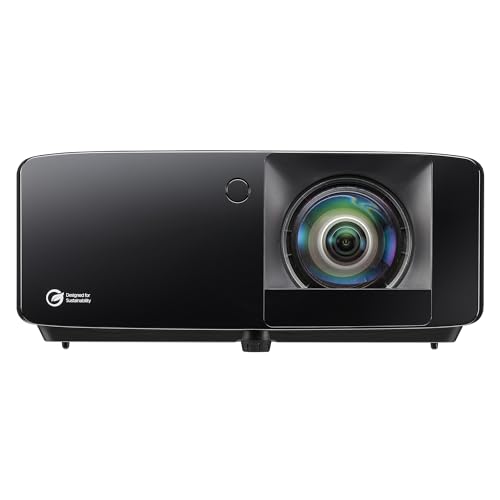
- 4,200 ANSI lumens for bright-room gaming
- Short-throw design for compact spaces
- 30,000-hour laser source and dust protection
Best For: Bright, space-conscious gaming and golf simulation setups
Best Cinema-Grade Pick

- 4K resolution with HDR10 and HLG
- 120Hz refresh and below-20ms input lag
- 3,400-lumen 3LCD laser projection
Best For: Premium gaming and home-theater installations
Best High-Refresh Pick

- 240Hz refresh rate and 4.2ms input lag
- 4K UHD resolution with 3,500 ANSI lumens
- Xbox-focused gaming and golf simulation modes
Best For: Competitive Xbox gaming and fast-action play
Best Overall
XGIMI HORIZON 20 4K RGB Triple Laser

- 4K RGB triple-laser image at 3,200 ISO lumens
- 1ms response, 240Hz, VRR, and ALLM for gaming
- Google TV, Dolby Vision, optical zoom, and lens shift
Best For: Premium gaming and home-cinema setups
Best for Big-Screen Versatility
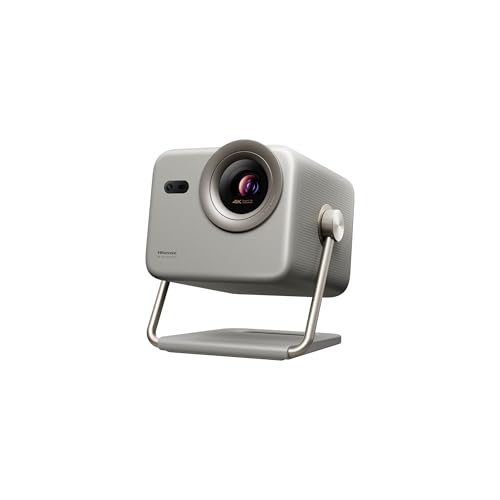
- 4K UHD triple-laser projection from 65 to 200 inches
- Optical zoom and intelligent screen adjustments simplify setup
- VIDAA OS, Netflix, Dolby Vision, and active 3D support
Best For: Flexible gaming and movie rooms
Best Portable Pick
Dangbei Atom 1080p Laser Projector

- Lightweight 2.82-pound design for easy room-to-room use
- 1,200 ISO lumens, 1080p resolution, and HDR10
- Google TV with official Netflix and automatic image setup
Best For: Portable gaming, streaming, and flexible setups
Top-Tier Competitive Pick – Valerion VisionMaster Pro 4K
For shoppers comparing laser projectors for gaming, the Valerion VisionMaster Pro 4K stands out with 4K resolution, a claimed 4ms input lag, and a 240Hz refresh rate. Its wide color gamut, Enhanced Black Level technology, and flexible optical zoom also make it suited to cinematic play spaces.
Best For: Competitive gamers who want high refresh performance alongside a large-format home theater image.
Pros:
- 4ms input lag and 240Hz support for responsive gaming.
- Native 4K UHD resolution with HDR10+ and IMAX Enhanced support.
- 0.9–1.5x optical zoom and automatic focus and keystone correction improve placement flexibility.
- 15,000:1 contrast, EBL technology, and 110% Rec.2020 coverage support rich images.
Cons:
- Its stationary design and large maximum image capability may be excessive for smaller rooms.
- Gaming features and advanced image controls may require setup to optimize.
This is the most performance-focused option in the group, particularly for buyers who want fast gaming response without giving up a premium 4K movie experience. The optical zoom and automated adjustments add useful flexibility for dedicated rooms.
Bright-Room Gaming Pick – BenQ TK710 4K Laser
The BenQ TK710 is a practical choice among laser projectors for gaming when you need a bright picture in a living room or other space with ambient light. It combines 3200 ANSI lumens with 4K HDR imaging and gaming modes designed for both fast 1080p play and 4K console gaming.
Best For: Console and PC gamers who play in brighter rooms and want a straightforward tabletop projector.
Pros:
- 3200 ANSI lumens helps maintain visibility with the lights on.
- 4ms response at 1080p/240Hz and 16ms input lag at 4K/60Hz.
- Native 4K UHD resolution with HDR10 and HLG support.
- Laser light source is rated for up to 20,000 hours and includes a three-year warranty.
Cons:
- Its listed 144-inch maximum image is smaller than the 200- to 300-inch claims of some alternatives.
- It is primarily a tabletop model, with less placement flexibility than gimbal-style portable designs.
The TK710 makes a strong case when brightness and predictable gaming performance matter more than built-in smart entertainment features. Its 4K/60Hz latency specification is especially relevant for PS5, Xbox, and PC users targeting detailed 4K gameplay.
Portable Immersion Pick – JMGO N1S 4K Upgrade
The JMGO N1S 4K Upgrade is one of the more flexible laser projectors for gaming, pairing a portable 4.4-pound design with a rotating gimbal, automatic focus, and keystone correction. Its 17ms latency, 4K HDR picture, and built-in Google TV make it a convenient option for gaming and streaming in multiple locations.
Best For: Gamers who want a portable projector that can move between rooms, outdoor setups, and entertainment spaces.
Pros:
- Portable 4.4-pound design with a 127-degree vertical gimbal.
- 4K UHD resolution, HDR10, triple-laser color, and support for screens up to 200 inches.
- 17ms latency, HDMI 2.1, and MEMC support gaming use.
- Google TV, officially licensed Netflix, Google Cast, and 10W Dolby Audio are built in.
Cons:
- Its 17ms latency is higher than the 4ms figures listed for the two performance-oriented Valerion models and the BenQ’s 1080p mode.
- At 1700 ISO lumens, it is less bright on paper than the BenQ TK710.
- Keystone and color calibration may require attention for the best image.
This model prioritizes convenience and mobility over the lowest possible latency. Choose it when the ability to reposition the projector easily, access streaming apps without a separate dongle, and enjoy vivid triple-laser color is more important than competitive-level response.
Smart Home Theater Pick – Valerion StreamMaster Plus2
The Valerion StreamMaster Plus2 blends gaming speed with an integrated smart home theater setup. For buyers seeking laser projectors for gaming, its 4ms input lag, 240Hz refresh rate, 4K HDR support, and automatic alignment features are complemented by Google TV and broad device-casting support.
Best For: Gamers who want a large-screen projector that also serves as a voice-controlled, connected entertainment hub.
Pros:
- 4ms input lag and 240Hz refresh rate with dedicated RPG, FPS, and night-vision gaming features.
- 4K UHD imaging with Dolby Vision, HDR10, dynamic tone mapping, and IMAX Enhanced support.
- Google TV plus AirPlay 2, Miracast, and Chromecast support reduces reliance on external devices.
- Automatic focus, obstacle avoidance, alignment, and keystone correction simplify setup.
Cons:
- Its 2000 ISO lumens rating is lower than the BenQ TK710’s 3200 ANSI lumens.
- The feature-rich smart home and image-control systems may be more than casual gamers need.
The StreamMaster Plus2 is a compelling all-in-one choice for a connected media room. It offers the same headline gaming speed as the fastest models here while adding voice control, streaming, casting, and automated setup for a more hands-off experience.
Best Short-Throw Pick – Optoma GT2400HDR
If you need laser projectors for gaming that can work in a compact room, the Optoma GT2400HDR is a practical option. Its short-throw design, 4,200 ANSI lumens, Full HD resolution, and low-input-lag gaming focus make it suitable for bright spaces, large images, and gaming setups where placement distance is limited.
Best For: Gamers and golf-simulation users who want a bright, short-throw Full HD projector.
Pros:
- Short-throw range of approximately 2.6 to 3.7 feet
- High 4,200 ANSI-lumen brightness for rooms with ambient light
- 30,000-hour DuraCore laser light source with IP6X-rated dust protection
- Supports tabletop, wall, and floor mounting
Cons:
- Native resolution is 1920×1080 rather than 4K
- Connectivity is centered on HDMI and RCA
- Its 9.4-pound weight may be less convenient for frequent relocation
The GT2400HDR prioritizes brightness, durability, and easy placement over native 4K detail. It is a strong fit when a short throw and responsive gaming experience matter more than maximum resolution.
Best Cinema-Grade Pick – Epson Home Cinema LS6000
The Epson Home Cinema LS6000 is one of the more flexible laser projectors for gaming, combining 4K display technology with HDR support, 120Hz operation, and Auto Low Latency Mode. Its 3LCD engine, 3,400 lumens of color and white brightness, and extensive installation adjustments also make it a strong choice for a dedicated home theater.
Best For: Console and PC gamers who want 4K HDR picture quality with home-cinema features.
Pros:
- 4K native resolution with an 8.29-million-pixel image
- 120Hz refresh rate, ALLM, and input lag below 20ms
- 3,400 lumens of color and white brightness with HDR10 and HLG support
- Manual lens shift and support for screens up to 300 inches
Cons:
- Its minimum throw distance is about 3.75 feet, so it is not an ultra-short-throw model
- Uses a 20,000-hour laser light source, shorter-rated than some competing laser models
- Designed primarily for ceiling mounting
The LS6000 is a balanced premium option for players who want sharp 4K visuals without giving up gaming responsiveness. Its lens shift and broad screen-size support further suit permanent installations.
Best High-Refresh Pick – ViewSonic LX700-4K
For fast-action players comparing laser projectors for gaming, the ViewSonic LX700-4K stands out with a 240Hz refresh rate and stated 4.2ms input lag. It also delivers 4K UHD resolution, 3,500 ANSI lumens, HDR support, and a dedicated Xbox gaming focus, making it versatile for both competitive play and large-screen entertainment.
Best For: Xbox gamers and competitive players who prioritize very high refresh rates and low input lag.
Pros:
- 240Hz refresh rate with 4.2ms ultra-low input lag
- 4K UHD resolution and 3,500 ANSI lumens
- HDR/HLG support and SuperColor technology
- 1.3x optical zoom, keystone correction, and four-corner adjustment
Cons:
- Listed minimum throw distance is about 1 meter, so it is not an ultra-short-throw projector
- Rated laser light-source life is 20,000 hours
- Its gaming-focused 240Hz specification may be more than casual players need
The LX700-4K is a compelling performance-oriented choice when smooth motion and rapid response are the priority. Its image-adjustment tools and golf mode add flexibility for multipurpose rooms and simulation setups.
Best Overall – XGIMI HORIZON 20 4K RGB Triple Laser
For shoppers comparing laser projectors for gaming, the XGIMI HORIZON 20 stands out as a high-performance 4K option. Its RGB triple-laser light source, 3,200 ISO lumens, 1ms response time, 240Hz refresh rate, VRR, and ALLM are aimed at large, smooth, responsive gameplay.
Best For: Gamers who want premium 4K visuals, high refresh rates, and a bright projector for both gaming and home cinema.
Pros:
- Native 4K resolution with RGB triple-laser color and 3,200 ISO lumens.
- Gaming-focused features include 1ms response, 240Hz, VRR, and ALLM.
- Includes Google TV, licensed Netflix, Harman Kardon speakers, optical zoom, and lens shift.
- Supports Dolby Vision, HDR10+, IMAX Enhanced, and Filmmaker Mode.
Cons:
- Its premium feature set may be more than casual gamers need.
- The projector weighs 4.9 kg, making it less convenient to move than smaller portable models.
The HORIZON 20 is the strongest all-around choice here for competitive or enthusiast gaming, especially if you want a very large image without giving up 4K detail and flexible installation.
Best for Big-Screen Versatility – Hisense M2 Pro Triple Laser
The Hisense M2 Pro is a flexible choice among laser projectors for gaming, combining 4K UHD resolution with a portable design, optical zoom, and automatic image adjustments. Its 1,300 ANSI lumens suit low-light gaming rooms, while the 65- to 200-inch image range works for both everyday play and group viewing.
Best For: Gamers who want a portable 4K projector with smart features, optical zoom, and a large adjustable screen size.
Pros:
- Triple-laser light source and 4K UHD resolution deliver detailed, vivid images.
- Optical zoom preserves image sharpness while accommodating different room setups.
- Smart VIDAA OS includes Netflix, YouTube, Disney+, and other streaming services.
- Offers Dolby Vision, AI picture enhancements, and active 3D support.
Cons:
- Its 1,300 ANSI lumens are better suited to low-light environments than bright rooms.
- Active 3D requires compatible DLP-Link shutter glasses.
The M2 Pro balances gaming, movies, and portability well. It is particularly appealing when you need setup flexibility and a screen that can scale from a moderate 65-inch image to a dramatic 200 inches.
Best Portable Pick – Dangbei Atom 1080p Laser Projector
The Dangbei Atom is a compact, easy-to-carry option for shoppers seeking laser projectors for gaming without a bulky installation. It delivers 1080p resolution, 1,200 ISO lumens, HDR10, and a screen up to 180 inches, while autofocus, keystone correction, screen fit, and obstacle avoidance make setup quick.
Best For: Casual gamers and renters who want a lightweight projector that can move easily between rooms.
Pros:
- Thin, lightweight design weighs about 2.82 pounds and is 1.87 inches thick.
- 1,200 ISO lumens and HDR10 support provide a bright, high-definition image.
- Built-in Google TV with official Netflix access and a broad app selection.
- Autofocus, keystone correction, screen fit, and obstacle avoidance simplify setup.
Cons:
- Its native resolution is 1080p rather than 4K.
- The supplied notes do not specify dedicated low-latency or high-refresh gaming features.
- Its one-year warranty is shorter than the XGIMI HORIZON 20’s two-year coverage.
The Atom is the most convenient pick for portable gaming and streaming. Choose it when simple setup and low weight matter more than native 4K detail or advanced competitive-gaming specifications.
How We Picked the Best Laser Projectors for Gaming
We compared these models across the features that matter most for gaming and everyday home entertainment: input lag, refresh-rate support, resolution, brightness, laser light-source performance, throw distance, image-processing features, and smart-platform usability. We also considered how well each projector fits a particular use case, from competitive console play and golf simulation to movie nights and portable gaming.
Specifications can vary by picture mode and input resolution, so treat advertised response times, brightness figures, and refresh rates as performance targets rather than guarantees for every setup. A suitable screen, controlled ambient light, and correct gaming mode still have a major effect on results.
Quick Comparison
- Best for premium gaming: Valerion VisionMaster Pro 4K, with high-refresh support and advanced home-theater features.
- Best for straightforward 4K gaming: BenQ TK710, a bright laser model built around HDR entertainment and gaming.
- Best for short-throw setups: Optoma GT2400HDR, especially where seating or room depth is limited.
- Best for Xbox-focused play: ViewSonic LX700-4K, with 240Hz support and strong brightness.
- Best portable choices: Hisense M2 Pro and Dangbei Atom, which prioritize flexible placement and smart features.
- Best all-around smart projectors: JMGO N1S 4K, XGIMI HORIZON 20, and Valerion StreamMaster Plus2.
Key Buying Factors for Laser Projectors for Gaming
Input Lag and Refresh Rate
Low input lag is crucial for shooters, racing games, and competitive play. Look for a dedicated gaming mode and verify the supported refresh rate at your intended resolution. A projector may accept a high-refresh signal while displaying it at a lower rate, so check the manual for console and PC compatibility.
Resolution, HDR, and Image Quality
Native 4K or 4K-enhanced projection gives modern games sharper text and finer detail, while HDR support can improve highlights and contrast when the projector has enough brightness. Full HD remains a sensible choice for faster, less expensive gaming if you sit farther from the screen.
Brightness and Room Conditions
Laser projectors maintain consistent output and typically offer long operating life, but brightness requirements depend on screen size and ambient light. A bright room or very large screen favors models with higher rated lumens. For the best black levels and HDR impact, darken the room and use an appropriate screen surface.
Throw Distance, Installation, and Connectivity
Measure the space before buying. Short-throw projectors work well in compact rooms, while flexible lens shift or optical zoom can simplify ceiling mounting. Confirm HDMI bandwidth, eARC or audio outputs, USB options, wireless features, and support for your console, PC, soundbar, or AV receiver.
Who Should Buy Which Laser Projectors for Gaming?
Choose a high-refresh 4K model such as the Valerion VisionMaster Pro 4K, Valerion StreamMaster Plus2, or ViewSonic LX700-4K if smooth motion and large-screen immersion are your priorities. The BenQ TK710 and JMGO N1S 4K are strong general-purpose choices for buyers who want gaming and streaming in one projector.
For limited room depth, the Optoma GT2400HDR is the practical fit. Movie-focused buyers who also game should consider the Epson Home Cinema LS6000 or XGIMI HORIZON 20 for their broader entertainment appeal. The Hisense M2 Pro and Dangbei Atom make more sense for bedrooms, travel, flexible seating, or occasional gaming than for demanding competitive play.
Before purchasing, confirm the projector’s gaming specifications at the resolution and refresh rate you plan to use, then account for screen size, mounting distance, room lighting, and external audio. Those details often matter as much as the headline specification.