The best game controllers for gaming rooms should fit the way your space is used, whether you host multiplayer sessions, switch between PC and consoles, or keep a dedicated retro setup.
We selected 10 options spanning wireless and wired designs, Hall Effect controls, low-latency polling, broad device compatibility, and plug-and-play simplicity.
Best 10 Game Controllers for Gaming Rooms Picks for 2026
Screen-Driven Customization
ManbaOne Interactive Wireless Controller

- 2-inch screen for direct controller setup
- Hall Effect sticks and triggers with motion sensing
- Works with PC, Switch, iOS, and Android
Best For: Multi-platform rooms wanting profiles, back buttons, and a charging dock
Reliable Wireless PC Control
Logitech G F710 Wireless Gamepad

- 2.4 GHz wireless USB nano-receiver
- Dual vibration motors for supported games
- Programmable through Logitech Profiler software
Best For: Windows and ChromeOS gaming rooms seeking wireless convenience
Low-Latency Wired Play
GameSir Tegenaria Lite Controller

- 1000Hz polling rate and ultra-low-latency USB
- Hall Effect sticks for precise, drift-resistant control
- Two mappable back buttons and Turbo function
Best For: Fast-paced Switch, PC, Steam, and mobile gaming
Simple PC Plug-and-Play

- Six-foot USB cable for comfortable desktop play
- Familiar console-style layout and floating D-pad
- Profiler software supports programmable controls
Best For: PC gaming rooms wanting a simple corded controller
Low-Latency Wireless Pick

- 1000Hz polling over 2.4G or wired
- Hall Effect joysticks and triggers
- Remappable L4/R4 bumpers
Best For: Windows and Android gaming rooms needing wireless flexibility
Most Versatile Wireless Pick

- Works with PC, Switch, iOS, and Android
- Hall Effect controls with zero-deadzone mode
- Programmable back buttons and 8+ hour battery
Best For: Multi-platform gaming rooms using several compatible devices
Versatile Wired Pick
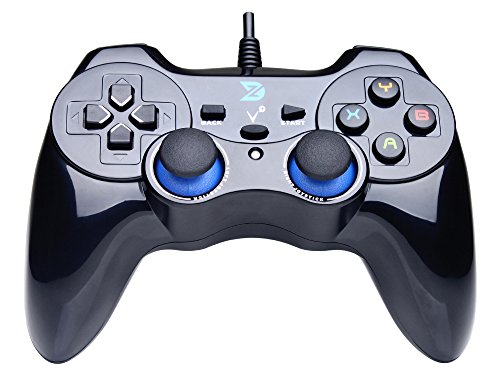
- USB wired connection with plug-and-play support
- Works with Windows, PS3, Steam, and compatible Android devices
- XInput/DirectInput modes plus vibration feedback
Best For: PC and PS3 gaming setups that favor a wired controller
Retro Room Centerpiece

- Includes 200+ built-in Atari and bonus games
- Two wireless joysticks with paddle controls
- HDMI TV connection, save options, and RGB lighting
Best For: Shared retro gaming sessions and party-friendly TV setups
Feature-Rich Wireless Pick

- Three connection modes for PC, Steam, Switch, Android, and iOS
- Hall Effect sticks and triggers help prevent stick drift
- Back buttons, 20-hour battery, RGB, and 1000Hz polling
Best For: Multi-device PC gaming rooms and competitive-style play
Screen-Driven Customization – ManbaOne Interactive Wireless Controller
For gaming rooms that need one controller across several platforms, the ManbaOne combines wireless flexibility with an integrated 2-inch interactive screen. It supports Switch, Switch 2, iOS, Android, and Windows PC, while its Hall Effect sticks and triggers suit players who prioritize responsive control. Note that it does not support Xbox, PlayStation, or GeForce Now, and Switch 2 wake-up is not supported.
Best For: Multi-platform gaming rooms that want on-controller setup options, RGB lighting, back-button customization, and a charging dock.
Pros:
- 2-inch screen enables direct configuration of buttons, vibration, joysticks, and lighting without an app.
- Supports wired, Bluetooth, and wireless-dongle connections.
- Hall Effect sticks and triggers, motion sensing, four saved profiles, and four mappable back keys add flexibility.
- Includes an 1800mAh battery and charging station with the wireless receiver.
Cons:
- Not compatible with Xbox, PlayStation, or GeForce Now.
- Switch 2 does not support the controller wake-up function.
- For PC, the wireless dongle is recommended over Bluetooth for stability.
The ManbaOne is a feature-rich choice for a gaming room shared across PC, Switch, and mobile devices. Its screen-based controls and charging dock make it convenient, provided your setup falls within its supported platforms.
Reliable Wireless PC Control – Logitech G F710 Wireless Gamepad
The Logitech G F710 is a practical wireless option for PC-focused gaming rooms. Its 2.4 GHz connection uses a compact USB nano-receiver, and the familiar console-style layout makes it easy to pick up for both older favorites and newer PC titles. It runs on two AA batteries and is designed for Windows and ChromeOS compatibility.
Best For: PC gaming rooms that want dependable wireless play, vibration feedback, and programmable controls through Logitech Profiler software.
Pros:
- 2.4 GHz wireless connection is designed for low-delay, low-interference play.
- Familiar console-style layout with a four-switch D-pad.
- Dual vibration motors provide feedback in supported games.
- Profiler software can assign keyboard and mouse commands to the gamepad.
Cons:
- Requires two AA batteries rather than a rechargeable built-in battery.
- Profiler customization requires software installation.
- Primarily suited to Windows and ChromeOS rather than console use.
For a PC gaming room, the F710 keeps setup simple while adding wireless freedom and broad game support. It is a sensible fit if you prefer replaceable batteries and a traditional controller layout over newer platform-specific features.
Low-Latency Wired Play – GameSir Tegenaria Lite Controller
The GameSir Tegenaria Lite is built for gaming rooms where a wired connection and quick input response matter. Its USB connection, 1000Hz polling rate, Hall Effect sticks, and ultra-low-latency design target responsive play across Switch, Android, iOS, PC, and Steam. The retro-inspired design also includes back buttons and customizable Turbo functionality.
Best For: Competitive-minded players who want precise wired control, anti-drift Hall Effect sticks, and extra inputs without relying on wireless connectivity.
Pros:
- Wired connection and 1000Hz polling rate are designed for near-instantaneous input.
- Hall Effect sticks provide precise control and resistance to wear-related drift.
- Two mappable back buttons add shortcut options.
- Dual asymmetric rumble motors and customizable Turbo function expand gameplay feedback and control.
Cons:
- USB wired design does not provide wireless freedom around the gaming room.
- Its feature set is centered on compatible Switch, Android, iOS, PC, and Steam setups.
- Membrane triggers and buttons may appeal less to players seeking mechanical switch feedback.
The Tegenaria Lite is a strong practical choice when responsiveness takes priority over cable-free play. Its Hall Effect sticks, high polling rate, and back buttons give it useful advantages for fast-paced games while keeping the setup straightforward.
Simple PC Plug-and-Play – Logitech G F310 Wired Gamepad
The Logitech G F310 is a straightforward wired controller for PC gaming rooms where reliable plug-and-play setup matters. Its six-foot cable allows comfortable distance from a monitor, while the console-like layout and floating D-pad make it familiar for a wide range of games. Profiler software adds programmable control options for supported setups.
Best For: Desktop PC players who want an affordable-feeling, wired gamepad with a long cable, familiar controls, and broad game support.
Pros:
- Simple USB connection avoids batteries, pairing, and charging.
- Six-foot cord supports relaxed play away from the monitor.
- Console-style layout includes a floating four-switch D-pad for directional changes.
- Profiler software can program buttons for keyboard and mouse commands.
Cons:
- Wired operation limits flexibility compared with wireless controllers.
- Profiler customization requires software installation.
- Supplied notes primarily identify compatibility with PC, Chromebook, and Android TV setups.
The F310 is a sensible foundation for a PC gaming room that values simplicity over advanced wireless or Hall Effect features. Its long cable, familiar controls, and programmable options cover everyday gaming without requiring a battery routine.
Low-Latency Wireless Pick – 8Bitdo Ultimate 2C
For gaming rooms that need a flexible PC gamepad without a cable across the seating area, the 8Bitdo Ultimate 2C combines wireless connectivity with a 1000Hz polling rate over 2.4G and wired connections. Hall Effect controls, extra bumpers, and onboard remapping make it a feature-rich choice for Windows and Android setups.
Best For: Windows and Android gaming rooms seeking wireless play, responsive inputs, and extra controls.
Pros:
- Supports Windows and Android.
- 1000Hz polling rate is available over 2.4G and wired connections.
- Hall Effect joysticks and triggers are designed to resist common stick-drift concerns.
- Includes remappable L4/R4 bumpers, turbo, and onboard button mapping.
Cons:
- Compatibility is limited to Windows and Android in the supplied specifications.
- Wireless operation depends on its battery power source.
The Ultimate 2C is a strong all-around option for a gaming room where freedom from cables matters. Its additional bumpers and tactile controls are especially useful for players who want more input options without relying on configuration software.
Budget Wired Workhorse – USB PC Game Controller
A wired controller can be a practical fit for gaming rooms with permanent desk or emulator stations. This USB gamepad offers plug-and-play connectivity for Windows PCs, Raspberry Pi systems, Steam, Roblox, RetroPie, and RecalBox, with a 4.9-foot cable for seated play.
Best For: PC, Raspberry Pi, Steam, and retro-gaming stations that prioritize simple wired setup.
Pros:
- Broad compatibility with Windows, Raspberry Pi, Steam, Roblox, RetroPie, and RecalBox.
- Plug-and-play USB connection requires no software installation.
- Includes dual vibration, analog and digital modes, and an ergonomic anti-sweat design.
- Backed by a stated unconditional satisfaction guarantee and lifetime warranty.
Cons:
- The corded design limits movement around the gaming room.
- It uses D-input, so some games may require the precautions listed by the manufacturer.
- It is intended primarily for PC and compatible emulator platforms rather than current console systems.
This controller makes the most sense when reliability and broad computer compatibility matter more than wireless convenience. It is a straightforward choice for a dedicated desk, Raspberry Pi, or retro-gaming setup.
Most Versatile Wireless Pick – Multi-Platform PC Controller
For gaming rooms shared across PC, Switch, iOS, and Android, this wireless controller offers broad platform flexibility through Bluetooth, a USB-C cable, and an included Bluetooth dongle. Hall Effect controls, programmable back buttons, dynamic lighting, and an 8-plus-hour battery add features for players who want customization.
Best For: Multi-platform gaming rooms where one controller needs to support PC, Switch, iOS, and Android.
Pros:
- Supports PC, Switch, iOS 13+, and Android through Bluetooth or wired connection.
- Hall Effect joysticks and triggers include a selectable zero-deadzone mode.
- Programmable back buttons support up to 21 actions, with adjustable turbo functions.
- 1000mAh battery provides more than eight hours of stated use and includes a braided USB-C cable.
Cons:
- Some features are platform-specific, including gyro controls for Switch gameplay.
- Its many lighting, turbo, and mapping controls may take more setup than a basic gamepad.
- Auto-sleep activates after 20 minutes of inactivity.
This is the most adaptable option for a shared gaming room with multiple systems. Its rechargeable battery and included adapter simplify wireless setup, while the back buttons and Hall Effect controls give experienced players room to customize their layout.
Versatile Wired Pick – ZD-V+ USB Gaming Controller
For gaming rooms with a PC, PS3, or Steam setup, the ZD-V+ is a straightforward wired option. It supports Windows XP through Windows 11, offers XInput and DirectInput modes, and uses USB plug-and-play connectivity for compatible games.
Best For: Gamers who want an affordable wired controller for PC, Steam, PS3, or compatible Android devices.
Pros:
- Supports Windows XP/7/8/10/11, PS3, Steam, Linux, and compatible Android devices.
- Offers both XInput and DirectInput modes.
- Includes vibration feedback and a switch for exchanging D-pad and left-stick functions in XInput mode.
- USB connection avoids battery charging.
Cons:
- Does not support Xbox consoles or Mac OS.
- Android use requires an OTG-capable device and a separate OTG adapter.
- Only supports PC games that use XInput mode when operating in that mode.
The ZD-V+ makes sense when reliable USB connectivity matters more than wireless freedom. Check your game and device compatibility carefully, especially for Android and PC titles.
Retro Room Centerpiece – Atari Game Station Pro
The Atari Game Station Pro is designed for gaming rooms built around shared, nostalgia-driven play. It connects directly to a TV through HDMI and includes more than 200 built-in Atari games, two wireless joysticks, save options, and RGB lighting.
Best For: Families, parties, and retro gaming rooms that want a TV-based multiplayer console with included controllers.
Pros:
- Includes over 200 built-in Atari games and bonus titles.
- Comes with two 2.4 GHz wireless joysticks featuring paddles for paddle-based games.
- Connects directly to a TV with the included HDMI cable.
- Offers game saves and dynamic RGB LED lighting.
Cons:
- Pac-Man and Galaga are not included.
- Each joystick requires two AA batteries, and the batteries are not included.
- Requires a 5-volt, 2-amp USB-A power source.
As a room-friendly retro package, this system supplies the console, games, joysticks, power cable, and HDMI cable in one box. It is best suited to players who specifically want officially licensed Atari content rather than modern console features.
Feature-Rich Wireless Pick – EasySMX X15 PC Controller
The EasySMX X15 suits gaming rooms where one controller needs to move between PC, Steam, Switch, mobile, and wired setups. It combines 2.4G wireless, Bluetooth, and USB-C connections with Hall Effect sticks and triggers, programmable back buttons, and a 1000mAh battery.
Best For: PC and Steam players who want low-maintenance stick precision, flexible connections, and customizable controls.
Pros:
- Supports Windows PC, Steam, Switch, Android, and iOS through three connection modes.
- Hall Effect joysticks and triggers are designed to eliminate stick drift.
- Two programmable back buttons support shortcuts and combo inputs.
- Offers up to 20 hours of playtime, dual vibration, RGB lighting, and a 1000Hz polling rate.
Cons:
- Does not include a microphone jack or gyro sensor.
- Compatibility and pairing modes vary by device, so setup should be checked before purchase.
- Its asymmetric Xbox-style stick layout may not suit every player.
The X15 is a strong fit for a modern multi-device gaming room, particularly for FPS, racing, and action games. Its main trade-offs are the missing headset and gyro features, which may matter for some Switch or multiplayer setups.
How We Picked the Best Game Controllers for Gaming Rooms
We compared these controllers on the features that matter most in a shared or dedicated gaming space: platform compatibility, connection type, control feel, latency, durability, comfort, setup requirements, and overall flexibility. Models with Hall Effect sticks or triggers can help reduce the risk of traditional potentiometer drift, while higher polling rates may provide faster input reporting on compatible systems.
We also considered how easily each controller fits into a room with multiple players. Wireless models reduce cable clutter, while wired gamepads are often simpler to maintain and ready whenever someone sits down to play. Retro-focused products were judged by their included games, controller arrangement, and suitability for casual group play.
Quick Comparison
| Best For | Controller Type | Notable Features |
|---|---|---|
| Flexible multi-device play | Wireless | Broad compatibility, rechargeable battery, Hall Effect controls |
| Competitive PC gaming | Wireless or wired | High polling rates, responsive sticks and triggers |
| Simple PC setups | Wired | Plug-and-play USB connection, low maintenance |
| Switch and mobile gaming | Wireless or wired | Device-specific compatibility and portable designs |
| Retro gaming rooms | Wireless console bundle | Built-in game libraries and multiplayer convenience |
Key Buying Factors for Game Controllers for Gaming Rooms
Compatibility
Check support for the devices actually used in your room. PC compatibility is common, but Switch, Switch 2, Android, iOS, PS3, and Steam support can vary. A controller that works across several platforms may offer better value for a shared setup.
Wireless Versus Wired
Wireless controllers keep coffee tables and seating areas tidy, but they require charging and may need pairing. Wired models avoid battery management and can be preferable for permanent PC stations. For multiplayer spaces, consider cable length and whether USB ports are easily accessible.
Stick Design, Polling, and Comfort
Hall Effect sticks and triggers are attractive for users concerned about drift. A 1000Hz polling rate may appeal to PC players who prioritize responsive input, although the benefit depends on the game and platform. Also check button layout, grip shape, vibration support, and whether the controller remains comfortable during longer sessions.
Room Setup and Maintenance
Look for clear status indicators, durable cables or charging options, easy-to-clean surfaces, and storage that keeps controllers off the floor. RGB lighting can complement a gaming-room aesthetic, but it should not outweigh ergonomics or reliable connectivity.
Who Should Buy Which Game Controllers for Gaming Rooms?
- Choose a wireless Hall Effect model if you want a flexible controller for PC, mobile, or multiple players without cable clutter.
- Choose a wired controller for a fixed PC station, occasional guests, or the simplest plug-in-and-play experience.
- Choose a high-polling-rate controller if fast-response PC gaming is a priority and your games and platform support the feature.
- Choose a Switch-compatible model if the room regularly hosts Nintendo-focused multiplayer sessions.
- Choose the Atari game station if your priority is casual group entertainment and an all-in-one retro library rather than modern cross-platform gaming.
Before buying, confirm the operating-system support, connection method, included receiver or cable, and return policy. Those details are especially important when several people will share the same gaming-room hardware.