A portable DAC with 4.4mm balanced output can give compatible headphones and IEMs more power, lower noise, and a cleaner listening experience than a phone or laptop’s built-in audio hardware.
We compared 10 compact USB DAC amplifiers across output options, decoding support, power, portability, controls, and everyday usability to help you choose the right model for your setup.
Best 10 Portable Dac with 44mm Balanced Output Picks for 2026
Best Value Balanced Dongle

- 4.4mm balanced and 3.5mm outputs
- DSD256 and PCM 32-bit/384kHz support
- Compact metal body with 60-step volume control
Best For: Everyday phone, tablet, and computer listening
Most Powerful Portable Amp

- Up to 900mW per channel
- ESS ES9027PRO DAC and 10-band EQ
- Color touchscreen with carbon-fiber body
Best For: Demanding headphones and customizable portable setups
Best for Hi-Res Tuning
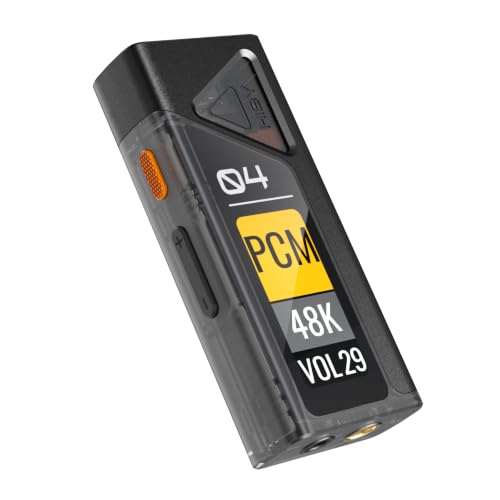
- 4.4mm balanced and 3.5mm outputs
- DSD512 and PCM 768kHz/32-bit support
- OLED display plus app-based parametric EQ
Best For: Portable high-resolution listening with sound customization
Best Feature-Rich Pocket Amp

- Fully balanced 4.4mm output
- 400mW output with PowerMatch and iEMatch
- PCM 384kHz, DSD256, and MQA support
Best For: Balanced headphone and sensitive-IEM users
Balanced Power Pick

- PCM 384kHz/DSD256 support
- 4.4mm balanced and 3.5mm outputs
- Up to 220mW with broad compatibility
Best For: Portable balanced listening across phones and computers
Refined Portable Choice

- Fully balanced 4.4mm output
- PCM 384kHz/DSD256/MQA support
- PowerMatch, iEMatch, and XBass controls
Best For: Flexible headphone and IEM tuning on the go
High-Resolution Feature Pick
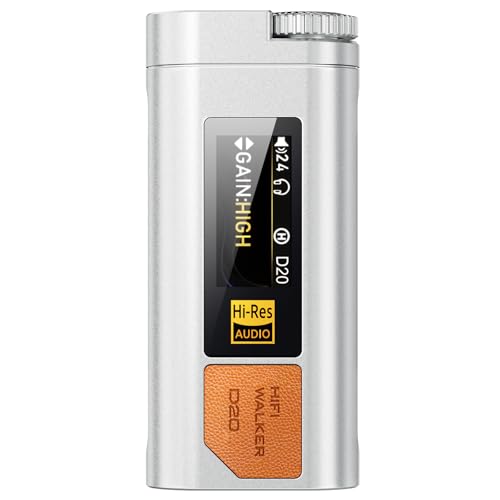
- PCM 768kHz/DSD512 support
- Up to 280mW through 4.4mm balanced
- OLED display with ALPS control knob
Best For: High-resolution playback and portable monitoring
Best Compact Choice

- Dual ESS Sabre DAC balanced circuit
- 4.4mm output up to 241mW
- 15 g USB-C plug-and-play design
Best For: Portable USB-C listening with minimal setup
Best Feature-Rich Option

- Eight CS43131 DAC array
- 365mW balanced output at 32 ohms
- OLED display and app control
Best For: Powerful, customizable portable playback
Best Tube-Mode Pick

- Dual JAN6418 tube and solid-state modes
- 577mW balanced output at 32 ohms
- ES9069 DAC with OLED display
Best For: Powerful portable audio with adjustable sound character
Best Value Balanced Dongle – Fosi Audio DS2
The Fosi Audio DS2 is a compact, affordable-feeling choice for shoppers seeking a portable DAC with 44mm balanced output—specifically, a 4.4mm balanced connection—alongside a standard 3.5mm jack. Its dual CS43131 DACs, high-resolution decoding, and independent volume buttons make it practical for phones, tablets, and computers.
Best For: Listeners who want a lightweight USB-C dongle with both balanced and single-ended outputs, strong compatibility, and simple physical controls.
Pros:
- Supports DSD256 and PCM up to 32-bit/384kHz.
- Offers up to 170mW per channel at 32Ω through its outputs.
- Dual CS43131 DAC chips, 60-step volume control, and volume memory.
- Compatible with iPhone 15 models, iPads, Android devices, Windows, Mac, and laptops.
Cons:
- Its feature set is focused on straightforward USB DAC operation rather than a display or app-based tuning.
- The supplied notes do not specify a built-in battery or wireless connectivity.
Choose the DS2 if you want high-resolution playback and a 4.4mm balanced option in a small metal-bodied dongle without complicated setup.
Most Powerful Portable Amp – FiiO QX13
The FiiO QX13 is aimed at buyers who want a powerful portable DAC/amp rather than a minimalist dongle. Its ES9027PRO DAC, 900mW-per-channel output, color display, 10-band EQ, and carbon-fiber construction make it a feature-rich option for driving demanding headphones on the go.
Best For: Headphone enthusiasts who prioritize substantial amplification, onboard controls, visual feedback, and extensive sound customization.
Pros:
- Delivers up to 900mW per channel for high-power headphone drive.
- Uses an 8-channel ESS ES9027PRO DAC design with multiple low-noise regulators.
- Includes a 1.99-inch color touchscreen and customizable interface.
- Provides a 10-band EQ and a premium 21-layer carbon-fiber body.
Cons:
- The supplied notes do not explicitly confirm a 4.4mm balanced output.
- Its larger feature set may be excessive for shoppers seeking a simple phone dongle.
- The optional E-Stick power bank is sold separately.
The QX13 stands out when output power and control matter more than pocket-minimalist design. Verify the connector layout if a 4.4mm balanced output is essential to your setup.
Best for Hi-Res Tuning – HiBy Music FC4
The HiBy Music FC4 is a versatile portable DAC with 44mm balanced output—the product provides a 4.4mm balanced port—plus 3.5mm single-ended output. Dual CS43131 DACs, DSD512 support, a color OLED display, and app-based EQ make it a strong fit for listeners who want both high-resolution playback and practical tuning options.
Best For: Mobile listeners who want a lightweight balanced dongle with hardware volume controls, broad device support, and customizable EQ.
Pros:
- Supports DSD512, PCM up to 768kHz/32-bit, and MQA 8X decoding.
- 4.4mm balanced output provides up to 151mW at 32Ω.
- Includes eight EQ presets and professional parametric EQ through the HiByMusic app.
- Works with iOS, Android, Windows, macOS, PS5, and Switch.
Cons:
- The balanced output is less powerful than some larger portable amplifiers.
- App-based tuning may be unnecessary for listeners who prefer plug-and-play operation.
For a compact 4.4mm device with unusually broad format support and flexible EQ, the FC4 is one of the more adaptable choices in this group.
Best Feature-Rich Pocket Amp – iFi hip-dac 3
The iFi hip-dac 3 combines a portable DAC and headphone amplifier with a fully balanced 4.4mm output and S-Balanced 3.5mm output. It supports PCM 384kHz, DSD256, and full MQA decoding, while PowerMatch, iEMatch, and XBass provide useful adjustments for different headphones and earphones.
Best For: Listeners who want balanced portable audio with gain control, sensitive-IEM matching, bass adjustment, and separate USB-C audio and charging connections.
Pros:
- Provides a fully balanced 4.4mm output and S-Balanced 3.5mm output.
- Offers up to 400mW output with PowerMatch gain adjustment.
- Supports PCM up to 32-bit/384kHz, DSD256, and full MQA decoding.
- Includes iEMatch, XBass, dual USB-C ports, and up to 12 hours of playtime.
Cons:
- At 0.21kg, it is heavier than the smallest USB-C dongles.
- The supplied notes list smartphone, tablet, and computer compatibility with USB-C output, but do not detail iPhone adapter requirements.
The hip-dac 3 is a practical middle ground between a tiny dongle and a desktop-style amplifier, especially for users who value output flexibility and hardware sound-shaping features.
Balanced Power Pick – MECHEN AP10
The MECHEN AP10 is a practical portable dac with 44mm balanced output for listeners who want strong output power and broad device compatibility. Its ES9028Q2M-based design supports PCM up to 32-bit/384kHz and DSD256, while the 4.4mm balanced connection complements its standard 3.5mm output.
Best For: Phone, tablet, and computer users who need a powerful, easy-to-use balanced DAC/amp with detailed high-resolution playback.
Pros:
- Supports PCM 384kHz/32-bit and DSD256 decoding.
- Offers 4.4mm balanced and 3.5mm single-ended outputs.
- Provides up to 220mW output, 100-level volume adjustment, and volume memory.
- Works with iPhone, iPad Pro, Android devices, Windows computers, Macs, and laptops.
Cons:
- The supplied notes do not specify a display or onboard playback controls beyond volume adjustment.
- Its plastic material listing may be less premium than an all-metal alternative.
With its low quoted distortion, high signal-to-noise ratio, and flexible inputs, the AP10 is a well-rounded choice when balanced drive and straightforward operation matter more than extra interface features.
Refined Portable Choice – iFi Hip-dac 3 Stealth
The iFi Hip-dac 3 Stealth is a compact portable dac with 44mm balanced output, housed in a matte-black aluminum enclosure. It combines bit-perfect playback with 32-bit/384kHz PCM, DSD256, and full MQA decoding, plus adjustable features for different headphones and earphones.
Best For: Listeners seeking a polished portable DAC/amp with balanced output, adjustable gain, and sound-shaping controls.
Pros:
- Includes a fully balanced 4.4mm output and S-Balanced 3.5mm output.
- Supports 32-bit/384kHz PCM, DSD256, and full MQA decoding.
- PowerMatch, iEMatch, and XBass help tailor output to headphones or sensitive IEMs.
- Uses separate USB-C ports for audio data and charging.
Cons:
- The supplied notes describe USB-C compatibility but do not list iPhone or Lightning support.
- It weighs 0.2 kg, making it less lightweight than some dongle-style options.
The Hip-dac 3 stands out for its flexible headphone matching and feature set. It is a strong fit for users who want balanced connectivity without giving up practical controls for gain, sensitive earphones, or bass response.
High-Resolution Feature Pick – HIFI WALKER D20
The HIFI WALKER D20 is a feature-rich portable dac with 44mm balanced output for listeners who want unusually high format support and visible controls. Its ES9038Q2M and CT7601PR combination handles PCM up to 768kHz/32-bit and native DSD512, while the 4.4mm balanced output is rated up to 280mW.
Best For: Audiophiles, musicians, and streamers who want high-resolution USB playback, a display, and powerful balanced headphone drive.
Pros:
- Supports PCM 768kHz/32-bit and native DSD512.
- Provides 4.4mm balanced and 3.5mm single-ended outputs with up to 280mW balanced power.
- Includes a 0.96-inch OLED display and ALPS knob for volume and menu control.
- CNC-machined aluminum body and plug-and-play USB Type-C connectivity suit portable and desktop use.
Cons:
- The supplied notes do not identify a dedicated iPhone or Lightning connection.
- Its advanced controls and display may be more than casual listeners need.
The D20 is the most specification-focused option in this group. Its high-resolution support, strong balanced output, OLED interface, and broad computer and Android compatibility make it particularly appealing for detailed monitoring and demanding digital libraries.
Best Compact Choice – iFi Audio Go Link Max
If you want a portable dac with 44mm balanced output that stays simple and lightweight, the iFi Audio Go Link Max is a practical option. Its USB-C plug-and-play design, 15 g weight, and flexible cable suit phone and tablet listening, while the 4.4mm output provides up to 241mW of power.
Best For: USB-C users who want a compact, straightforward dongle with both 3.5mm and balanced 4.4mm output.
Pros:
- Dual ESS Sabre DAC chips form a balanced circuit.
- 4.4mm balanced output delivers up to 241mW.
- Supports PCM up to 384kHz/32-bit and native DSD256.
- Flexible cable and 15 g weight support portability.
Cons:
- Designed for USB-C devices, with adapters needed for other connections.
- Its output power is lower than the larger SHANLING models here.
The Go Link Max is a strong pick when convenience matters more than maximum amplification. Dynamic Range Enhancement, THD compensation, and included USB-A adapter add useful flexibility without making the dongle cumbersome.
Best Feature-Rich Option – SHANLING UA6 II
The SHANLING UA6 II is a portable dac with 44mm balanced output for listeners who want substantial power and detailed control. Its 4.4mm balanced connection reaches 365mW at 32 ohms, and the unit adds an OLED display, app controls, and broad Android, iOS, Windows, and Mac compatibility.
Best For: Listeners who want high-resolution decoding, strong balanced output, and on-device playback information.
Pros:
- Eight CS43131 DACs support 768kHz/32-bit and DSD512.
- 4.4mm balanced output reaches 365mW at 32 ohms.
- OLED screen shows sample rate, volume, and gain.
- Eddict Player app supports filters, gain, and firmware updates.
Cons:
- More feature-heavy and less pocket-simple than a basic dongle.
- iOS use requires a compatible adapter or cable.
With both 3.5mm and 4.4mm outputs, the UA6 II accommodates more headphones and IEMs than a balanced-only design. It is especially appealing if you value adjustable gain, display feedback, and Switch UAC1.0 support alongside high-resolution playback.
Best Tube-Mode Pick – SHANLING UA7
For a portable dac with 44mm balanced output and a more distinctive presentation, the SHANLING UA7 combines an ES9069 DAC with dual JAN6418 tubes. Its balanced output provides 577mW at 32 ohms, while Tube and Solid-State modes let you choose between a warmer character and a more direct, high-resolution sound.
Best For: Enthusiasts who want high portable output power and the option of tube or solid-state sound.
Pros:
- Dual JAN6418 tubes provide a warm Tube mode.
- Solid-State mode offers a separate high-resolution presentation.
- 4.4mm balanced output reaches 577mW at 32 ohms.
- OLED display and Eddict Player app add control and status feedback.
Cons:
- Tube hardware makes it a more specialized choice than a simple dongle.
- The supplied notes do not specify the UA7’s weight or dimensions.
The UA7 stands out for combining substantial drive power with selectable sound signatures. It supports DSD512 and 768kHz/32-bit playback, making it a compelling choice for users who want desktop-style features in a portable metal-bodied amplifier.
How We Picked the Best Portable Dac with 44mm Balanced Output
We focused on models that include a true 4.4mm balanced headphone output and work as portable USB DACs for phones, tablets, computers, or compatible digital audio players. We considered amplifier power, supported formats, connection options, size, controls, app support, battery or bus-powered operation, and the practicality of each design for daily listening.
Specifications such as DSD and PCM support can indicate compatibility, but they do not guarantee better sound by themselves. Our comparison gives greater weight to useful output performance, reliable connectivity, sensible controls, and value for the intended listener.
Quick Comparison
| What to Compare | Why It Matters |
|---|---|
| Balanced output | 4.4mm connections can provide more power and channel separation with compatible headphones. |
| Amplifier power | Higher output is useful for demanding over-ear headphones, while sensitive IEMs may need less. |
| DAC and format support | Modern chips and high-resolution support improve compatibility, but do not replace good implementation. |
| Size and controls | Small dongles are easiest to carry; larger units often offer displays, EQ, and more output power. |
| Device compatibility | Check USB-C support, adapters, operating-system compatibility, and whether your source can provide enough power. |
Key Buying Factors for a Portable DAC with 4.4mm Balanced Output
Power and Headphone Matching
Start with your headphones. Efficient IEMs usually work well with a compact dongle, while high-impedance or low-sensitivity over-ear models benefit from a stronger amplifier. More power is not automatically better: very sensitive earphones can reveal hiss or make volume control less precise.
Outputs, Gain, and Volume Control
Look for both 4.4mm balanced and 3.5mm single-ended outputs if you use different headphones. Hardware volume buttons, gain settings, and a clear display can make a portable unit easier to use than software-only controls. Confirm that the balanced output is intended for headphones and never use incompatible adapters that tie channels together.
Portability and Battery Demands
USB dongles are light and usually draw power from the source. Larger battery-powered units can deliver more power and reduce phone battery drain, but add weight and another device to charge. Consider whether you will use the DAC at a desk, while traveling, or directly from a phone.
Features and Everyday Compatibility
EQ, app control, filters, display information, and multiple digital inputs may be worthwhile if you adjust sound regularly. Otherwise, a simple plug-and-play model may be more reliable. Check cable type, Android and iPhone requirements, computer support, and whether microphone or inline remote functions are supported.
Who Should Buy Which Portable Dac with 44mm Balanced Output?
- Choose a small dongle if you want the lightest phone or laptop upgrade and use efficient IEMs or easy-to-drive headphones.
- Choose a higher-power portable amp if your over-ear headphones sound quiet or compressed from ordinary dongles.
- Choose a model with EQ or app support if you want to tailor frequency response, gain, filters, or playback controls.
- Choose a display-equipped unit if you frequently change volume, inputs, gain, or sampling rates and want information at a glance.
- Choose a simple 4.4mm-and-3.5mm design if compatibility and quick plug-and-play use matter more than advanced features.
Before buying, confirm your headphones use a compatible balanced cable and check the DAC’s output specifications for your expected load. The best choice is the model that provides adequate power and convenient controls without adding features or bulk you will not use.