The best drum machines can provide anything from classic analog thump to flexible sampling, hands-on sequencing, and compact portable beatmaking. The right choice depends on your workflow, sound preferences, and whether you plan to perform, produce, or practice.
This roundup compares 10 standout options across beginner-friendly grooveboxes, analog rhythm machines, sample-based tools, and performance-focused instruments.
Best 10 Drum Machines Picks for 2026
Flagship Classic

- Authentic modeled TR-808, 909, 707, 727, 606, and CR-78 sounds
- Imports mono or stereo samples via SD card
- Advanced kit, sequencing, and effects customization
Best For: Producers seeking classic Roland tones with modern sample and effects control
Portable Pattern Lab
Korg Volca Drum Digital Percussion Synthesizer

- Six-part DSP synth engine with waveguide resonator
- 16-step sequencing with Active Step and Slice functions
- Built-in speaker in a compact portable design
Best For: Mobile beat-making and experimental electronic percussion
Pocket Rhythm & Bass
Roland AIRA Compact T-8 Beat Machine

- TR-808, TR-909, and TR-606 drums plus TB-303 bass
- Up to 64 patterns with up to 32 steps each
- USB-C audio/MIDI and built-in performance effects
Best For: Portable Roland-style beat-making, acid jams, and live idea capture
Songwriter’s Workhorse

- 500 onboard sounds with built-in digital effects
- Pattern Play, programmable Drum Roll, and tap tempo
- MIDI support plus wall-adapter or battery power
Best For: Songwriting, live performance, and MIDI-based studio setups
Expressive Analog Power

- Per-drum accent controls
- Song mode for pattern chaining
- Metal alloy-steel construction
Best For: Hands-on pattern programming and live performance
Pocket Beat Playground
teenage engineering PO-12 Rhythm

- Synthesized and sampled drum sounds
- 16 punch-in effects
- Battery-powered pocket format
Best For: Portable beat creation and quick musical sketches
Sample-Based Sequencing
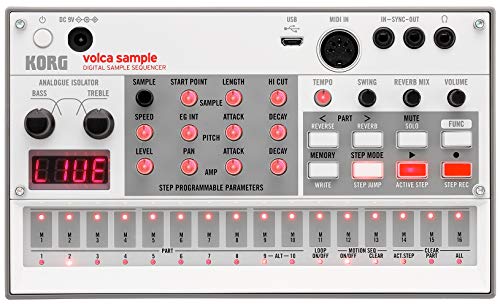
- 8-voice sample-based polyphony
- Pattern chaining and start delay
- Micro USB and librarian software
Best For: Portable sample sequencing and beat production
Portable Pick

- Four drum kits and four bass sounds
- Records layered patterns with mute controls
- Built-in speaker and wired headphone support
Best For: Beginners and portable beat making
Sampling Powerhouse
teenage engineering EP-133 K.O. II
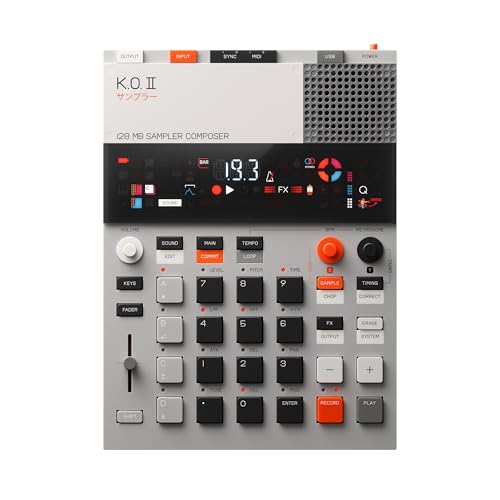
- Built-in microphone and line-in sampling
- Four groups with 99 patterns each
- Punch-in, master, and stereo effects
Best For: Sampling-focused beat makers and live performers
Analog Classic

- 16 analog drum sounds with global accent
- 64-step sequencer with repeat and mute tools
- 11 independent analog outputs
Best For: Studio producers seeking vintage analog rhythms
Flagship Classic – Roland TR-8S Rhythm Performer
The Roland TR-8S is a versatile choice for producers who want classic drum-machine sounds alongside modern sampling and sound-design tools. It combines circuit-modeled TR-808, 606, 909, 707, 727, and CR-78 sounds with sample import, detailed effects, and storage for up to 128 kits.
Best For: Producers and performers who want deep kit customization, authentic Roland sounds, and a performance-ready workflow.
Pros:
- Includes detailed circuit-modeled sounds from several iconic Roland drum machines.
- Supports mono and stereo sample import through the SD card slot.
- Offers per-instrument effects, master effects, and adjustable decay, tuning, sample start, speed, and direction.
- Stores instrument and master-effect settings with each kit.
Cons:
- Its broad feature set may be more than beginners need.
- Sample management requires an SD card, while the TR-EDITOR is a separate software workflow.
The TR-8S stands out among drum machines for combining recognizable Roland character with flexible sample-based production. It is a strong fit when hands-on performance and detailed sound shaping matter as much as classic rhythm tones.
Portable Pattern Lab – Korg Volca Drum Digital Percussion Synthesizer
Korg Volca Drum Digital Percussion Synthesizer w/ 16-step Sequencer and Active Step
Check Price On AmazonThe Korg Volca Drum is a compact digital percussion synthesizer for creating distinctive patterns without a large setup. Its six-part DSP synth engine, waveguide resonator, and 16-step sequencer provide a focused way to build and vary rhythms.
Best For: Mobile producers, beginners, and electronic musicians who want an affordable, portable drum machine with hands-on pattern tools.
Pros:
- Compact design includes a built-in speaker for portable music creation.
- Six-part DSP synthesis and a waveguide resonator support varied, resonant drum sounds.
- Active Step, Slice, and randomize functions encourage evolving and intricate patterns.
- Accent and choke functions add control over dynamics and part grouping.
Cons:
- The 16-step sequencer is more limited than longer pattern systems.
- Its sound-generation approach focuses on digital percussion rather than a broad sample library.
The Volca Drum is a practical entry point for experimental rhythm programming. It favors immediacy and portability, making it useful for sketching ideas, adding movement to loops, or performing compact electronic sets.
Pocket Rhythm & Bass – Roland AIRA Compact T-8 Beat Machine
The Roland AIRA Compact T-8 is a highly portable beat machine and bass synthesizer built around genuine TR-808, TR-909, and TR-606 sounds, plus TB-303 bass. It combines a 16-step workflow with pattern storage, performance controls, effects, and USB-C audio and MIDI connectivity.
Best For: Beginners, mobile producers, and performers who want Roland rhythm and bass sounds in a compact format.
Pros:
- Combines classic TR drum sounds with TB-303 bass synthesis.
- Supports up to 64 user patterns and patterns of up to 32 steps.
- Includes probability, sub-step, last-step, and velocity controls for detailed programming.
- Provides delay, reverb, overdrive, sidechain compression, MIDI, sync, and USB-C audio/MIDI.
Cons:
- Its compact design may offer fewer controls than larger standalone drum machines.
- The feature set centers on Roland-style rhythm and acid-oriented bass sounds.
The T-8 is one of the most convenient drum machines for quick ideas and portable performance. Its combination of TR tones, TB-303 bass, pattern variation, and built-in effects makes it especially appealing for acid, electronic, and beat-focused workflows.
Songwriter’s Workhorse – Alesis SR-18 Drum Machine
The Alesis SR-18 is a standalone drum machine designed for songwriters, live performers, and remix engineers who need a substantial built-in sound library. It includes 500 professional sounds, onboard effects, MIDI support, and pattern-focused performance features.
Best For: Songwriters and performers who want a dedicated drum machine with many onboard sounds, MIDI connectivity, and flexible power options.
Pros:
- Includes 500 sounds and built-in digital effects for added production flexibility.
- Pattern Play Mode lets you trigger different patterns directly from the pads.
- Provides programmable Drum Roll and tap-tempo functions.
- Supports MIDI connections to keyboards, computers, DAWs, and electronic drum kits.
Cons:
- Battery operation requires six AA batteries, which are not included.
- Its included sound library is less focused on the classic Roland circuit-modeling approach found in some newer drum machines.
The SR-18 remains a practical choice when you want a self-contained songwriting and performance tool. Its large sound selection, pad-triggered patterns, MIDI support, and included adapter make it useful both in a studio and away from one.
Expressive Analog Power – Arturia DrumBrute Impact
The Arturia DrumBrute Impact is a strong choice among drum machines for producers who want hands-on analog-style beat programming with dedicated sound-shaping control. Its metal construction, Song mode, and per-drum accent features make it suited to building dynamic patterns and arranging them into longer sequences.
Best For: Hands-on pattern programming, live performance, and analog-style drum production.
Pros:
- Provides a separate accent control for each drum.
- Song mode supports chaining patterns into arrangements.
- Optional Color sound-shaping is available on nearly all instruments.
- Metal alloy-steel construction offers a sturdy feel.
Cons:
- The Color control does not apply to the Cowbell.
- At 2.4 kg, it is less portable than the pocket-sized options in this roundup.
The DrumBrute Impact stands out when performance-oriented controls and pattern arrangement matter more than ultra-light portability. It is a practical pick for users who want a substantial dedicated drum machine with flexible sequencing features.
Pocket Beat Playground – teenage engineering PO-12 Rhythm
The teenage engineering PO-12 is one of the most portable drum machines available, combining synthesized and sampled drum sounds with a built-in sequencer. Its 16 punch-in effects, pattern chains, speaker, and battery operation make it convenient for sketching beats away from a studio.
Best For: Portable beat creation, quick musical sketches, and compact setups.
Pros:
- Combines synthesized and sampled drum sounds in a pocket-sized device.
- Includes 16 punch-in effects for performance-oriented sound changes.
- Supports 16 pattern chains for assembling tracks.
- Offers a built-in speaker and 3.5 mm line output.
Cons:
- Its compact format provides less physical space for controls than larger drum machines.
- It requires two AAA batteries for portable operation.
The PO-12 is best viewed as a highly portable idea generator rather than a full-size studio centerpiece. Choose it when instant access, battery operation, and playful sequencing are top priorities.
Sample-Based Sequencing – Korg Volca Sample 2
Korg Volca Sample 2 Digital Sample Sequencer Drum Machine w/Pattern Chain Mode and 16-step Sequencer
Check Price On AmazonThe Korg Volca Sample 2 is a compact sample-based drum machine for producers who want flexible sequencing in a lightweight format. It pairs 8-voice polyphony with pattern chaining, onboard reverb and filtering, expanded memory, and computer connectivity through its Micro USB port.
Best For: Sample-driven genres such as future bass, trap, and lo-fi hip hop, especially in portable setups.
Pros:
- Offers 8-voice polyphony for sample-based arrangements.
- Includes a 16-step sequencer with pattern chain and start-delay functions.
- Has double the memory of previous models for samples and longer recordings.
- Provides librarian software, Micro USB connectivity, and an integrated speaker.
Cons:
- It is sample-based rather than focused on built-in analog drum synthesis.
- The product notes do not specify warranty coverage; buyers should confirm it with the seller or manufacturer.
- It uses six AA batteries for battery-powered operation.
The Volca Sample 2 is a versatile option when loading and sequencing samples is central to your workflow. Its lightweight body, standalone speaker, and computer-friendly sample management make it especially useful for mobile production.
Portable Pick – Stylophone BEAT
The Stylophone BEAT is a compact, approachable choice for shoppers seeking portable drum machines. It combines four drum kits, four bass sounds, pattern recording, layered parts, and a built-in speaker in a lightweight plastic design.
Best For: Beginners, casual beat makers, and musicians who want a battery-powered rhythm machine for travel or quick ideas.
Pros:
- Compact design with four drum kits and four bass sounds.
- Records multiple patterns and layers, with mute controls for shaping arrangements.
- Click track and tempo lock help keep performances in time.
- Built-in speaker, volume control, and wired headphone support add flexibility.
Cons:
- Requires three AA batteries, which are not included.
- Its compact feature set may be limiting for advanced production workflows.
Choose the Stylophone BEAT if portability and straightforward rhythm creation matter more than extensive sequencing or sound-design options. It is a practical entry point for experimenting with drum patterns and bass parts.
Sampling Powerhouse – teenage engineering EP-133 K.O. II
The teenage engineering EP-133 K.O. II is a versatile option among drum machines for producers who want sampling, sequencing, and live performance controls in a portable unit. It includes a built-in microphone, 128MB of memory, pattern-based sequencing, and a broad selection of effects.
Best For: Beat makers and performers who want to sample microphones, instruments, records, or phone audio while building and arranging tracks on the device.
Pros:
- Samples through the built-in microphone or line input and supports resampling.
- Four groups with 99 patterns each provide substantial pattern-building capacity.
- Includes six master effects and 12 punch-in effects controlled by a multifunctional fader.
- Offers MIDI and sync connectivity, a built-in speaker, and USB-C power support.
Cons:
- Its wide feature set may require more time to learn than a basic drum machine.
- Runs on four AAA batteries, which may need regular replacement for portable use.
The K.O. II stands out when sampling and performance-oriented workflow are priorities. Its sequencer, effects, memory, and connectivity make it better suited to developing complete ideas than simply triggering preset drum sounds.
Analog Classic – Behringer RD-8
The Behringer RHYTHM DESIGNER RD-8 is built for producers who want a warm, vintage character from an analog drum machine. It provides 16 drum sounds, a 64-step sequencer, a dual-mode filter, and multiple outputs for external processing or multitrack recording.
Best For: Electronic musicians and studio producers seeking classic analog drum tones, hands-on sequencing, and flexible routing.
Pros:
- Analog sound engine delivers a warm, vintage, rich sound profile.
- Includes 16 drum sounds with additional parameters and global accent control.
- 64-step sequencer supports polymeter, step-repeat, note-repeat, mutes, solos, and real-time triggering.
- Eleven independent analog outputs support external processing or multitrack recording.
Cons:
- At 8.3 pounds, it is less convenient for portable use than compact battery-powered units.
- The analog-focused design may be less suitable for shoppers wanting sampling or melodic sequencing.
The RD-8 is a strong fit when authentic analog-style rhythm sounds and hands-on sequencing are central to your setup. Its independent outputs also make it a practical choice for studio integration and external effects processing.
How We Picked the Best Drum Machines
We selected these Drum Machines to represent a range of production styles, budgets, and experience levels. Our evaluation focuses on sound generation, sequencing depth, hands-on control, connectivity, portability, and how well each unit fits common studio or live-performance workflows. The list includes analog instruments, digital percussion synthesizers, sample sequencers, and compact beatmaking devices rather than treating every drum machine as the same type of tool.
Quick Comparison
| Best For | What to Prioritize |
|---|---|
| Live performance | Hands-on controls, pattern chaining, reliable outputs, and performance effects |
| Studio production | Sound variety, sequencing flexibility, MIDI, USB, and audio connectivity |
| Analog drum tones | Dedicated synth voices, tuning controls, filters, and distortion |
| Sampling | Sample memory, resampling, microphones or audio inputs, and fast editing |
| Portable beatmaking | Battery operation, compact size, built-in speaker, and immediate controls |
Key Buying Factors for Drum Machines
Sound Engine
Analog Drum Machines generally deliver distinctive, immediate tones with strong low-end character, while digital models can provide broader percussion palettes and more detailed sound shaping. Sample-based units are useful when you want realistic kits, imported sounds, or unconventional textures.
Sequencer and Performance Features
Look for step length, pattern storage, parameter locks, probability, motion recording, pattern chaining, and live step entry. These features determine whether a machine is mainly a rhythm box or a complete performance instrument.
Connectivity and Workflow
Check for MIDI input and output, USB, individual outputs, audio inputs, and synchronization options. A device with strong standalone features may be ideal for quick sessions, while broader connectivity matters when integrating synthesizers, controllers, or a computer.
Controls, Portability, and Power
Large dedicated controls are valuable for live adjustment, but compact devices can be better for travel and sketching ideas. Also confirm whether the unit uses batteries, USB power, or an external adapter, and whether its interface suits your preferred working style.
Who Should Buy Which Drum Machines?
Choose a performance-oriented machine if you want to improvise patterns, manipulate effects, and build complete live sets. Analog-focused options suit producers who value characterful kick drums, snares, and tactile sound shaping. Sample sequencers are better for producers working with recorded hits, loops, vocals, or field recordings.
Beginners should prioritize an intuitive interface, useful preset sounds, and a sequencer that makes experimentation easy. Experienced producers may prefer deeper automation, flexible routing, pattern chaining, and more extensive MIDI control. For travel or spontaneous ideas, compact battery-powered units offer the fastest path from a blank pattern to a usable beat.