Your first shortwave radio should make it easy to find stations, not leave you puzzling over controls. The right choice depends on where you’ll listen, how you want to power it, and whether you also need weather alerts.
These nine picks range from compact travel radios to larger home-friendly models. Use the buying guide below to narrow the field by features you’ll use.
Best 9 Shortwave Radios for Beginners Picks for 2026
Best for Home Listening
Veravoxes Bluetooth AM/FM/Shortwave Radio

- Manual and auto tuning with LCD signal display
- AC or four C-battery power
- Bluetooth input, wired headphone jack, and sleep timer
Best For: Home listeners who also stream phone audio
Best Simple Portable
XHDATA D226 AM/FM/Shortwave Radio
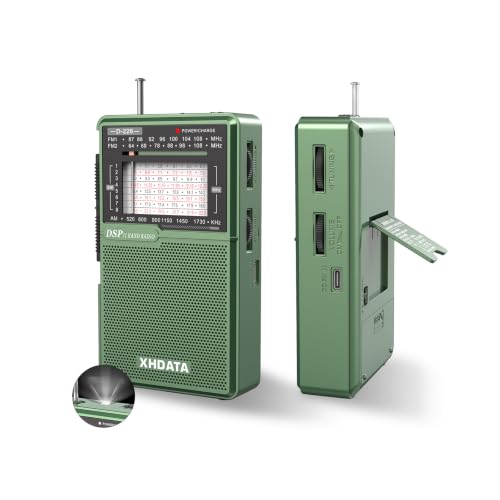
- Marked dial and manual tuning
- USB-C rechargeable or two-AA power
- Pocketable size with flashlight and stand
Best For: Travelers who prefer simple controls
Best for Band Exploration
C. Crane CC Skywave 2 Travel Radio

- AM/FM/SW, NOAA weather alerts, and aviation band
- Direct entry, selectable bandwidths, and 400 memories
- Two-AA operation; earphones and case included
Best For: Travelers interested in exploring multiple bands
Emergency-Ready Pick

- SW/AM/FM scanning plus NOAA reception
- USB-C, hand-crank, and solar charging
- Flashlight, SOS alert, and Bluetooth playback
Best For: Beginners building a camping or emergency kit
Simple Digital Pick
Rechargeable AM/FM/SW Radio with NOAA

- Automatic search and 100 presets
- SW/AM/FM and NOAA weather bands
- USB-C battery, Bluetooth, and headphone jack
Best For: Easy everyday listening and station presets
Growth-Potential Pick

- SW, LW, AM, and FM reception
- Direct entry and 1,000 memories
- External antenna and reception controls
Best For: Beginners interested in learning advanced tuning
Widest Shortwave Coverage
Handsider Rechargeable Pocket Radio

- Full-shortwave version with SW1/SW2 switch
- USB-C rechargeable 1200mAh battery
- Pocket-size body and headphone jack
Best For: Portable listening with broader shortwave coverage
Best with Extra Features
Veravoxes AC/Battery Shortwave Radio

- Large knob and analog tuning scale
- AC power or four C batteries
- Telescopic antenna and AUX input
Best For: Simple tabletop listening with backup battery power
Most Compact Carry
Ekevitte 3-Band Mini Pocket Radio

- Measures 3.94 x 0.91 x 2.36 inches
- USB-C rechargeable with wrist lanyard
- Shortwave range: 7.8–16.20 MHz
Best For: Walks and compact everyday carry
Best for Home Listening – Veravoxes Bluetooth AM/FM/Shortwave Radio
Among shortwave radios for beginners, this Veravoxes model suits listeners who want straightforward AM/FM/shortwave tuning alongside room-filling audio. Manual and auto tuning, an LCD signal-strength display, and a telescopic antenna make it practical for exploring stations at home.
Best For: Beginners who want a home radio with shortwave reception and Bluetooth audio from a phone.
Pros:
- Runs on AC power or four C batteries for flexible placement.
- Bluetooth 5.2 receiver, adjustable treble and bass, and a 3.5 mm headphone jack.
- Includes an alarm clock and a 10–120-minute sleep timer.
Cons:
- Bluetooth receives audio only; it cannot send sound to Bluetooth headphones or speakers.
- Four C batteries are not included.
Choose this for a home-first listening setup with useful extras; use wired headphones when you need private listening.
Best Simple Portable – XHDATA D226 AM/FM/Shortwave Radio
The XHDATA D226 is a compact option among shortwave radios for beginners who prefer a marked frequency dial over menus. It covers AM, FM, and shortwave, with a rear stand that helps keep it upright on a desk or nightstand.
Best For: Beginners who want a small, manually tuned radio for travel or everyday listening.
Pros:
- Clearly marked frequency panel and smooth tuning control.
- Built-in rechargeable battery with USB-C charging, plus a two-AA battery option.
- Includes a flashlight, rear stand, speaker, and 3.5 mm headphone jack.
Cons:
- AA batteries are not included.
- You must set the power selector to match the power source before use.
This is a practical pick if portability and simple controls matter more to you than digital tuning features.
Best for Band Exploration – C. Crane CC Skywave 2 Travel Radio
For beginners ready to explore beyond basic broadcasts, the CC Skywave 2 adds NOAA weather with alerts and VHF aviation to AM, FM, and shortwave. Its direct frequency entry, scanning, and memory presets give you several ways to find and revisit stations.
Best For: Curious travelers who want multiple bands and digital tuning options in a small radio.
Pros:
- Covers shortwave from 2300–26100 kHz, plus weather alerts and aviation broadcasts.
- Offers selectable bandwidths, fast or fine tuning, and 400 memories.
- Runs on two AA batteries and includes earphones, a carry case, and an external shortwave antenna jack.
Cons:
- AA batteries are not included; the compatible AC adapter is optional.
- It is not water resistant.
This model offers more room to grow than a basic three-band set, though its extra tuning controls may take time to learn.
Emergency-Ready Pick – Emgykit R11 Shortwave Radio
Among shortwave radios for beginners, the Emgykit R11 makes sense if you also want a camping and emergency device. It combines manual tuning and automatic scanning across SW, AM, and FM with NOAA weather reception.
Best For: New listeners who want shortwave alongside backup power and emergency tools.
Pros:
- Automatically scans and stores up to 70 stations per band across SW, AM, and FM.
- Built-in 4,000mAh battery charges by USB-C, hand crank, or solar power.
- Includes a flashlight, SOS alert, compass, Bluetooth playback, and a headphone jack.
Cons:
- Automatic scan results depend on local signal conditions.
- Hand-crank and solar charging are described as emergency charging options, not the primary everyday charging method.
This is the practical choice when preparedness matters as much as exploring shortwave. For routine use, USB-C charging is the straightforward option.
Simple Digital Pick – Rechargeable AM/FM/SW Radio with NOAA
For shoppers comparing shortwave radios for beginners, this rechargeable model offers straightforward digital controls, automatic station search, and a bright display. It covers SW, AM, FM, and NOAA weather frequencies without requiring you to tune every station from scratch.
Best For: Beginners who want easy station presets and a compact everyday listening radio.
Pros:
- Automatic and manual presets store up to 100 stations.
- USB-C rechargeable 1,250mAh battery is rated for up to 10–12 hours of listening.
- Offers a headphone jack, Bluetooth playback, TF card playback, and a flashlight.
Cons:
- Its listed SW coverage is 4.75–21.85 MHz rather than the wider range offered by some radios.
- Unlike a hand-crank model, the supplied features list USB-C charging as its charging method.
The presets and clear controls make this an approachable first radio. Choose it for convenient listening rather than for off-grid charging flexibility.
Growth-Potential Pick – QODOSEN DX-286 Portable Radio
The QODOSEN DX-286 is the most feature-rich option here for shoppers researching shortwave radios for beginners who expect to grow into more hands-on tuning. Its listed SW range is 1.711–27 MHz, and it also receives LW, AM, and FM.
Best For: Curious new listeners who want room to experiment with tuning and reception settings.
Pros:
- Offers direct frequency entry, multiple tuning modes, and 1,000 cross-band memories.
- Supports an external antenna and includes attenuation, amplifier, and antenna-switching controls.
- Compact body comes with a rechargeable battery, USB charging cable, and carrying accessories.
Cons:
- The extensive menus and reception controls may take more time to learn than a basic scanning radio.
- It is listed as not water-resistant.
If you want to learn how antenna and signal settings affect reception, the DX-286 gives you tools to explore. Beginners seeking only one-button scanning may prefer a simpler model.
Widest Shortwave Coverage – Handsider Rechargeable Pocket Radio
Among shortwave radios for beginners, this Handsider pocket model stands out for its full-shortwave version and straightforward FM, AM, SW1, and SW2 switch. It measures 4.1 x 1.2 x 2.85 inches, making it easy to carry around the house or outdoors.
Best For: Beginners who want a rechargeable pocket radio with more shortwave coverage than a limited-range model.
Pros:
- Full-shortwave version with separate SW1 and SW2 settings.
- Removable 1200mAh rechargeable battery charges via USB-C.
- Headphone jack allows private listening.
Cons:
- Small body may be less comfortable than a larger tabletop radio for extended dial tuning.
- No AC plug-in option is listed.
Choose this if shortwave range and pocket portability matter most; the simple controls also make it an approachable first radio.
If you are comparing shortwave radios for beginners primarily for home use, this Veravoxes model pairs an analog scale and large tuning knob with AC power. It can also run on four C batteries when you want to move it outdoors or keep it in an emergency kit.
Best For: Listeners who prefer a larger, easy-to-operate radio for a room, with battery power as an alternative.
Pros:
- Large rotary knob and analog scale avoid digital menus.
- Runs on AC power or four C batteries.
- Includes a telescopic antenna, bass controls, and an AUX input.
Cons:
- At 9.09 inches wide and 1.5 pounds, it is less pocket-friendly than the mini radios here.
- Four C batteries are required for battery operation.
This is the practical pick for a bedside, kitchen, or office setup rather than a coat pocket, especially if plug-in power and hands-on controls appeal to you.
For shortwave radios for beginners who want the smallest carry option in this roundup, the Ekevitte measures 3.94 x 0.91 x 2.36 inches and includes a wrist lanyard. Its three bands cover FM, AM, and shortwave, with a stated SW tuning range of 7.8–16.20 MHz.
Best For: Walks and everyday pocket carry when compact size matters more than broad shortwave tuning.
Pros:
- Compact body includes a wrist lanyard.
- 1200mAh rechargeable battery charges via USB-C.
- Adjustable antenna and 3.5mm earphone jack add listening flexibility.
Cons:
- Shortwave tuning is limited to the listed 7.8–16.20 MHz range.
- The seller recommends a better outdoor environment for shortwave reception.
Its portability is the draw, but check the stated shortwave range before buying if there are particular frequencies you hope to explore.
How We Picked These Shortwave Radios for Beginners
We focused on practical first-radio considerations: available bands, portability, power options, and controls a new listener can live with. The nine selected models cover pocket and tabletop-style choices, rechargeable and replaceable-battery designs, and radios with extras such as NOAA weather reception. We treated those extras as use-case features rather than automatic upgrades: a simpler radio can be a better first purchase if you mainly want to explore shortwave broadcasts.
Product names alone cannot establish reception quality, battery life, or ease of tuning. Check current specifications, included accessories, and recent owner feedback before ordering.
Quick Comparison: Match the Radio to the Job
For a small everyday-carry radio, start with the XHDATA D226 or one of the rechargeable pocket models. If travel and weather information matter, compare the C. Crane CC Skywave 2 with the portable models that list NOAA reception or alerts. For listening near an outlet while keeping battery backup, look at the AC-and-battery-powered options. The DX-286 is the feature-heavy choice for someone who wants more tuning tools and expects to grow into them.
Check the exact listing before deciding: similarly named portable radios can differ in charging method, battery inclusion, and weather-alert capability.
Key Buying Factors for Shortwave Radios for Beginners
Tuning and Frequency Coverage
Shortwave reception is more useful when you can locate and return to a frequency without guesswork. Look for a clear frequency display or readable dial, controls you can operate comfortably, and published shortwave coverage. “Full shortwave” is a listing claim, so compare the actual frequency ranges if particular broadcasts matter to you.
Power and Portability
Rechargeable radios reduce disposable-battery use, while replaceable batteries can be convenient on longer trips away from charging. AC operation suits a bedside or desk radio. If you plan to carry it, weigh pocket size against speaker volume and control size; the smallest set is not always the easiest to use.
Antenna and Listening Conditions
Shortwave signals vary with time of day, location, and interference from nearby electronics. An adjustable antenna and a quiet place to listen can matter as much as the radio itself. A headphone jack is useful for private listening and for hearing weaker signals. Don’t assume a weather-alert feature works like continuous monitoring unless the specifications say so.
Who Should Buy Which Shortwave Radios for Beginners?
Casual explorer: Choose a straightforward AM/FM/shortwave portable with controls and a power source you prefer. Traveler: Prioritize compact size and bands you’ll use; the CC Skywave 2 adds aviation and NOAA coverage. Camping or emergency-kit buyer: Compare NOAA functionality, battery flexibility, and charging access rather than relying on an “emergency” label. Future hobbyist: Consider the DX-286’s additional features, but budget time to learn its controls. Whichever you choose, verify the listed bands and power requirements for the specific model before buying.