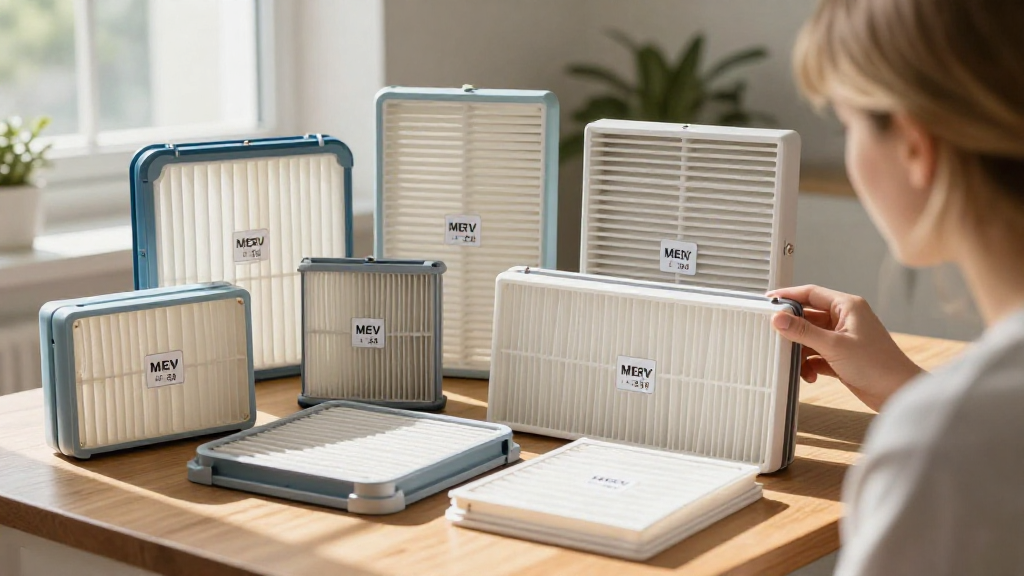
Choosing the right MERV rating for filters can significantly impact your indoor air quality.
But with so many options available, how do you determine which MERV rating is appropriate for your needs?
What is MERV and Why Does it Matter?
MERV stands for Minimum Efficiency Reporting Value.
It is a standard that measures the effectiveness of air filters.
The scale ranges from 1 to 16, with higher numbers indicating better filtration capabilities.
By understanding how to choose MERV rating, you can make informed decisions about your indoor air quality and filter efficiency.
Here are the main points of the MERV scale:
- MERV 1-4: Basic filtration suitable for window air conditioning units.
- MERV 5-8: More effective for residential applications, capable of capturing larger particles like dust and pollen.
- MERV 9-12: Designed for superior filtration, suitable for homes with pets or allergies.
- MERV 13-16: High-efficiency filters often used in hospitals and cleanrooms, effective at trapping small particles such as bacteria and smoke.
Now that we have established what MERV means, let’s dive into how to choose MERV rating based on various factors.
How to Choose MERV Rating: What Factors Should You Consider?
When considering how to choose MERV rating, it’s essential to weigh several important factors:
-
Air Quality Needs:
– How clean do you want your air to be?
– Do you suffer from allergies or respiratory issues?
– Are you concerned about indoor pollutants? -
HVAC System Compatibility:
– Will your HVAC system be able to handle a filter with a higher MERV rating?
– Higher-rated filters can restrict airflow, which may strain your HVAC system and lead to inefficiencies. -
Filter Longevity:
– How often will you need to change the filter based on the chosen MERV rating?
– Higher ratings may require more frequent replacements due to quicker accumulation of particles. -
Dust and Allergen Levels in Your Home:
– Consider your environment. Do you have pets?
– Live in an area with high pollen counts? These conditions may warrant a higher MERV rating. -
Your Budget:
– Higher MERV filters often come at a greater cost.
– Determine what fits within your budget while meeting your air quality needs.
What Are the Benefits of Filters with High MERV Ratings?
Once you understand how to choose MERV rating, it’s crucial to note the various advantages that come with higher-rated filters:
-
Improved Air Quality: Higher MERV filters enhance the air you breathe by capturing a broad range of contaminants.
-
Allergen Reduction: A filter with a MERV rating of 11 or higher is typically efficient in trapping allergens such as pollen, pet dander, and dust mites.
-
Better Odor Control: High-efficiency filters can help reduce unpleasant odors in your home.
-
Enhanced HVAC Efficiency: The right filter can also improve the overall efficiency of your heating and cooling system.
How to Choose MERV Rating for Specific Situations?
Different requirements call for different MERV ratings. Here’s a more situational breakdown:
Homes Without Special Needs
If you don’t have severe allergies or pets and live in a relatively clean air environment:
- Consider MERV 5 to 8.
- These filters will effectively trap average-sized particles and maintain acceptable air quality.
Homes with Allergies and Pets
If anyone in your household suffers from allergies or you have pets:
- Opt for filters rated between MERV 9 to 12.
- These filters provide better protection against allergens and fine particles.
Commercial and High-Risk Environments
For offices or healthcare settings where air quality is crucial:
- Filters rated MERV 13 to 16 are recommended.
- These filters effectively remove bacteria, dust, and smoke particles, providing a safer environment.
What Are the Common Misconceptions About MERV Ratings?
When learning how to choose MERV rating, it’s essential to dispel some common myths that may lead to poor decisions:
-
Higher is Always Better: While higher MERV filters do capture smaller particles, they may not always be suitable for every system.
-
MERV Ratings Correlate with Lifespan: A higher MERV rating doesn’t necessarily mean the filter will last longer. Some high-rated filters can clog more quickly.
-
One Size Fits All: The optimal MERV rating can vary widely depending on individual circumstances, including the environment and the specific needs of your HVAC system.
How Often Should You Change Your Filters Based on MERV Rating?
The frequency with which you should change your filters largely depends on the MERV rating you’ve selected:
- MERV 1-4: Change every three months.
- MERV 5-8: Change every three to six months.
- MERV 9-12: Change every one to three months.
- MERV 13-16: Change every one to two months.
In Conclusion: How to Choose MERV Rating That Fits Your Needs
When it comes to air filters, understanding how to choose MERV rating is vital for ensuring excellent indoor air quality.
With the right filter in place, you can reduce allergens, improve HVAC efficiency, and breathe easier in your home or workplace.
Summary Points:
- Assess Your Air Quality Needs: Know what contaminants you need to filter out.
- Check HVAC Compatibility: Ensure your system can handle the filter you select.
- Plan for Replacement: Factor in how often you’ll need to replace your filter.
- Consider Your Budget: Find a balance between cost and air quality needs.
By following these guidelines, you’ll be well-equipped to select the MERV rating that meets your specific air filtration requirements.
Happy filtering!