When you’re setting up your home studio, choosing the right audio interface can make all the difference in your recording quality. With so many options out there, it can be challenging to know which one suits your needs best. This guide will walk you through the top 10 audio interfaces designed specifically for beginners like you, ensuring you have the tools to start your audio journey on the right foot. Let’s explore your options.
Focusrite Scarlett Solo 3rd Gen USB Audio Interface

If you’re a guitarist, vocalist, or podcaster looking to kickstart your home studio, the Focusrite Scarlett Solo 3rd Gen USB Audio Interface is an excellent choice. This compact interface delivers studio-quality sound with high-performance mic pre-amps and switchable Air mode for enhanced clarity. You’ll appreciate the two high-headroom instrument inputs that prevent clipping and distortion. With 24-bit/192kHz recording capabilities, your audio retains its sonic qualities. It connects easily to your Mac or PC via USB, eliminating the need for external power. Plus, it comes with essential software and a three-year warranty, ensuring you’re covered.
Best For: Guitarists, vocalists, podcasters, and producers looking for a compact and high-quality audio interface to enhance their home studio setup.
Pros:
- High-performance mic pre-amps produce brighter recordings.
- Compact design allows for easy portability and setup.
- Includes essential software for a complete recording experience.
Cons:
- Limited to two inputs, which may not suffice for larger setups.
- No MIDI input/output, limiting connectivity with other devices.
- Some users may find the software bundle basic compared to other interfaces.
Focusrite Scarlett Solo Studio USB Audio Interface Bundle

The Focusrite Scarlett Solo Studio USB Audio Interface Bundle is perfect for aspiring musicians, songwriters, and podcasters looking to achieve studio-quality recordings at home. With its 120dB dynamic range and Air mode, your vocals and guitars will shine with clarity and presence. This bundle includes a CM25 MkIII condenser microphone, SH-450 headphones, and a complete recording toolkit featuring industry-leading software like Pro Tools Intro+ and Ableton Live Lite. Plus, it’s compatible with various devices and supports a maximum sample rate of 192 kHz. With a 3-year warranty and 24/7 support, you’re set for your recording journey.
Best For: Aspiring musicians, songwriters, and podcasters looking for a complete home recording solution.
Pros:
- Studio-quality sound with a 120dB dynamic range enhances recordings.
- Includes essential software like Pro Tools Intro+ and Ableton Live Lite for versatile recording options.
- User-friendly setup with 24/7 support and a detailed Easy Start guide.
Cons:
- Limited to two channels, which may not be sufficient for larger recording setups.
- Requires a computer for functionality, limiting portability.
- Headphones may not be suitable for professional mixing due to their performance level.
Focusrite Scarlett 2i2 4th Gen USB Audio Interface for Recording

For aspiring musicians and podcasters, the Focusrite Scarlett 2i2 4th Gen USB Audio Interface stands out as an ideal choice. It delivers studio-quality sound with a dynamic range of 120dB, utilizing the same converters found in major studios. You’ll appreciate features like Auto Gain for optimal levels and Clip Safe to prevent distortion. The Air mode enhances your vocals and guitars, helping you achieve that signature sound. Plus, it comes bundled with excellent software like Pro Tools Intro+ and Ableton Live Lite, making it easy to engage in recording without any technical hassles. Start creating your best work today!
Best For: Aspiring musicians, podcasters, and streamers looking for high-quality, user-friendly recording solutions.
Pros:
- Studio-quality sound with a dynamic range of 120dB, leveraging professional-grade converters.
- User-friendly design allows for quick setup and seamless connectivity for mics and instruments.
- Comprehensive software bundle including Pro Tools Intro+, Ableton Live Lite, and more for enhanced recording capabilities.
Cons:
- Limited inputs may not be suitable for larger recording setups or multi-instrument sessions.
- No MIDI input/output, which may restrict some users who want to integrate MIDI devices.
- Software compatibility may vary depending on the user’s operating system and hardware specifications.
PreSonus AudioBox Go Creator Studio Recording Bundle

Looking to kickstart your home studio with all the essentials? The PreSonus AudioBox Go Creator Studio Recording Bundle has you covered. This ultra-compact package includes a 2×2 USB-C audio interface with 24-bit/96 kHz recording, the PreSonus M7 condenser microphone for warm sound, and HD7 monitoring headphones for precise audio. Plus, you’ll get Studio One 6 Artist Edition software, compatible with major DAWs. With everything you need to produce studio-quality recordings, this bundle is perfect for beginners keen to immerse themselves in the world of music production. Get ready to release your creativity!
Best For: Beginners looking to set up a home studio with all the essential tools for music production.
Pros:
- All-in-one bundle includes audio interface, microphone, headphones, and software, making it convenient for newcomers.
- High-quality recording capabilities at 24-bit/96 kHz ensure professional sound quality for your projects.
- Compatibility with major DAWs allows for flexibility in choosing your preferred music production software.
Cons:
- Limited input options with only one mic/line combo input and one instrument input may not suffice for more complex setups.
- Basic software edition may lack some advanced features found in higher-tier versions of Studio One.
- Headphones may not suit all preferences as they are designed primarily for monitoring rather than casual listening.
PreSonus AudioBox USB 96 Studio Recording Package

Designed specifically for aspiring musicians and producers, the PreSonus AudioBox USB 96 Studio Recording Package offers everything you need for home recording in one convenient bundle. This package features a durable AudioBox USB 96 audio/MIDI interface, perfect for capturing vocals and instruments. You’ll also get the versatile M7 large-diaphragm condenser microphone, ideal for both vocals and acoustic sounds. The included HD7 headphones guarantee you can mix and monitor without disturbing anyone. Plus, with Studio One Artist and Studio Magic software—valued over $1000—you’ll have professional tools at your fingertips, along with all necessary cables and a desktop mic stand.
Best For: Aspiring musicians and producers looking for a complete home recording solution in one package.
Pros:
- Comprehensive package includes an audio interface, microphone, headphones, and software, making it ideal for beginners.
- High-quality components like the M7 condenser microphone and HD7 headphones ensure professional sound capture and monitoring.
- Valuable software bundle with Studio One Artist and Studio Magic offers creative tools worth over $1000.
Cons:
- Limited upgrade options for the audio interface if users want to expand their setup in the future.
- May require additional accessories such as pop filters or mic stands for optimal use, which are not included.
- Learning curve for beginners unfamiliar with audio recording software and equipment.
Audio Interface 2X2 24-bit/192kHz for PC/Mac/iOS Recording

The PIYONE Audio Interface Q2-Alloy Red stands out as an excellent choice for aspiring musicians and podcasters seeking a reliable entry point into home recording. With its 2X2 configuration and 24-bit/192kHz audio resolution, you’ll enjoy studio-quality sound on your PC, Mac, or iOS device. The plug-and-play USB C setup guarantees easy connectivity, while two XLR/TRS combo jacks offer flexible input options. Plus, the integrated 48V phantom power supports demanding microphones, and the zero-latency monitoring feature allows for seamless tracking. Its elegant design and built-in headphone jack make this interface a perfect addition to your home studio.
Best For: Aspiring musicians and podcasters looking for a reliable and high-quality audio interface for home recording.
Pros:
- Easy Setup: Plug-and-play USB C connectivity eliminates the need for additional drivers, making it user-friendly.
- Studio-Quality Sound: Offers 24-bit/192kHz audio resolution for professional-grade recordings.
- Integrated Phantom Power: Supports demanding microphones with 48V phantom power for enhanced audio capture.
Cons:
- Limited Inputs: Only two XLR/TRS combo jacks may not be sufficient for users needing multiple simultaneous inputs.
- Weight: At 0.74 kg, it may feel slightly heavier compared to some other portable audio interfaces.
- Limited Warranty Information: Warranty details are only available upon request, which might be inconvenient for some buyers.
Fender Quantum Creator Bundle Home Recording Kit
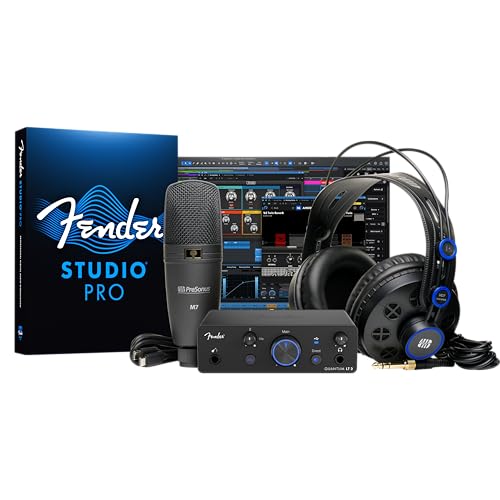
For aspiring musicians and podcasters seeking an all-in-one solution, the Fender Quantum Creator Bundle Home Recording Kit stands out as an exceptional choice. This kit includes the Quantum LT 2 USB-C interface, M7 condenser microphone, HD7 headphones, XLR cable, mic stand, and the Fender Studio Pro software. You’ll capture vocals and instruments with warmth thanks to the M7 mic, while the HD7 headphones guarantee comfort during long sessions. Plus, its plug-and-play setup and low-latency recording make it easy for beginners. Compact and portable, this bundle is perfect for any home studio, dorm room, or rehearsal space.
Best For: Aspiring musicians and podcasters looking for an all-in-one home recording solution.
Pros:
- High-quality M7 condenser microphone delivers clear and warm sound for vocals and instruments.
- Compact and portable design makes it ideal for various environments, including home studios and travel.
- Plug-and-play setup with low-latency recording features simplifies the process for beginners.
Cons:
- Limited advanced features may not satisfy professional users or those with more complex recording needs.
- The bundled software may require a learning curve for users unfamiliar with music production.
- HD7 headphones, while comfortable, may lack the premium sound quality found in higher-end models.
MAONO USB Audio Interface for PC (PS22 Lite Black)

If you’re looking to elevate your home studio setup without breaking the bank, the MAONO PS22 Lite USB Audio Interface is an excellent choice for beginners. With a 24-bit/192kHz resolution, it captures audio with impressive clarity. You can easily connect condenser and dynamic microphones, thanks to its 56 dB preamp and 48V phantom power. The compact design and user-friendly features, like the dynamic light ring and intuitive modes, make setup a breeze. Plus, its compatibility with Mac, Windows, and iPads guarantees versatility. With the included USB cable and 1-year warranty, you’re all set for your recording journey!
Best For: Beginners looking to enhance their home studio setup with an affordable and user-friendly audio interface.
Pros:
- Compact and lightweight design for easy portability.
- High-resolution 24-bit/192kHz audio capture for clear recordings.
- Compatible with multiple devices including Mac, Windows, and iPads.
Cons:
- Limited advanced features compared to higher-end models.
- May require additional software for optimal functionality.
- Only includes a 1-year warranty, which may be less than some competitors.
M-AUDIO M-Track Duo USB Audio Interface for Recording and Streaming

Compact and portable, the M-Audio M-Track Duo USB audio interface is perfect for beginners looking to plunge into recording and streaming. With dual XLR, line, and instrument inputs, it offers versatile sound recording options. The 48kHz audio resolution guarantees high-quality results, while zero-latency monitoring lets you hear your performance in real-time. USB-powered and compatible with major DAWs, it’s ideal for music creation on both Mac and PC. Plus, it comes with MPC Beats software to jumpstart your production journey. Weighing only 0.3 kg, you can easily take it anywhere your creativity leads you.
Best For: Beginners looking for an affordable and portable audio interface for recording and streaming.
Pros:
- Compact and lightweight design makes it easy to transport.
- Offers versatile connectivity with dual XLR, line, and instrument inputs.
- Includes MPC Beats software to help kickstart music production.
Cons:
- Limited maximum sample rate of 48 kHz may not satisfy advanced users.
- Lacks MIDI input/output, limiting integration with MIDI devices.
- Only provides a 1-year manufacturer warranty, which may be shorter than competitors.
M-AUDIO M-Track Solo USB Audio Interface for Recording and Podcasting
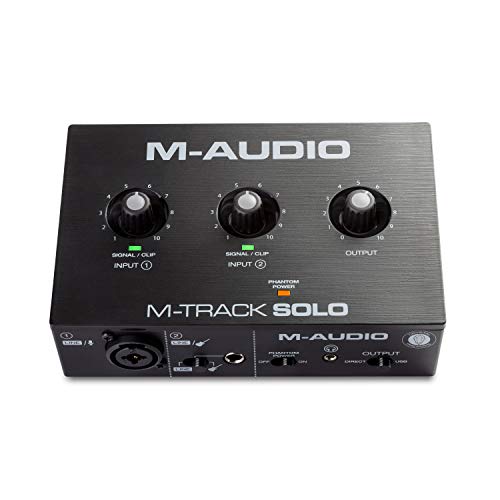
The M-AUDIO M-Track Solo USB Audio Interface is perfect for beginner musicians and podcasters who want to achieve high-quality recordings without breaking the bank. With its compact design, you can easily set it up on your Mac or PC. It features XLR, Line, and DI inputs, allowing you to record multiple sources simultaneously. Enjoy crystal-clear 48kHz audio resolution and zero-latency monitoring through its headphone output. Plus, it comes with MPC Beats software for added production power. Powered via USB, it’s a hassle-free choice that fits right into your home studio setup. Get started and elevate your audio game today!
Best For: Beginner musicians and podcasters looking for an affordable and high-quality audio recording solution.
Pros:
- Compact and portable design makes it easy to use with Mac and PC.
- Supports multiple input types (XLR, Line, and DI) for versatile recording options.
- Includes MPC Beats software for enhanced music production capabilities.
Cons:
- Limited to 2-channel recording, which may not suffice for larger projects.
- Requires a USB connection, which may limit placement options.
- Lacks advanced features found in more expensive audio interfaces.
Factors to Consider When Choosing Audio Interfaces for Home Studio Beginners
When you’re choosing an audio interface for your home studio, there are several key factors to keep in mind. You’ll want to take into account audio quality specifications, input and output options, and compatibility with your software. Plus, think about portability, design, and the types of connectivity available to guarantee it fits your setup seamlessly.
Audio Quality Specifications
Choosing the right audio interface for your home studio can considerably impact the quality of your recordings, especially if you’re just starting out. Look for interfaces with higher resolutions like 24-bit/192kHz, as they capture a broader dynamic range and finer detail. A dynamic range of around 120dB is ideal, ensuring you get clearer recordings without distortion. If you plan to use condenser microphones, make sure your interface has phantom power (+48V) to operate them effectively. Zero-latency monitoring is another essential feature, allowing you to hear inputs in real-time without delays. Finally, pay attention to the built-in preamps; high-quality ones can enhance audio clarity and reduce noise, helping you avoid clipping and distortion in your recordings.
Input and Output Options
Selecting the right input and output options is essential for maximizing your home studio’s recording potential. First, consider the number of inputs and outputs; this determines how many instruments or microphones you can connect simultaneously. Look for combo XLR/TRS inputs to accommodate both microphones and instruments, enhancing your recording versatility. If you plan on using condenser microphones, make certain the interface provides phantom power (48V) to operate them effectively. Also, check for balanced TRS outputs, which help eliminate noise when connecting to studio monitors. Finally, consider interfaces with dedicated instrument inputs. These prevent clipping and distortion, allowing for high-headroom recording of guitars and bass, guaranteeing you capture the best sound quality possible.
Compatibility With Software
While you engage in building your home studio, ensuring your audio interface is compatible with your software is essential for a smooth recording experience. Start by checking if the interface works with your operating system—be it Mac, Windows, or iOS—to prevent connectivity headaches. Look for interfaces that support popular digital audio workstations (DAWs) like Pro Tools, Ableton Live, and Cubase, as this will make your recording process more efficient. Additionally, see if the interface comes with bundled software, including plugins and virtual instruments, to enhance your creativity. It’s also vital that the interface supports the necessary sample rates and bit depths, like 24-bit/192kHz, and has the right connectivity options, like USB-C or USB-A, for seamless integration.
Portability and Design
An audio interface’s portability and design can greatly impact your recording experience, especially if you plan to work in different locations. Look for compact models that weigh around 0.74 kg to 3.02 pounds, making them easy to transport for on-the-go sessions. Many interfaces feature a plug-and-play design with USB connectivity, allowing for quick setup without needing extra drivers or power sources. Their dimensions often fit well on a desk or in a travel bag, with common sizes like 1.71D x 5.65W x 3.77H inches. Ergonomic designs may include LED indicators for visibility in low light and lightweight materials for comfort during extended use. Integrated headphone outputs and direct monitoring help you track audio without latency, enhancing portability.
Connectivity Types Available
When choosing an audio interface for your home studio, understanding the connectivity types available is essential for maximizing your recording potential. USB connectivity is the most common option, offering a straightforward plug-and-play setup for both Mac and PC users. USB-C ports are gaining traction because they support high-speed data transfer and power through a single cable. Some interfaces even combine USB and MIDI connectivity, giving you the flexibility to connect various instruments and devices. For best audio quality, look for balanced TRS outputs to minimize noise and interference when hooking up studio monitors. Additionally, compatibility with mobile devices through USB and Lightning connectors can make it easier for you to record on the go.
Included Software Bundles
After considering connectivity options, another important factor to look at is the included software bundles that come with many audio interfaces. Many of these bundles feature industry-standard recording software, like Pro Tools Intro+, Ableton Live Lite, and Cubase LE, which can greatly boost your recording experience. Some also include additional tools, such as mastering plugins and virtual instruments, giving you a thorough toolkit for music production without extra costs. The quality of the software can vary, with some packages valued over $1000, offering extensive features for both beginners and experienced users. Make sure the software is compatible with major digital audio workstations (DAWs) and that updates and support are available to enhance your recording capabilities.
Phantom Power Requirements
Choosing an audio interface without considering phantom power could leave you unable to use condenser microphones, which are essential for capturing high-quality sound. These microphones require a voltage of +48V to function effectively. When you’re selecting an interface, check for a switchable phantom power feature, allowing you to enable or disable it as needed. Make sure it provides sufficient phantom power output for the number of condenser mics you plan to use simultaneously. This capability can greatly enhance your recording quality, as high-end studio-grade microphones deliver clearer, more detailed audio. Look for interfaces that specify their phantom power capabilities regarding voltage and multi-channel support to guarantee you get the best setup for your home studio.
Budget-Friendly Choices
Finding the right audio interface for your home studio doesn’t have to strain your wallet, especially with plenty of budget-friendly options available. When choosing, aim for 24-bit resolution and a sample rate of at least 96 kHz to guarantee quality recordings. Many affordable models also include essential features like phantom power for condenser mics and zero-latency monitoring, which enhance your recording experience. Don’t overlook bundled software; some interfaces come with professional-grade DAWs and plugins, adding great value. Additionally, look for compact and portable designs, perfect for limited spaces or on-the-go creators. With price points typically ranging from $50 to $200, you’ll find options that meet your needs without sacrificing vital recording capabilities.