Choosing the right antenna can make a bigger difference than upgrading the radio itself. The best active shortwave radio antennas can improve weak signal pickup, reduce noise, and make listening far more enjoyable.
Below, you’ll find a focused roundup of 10 options for shortwave, SWL, HAM, and SDR use, along with a practical guide to help you match the right antenna to your space, budget, and listening goals.
Best 10 Active Shortwave Radio Antennas Picks for 2026
Best for Noise Rejection
MLA-30 Loop Antenna Active Receiving Antenna
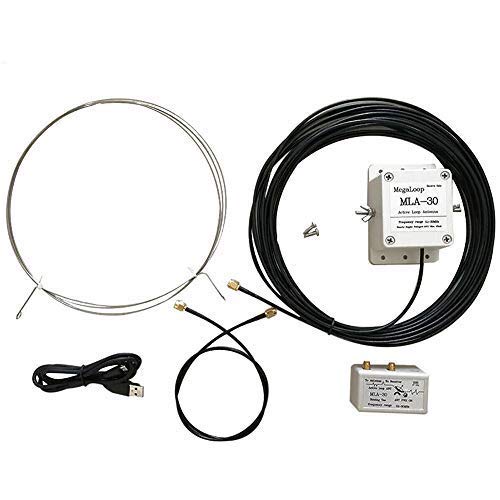
- 100kHz–30MHz coverage for SWL, HAM, and SDR
- Low-noise amplifier helps boost weak signals
- Compact active loop suits balconies and rooftops
Best For: Shortwave listeners and SDR users who want a compact receiving antenna with strong interference rejection.
Best for Easy Setup
XHDATA AN-80 Shortwave Reel Antenna
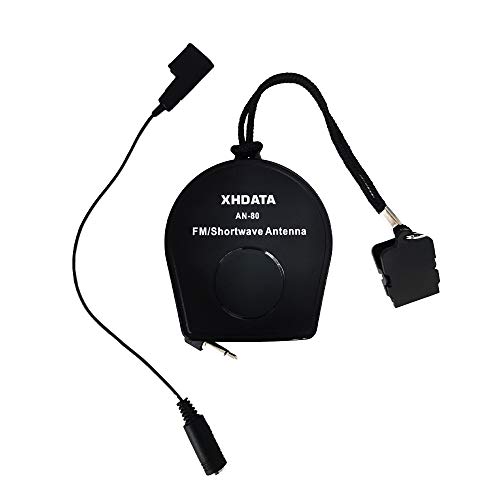
- 720 cm extension helps improve signal placement
- Works with FM/SW radios, including no-jack models
- Lightweight and pocketable for travel
Best For: Listeners who want a simple, portable antenna upgrade with quick setup.
Best Budget
MLA30+ Upgraded Active Loop Antenna
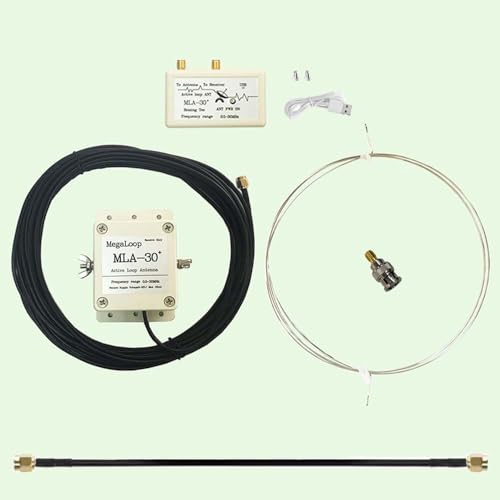
- Up to 30 dB noise suppression for cleaner reception
- 0.5-30MHz coverage for SWL and HAM listening
- Compact, rainproof, USB-powered design
Best For: SWL and HAM listeners who need a compact receive-only antenna for noisy urban locations.
Best for Wideband SDR Listening

- 0.1-180MHz coverage for LW/MW/SW/FM/VHF
- Adjustable gain with FM strong-signal control
- Compact 55cm loop with battery-powered feed box
Best For: SDR listeners and shortwave hobbyists who want a compact broadband active loop.
Best for Weak-Signal Rejection

- Covers SW and MW bands for broad listening
- Built-in amp and noise filter help reduce interference
- Portable directional loop with included cables
Best For: SWL and ham radio listeners who want a compact active loop antenna with better noise rejection.
Best Wideband Active Loop
K-480WLA Portable Shortwave Loop Antenna

- 0.5-500MHz wideband receive coverage
- Built-in MW and FM bandstop filters
- Adjustable gain with portable loop design
Best For: SDR listeners and radio hobbyists who want a broad-coverage active loop with filtering.
Best for Noise Reduction
LF-901 Portable Active Loop Antenna

- Active loop design reduces interference for cleaner reception
- Covers MW and shortwave bands from 10KHz–30MHz
- Rechargeable battery and adapters add setup flexibility
Best For: Listeners in noisy urban spaces who want a flexible receive-only antenna setup.
Best for Urban Noise Rejection
GA490 Portable Shortwave Active Loop Antenna

- 100kHz-179MHz coverage for MW, SW, and air-band listening
- Built-in amplification and noise suppression for urban RF noise
- Compact 50cm loop works well on balconies and rooftops
Best For: City listeners who need a compact active loop antenna to improve reception in noisy spaces.
Best Heavy-Duty Pick
GA800 Active Loop Shortwave Antenna
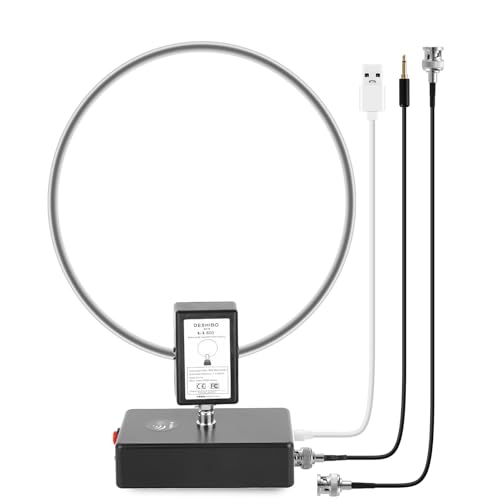
- No tuning required for quick setup
- Covers LW, MW, SW, FM, air, and V band
- Directional loop helps cut noise
Best For: Indoor listeners and ham operators who want a simple, low-noise active receiving antenna.
Best Simple Pick
GA800 Portable Active Loop Antenna

- No tuning required for simple, beginner-friendly use
- Built-in amplification and noise suppression
- Compact 10-inch loop with 10kHz-159MHz coverage
Best For: Beginners and portable listeners who want a quick, no-fuss active loop antenna.
Best for Noise Rejection – MLA-30 Loop Antenna Active Receiving Antenna
MLA-30 Loop Antenna Active Receiving Antenna 100kHz - 30MHz for Short Wave Radio
Check Price On AmazonIf you want one of the more practical active shortwave radio antennas for cramped setups, the MLA-30 is built to help pull in weak signals while cutting down nearby interference. Its wide 100kHz–30MHz coverage makes it a flexible match for SWL, HAM, and SDR receivers, especially when you need better reception in noisy urban environments.
Best For: Shortwave listeners, amateur radio users, and SDR hobbyists who need a compact receiving antenna with strong noise rejection.
Pros:
- Wide 100kHz–30MHz coverage for shortwave, medium wave, and HAM use
- Active loop design with low-noise amplification for cleaner reception
- Directional performance helps reduce interference and improve SNR
- Compact size works well for balconies, rooftops, and indoor installs
Cons:
- Receiving-only design, so it is not meant for transmitting
- Performance depends on placement and local interference conditions
- Requires a bit of setup and positioning to get the best results
For buyers comparing active shortwave radio antennas, this MLA-30 stands out for its combination of broad coverage, compact form factor, and interference reduction. It is a sensible pick if your main goal is improving receive performance rather than adding a large outdoor antenna.
Best for Easy Setup – XHDATA AN-80 Shortwave Reel Antenna
If you want a simple way to boost reception, the XHDATA AN-80 is a practical add-on for active shortwave radio antennas use cases. It works as a lightweight external whip/reel antenna for FM and SW radios, including models without an antenna jack, so it’s a flexible option for travel, casual listening, and everyday signal improvement.
Best For: Radio listeners who want a portable, low-fuss antenna that can improve reception without a complicated install.
Pros:
- Extends up to 720 cm for better placement and signal pickup
- Works with FM and shortwave radios, even if there’s no antenna jack
- Includes a spring-loaded clip for quick hookup
- Small, lightweight design is easy to pack for travel
Cons:
- Passive design, so it won’t amplify weak signals on its own
- Performance depends heavily on placement and local conditions
For buyers comparing active shortwave radio antennas, the AN-80 stands out as a low-cost, portable way to improve reception without adding bulk. It’s a strong pick if you value convenience and flexibility over advanced tuning features.
Best Budget – MLA30+ Upgraded Active Loop Antenna
If you want active shortwave radio antennas that can pull usable signals out of a noisy urban environment, the MLA30+ is built for that job. Its 0.5-30MHz coverage, directional loop design, and low-noise amplifier make it a practical pick for SWL and HAM listeners working with limited space.
Best For: SWL and HAM users in apartments, dense neighborhoods, or other high-interference locations who need better signal clarity without a large outdoor wire.
Pros:
- Up to 30 dB noise suppression helps improve weak-signal reception
- Wide 0.5-30MHz range covers medium-wave and shortwave listening
- Compact, modular design is easy to mount on balconies or rooftops
- USB-powered operation is simple to run from a charger or power bank
Cons:
- Receive-only design, so it is not suitable for transmitting
- Performance still depends on placement and nearby interference sources
- Best results usually require careful antenna orientation
For buyers comparing active shortwave radio antennas, this model stands out for its noise rejection and compact installation rather than raw long-range size. It is a strong fit if your main goal is cleaner reception in a crowded RF environment.
Best for Wideband SDR Listening – K-180WLA Active Loop Antenna
If you want one of the more versatile active shortwave radio antennas for a single-receiver setup, the K-180WLA stands out for its unusually broad 0.1-180MHz coverage and built-in active preamp. It is a compact magnetic loop option that fits smaller spaces while still targeting LW, MW, SW, FM, and even VHF users.
Best For: SDR listeners and shortwave hobbyists who need a compact, broadband active loop with strong coverage and easy outdoor mounting.
Pros:
- Wide 0.1-180MHz coverage supports long wave through VHF listening
- Adjustable gain and FM attenuation help in strong-signal environments
- Compact 55cm loop works well on balconies, rooftops, and windows
- Built-in battery and waterproof feed box simplify outdoor use
Cons:
- Active design may be overkill if you only need basic HF reception
- Best performance depends on careful placement and setup
- Feeder length and power/battery management add some complexity
For buyers comparing active shortwave radio antennas, this model is appealing because it combines broad coverage, adjustable gain, and a portable loop form factor. It is especially useful if you want one antenna to cover multiple bands without giving up too much convenience.
Best for Weak-Signal Rejection – GA450 Active Loop Antenna
If you want one of the more capable active shortwave radio antennas for compact listening spaces, the GA450 is built to help pull in SW and MW signals with less household noise. Its loop design, built-in amplifier, and portable size make it a practical upgrade for listeners who want cleaner reception without a complex install.
Best For: SWL and ham radio enthusiasts who need a portable indoor/outdoor loop antenna with better interference rejection.
Pros:
- Covers shortwave and medium wave bands for broad listening use
- Active amplification and noise filtering can improve weak-signal reception
- Compact, directional loop design helps with targeting stations and reducing interference
- Includes BNC cables and USB charging for easier setup
Cons:
- Loop size is small, so it may not match larger antennas for ultimate gain
- Requires power and charging, unlike passive antenna options
- Directional tuning may take some experimentation to use effectively
Overall, the GA450 is a strong pick if you need active shortwave radio antennas that prioritize noise reduction, portability, and easy placement over maximum size and complexity. It fits especially well for listeners who want a flexible loop antenna that works indoors or outside.
Best Wideband Active Loop – K-480WLA Portable Shortwave Loop Antenna
If you want one of the more flexible active shortwave radio antennas for mixed-band listening, the K-480WLA is built to cover a very wide span from LF through VHF. Its built-in bandstop filters, adjustable gain, and compact loop design make it a practical choice for listeners trying to tame interference in challenging locations.
Best For: SDR users, shortwave listeners, and ham radio hobbyists who need a wideband active loop with filtering and outdoor-friendly setup.
Pros:
- 0.5-500MHz coverage supports LW, MW, SW, FM, AIR, VHF, UHF, and 6m use
- Built-in MW and FM bandstop filters help reduce out-of-band interference
- Continuously adjustable gain gives you more control over signal levels
- Compact loop and waterproof housing suit balconies, rooftops, and outdoor installs
Cons:
- Wideband designs can still require careful placement to avoid local noise
- Outdoor mounting is easier than indoor use, but it still takes some setup space
- Not the simplest pick if you only need a basic single-band receive antenna
Overall, the K-480WLA stands out among active shortwave radio antennas because it combines broad frequency coverage with built-in filtering in a receiver-focused loop design. That makes it a strong option if you want one antenna for experimenting across multiple bands without giving up interference control.
Best for Noise Reduction – LF-901 Portable Active Loop Antenna
If you want active shortwave radio antennas that help cut through urban interference, the LF-901 is built around an active loop design with broad 10KHz–30MHz coverage. Its rechargeable battery, included adapters, and 10-meter feed cable make it a practical pick for listeners who need a flexible receive-only antenna setup.
Best For: Shortwave listeners and ham radio users who want a portable, noise-resistant antenna for apartments, balconies, or other limited-space setups.
Pros:
- Active loop design helps reduce noise and improve signal clarity
- Wide frequency range covers MW and shortwave bands
- Includes multiple adapters for different radio models
- Rechargeable battery and 10-meter cable improve placement flexibility
Cons:
- Receive-only design may not suit transmit-focused users
- Setup is more involved than a simple whip antenna
Overall, the LF-901 stands out among active shortwave radio antennas for buyers who care more about cleaner reception than compact simplicity. If your listening spot is plagued by household or city noise, this antenna’s active loop approach and accessory bundle make it a sensible, versatile choice.
Best for Urban Noise Rejection – GA490 Portable Shortwave Active Loop Antenna
If you live in a dense area and want stronger, cleaner reception, this is one of the more practical active shortwave radio antennas to consider. The GA490 portable active loop is designed to pull in MW, SW, and air-band signals while helping reduce interference from buzzing, cluttered RF environments, and limited-installation spaces.
Best For: City listeners, SWL hobbyists, and ham users who need a compact outdoor or balcony antenna with built-in amplification and noise suppression.
Pros:
- Wide 100kHz-179MHz coverage handles MW, SW, air, and more
- Built-in amplification and noise suppression help in noisy urban settings
- Compact 50cm loop is easy to mount on balconies, rooftops, or outdoors
- Includes battery power and adapters for flexible setup with many receivers
Cons:
- Not the best choice if you want a large fixed antenna for maximum reach
- Setup still requires some assembly and placement adjustment for best results
- Performance depends on receiver compatibility and local interference levels
For buyers comparing active shortwave radio antennas, the GA490 stands out more for noise handling and space-saving practicality than sheer size. It makes the most sense if you need a portable loop that can improve reception in a tough RF environment without taking over your living area.
Best Heavy-Duty Pick – GA800 Active Loop Shortwave Antenna
The GA800 is a practical pick if you want one of the simplest active shortwave radio antennas to add to an indoor listening setup. It covers LW, MW, SW, FM, air band, and V band, and it skips tuning entirely, which makes it appealing for casual listeners and ham operators who want fast setup with less fuss.
Best For: Indoor SWL and ham radio users who want a low-noise, no-tuning active loop antenna for wideband receiving.
Pros:
- No tuning required, so setup is quick and beginner-friendly.
- Wide coverage from 10 KHz to 159 MHz for multiple listening bands.
- Directional loop design and signal circuitry help reduce noise and interference.
- Compact 10.2-inch size works well in limited indoor spaces.
Cons:
- For FM, aviation, and U/V bands, the power supply should be turned off.
- Designed mainly as an indoor receiving antenna, not a transmit antenna.
- Performance depends on placement and orientation in noisy environments.
Overall, the GA800 stands out among active shortwave radio antennas for users who value convenience, broad band coverage, and reduced noise over advanced manual adjustment. If you want an easy indoor loop that can get you listening quickly, it is a solid fit.
Best Simple Pick – GA800 Portable Active Loop Antenna
If you want one of the more approachable active shortwave radio antennas for everyday listening, the GA800 focuses on simplicity, portability, and broad frequency coverage. Its built-in amplification and noise suppression aim to improve reception without the hassle of manual tuning, which makes it a practical pick for new SWL users and casual HAM operators.
Best For: Beginners, travelers, and listeners who want a plug-and-play active loop antenna for LW, MW, SW, FM, and air band use.
Pros:
- No tuning required, so setup is quick and beginner friendly
- Built-in amplification and noise suppression help improve reception in noisy environments
- Wide 10kHz-159MHz coverage supports many listening bands
- Compact 10-inch, 1.4-pound design works well in small spaces or on the go
Cons:
- Needs external power, which adds one more item to manage
- FM, aviation, and V/U band listening may perform better with power off
- Loop size is small, so it may not match larger antennas in all conditions
Overall, the GA800 is a strong fit if you value convenience over manual adjustment. Among active shortwave radio antennas, it stands out for being easy to deploy while still offering broad band coverage and solid noise control.
How We Picked the Best Active Shortwave Radio Antennas
We focused on Active Shortwave Radio Antennas that offer useful coverage for HF and SWL listeners, practical power options, and real-world convenience for indoor or portable use. We also considered receiving performance, noise handling, build quality, tuning simplicity, and whether the antenna is better suited to a desktop, balcony, backyard, or travel setup.
Quick Comparison
For most buyers, the main tradeoff is between ease of use and flexibility. Loop-style active antennas are often better for reducing household noise and improving weak-signal listening, while whip or reel-style antennas can be useful when you need a simple external pickup solution. Wideband models are attractive for SDR users, but they may require more careful placement and stronger filtering to stay quiet.
Key Buying Factors for Active Shortwave Radio Antennas
Frequency Coverage
Check the lowest and highest frequencies the antenna can cover. If you mainly listen to shortwave broadcast bands, a model centered on HF and SW may be enough. If you also want MW, VHF, FM, or airband listening, choose a wider-range antenna only if your receiver can take advantage of it.
Noise Rejection and Placement
Active antennas amplify signal, but they also amplify noise if placed poorly. For best results, keep them away from routers, power supplies, LED lights, and computers. In many homes, a smaller loop placed near a window or outdoors will outperform a larger antenna stuck beside noisy electronics.
Power and Connectivity
Most Active Shortwave Radio Antennas need USB power, batteries, or a separate supply. Make sure the connector type matches your radio or SDR setup, and confirm whether the package includes coax, BNC adapters, or mounting hardware. Convenience matters more than many buyers expect.
Indoor Vs. Outdoor Use
If you listen indoors, prioritize compact antennas with strong noise handling. For outdoor use, look for weather-resistant materials and a design that can be mounted securely. An outdoor placement often improves reception, but only if the antenna is installed safely and away from interference.
Who Should Buy Which Active Shortwave Radio Antennas?
If you are new to shortwave listening, choose a simple active loop that is easy to power and position. If you use an SDR or monitor multiple bands, a wider-coverage model may give you more flexibility. Travelers and apartment listeners usually benefit from compact, portable options, while dedicated hobbyists may prefer antennas with better mounting options, lower noise amplification, and stronger build quality. For the best results, match the antenna to your listening environment first, then to the frequency range you care about most.