Choosing the right base station scanner radio comes down to what you want to monitor, how much range and clarity you need, and whether you need simple scanning or advanced digital decoding.
Below, we’ve narrowed the field to 10 strong options for home monitoring, vehicle use, and serious public-safety listening.
Best 10 Base Station Scanner Radios Picks for 2026
Best Digital Decode Performance
Uniden SDS200 Base/Mobile Digital Scanner

- True I/Q design improves digital decode
- TrunkTracker X supports advanced trunked systems
- Flexible base/mobile setup for home or vehicle use
Best For: Scanner hobbyists and public-safety listeners who need top-tier digital performance.
Best Compact GMRS Base-Station Pick
QYT KT-8900 25W GMRS Mobile Radio
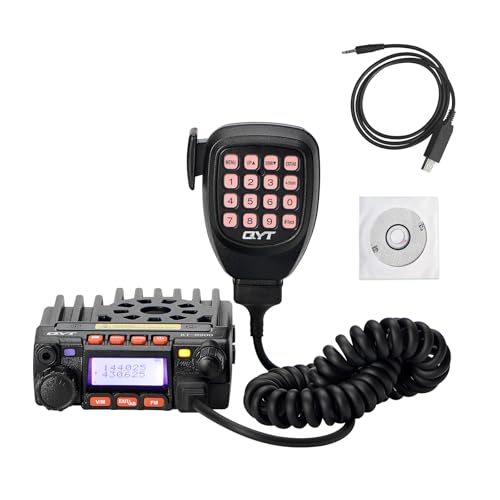
- 25W GMRS mobile radio with dual-band support
- NOAA weather scan and alert for emergencies
- Compact control mic design for vehicle or base use
Best For: Drivers and hobbyists who want a compact GMRS radio for vehicle mounting or simple base-station use.
Best for Analog Scanning
Uniden Bearcat BC125AT Handheld Scanner

- 500 alpha-tagged channels across 10 banks
- Close Call RF capture for nearby signals
- Preset searches for air, marine, railroad, and racing bands
Best For: Analog-focused listeners who want a portable scanner for hobby and local monitoring.
Best for Off-Road Vehicles
QYT KT-8900D GMRS Mobile Radio

- Strong 25W VHF / 20W UHF output
- 200 programmable channels with repeater support
- Dual receive and quad standby for monitoring
Best For: Off-road drivers and vehicle users who want a high-power GMRS mobile radio with repeater capability.
Best for False-Alert Filtering

- GPS mute memory learns repeat false alerts on regular routes
- Long-range radar and laser detection with advanced filtering
- Voice alerts and OLED display make daily use easier
Best For: Drivers who want strong detection and fewer nuisance alerts on familiar roads.
Best Feature-Rich GMRS Base Station
BTECH GMRS-50PRO Weatherproof Radio

- 50W base station output for stronger fixed-location use
- Bluetooth, GPS, and NOAA add smart monitoring features
- Dual-band scanner capability expands listening options
Best For: Users who want a rugged, high-power GMRS base station with extra monitoring and smart features.
Best Hybrid CB Scanner
Uniden BEARTRACKER 885 CB/Scanner

- CB radio and police/fire/DOT scanning in one unit
- GPS and BearTracker alerts help find nearby activity
- NOAA weather, SWR meter, and noise-cancelling mic
Best For: Truckers and road travelers who want CB communication plus public-safety scanning in one device.
Best for Mobile/Phase 2 Monitoring
Uniden BCD996P2 Digital Mobile Scanner
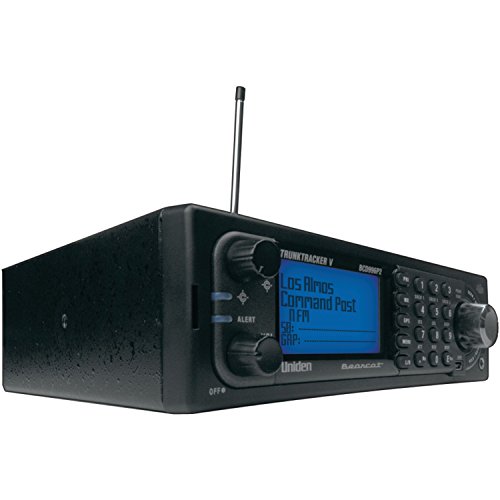
- Phase 2 support for broader system compatibility
- 25,000 channels for extensive scanning setups
- Close Call and 4-line display improve usability
Best For: Radio hobbyists and public-safety listeners who want a feature-rich base/mobile scanner.
Best for Compact Base Stations
Retevis RT95 Dual Band Mobile Radio

- Compact dual-band radio for home or vehicle use
- Rotatable display and dual speakers aid everyday operation
- CHIRP and VFO support simplify programming
Best For: Hams who want a small, easy-to-install dual-band transceiver for a desk, shack, or vehicle setup.
Best Digital Decode Performance – Uniden SDS200 Base/Mobile Digital Scanner
If you want one of the most capable base station scanner radios for difficult-to-monitor systems, the Uniden SDS200 is built around strong digital decoding and TrunkTracker X performance. It’s a serious pick for listeners who need reliable reception on modern digital and trunked radio networks.
Best For: Scanner hobbyists and public-safety listeners who want top-tier digital performance in a home or base/mobile setup.
Pros:
- True I/Q design helps improve digital decode on complex signals
- TrunkTracker X technology supports advanced trunked systems
- Flexible base/mobile form factor works well at a desk or in a vehicle
- Strong choice for demanding listeners who prioritize performance
Cons:
- More expensive than entry-level scanners
- Can feel complex for first-time scanner buyers
For buyers comparing base station scanner radios, the SDS200 stands out when decode quality matters more than simplicity. It’s best suited to users who want a high-end scanner that can keep up with challenging digital systems.
Best Compact GMRS Base-Station Pick – QYT KT-8900 25W GMRS Mobile Radio
If you want a compact radio that can pull double duty as a vehicle unit and a basic home setup, the QYT KT-8900 is a practical option to consider alongside other base station scanner radios. It offers GMRS support, dual-band capability, and NOAA weather scan/alert features, making it a flexible choice for off-road trips, camping, and general backup communications.
Best For: Drivers, off-roaders, and hobbyists who want a compact GMRS radio that can be used in a vehicle or as a simple base station.
Pros:
- 25W GMRS mobile radio with dual-band capability for versatile use
- NOAA weather scan and alert add useful emergency awareness
- Integrated control mic keeps the main unit compact and easy to mount
- Privacy codes and repeater support improve channel flexibility
Cons:
- Requires an external antenna, which is not included
- Software compatibility is limited and may be an issue on newer Windows versions
- Not a true all-in-one scanner; it is better suited to GMRS use
For buyers comparing base station scanner radios, this model stands out more for compact GMRS communication than for broad scanning features. It’s a solid value pick if you want something that can work in a truck now and serve as a simple stationary setup later.
Best for Analog Scanning – Uniden Bearcat BC125AT Handheld Scanner
If you want one of the more affordable ways to monitor base station scanner radios needs without stepping into digital territory, the Uniden Bearcat BC125AT is a practical handheld pick. It gives you 500 alpha-tagged channels, preloaded search bands, and Close Call RF capture, making it easy to find nearby and local transmissions fast.
Best For: Listeners who mainly follow aviation, marine, railroad, racing, and non-digital police/fire/public safety channels.
Pros:
- 500 alpha-tagged channels across 10 storage banks for organized scanning
- Close Call technology helps lock onto nearby transmissions quickly
- Useful pre-sets for air, marine, railroad, CB, FRS/GMRS, and racing bands
- Compact, lightweight design with an easy-to-read orange backlit display
Cons:
- Not a digital scanner, so it won’t monitor P25, DMR, or NXDN systems
- Not ideal for areas where public safety has moved to digital trunking
- No 2-way communication; receive-only scanner only
Overall, the BC125AT is a strong choice if you need a portable analog scanner for hobby use and local monitoring. For shoppers comparing base station scanner radios, its real strength is simplicity and broad analog coverage rather than digital compatibility.
Best for Off-Road Vehicles – QYT KT-8900D GMRS Mobile Radio
If you want a rugged mobile radio for trail runs, road trips, or convoy driving, the QYT KT-8900D is a practical pick. It brings strong transmit power, 200 programmable channels, and repeater support, making it a flexible option for buyers comparing base station scanner radios with mobile GMRS setups.
Best For: Off-road drivers, overlanders, and vehicle users who need a high-power GMRS mobile radio with repeater capability.
Pros:
- Up to 25W VHF / 20W UHF output for strong mobile communication range
- 200 customizable channels plus GMRS repeater support and CTCSS/DCS coding
- Dual receive, quad standby, and a large backlit display for easy monitoring
- Microphone controls and VOX help keep operation simple while driving
Cons:
- Requires an external antenna, which is sold separately
- Programming is limited to compatible software, so setup is less flexible than some radios
- More of a mobile GMRS radio than a true scanner-style base station unit
Overall, this model makes the most sense if your priority is dependable in-vehicle communications rather than traditional scanning. For shoppers comparing base station scanner radios, it stands out as a power-focused GMRS alternative built for travel and convoy use.
Best for False-Alert Filtering – Uniden DFR7 Radar Detector
If you want a radar detector that stays usable on everyday drives, the Uniden DFR7 is a practical pick. It combines long-range radar and laser detection with GPS-based memory, so it can learn repeat false alerts and keep the noise down on routes you drive often. That makes it a smart fit for buyers comparing options alongside base station scanner radios and looking for reliable in-car warning features.
Best For: Drivers who want strong detection, GPS muting, and fewer false alerts on familiar routes.
Pros:
- Super long range sensitivity with wide-band radar and laser detection
- GPS mute memory helps suppress repeat false alerts along regular routes
- Preloaded red light and speed camera alerts with free updates
- Voice alerts and OLED display improve ease of use while driving
Cons:
- Not the cheapest option in its category
- Some drivers may not need the GPS and camera-alert features
Overall, the DFR7 stands out when false-alert filtering matters more than raw simplicity. If you want a detector that feels more refined for daily commuting than many base station scanner radios alternatives, this model is worth a look.
Best Feature-Rich GMRS Base Station – BTECH GMRS-50PRO Weatherproof Radio
If you want a GMRS base unit that does more than basic push-to-talk, the BTECH GMRS-50PRO is built for serious monitoring and communication. It brings together 50 watts of power, IP54 weather resistance, Bluetooth, GPS, NOAA alerts, and scanner functionality, making it a strong pick for buyers comparing base station scanner radios for home, shop, or emergency use.
Best For: Users who want a rugged, high-power GMRS base station with extra monitoring and smart features.
Pros:
- 50-watt output helps improve range in a fixed base setup
- Bluetooth, GPS, and NOAA support add useful everyday flexibility
- Dual-band scanner capability broadens monitoring options
- IP54 weatherproofing adds extra durability for rougher environments
Cons:
- More features than casual users may need
- Requires a proper setup to get the most from its performance
- Higher cost than simpler GMRS radios
This is a compelling choice if you want one of the more capable base station scanner radios with added location and weather awareness. It leans toward advanced users who value power, versatility, and durability over a bare-bones radio.
Best Hybrid CB Scanner – Uniden BEARTRACKER 885 CB/Scanner
The Uniden BEARTRACKER 885 is a strong pick for drivers who want one unit that can handle both CB radio and public-safety scanning. Among base station scanner radios, it stands out for combining 40-channel CB performance with BearTracker alerts, GPS-based channel selection, and a built-in scanner for police, fire, ambulance, and DOT traffic.
Best For: Truckers and road travelers who want CB communication plus nearby public-safety alerts in a single radio.
Pros:
- Combines 40-channel CB radio with digital trunk-tracking scanner functions
- BearTracker alerts and GPS help surface nearby public safety activity automatically
- Useful extras include NOAA weather alerts, SWR meter, RF gain, and mic gain
- Noise-cancelling microphone is well suited to loud cab environments
Cons:
- More complex than a basic CB-only radio
- Best results depend on proper antenna setup and tuning
- Primarily aimed at mobile use, not a simple plug-and-play desktop setup
For buyers comparing base station scanner radios, this model is compelling if you want broad coverage and real-time alerts without juggling separate devices. It is especially practical for long-haul drivers who value both CB chatter and situational awareness on the road.
Best for Mobile-to-Base Control – BTECH GMRS-50PRO 50W GMRS Base Radio
If you want base station scanner radios that lean more toward licensed GMRS operation than pure scanning, the BTECH GMRS-50PRO is built for fast control, strong range, and flexible use at home or in a vehicle. Its 50-watt output, connected mic interface, and Bluetooth/app programming make it a practical pick for users who want a modern base setup with fewer menu hassles.
Best For: Licensed GMRS users who want a weatherproof radio for home, field, fleet, or mobile/base coordination.
Pros:
- True 50W GMRS output with vehicle and base station flexibility
- Bluetooth app programming plus CSV import/export for multi-radio setups
- GPS, NOAA, VOX, and Bluetooth HFP support for modern field use
- Connected mic display keeps key info visible and speeds up operation
Cons:
- Requires a GMRS license for legal operation
- Not a full-featured scanner for public-safety or trunked systems
- Best value depends on whether you need GMRS-first features, not pure scanning
For buyers comparing base station scanner radios, this model stands out when you need GMRS power, simple day-to-day control, and app-based setup more than wideband scanning. It’s especially appealing for families, clubs, farms, and crews that want dependable local communication with a base-unit feel.
Best for Mobile/Phase 2 Monitoring – Uniden BCD996P2 Digital Mobile Scanner
If you want one of the more capable base station scanner radios for serious monitoring, the Uniden BCD996P2 is built for wide-area scanning, modern digital systems, and flexible mobile-or-base use. Its 25,000 dynamically allocated channels, Close Call RF capture, and Phase 2 support make it a strong fit for users who need deeper coverage than a basic analog scanner.
Best For: Radio hobbyists and public-safety listeners who want a feature-rich base/mobile scanner with Phase 2 support and lots of memory.
Pros:
- Supports Phase 2 digital systems for broader compatibility
- 25,000 dynamically allocated channels offer plenty of storage
- Close Call RF capture helps catch nearby transmissions quickly
- 4-line alpha display makes channels and IDs easier to read
Cons:
- Learning curve can be steep for first-time scanner buyers
- Programming may take time compared with simpler models
Overall, the BCD996P2 is a smart pick if you need a capable scanner that can handle complex systems and still work well as one of your main base station scanner radios. It is especially appealing to listeners who value flexibility, memory depth, and Phase 2 readiness over simplicity.
Best for Compact Base Stations – Retevis RT95 Dual Band Mobile Radio
The Retevis RT95 is a compact dual-band option for buyers comparing base station scanner radios that can also pull double duty in a vehicle. It adds a rotatable display, dual speakers, CHIRP support, and an easy base-station setup when powered from a 13.8V source, making it a flexible pick for home or mobile listening and communications.
Best For: Hams who want a small, easy-to-install dual-band transceiver for a desk, shack, or vehicle setup.
Pros:
- Compact footprint with included cables for easier installation
- Rotatable LCD and dual speakers improve readability and audio placement
- CHIRP and VFO mode make frequency programming more flexible
- Built-in cooling fan supports longer, more stable use
Cons:
- Power supply for full base-station use is not included
- More feature-rich than a basic scanner, so setup may take time
- Not a dedicated receive-only scanner radio
For shoppers comparing base station scanner radios, the RT95 stands out as a compact, feature-packed transceiver that works well when you want one radio for both mobile and home use. It is a practical choice if you value flexibility, screen visibility, and straightforward base-station deployment over a pure scanner-only design.
How We Picked These Base Station Scanner Radios
We focused on practical buyer priorities: reception quality, digital and analog compatibility, channel capacity, ease of setup, and features that matter in real-world use such as weather alerts, close-call capture, GPS, and repeater support. We also considered whether each model fits casual listeners, hobbyists, or users who need more advanced monitoring capability.
Quick Comparison: What Matters Most
The best choice depends on your main use case. If you want broad public-safety monitoring, prioritize digital trunking support and strong signal handling. If you want a versatile home station, look for a model with clear audio, easy programming, and stable base power. If you need communications plus scanning, a GMRS or dual-band radio may fit better than a dedicated scanner.
Key Buying Factors for Base Station Scanner Radios
Digital Vs. Analog Support
Many agencies now use digital systems, so scanner buyers should confirm support for the formats used in their area. Analog-only radios are simpler, but they can miss a lot of modern traffic.
Channel Capacity and Programming
More channels are useful, but only if the radio is easy to organize. Dynamic memory, tagging, and PC programming can make a big difference for managing large scan lists.
Reception and Signal Handling
Look for features like Close Call, trunk tracking, and strong front-end filtering if you live in a dense RF environment. Good signal handling helps reduce missed transmissions and unwanted interference.
Power, Antennas, and Placement
For Base Station Scanner Radios, antenna quality and placement often matter as much as the radio itself. A proper external antenna can dramatically improve range, especially indoors or in weak-signal areas.
Extra Features Worth Having
Weather alerts, GPS, audio customization, and emergency monitoring features add convenience, but they should complement—not replace—core scanning performance.
Who Should Buy Which Base Station Scanner Radios?
Casual listeners should choose a straightforward scanner with simple controls and good local coverage. Serious hobbyists will get more value from advanced digital scanning, larger memory, and programming flexibility. Users who want one device for both communication and monitoring may prefer GMRS or dual-band radios instead of a dedicated scanner. If your priority is monitoring public safety, Base Station Scanner Radios built for trunked digital systems are usually the smartest investment.