If you want to monitor railroad traffic reliably, the right scanner makes all the difference. The best models balance clear reception, easy programming, and the right channel support for your listening style.
Below, we’ve rounded up nine strong options for new and experienced listeners, with picks for handheld portability, home use, and mobile setups.
Best 9 Scanner Radios for Railroad Frequencies Picks for 2026
Best Rail Band Starter
Uniden BC125AT Handheld Scanner

- Railroad preset bands for quick setup
- 500 alpha-tagged channels for organized scanning
- Compact handheld with Close Call detection
Best For: Railfans and beginners who want an easy handheld scanner for railroad listening.
Best for Easy Programming
Whistler WS1040 Handheld Digital Scanner

- Menu-driven programming with context-sensitive help
- Flexible scan lists and free-form memory organization
- P25 Phase I, trunking, and weather alert support
Best For: Listeners who want a flexible handheld scanner that’s easier to program and manage.
Best Entry-Level Railroad Scanner
Uniden Bearcat SR30C Handheld Scanner

- 500 channels with railroad and other service-bank presets
- Close Call RF Capture for nearby signals
- Compact handheld with PC programming and USB power
Best For: Entry-level listeners who want a compact scanner for railroad channels plus other non-digital services.
Best for Hands-On Scanning
Whistler WS1025 200-Channel Desktop Scanner

- 200-channel memory for storing multiple frequencies
- Priority channel and scan delay for active monitoring
- Tune function helps search for new frequencies
Best For: Experienced users who want a simple desktop scanner for railroad and public safety listening.
Best for Easy Setup
Uniden BCD436HP Handheld Scanner

- Zip-code scanning keeps setup simple.
- GPS and Close Call add useful advanced features.
- Large display and instant replay improve monitoring.
Best For: Beginners and travelers who want a capable handheld scanner with minimal setup.
Best for Analog Rail Scanning
Whistler WS1010 Analog Handheld Scanner

- 400-channel memory across 10 banks
- Includes service banks for rail-adjacent listening
- Skywarn, SAME alerts, and Spectrum Sweeper add utility
Best For: Hobbyists and commuters who want an affordable analog scanner for rail monitoring and weather alerts.
Best for Railroad Monitoring
Uniden BCD996P2 Digital Mobile TrunkTracker V
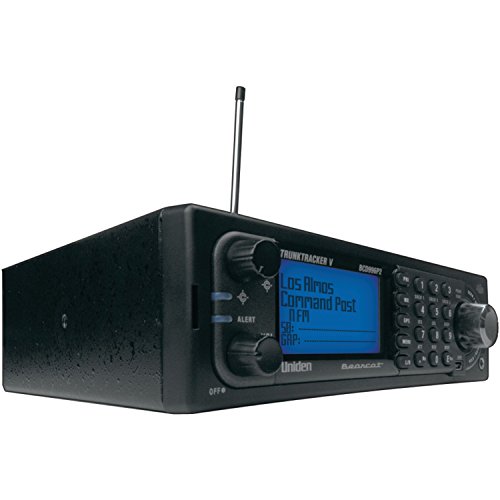
- 25,000 channels for rail and general scanning
- Close Call RF Capture helps find nearby signals
- Phase 2 digital and trunking support widen coverage
Best For: Railfans and scanner users who want a feature-rich mobile/base unit for railroad frequencies, trunked systems, and weather alerts.
Best All-in-One Desk Scanner
Uniden BC365CRS 500 Channel Scanner
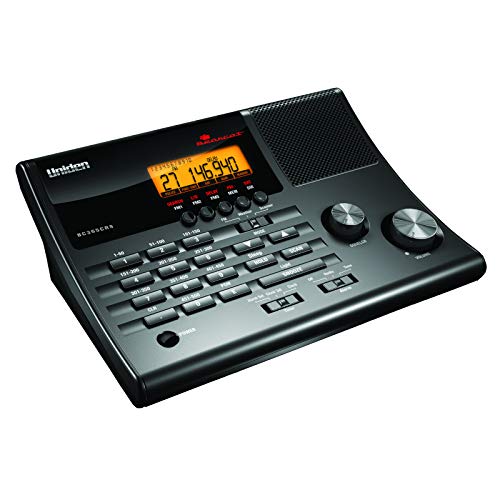
- 500-channel analog scanner with railroad preset searches
- Adds FM radio, alarm clock, snooze, and weather alerts
- Easy-to-read desktop design with backlit display
Best For: Buyers who want a desktop scanner that covers railroad channels and everyday home use.
Best Value Analog Pick
Uniden BC355N Base/Mobile Scanner
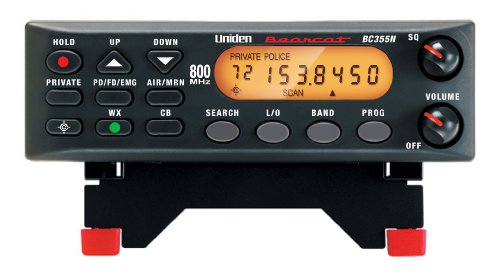
- 300-channel analog scanner with banked memory
- Close Call helps catch nearby railroad activity
- Includes railroad, weather, aviation, and marine bands
Best For: Budget-minded listeners who need a simple analog scanner for railroad and other non-digital frequencies.
Best Rail Band Starter – Uniden BC125AT Handheld Scanner
If you want an easy way to monitor scanner radios for railroad frequencies, the Uniden Bearcat BC125AT is a practical handheld option with railroad search presets, 500 alpha-tagged channels, and a compact design that’s easy to carry on the road or trackside.
Best For: Railfans and casual scanner users who want a lightweight, non-digital handheld with simple presets for railroad monitoring.
Pros:
- Includes preset railroad search bands, plus aviation, marine, and racing
- 500 alpha-tagged channels make it easy to organize active frequencies
- Close Call technology helps find nearby transmissions quickly
- Portable, backlit handheld design is easy to use in the field
Cons:
- Does not support digital systems like P25, DMR, or NXDN
- No two-way communication; it only receives transmissions
For scanner radios for railroad frequencies, the BC125AT is a solid entry-level choice if your local rail channels are still analog. It’s less suitable for users who need digital public-safety monitoring, but for railroad listening and other non-digital services, it covers the basics well.
Best for Easy Programming – Whistler WS1040 Handheld Digital Scanner
If you want scanner radios for railroad frequencies without a steep learning curve, the Whistler WS1040 is a practical handheld pick. Its menu-driven programming with context-sensitive help makes it easier to get up and running, while scan lists and free-form memory help keep channels organized as your needs grow.
Best For: Hobbyists and public-safety listeners who want a flexible handheld scanner that’s easier to program and manage.
Pros:
- Menu-driven setup with built-in help text for easier programming
- Free-form memory and scan lists make channel organization flexible
- Supports P25 Phase I, trunking, and multi-system monitoring
- Audio and LED alerts plus weather/Storm Spotter functions add versatility
Cons:
- Programming can still take time for first-time scanner users
- No mention of newer P25 Phase II support
For listeners comparing scanner radios for railroad frequencies, the WS1040 stands out more for usability and broad monitoring support than for being a railroad-only specialist. It’s a solid choice if you want one handheld scanner that can handle rail, weather, and other compatible systems in a single device.
Best Entry-Level Railroad Scanner – Uniden Bearcat SR30C Handheld Scanner
If you want an affordable way to listen to scanner radios for railroad frequencies, the Uniden Bearcat SR30C is a straightforward handheld option with 500 channels, preloaded service banks, and easy PC programming. It’s a practical pick for hobbyists who want railroad, aviation, marine, and non-digital public safety listening without paying for digital-trunking features they may not need.
Best For: Entry-level listeners who want a compact scanner for railroad channels plus other non-digital services.
Pros:
- Pre-programmed service banks include railroad, marine, civil air, racing, and NOAA weather
- Close Call RF Capture helps find nearby active transmissions quickly
- Compact handheld design with three power options, including USB power
Cons:
- Does not support digital communications like P25, DMR, or NXDN
- Smaller feature set than more advanced trunking scanners
For buyers focused on scanner radios for railroad frequencies, the SR30C makes sense as a simple, low-cost starter scanner that covers the basics well. It’s not the right choice for digital public safety systems, but for rail monitoring and other analog services, it offers a lot of value in a compact package.
Best for Hands-On Scanning – Whistler WS1025 200-Channel Desktop Scanner
If you want a straightforward base radio for scanner radios for railroad frequencies, the Whistler WS1025 is a practical pick for users who don’t mind doing a bit of setup. Its 200-channel memory, priority channel, scan delay, and tune function give you the tools to follow active traffic and search for nearby frequencies without overcomplicating the process.
Best For: Experienced scanner users who want a simple desktop unit for monitoring public safety, weather, and railroad-related channels.
Pros:
- 200-channel memory supports a solid range of stored frequencies
- Priority channel and scan delay help you catch important transmissions
- Tune function can help discover new or unlisted frequencies
- Backlit LCD display is easy to read in low light
Cons:
- Better suited to experienced users than total beginners
- Analog design lacks the flexibility of newer digital scanners
- Desktop form factor is less convenient for portable use
For buyers focused on scanner radios for railroad frequencies, the WS1025 makes sense if you want a dependable base unit with useful scanning controls rather than advanced automation. It’s a good fit when ease of basic operation matters, but you still want enough features to actively search, monitor, and refine your listening setup.
Best for Easy Setup – Uniden BCD436HP Handheld Scanner
If you want scanner radios for railroad frequencies without spending a lot of time learning complex programming, the Uniden BCD436HP is built to make setup simple. Its zip-code based scanning, large display, and GPS support are especially helpful for travelers who want quick access to nearby channels and reliable monitoring.
Best For: Beginners and traveling users who want a feature-rich handheld scanner with minimal setup.
Pros:
- No programming needed—enter a zip code and start scanning.
- Strong feature set includes Close Call, GPS connectivity, and Discover modes.
- Large display and instant replay make it easier to follow active traffic.
- Supports a wide range of services across the USA and Canada.
Cons:
- More expensive than basic entry-level scanners.
- Railroad monitoring may still require some channel setup depending on your local area.
This is a smart pick if you want a capable handheld that favors convenience over tinkering. For shoppers comparing scanner radios for railroad frequencies, the BCD436HP stands out for ease of use, broad coverage, and advanced tools that help you stay on top of nearby transmissions.
Best for Analog Rail Scanning – Whistler WS1010 Analog Handheld Scanner
The Whistler WS1010 is a straightforward choice if you want scanner radios for railroad frequencies without a steep learning curve. Its 400-channel memory, service banks, and PC programmability make it easy to organize rail, weather, and other public-service channels in one handheld unit.
Best For: Hobbyists and commuters who want an affordable analog scanner for rail monitoring plus weather and service-band listening.
Pros:
- 400-channel memory across 10 banks for flexible frequency storage
- Service banks include marine, fire/police, aircraft, ham, and weather bands
- Spectrum Sweeper helps find nearby active transmissions quickly
- SAME weather alerts and Skywarn support add practical utility
Cons:
- Analog-only design won’t cover digital trunked systems
- PC programming requires a separate cable and third-party software
- Not a dedicated railroad scanner, so setup may take some channel planning
For buyers focused on scanner radios for railroad frequencies, the WS1010 is a capable entry-level pick if your target rail channels are analog and you also want weather and general service-band coverage. It’s best suited to users who value simplicity and broad listening versatility over advanced digital features.
Best for Railroad Monitoring – Uniden BCD996P2 Digital Mobile TrunkTracker V
The Uniden BCD996P2 is a strong pick if you want scanner radios for railroad frequencies plus the flexibility to monitor local public safety and weather channels. Its phase 2 digital support, large channel capacity, and Close Call feature make it especially useful for listeners who want a serious base/mobile scanner that can keep up with busy RF environments.
Best For: Railfans and scanner users who want a feature-rich mobile/base unit for railroad frequencies, trunked systems, and weather alerts.
Pros:
- 25,000 dynamically allocated channels give you plenty of room for rail and non-rail programming
- Close Call RF Capture helps identify nearby transmissions quickly
- Supports APCO 25 Phase 1 and Phase 2, plus multiple trunked system types
- GPS-compatible location-based scanning can streamline travel monitoring
Cons:
- More complex than a basic handheld scanner
- Base/mobile design is less portable for on-the-go use
- Does not include the simplicity of plug-and-play railroad-only scanning
For buyers comparing scanner radios for railroad frequencies, the BCD996P2 stands out as a versatile long-term scanner rather than a niche rail-only model. If you want one unit that can cover rail traffic, weather alerts, and other local communications, this Uniden offers a lot of capability for the money.
Best All-in-One Desk Scanner – Uniden BC365CRS 500 Channel Scanner
If you want one compact unit that can handle casual monitoring without adding clutter, the Uniden BC365CRS is a practical pick for scanner radios for railroad frequencies. It combines a conventional 500-channel scanner with an alarm clock, FM radio, and weather alerts, so it fits well on a desk or nightstand while still covering railroad, aviation, marine, and other analog services.
Best For: Buyers who want an affordable desktop scanner that can monitor railroad channels plus everyday radio and weather features in one unit.
Pros:
- 500-channel conventional scanner with preset searches for railroad and other popular bands
- Built-in alarm clock, snooze, sleep timer, and FM radio for all-in-one home use
- Clear backlit LCD and desktop-friendly layout make it easy to read and operate
- Priority channels help you check important frequencies more often
Cons:
- Does not receive digital or trunked communications
- Best for analog scanning, so it may not suit larger public safety systems
- Desktop design is less portable than handheld scanners
The BC365CRS is a strong value if your focus is analog listening and simple day-to-day convenience. For scanner radios for railroad frequencies, it offers an easy entry point with useful extras, but shoppers needing digital support should look elsewhere.
Best Value Analog Pick – Uniden BC355N Base/Mobile Scanner
If you want an affordable entry point into scanner radios for railroad frequencies, the Uniden BC355N is a straightforward analog base/mobile option with pre-programmed search bands and 300 channel memory. It’s built for listening to non-digital services like weather, aviation, marine, and rail, but it won’t decode modern digital or trunked systems.
Best For: Hobbyists who want a simple, budget-friendly analog scanner for railroad, weather, aviation, and other non-digital bands.
Pros:
- 300-channel memory with easy banked scanning
- Close Call RF capture helps find nearby active signals fast
- Pre-programmed service bands include railroad, marine, aviation, and NOAA weather
- Includes AC, DC, and vehicle power options
Cons:
- Analog-only, so it cannot monitor digital or trunked radio systems
- Not ideal in areas where public safety has moved to P25, DMR, or NXDN
- Limited for advanced scanning users who need more flexibility
The BC355N makes sense if your priority is scanning scanner radios for railroad frequencies without paying for digital features you may not need. It’s a practical pick for basic rail monitoring and general analog listening, as long as your local channels are still non-digital.
How We Picked the Best Scanner Radios for Railroad Frequencies
We focused on models that are practical for listening to railroad traffic and flexible enough for related bands like aviation, marine, NOAA weather, and local public safety. Priority went to ease of use, channel capacity, scan speed, and features like Close Call or Spectrum Sweeper that help catch nearby transmissions.
For Scanner Radios for Railroad Frequencies, usability matters as much as specs. A strong radio should be simple to program, dependable in day-to-day use, and suited to how and where you listen.
Quick Comparison: Handheld, Desktop, and Mobile
Handheld scanners are best if you want portability at the track, in the yard, or on the move. Desktop and base/mobile models are better for a permanent listening spot, stronger antennas, and longer sessions. Digital models are the safer choice if you also want broader compatibility with modern systems, while analog scanners remain a budget-friendly option for straightforward monitoring.
Key Buying Factors for Scanner Radios for Railroad Frequencies
Channel Capacity
More channels give you room to store railroad, weather, and other utility frequencies without constantly reprogramming. If you monitor several regions or rail lines, higher-capacity scanners are easier to live with.
Programming and Search Tools
Look for PC programming support, preloaded search bands, and features that simplify setup. Railroad monitoring is easier when you can scan quickly and organize favorites without a steep learning curve.
Reception Features
Close Call, RF capture, and similar tools can help you find nearby signals fast. A good antenna and solid sensitivity are also important, especially if you listen from home or a moving vehicle.
Digital Versus Analog
If you only need basic railroad listening, analog scanners can still be a good value. If you want broader future-proofing or plan to monitor additional services, digital models offer more flexibility.
Form Factor
Choose handheld for portability, base/mobile for a fixed setup, and combo-style units if you want one scanner to cover multiple listening situations. The best choice depends on whether you’ll use it trackside, at home, or in a vehicle.
Who Should Buy Which Scanner Radios for Railroad Frequencies?
Choose a compact handheld if you want something simple to carry and use near rail lines. Pick a desktop or base/mobile scanner if you want a more permanent listening station with easier day-to-day scanning. Go with a digital model if you want the broadest feature set and long-term flexibility, and consider an analog unit if your priority is value and straightforward railroad monitoring.
In short, the right scanner comes down to your listening habits, setup location, and how much flexibility you want beyond railroad channels.