Choosing the right analyzer can make antenna tuning faster, more accurate, and far less frustrating. Whether you’re checking SWR, verifying feedlines, or dialing in a new build, the best tool saves time on the bench and at the site.
Below, we compare five strong options for different ham radio needs, from budget-friendly NanoVNA-style units to more advanced handheld analyzers with bigger displays and broader coverage.
Best 5 HF Antenna Analyzers for Ham Radio Picks for 2026
Best Portable Kit
SEESII NanoVNA-H 1.5GHz Antenna Analyzer
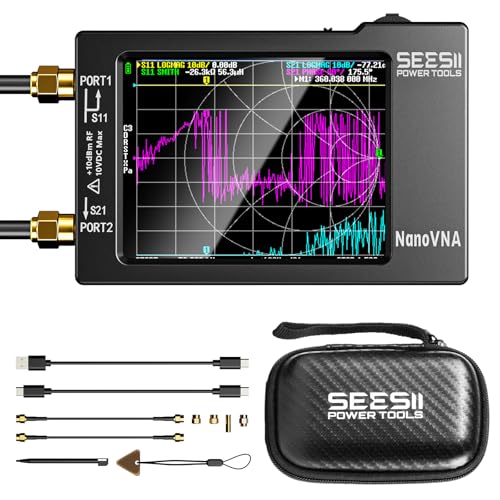
- 9KHz-1.5GHz coverage for HF and broader RF testing
- Includes calibration kit, cables, and EVA protective case
- Measures SWR, S-parameters, phase, delay, and Smith charts
Best For: Hams and DIY radio users who want a portable, accessory-rich VNA for antenna work.
Best Portable Tuner for Field Ops
ATU-100 EXT Automatic Antenna Tuner

- Automatic SWR tuning for faster setup
- Compact, rugged design for portable use
- Supports many common antenna types
Best For: Portable ham operators who want a small automatic tuner for quick field matching.
Best for Wideband Antenna Testing

- 50kHz–3GHz coverage for HF, VHF, and UHF
- 4-inch touchscreen with PC software support
- Includes calibration kit, cables, and storage bag
Best For: Hams who need a broad-range analyzer for antenna tuning, coax checks, and RF troubleshooting.
Best for Wideband Field Tuning
Comet CAA-500MarkII 1.8-500 MHz Analyzer
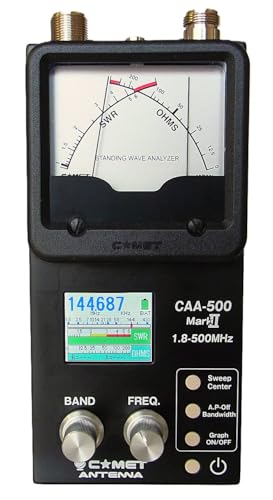
- Covers HF, VHF, and UHF from 1.8-500 MHz
- Color display shows SWR and impedance graphs
- Portable battery or DC-powered operation
Best For: Hams and field techs who need a portable wideband analyzer for antenna tuning and diagnostics.
Best for Portable Smith Chart Tuning
AURSINC NanoVNA H4 4" Touch Analyzer

- 9kHz-1.5GHz coverage for HF and beyond
- 4-inch touchscreen for easy field use
- SWR, Smith chart, S-parameters, and TDR support
Best For: Hams who want a compact, feature-rich analyzer for antenna tuning and RF diagnostics.
Best Portable Kit – SEESII NanoVNA-H 1.5GHz Antenna Analyzer
If you want one of the more versatile HF antenna analyzers for ham radio, this SEESII NanoVNA-H is a strong pick for checking resonance, SWR, phase, delay, and Smith chart data in a compact field-friendly package. The 9KHz-1.5GHz range gives you plenty of headroom for HF work plus broader RF testing, while the included calibration pieces and protective EVA case make it easier to carry and use on the go.
Best For: Hams, DIY radio builders, and mobile operators who want a portable VNA with a full accessory kit and rugged storage case.
Pros:
- Wide 9KHz-1.5GHz measurement range covers HF and beyond
- Includes calibration kit, cables, USB-C leads, and EVA carrying case
- Displays S-parameters, SWR, phase, delay, and Smith chart data
- Portable touchscreen design is convenient for field checks
Cons:
- May be more analyzer than casual users need for simple antenna checks
- Small touchscreen can feel cramped compared with larger lab units
- Advanced workflow may take some learning for first-time VNA users
For operators comparing HF antenna analyzers for ham radio, this model stands out for its portable kit, broad frequency coverage, and practical accessory bundle rather than a bare-bones price. It makes sense if you want a travel-ready VNA that can handle both tuning and deeper RF analysis.
Best Portable Tuner for Field Ops – ATU-100 EXT Automatic Antenna Tuner
If you need a compact way to improve match quality on the go, the ATU-100 EXT is a practical option to consider alongside HF antenna analyzers for ham radio. It automates tuning across a broad amateur band range, supports common antenna types, and keeps setup simple for portable and mobile operating.
Best For: POTA, SOTA, and other portable operators who want fast automatic impedance matching without manual retuning.
Pros:
- Automatic tuning helps reduce time spent chasing a low SWR.
- Works with dipole, vertical, ground, and loop antennas.
- Compact metal housing is easy to pack for field use.
- OLED display makes status and tuning info easy to read.
Cons:
- Best tuning range is 1.8-30MHz, with more limited performance at higher frequencies.
- May not bring very poor antenna matches below 1.5 SWR.
- Recommended operating power is only 6-12W during tuning.
For operators comparing HF antenna analyzers for ham radio, this tuner is less about measurement and more about convenient matching in the field. It’s a strong fit if you value portability, quick setup, and dependable everyday tuning over advanced diagnostic features.
Best for Wideband Antenna Testing – AURSINC NanoVNA SAA-2N V2.2
If you want one tool that can cover a lot of ground, the AURSINC NanoVNA SAA-2N V2.2 is a strong pick among HF antenna analyzers for ham radio. Its 50kHz to 3GHz range makes it useful for HF, VHF, and UHF work, while the 4-inch touchscreen and PC software support make it easier to read traces and save results.
Best For: Hams who want a broad-frequency analyzer for antenna tuning, coax checks, and general RF troubleshooting in the shack or out in the field.
Pros:
- Wide 50kHz–3GHz coverage for HF, VHF, and UHF measurements
- 4-inch touchscreen plus PC connectivity for easier analysis and data saving
- N-type connectors and steel enclosure add durability for field use
- Includes calibration kit, cables, and storage bag for portable setup
Cons:
- Requires recalibration after startup and frequency changes
- Calibration and workflow take more effort than a simple single-function antenna meter
- Best results depend on learning NanoVNA-style menus and procedures
For operators who need more than a basic meter, this is a versatile option in HF antenna analyzers for ham radio. It offers enough range and features for antenna work, feed line testing, and general S-parameter measurements without moving into lab-grade pricing.
Best for Wideband Field Tuning – Comet CAA-500MarkII 1.8-500 MHz Analyzer
If you want one of the more versatile HF antenna analyzers for ham radio, the Comet CAA-500MarkII stands out for covering HF through UHF in a single handheld unit. It gives you SWR, impedance, reactance, and resonance readings with a color display that makes antenna tuning easier to interpret on the spot.
Best For: Mobile operators, field installers, and hams who need a portable analyzer for HF, VHF, and UHF antenna checks.
Pros:
- Measures SWR, impedance, reactance, and resonance from 1.8-500 MHz
- Color LCD graphs help spot mismatches and tuning changes quickly
- Portable battery or external DC operation suits field use
- Fast sweep response supports efficient on-site diagnostics
Cons:
- More analyzer than needed if you only work on basic HF antennas
- Premium feature set may be overkill for casual users
For buyers comparing HF antenna analyzers for ham radio, the CAA-500MarkII is a strong pick when you need wide frequency coverage and easy-to-read plots in a rugged handheld package. It is especially useful if your station or field work spans multiple bands and antenna types.
Best for Portable Smith Chart Tuning – AURSINC NanoVNA H4 4" Touch Analyzer
If you want one of the most versatile HF antenna analyzers for ham radio, the AURSINC NanoVNA H4 gives you a compact way to check SWR, S-parameters, Smith charts, and TDR from the shack or the field. Its 9kHz-1.5GHz range covers HF work comfortably while also stretching into VHF/UHF testing, making it a practical all-around RF tool for antenna checks and basic troubleshooting.
Best For: Hams who want a portable, touchscreen analyzer for tuning antennas, confirming resonance, and doing quick RF diagnostics without a bulky bench setup.
Pros:
- Wide frequency coverage for HF through higher bands
- 4-inch touchscreen makes sweep setup and readings easy
- Measures SWR, Smith chart, S-parameters, and TDR
- Compact, travel-friendly form factor for field use
Cons:
- Learning curve can be steep for first-time users
- Best results often require calibration and some practice
- Not as plug-and-play as simpler antenna meters
For operators comparing HF antenna analyzers for ham radio, this model stands out as a feature-rich value pick rather than a simple one-function meter. It’s a smart choice if you want deeper measurement tools in a small package and don’t mind spending a little time learning the interface.
How We Picked These HF Antenna Analyzers for Ham Radio
We focused on practical features that matter most to operators: measurement range, SWR and impedance capability, display readability, portability, battery life, and how easy the unit is to use in real-world tuning work. We also considered whether each model is better suited to HF-only tasks or broader VHF/UHF testing.
Quick Comparison
If you mainly work on HF antennas, a wide-enough low-frequency range, stable calibration, and clear traces are the big priorities. NanoVNA-based analyzers tend to offer excellent value and broad frequency coverage, while dedicated handheld analyzers can be simpler to operate and easier to read in the field. Tools like the ATU-100 EXT serve a different role: they help match impedance but are not a direct substitute for a standalone analyzer.
Key Buying Factors for HF Antenna Analyzers for Ham Radio
Frequency Coverage
Make sure the analyzer covers the bands you actually use. For HF work, low-end coverage near 1.8 MHz matters for 160 meters, while extended range is useful if you also test VHF or UHF antennas.
Measurement Accuracy and Stability
Look for consistent SWR readings, reliable impedance data, and the ability to calibrate properly. A good analyzer should help you identify resonant points, feedline issues, and antenna bandwidth with confidence.
Display and Usability
Touchscreens, larger color displays, and intuitive menus make field work easier. If you plan to use the analyzer outdoors, readability in bright light and glove-friendly controls can matter more than raw specs.
Portability and Durability
Ham radio gear often travels to rooftops, antennas sites, and portable operating locations. A protective case, solid battery operation, and compact size can be just as valuable as extra frequency range.
Software and Calibration Support
Many HF Antenna Analyzers for Ham Radio connect to a PC for deeper analysis. If you like plotting traces, saving measurements, or doing more advanced diagnostics, check the software ecosystem before you buy.
Who Should Buy Which HF Antenna Analyzers for Ham Radio?
Choose a NanoVNA-style analyzer if you want maximum capability per dollar and do not mind a small learning curve. Pick a dedicated handheld analyzer if you want a simpler, more field-friendly experience with clearer on-device controls. If your main goal is matching antennas rather than analyzing them, an automatic tuner may be the better fit for your station workflow.
In short, the best choice depends on how you operate: budget experimenters, portable operators, and serious HF builders will all value different strengths. Match the tool to your bands, your workspace, and how often you need fast, repeatable measurements.