Wideband SDR receivers let you explore everything from shortwave and ham bands to public safety, aviation, and satellite signals with one flexible device.
Below, we focus on the best options for 2026 based on tuning range, usability, stability, and value so you can choose the right receiver for your setup and budget.
Best 10 Wideband SDR Receivers Picks for 2026
Starter Pick
RTL-SDR Blog V4 RTL2832U SDR Kit

- 500 kHz to 1.7 GHz tuning range
- Includes dipole antenna kit and bias tee
- 1 PPM TCXO and shielded aluminum case
Best For: Beginners wanting a ready-to-use wideband SDR receiver kit
Portable Pick
4.3-inch DSP SDR Touchscreen Receiver

- 100 kHz to 149 MHz receive range
- 4.3-inch touchscreen with waterfall display
- 5000mAh battery rated up to 12 hours
Best For: Portable listening with a self-contained touchscreen SDR
Wide-Range Pick
RX888 MKII Aluminum SDR Receiver

- 1 kHz to 64 MHz base range
- Notes also list coverage up to 1700 MHz
- ATT and VGA adjustment ranges for control
Best For: Advanced users who want broad receive coverage and gain adjustment
Durable Pick
4.3-inch CNC Aluminum SDR Receiver
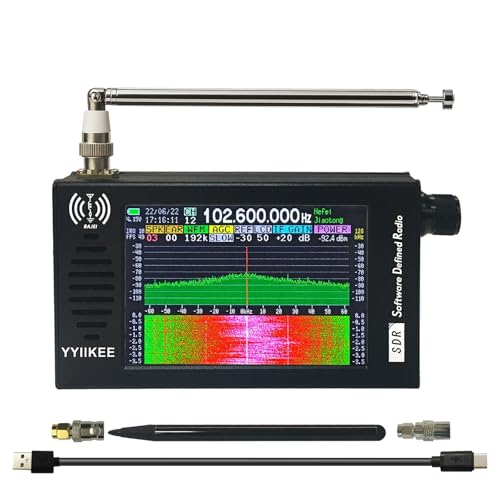
- 100 kHz to 149 MHz receive coverage
- 800x480 IPS touchscreen with waterfall
- Rechargeable battery in CNC aluminum shell
Best For: Portable ham and listening use with a rugged handheld design
Dual-channel transceiver pick
70MHz–6GHz 2TX/2RX Wideband Platform

- 70MHz–6GHz coverage with 2TX/2RX
- Gigabit Ethernet and USB OTG connectivity
- Zynq-7010 FPGA for real-time processing
Best For: Users who want a wideband SDR with transceiver capability and room to develop.
HF starter bundle
NESDR SMArt v5 HF Bundle with Upconverter

- 100kHz–1.7GHz receiver with HF upconversion
- Includes antennas, balun, and adapters
- 2-year warranty with 24/7 support
Best For: New SDR users who want a bundled HF-capable receiver kit.
Spectrum-monitoring receiver
10kHz–2GHz 14-bit SDR Pro Receiver
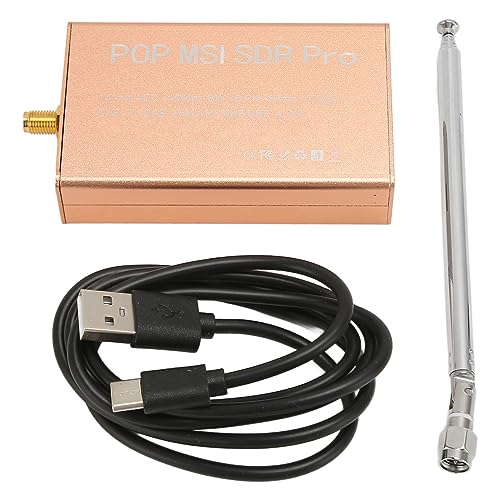
- 10kHz–2GHz wideband 14-bit receiver
- Works with SDRuno, HDSDR, SDR Console, and Cubic SDR
- Documented API for custom applications
Best For: PC-based monitoring and SDR software experimentation.
HF Bundle SDR
Nooelec NESDR Smart XTR v2 HF Bundle

- 300Hz to 2.3GHz coverage with HF upconversion
- Includes 3 antennas, balun, adapters, and cables
- 2-year warranty plus 24/7 technical support
Best For: Beginners who want an all-in-one HF-capable SDR bundle
Shielded RTL-SDR

- Aluminium shielded case with passive cooling
- Software-activatable 4.5V bias tee
- Lower-noise PCB with improved ESD protection
Best For: Users prioritizing noise reduction and compact receiver features
Full Band USB SDR
RTL SDR Receiver 100KHz to 1766MHz

- 100KHz to 1766MHz coverage with USB power
- 0.5 PPM TCXO for stable tuning
- Direct sampling plus scanning and demod modes
Best For: Listeners wanting broad tuning range and scanning features in a USB SDR
Starter Pick – RTL-SDR Blog V4 RTL2832U SDR Kit
If you want a practical entry into wideband SDR receivers, this RTL-SDR Blog V4 kit is built around a well-known RX-only dongle with a 500 kHz to 1.7 GHz tuning range and up to 3.2 MHz of instantaneous bandwidth. It also adds a built-in HF upconverter, TCXO stability, bias tee support, and a dipole antenna kit, making it a strong all-in-one option for beginners who want to explore terrestrial and satellite signals.
Best For: Beginners who want a versatile SDR starter kit with an included antenna and broad receive coverage.
Pros:
- Tunes from 500 kHz to 1.7 GHz with up to 3.2 MHz instantaneous bandwidth.
- Includes an antenna kit plus activatable bias tee for added setup flexibility.
- Uses a 1 PPM TCXO, aluminum shielded case, and improved filtering for better stability.
- Designed for easy terrestrial and satellite reception in a portable package.
Cons:
- RX only, so it cannot transmit.
- Requires a driver update and careful installation steps.
- Not suitable for HF reception despite the built-in upconverter.
For shoppers comparing wideband SDR receivers, this is the most beginner-friendly package in the group because it combines a proven dongle with the accessories needed to get started quickly. Just be aware that the HF side depends on the upconverter arrangement and the product notes stress correct driver installation.
Portable Pick – 4.3-inch DSP SDR Touchscreen Receiver
This portable DSP unit fits well in a roundup of wideband SDR receivers if you want a self-contained handheld receiver instead of a computer-dongle setup. It covers 100 kHz to 149 MHz, supports CW, AM, SSB, WFM, and FM stereo, and adds a 192 kHz spectrum display with waterfall visualization for monitoring signals on the go.
Best For: Portable listening and travel use when you want a touchscreen SDR with battery power.
Pros:
- 100 kHz to 149 MHz coverage with 1 Hz step resolution.
- 4.3-inch touchscreen plus rotary encoder for easier control.
- Built-in 5000mAh battery offers up to 12 hours of use.
- Supports CW, AM, SSB, WFM, and FM stereo demodulation.
Cons:
- Frequency range is narrower than true ultra-wide receiver dongles.
- Listed band coverage is focused below VHF/UHF satellite-style ranges.
- Best viewed as a handheld receiver rather than a PC-based SDR front end.
As a practical standalone receiver, this model emphasizes portability, simple operation, and visual tuning tools. It is a good choice if you value a built-in screen and battery more than maximum frequency coverage.
Wide-Range Pick – RX888 MKII Aluminum SDR Receiver
If your focus is on wideband SDR receivers with a more expansive front end, the RX888 MKII stands out for its 1 kHz to 64 MHz base range and notes indicating coverage up to 1700 MHz as well. It also includes attenuation and VGA adjustment ranges, which can be useful when you need to manage strong signals or fine-tune gain behavior for different listening environments.
Best For: Users who want a flexible receive platform with broad frequency coverage and gain control options.
Pros:
- Listed range starts at 1 kHz and includes coverage up to 1700 MHz in the notes.
- ATT adjustment range from -32 dB to 0 dB.
- VGA adjustment range from -10 dB to +33 dB for reception tuning.
- Aluminum-enclosed build for a more substantial hardware feel.
Cons:
- Product information is sparse compared with the other options.
- No bundled antenna or beginner setup accessories are mentioned.
- Configuration details may require more hands-on setup.
This is the most technically flexible option in the roundup, especially if you want gain control and a wider receive platform. It makes more sense for users who already know what they want from an SDR front end.
Durable Pick – 4.3-inch CNC Aluminum SDR Receiver
This handheld model is another strong candidate among wideband SDR receivers if you want a compact listening radio with a color display and built-in battery. It covers 100 kHz to 149 MHz, uses DSP digital demodulation, and provides a 192 kHz real-time spectrum plus waterfall display for easier tuning and signal identification.
Best For: Portable ham and shortwave-style listening with a durable touchscreen receiver.
Pros:
- 100 kHz to 149 MHz coverage with CW, AM, SSB, WFM, and FM stereo support.
- 4.3-inch 800×480 IPS touchscreen with rotary encoder control.
- All-aluminum alloy CNC shell for durable portable use.
- Rechargeable battery and included antenna, USB cable, and manual.
Cons:
- Coverage is limited compared with broader SDR dongles.
- FM stereo requires headphones according to the notes.
- Listed weight and size are still more like a handheld radio than a tiny pocket unit.
Compared with the other handheld option, this one emphasizes display quality, rugged construction, and easy field use. It is a sensible buy if you want a ready-to-carry SDR receiver with a clear touchscreen interface.
Dual-channel transceiver pick – 70MHz–6GHz 2TX/2RX Wideband Platform
If you need a wideband SDR receiver that also supports transmit, the Pluto+ SDR Plus offers a serious lab-style platform from 70MHz to 6GHz. Its dual 2TX/2RX design, Gigabit Ethernet, and FPGA-backed processing make it a flexible option for RF testing, wireless experimentation, and spectrum work.
Best For: Engineers, researchers, and SDR hobbyists who want a wideband transceiver with upgrade and development flexibility.
Pros:
- 70MHz–6GHz coverage with 2TX/2RX capability for broader SDR experiments
- Gigabit Ethernet and USB 2.0 OTG for high-speed connectivity
- Zynq-7010 FPGA, 512MB DDR3, and 32MB Flash support advanced processing
- Built-in 40MHz 0.5ppm VCTCXO plus external reference clock input for stable timing
Cons:
- More complex than a basic plug-and-play receiver
- Best value is strongest if you plan to use its development and transceiver features
This is the most flexible pick here if you want a wideband SDR receiver that can grow into a full transceiver workflow. It is especially appealing for users who care about open-source compatibility, custom firmware, and synchronized RF testing.
HF starter bundle – NESDR SMArt v5 HF Bundle with Upconverter
This wideband SDR receiver bundle is built for people who want an easier way to get into HF, VHF, and UHF monitoring. It combines the NESDR SMArt v5 with the Ham It Up upconverter, plus antennas, a balun, and adapters, so you have a more complete starter setup out of the box.
Best For: Beginners and HF-curious listeners who want a bundled receiver setup with upconversion included.
Pros:
- 100kHz–1.7GHz receiver coverage with HF support via the Ham It Up upconverter
- Includes antennas, a 9:1 balun, and SMA adapters for a more complete package
- Option to use direct sampling with the NESDR SMArt v5 without the upconverter
- Backed by 24/7 technical support and a 2-year manufacturer warranty
Cons:
- HF performance depends on using the included upconverter setup
- Best suited to receive use rather than advanced transceiver workflows
If your priority is receiving HF through a practical bundle, this kit is a strong choice among wideband SDR receivers. It is designed to reduce the guesswork for newcomers while still leaving room to experiment with direct sampling and common SDR software.
Spectrum-monitoring receiver – 10kHz–2GHz 14-bit SDR Pro Receiver
If you want a wideband SDR receiver focused on spectrum monitoring, this POP MSI SDR Pro covers 10kHz to 2GHz and works with popular SDR software. It is meant to be used with a PC and antenna, and its documented API makes it more appealing if you want to build on the platform.
Best For: Users who want a PC-based wideband receiver for spectrum analysis, monitoring, and software experimentation.
Pros:
- 10kHz–2GHz wideband coverage with 14-bit receiver design
- Compatible with SDRuno and other popular SDR software like HDSDR, SDR Console, and Cubic SDR
- Can monitor up to 10MHz of spectrum at a time
- Documented API supports custom demodulators or applications
Cons:
- Requires a PC and antenna to operate
- Compatibility-focused design may matter most if you already use supported SDR software
For buyers comparing wideband SDR receivers, this one stands out for software compatibility and developer-friendly features rather than bundled accessories. It is a practical fit if you want a receiver for monitoring, analysis, and experimentation across a broad RF range.
HF Bundle SDR – Nooelec NESDR Smart XTR v2 HF Bundle
If you want one of the more complete wideband SDR receivers for getting started across HF through UHF, this Nooelec bundle is built around a practical all-in-one approach. It pairs the NESDR Smart XTR v2 with the Ham It Up Plus v2 upconverter, so HF reception relies on an upconverter rather than a direct-sampling hack, which the maker says delivers a very different HF experience with better performance and no loss of gain controls.
Best For: Beginners and hobbyists who want a bundled wideband SDR setup with strong HF support and included antennas, adapters, and upconverter.
Pros:
- Wide 300Hz to 2.3GHz coverage for LF/HF/UHF/VHF use
- Includes Ham It Up Plus v2 upconverter for HF listening
- Comes with 3 antennas, balun, adapters, and cables
- Backed by a 2-year warranty and 24/7 technical support
Cons:
- Not recommended for ADS-B because of the frequency gap near 1.1GHz
- Coverage is not continuous across the full range
For buyers who value a ready-to-use package over piecing together accessories, this bundle is a strong choice. The included HF upconverter and antenna extras make it especially practical for exploring shortwave and general wideband scanning right away.
Shielded RTL-SDR – RTL-SDR V3 Wideband Receiver
This wideband SDR receiver focuses on the practical upgrades many users want in a compact RTL-SDR form factor. It features an aluminium shielded case with a thermal pad for passive cooling, a software-activatable 4.5V bias tee, and PCB changes aimed at lower noise, fewer spurs, and better ESD protection.
Best For: Users who want a compact wideband SDR receiver with shielding, bias tee support, and improved noise handling.
Pros:
- Aluminium shielded case with passive cooling for improved L-band performance
- Software-activatable 4.5V bias tee adds flexibility
- Lower-noise PCB design with USB noise choke and more bypass capacitors
- Improved ESD protection and extra discharge paths
Cons:
- Supplied notes do not include detailed frequency range
- Compatibility details are limited to desktop use in the listing notes
As a receiver-oriented pick, this model is best suited to buyers who care about cleanup features and practical RF improvements. The shielded enclosure and noise-reduction changes make it appealing for everyday SDR use where signal integrity matters.
Full Band USB SDR – RTL SDR Receiver 100KHz to 1766MHz
For buyers comparing wideband SDR receivers, this RTL-SDR option stands out for its broad stated coverage and straightforward USB operation. It supports 100KHz to 1766MHz, includes multiple demodulation modes, and adds features such as CTCSS, DCS, and automatic scanning for more flexible monitoring.
Best For: Listeners who want a wide coverage RTL-SDR receiver for shortwave, aviation, FM, and general scanning.
Pros:
- Wide 100KHz to 1766MHz tuning range
- Supports FM, NFM, CW, DSB, LSB, and USB modes
- 0.5 PPM TCXO for tuning stability and minimal drift
- Direct sampling support for shortwave reception with compatible software
Cons:
- HF performance depends on direct sampling and compatible software
- Best reception on HF requires suitable antennas such as long wire or dipole
This is a sensible wideband starter if you want broad tuning with useful scanning tools in one USB device. Its stated frequency range and direct-sampling support make it versatile, but antenna choice and software setup will still matter for getting the best results.
How We Picked These Wideband SDR Receivers
We prioritized reception range, frequency stability, supported applications, included hardware, and how easy each device is to use for real-world listening. For Wideband SDR Receivers, the best choice is not always the widest frequency span; clean reception, reliable drivers, and a strong software ecosystem matter just as much.
Quick Comparison
Use a simple rule of thumb: basic USB dongles are best for low-cost experimentation, touchscreen portable radios are easier for stand-alone field use, and higher-end desktop or transceiver-class models suit serious scanning, decoding, and experimentation. If you want maximum flexibility, look for strong HF performance, low noise, and good reference clock accuracy.
Key Buying Factors for Wideband SDR Receivers
Frequency Coverage
Check the range against what you actually want to listen to. HF coverage matters for shortwave and utility listening, while VHF/UHF support is essential for airband, amateur radio, weather, and many wireless signals. Some models stretch into GHz territory, which is useful for advanced monitoring but not necessary for everyone.
Dynamic Range and Bit Depth
Higher-bit receivers and better front ends can handle strong nearby signals more gracefully. This is especially important in crowded RF environments where overload and intermodulation can hide weaker signals.
Stability and Reference Accuracy
TCXO-equipped devices are a smart upgrade because they hold frequency more consistently as temperatures change. That makes tuning easier and improves decode reliability.
Software and Compatibility
Many Wideband SDR Receivers depend on third-party software, so confirm driver support for your operating system and favorite applications. A great receiver with poor software support can be frustrating to use.
Antenna and Accessories
The included antenna, bias tee support, filtering, and portability can significantly affect your results. A receiver with a strong antenna setup often outperforms a pricier unit used with poor accessories.
Who Should Buy Which Wideband SDR Receivers?
Beginners usually do best with an affordable RTL-SDR style dongle because it offers the easiest path into SDR without a major investment. Hobbyists who want a more self-contained experience may prefer a portable touchscreen receiver with built-in display and controls. Advanced users, experimenters, and developers should look at higher-performance desktop SDRs or transceiver-capable models for broader coverage, cleaner signals, and more control.
If you want a practical, future-proof purchase, choose the model that matches your main use case first, then compare stability, software support, and antenna needs. That approach will get you far better results than chasing the biggest frequency number alone.