Need to duplicate one HDMI source to multiple screens without hassle? The best HDMI splitters make it easy to mirror a TV, monitor, projector, or capture setup with the right resolution and bandwidth support.
Below, we focus on practical options for everyday buyers, from simple 1×2 splitters to higher-output 1×4 models, so you can match the right unit to your display needs.
Best 10 Hdmi Splitters Picks for 2026
4-Screen Mirror Pick
MT-ViKI 1x4 Powered HDMI Splitter

- 1x4 duplicate-only output
- Up to 4K@30Hz with HDCP 1.4
- Powered metal design with cascade support
Best For: duplicating one HDMI source to four displays with stable powered output
High-Refresh 2-Display Pick
OREI UltraHD 4K60 1x2 HDMI Splitter

- 1x2 mirror-only output
- Supports 4K@60Hz and 18 Gbps
- Includes power supply and 1-year warranty
Best For: two-display duplication with higher 4K refresh support
Budget Mirror Duplicator

- 1x2 duplicate-only output
- Up to 4K@30Hz with metal enclosure
- Includes power adapter; no extended mode
Best For: simple two-screen HDMI duplication on a budget
Simple 1-to-2 Mirroring
avedio links 4K@30Hz 1x2 HDMI splitter

- Mirrors one HDMI input to two displays
- Supports up to 4K@30Hz output
- Includes 4 ft HDMI cable; plug-and-play
Best For: Basic duplicate-only setups for two screens
High-End 4-Screen Mirroring
4K@60Hz 1x4 HDMI splitter with EDID
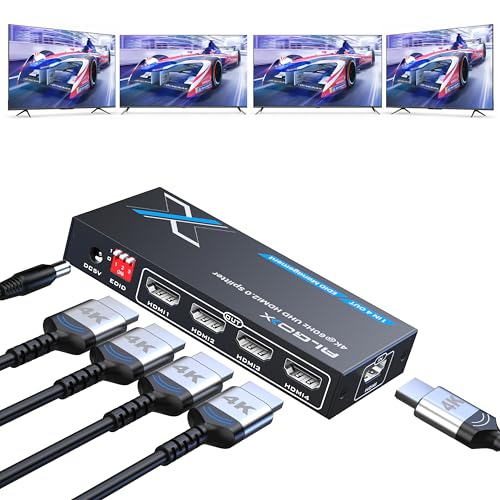
- Uncompressed 4K@60Hz mirror output to 4 displays
- Eight EDID presets for compatibility control
- Supports HDMI 2.0, HDCP 2.3, HDR10, Dolby Vision
Best For: Installations needing 4-screen 4K mirroring and EDID flexibility
Budget 4-Screen Mirroring
ENBUER 4K@30Hz 1x4 HDMI splitter
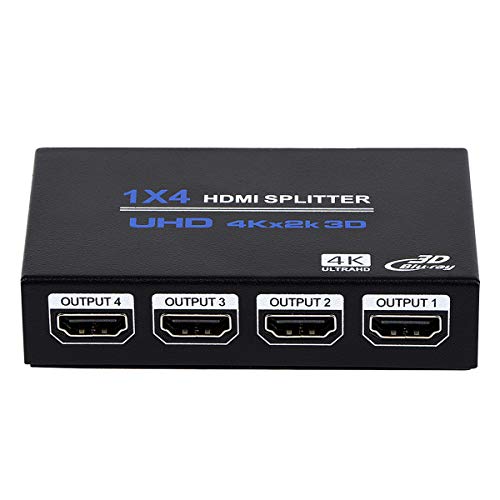
- Mirrors one input to four identical outputs
- Supports up to 4K@30Hz and 1080P@120Hz
- Plug-and-play with included 5V power supply
Best For: Budget-friendly four-display duplication
UltraHD 1x4 Distribution Pick
1 in 4 Out 4K@60Hz HDMI Splitter

- Mirrors one HDMI source to four displays
- Supports 4K@60Hz, HDR, HDMI 2.0, and HDCP 2.2
- EDID management and up to 131 ft transmission
Best For: Multi-display mirroring in AV, retail, and conference setups
Mirror-Only 1x2 Value Choice

- Duplicates one HDMI source to two displays
- Supports auto or forced downscaling
- Does not extend, switch, or extract audio
Best For: Simple mirrored viewing on two screens
Heavy-Duty 4-Display Option

- Mirrors one HDMI source to four outputs
- Supports 4K@60Hz with 18Gbps bandwidth
- Metal build with broad audio format support
Best For: Durable 4-screen mirrored setups with strong audio support
4-Screen Mirror Pick – MT-ViKI 1×4 Powered HDMI Splitter
If you need one of the more straightforward HDMI splitters for showing the same source on four displays, this MT-ViKI unit is built for mirror-only distribution. It supports up to 4K@30Hz, uses a powered design for steadier output, and is a practical fit for conference rooms, retail loops, classrooms, or multi-TV demo setups.
Best For: Users who want a powered 1×4 splitter to duplicate one HDMI source across four screens.
Pros:
- Splits one HDMI input to four identical outputs at the same time.
- Supports up to 4K@30Hz, 1080P@60Hz, 3D, and HDCP 1.4.
- Includes a 5V/2A power adapter for more stable long-distance performance.
- Metal housing is designed for better heat dissipation and EMI protection.
Cons:
- Mirror mode only; it does not support extended desktop mode.
- Does not include speaker output, so audio must come from the TV or monitor.
- Not a switch and does not include a remote.
Overall, this is a solid choice when your priority is dependable one-to-four duplication rather than advanced display management. The powered design and cascade support make it especially useful where signal stability matters.
High-Refresh 2-Display Pick – OREI UltraHD 4K60 1×2 HDMI Splitter
This OREI option is one of the better HDMI splitters if you want a clean 1-in, 2-out mirror setup with higher 4K refresh support. It is designed for duplicating a single HDMI source to two displays, with compatibility across common HDMI devices and a powered supply for reliable operation.
Best For: Anyone wanting a premium 1×2 splitter for two-screen duplication at up to 4K@60Hz.
Pros:
- Duplicates one HDMI source to two displays.
- Supports 4K@60Hz and 18 Gbps bandwidth.
- Works with many HDMI versions and a wide range of devices.
- Includes power supply, manual, and a 1-year warranty.
Cons:
- Does not extend monitors or create dual-screen extended mode.
- Long HDMI runs over 30 feet are not recommended.
- It is a 1×2 splitter, so it is not meant for larger multi-display setups.
If you want a dependable two-output splitter with strong format support, this model is an easy fit. It focuses on stable duplication and broad device compatibility rather than flexibility for extended desktop use.
Compact Dual-Monitor Pick – Warrky USB-C 4K 1×2 HDMI Splitter
The Warrky HDMI splitter is a compact 1-in, 2-out option for users who want a mirror-only setup with simple USB-C power. It supports up to 4K@30Hz, includes a built-in braided HDMI cable, and is suited to desks, classrooms, living rooms, and other spaces where a tidy connection matters.
Best For: People who want a small, metal-bodied splitter for mirrored dual displays with easy USB-C power.
Pros:
- Mirrors one HDMI source to two displays.
- Supports 4K@30Hz, 2K@60Hz, and 1080P@120Hz.
- USB-C powered for flexible power from a USB port or wall charger.
- Built-in braided HDMI cable and metal shell help keep the setup clean and durable.
Cons:
- Mirror mode only; it does not support extended displays.
- Best stability may require a wall charger, which is not included.
- Only provides two outputs, so it is not meant for larger display walls.
For a compact and tidy dual-display setup, this Warrky model is easy to recommend. It balances portability, straightforward powering, and solid format support for everyday mirrored use.
Budget Mirror Duplicator – OREI 4K 1×2 HDMI Duplicator
This OREI HDMI splitter is a practical mirror-only duplicator for sending one HDMI source to two TVs or monitors. It supports up to 4K@30Hz, includes a power adapter, and uses a metal enclosure for cooling, making it a straightforward choice when you want simple duplicate output rather than advanced display features.
Best For: Buyers who need an affordable 1×2 mirror splitter for standard HDMI duplication.
Pros:
- Duplicates one HDMI input to two identical outputs.
- Supports up to 4K@30Hz, plus 1080p and 3D formats.
- Metal housing helps with heat dissipation.
- Includes a power adapter and manual.
Cons:
- Does not support extended display mode.
- Recommended cable length is 30 feet or shorter for best results.
- Will not bypass HDCP and does not support HDCP 2.0/2.2.
This is a no-frills choice for people who just need to mirror one source to two screens reliably. Its limitations are clear, but within its intended use it stays focused on simple duplication and basic compatibility.
Simple 1-to-2 Mirroring – avedio links 4K@30Hz 1×2 HDMI splitter
If you need one of the simpler hdmi splitters for sending the same source to two screens, this avedio links model keeps things straightforward. It mirrors one HDMI input to two displays, supports up to 4K@30Hz, and includes a 4 ft HDMI cable in the box for an easy setup.
Best For: Users who want a basic 1-in-2 duplicate-only splitter for TVs, monitors, projectors, or console setups.
Pros:
- Duplicates one HDMI source to two displays at the same time.
- Supports up to 4K@30Hz and is backward compatible with common lower resolutions.
- Plug-and-play design with no driver installation required.
- Includes a 4 ft HDMI cable and uses external 5V power for stable output.
Cons:
- Does not support extended desktop or different content on each screen.
- Not a switcher and not an audio extractor.
- Requires a compatible power adapter, which is not included.
Overall, this is a practical pick if your goal is simple screen mirroring rather than advanced routing or multi-display independence. Its limits are clear, but within its intended use case it offers an easy, compact way to split one signal to two displays.
High-End 4-Screen Mirroring – 4K@60Hz 1×4 HDMI splitter with EDID
Among hdmi splitters aimed at higher-end setups, this 1-in-4 model is built for users who need a single source mirrored to multiple displays with minimal compromise. It supports uncompressed 4K@60Hz, includes EDID management for compatibility, and is designed for home theaters, classrooms, boardrooms, and digital signage.
Best For: Multi-display installations that need 4K@60Hz mirroring with EDID control.
Pros:
- Mirrors one source to four displays in uncompressed 4K@60Hz.
- Supports HDMI 2.0, HDCP 2.3, HDR10, and Dolby Vision.
- Eight DIP-switch EDID presets help match source and display resolutions.
- Includes a 5V power adapter and wall-mount kit.
Cons:
- Duplicate-only design does not support extend mode.
- Best 4K@60Hz performance depends on HDMI 2.0 or higher cables.
- More advanced than basic splitters, so it may be overkill for simple two-screen use.
This is a strong choice when display compatibility matters as much as image quality. The EDID presets and modern format support make it better suited to mixed-screen environments than a basic mirror splitter.
Budget 4-Screen Mirroring – ENBUER 4K@30Hz 1×4 HDMI splitter
If you want a straightforward way to duplicate one source across four displays, this ENBUER model keeps the job simple. Like other practical hdmi splitters, it mirrors a single input to four identical outputs, supports up to 4K@30Hz, and works as a plug-and-play box for TVs, monitors, projectors, and game consoles.
Best For: Affordable four-screen mirroring where 4K@30Hz and basic compatibility are enough.
Pros:
- Splits one HDMI input to four identical outputs.
- Supports up to 4K@30Hz, 2K@60Hz, and 1080P@120Hz.
- Plug-and-play setup with no external driver required.
- Includes a 5V power supply and supports common source and display devices.
Cons:
- Does not support extend mode.
- Does not support CEC, HDR, or VRR.
- 4K@60Hz support is limited and noted only in YCbCr.
For shoppers who mainly need a mirror-only 1×4 splitter without advanced video features, this is a sensible budget-oriented option. It covers the core use case well, as long as you do not need the newer gaming and HDR capabilities found in pricier models.
UltraHD 1×4 Distribution Pick – 1 in 4 Out 4K@60Hz HDMI Splitter
If you need HDMI splitters that can send one source to four displays at once, this 1×4 model is built for straightforward mirrored output. It supports 4K@60Hz, HDR, HDMI 2.0, and HDCP 2.2, making it a practical choice for multi-screen viewing where signal quality matters.
Best For: Mirroring one HDMI source to four TVs, monitors, or projectors in home theaters, classrooms, conference rooms, and retail displays.
Pros:
- Distributes one HDMI input to four screens simultaneously
- Supports 4K@60Hz, HDR, HDMI 2.0, and HDCP 2.2
- Offers up to 131 ft transmission with high-quality HDMI cables
- Includes EDID management for broader device compatibility
Cons:
- Mirrors the same signal to all displays, not separate content
- Long-distance performance depends on cable quality and length
This is a strong pick if you want a simple, plug-and-play splitter for synchronized 4K distribution. The combination of EDID management and long-distance support makes it especially useful in fixed AV setups.
Mirror-Only 1×2 Value Choice – 4K@60Hz HDMI Splitter
Among HDMI splitters for simple duplication, this 1×2 unit is aimed at mirroring one source to two displays with 4K@60Hz support. It is a practical option when you want the same video and audio on both screens and do not need extended desktop output.
Best For: Duplicating one HDMI source to two TVs, monitors, or projectors for home entertainment, presentations, events, and education.
Pros:
- Mirrors one HDMI input to two displays at 4K@60Hz
- Supports auto or forced downscaling for mixed-resolution displays
- Includes HDMI 2.0 bandwidth up to 18.5Gbps
- Compatible with common devices like PCs, consoles, streaming boxes, and Blu-ray players
Cons:
- Does not extend displays or act as a switcher
- Does not support audio extraction, ARC/eARC, or CEC
- 4K cable runs are limited compared with 1080p use
This splitter fits buyers who want a compact mirror-only solution with flexible resolution handling. It is best viewed as a no-frills way to share one HDMI signal across two screens reliably.
Heavy-Duty 4-Display Option – UltraHD 1×4 HDMI Splitter
If you are comparing HDMI splitters for a sturdier multi-output setup, this OREI 1×4 model focuses on reliable mirrored distribution to four displays. It supports up to 4K@60Hz at 18Gbps and includes EDID plus broad audio format compatibility, which helps it fit both home theater and professional AV use.
Best For: Mirroring a single HDMI source to four displays in presentations, bars, classrooms, retail, and home entertainment systems.
Pros:
- Splits one HDMI input to four mirrored outputs
- Supports 4K@60Hz with 18Gbps bandwidth
- Handles multiple audio formats, including Dolby TrueHD and DTS-HD Master Audio
- Metal enclosure helps with durability and heat dissipation
Cons:
- Mirrors the same content rather than extending desktops
- Works best with HDMI cables up to 30 ft
This is a well-rounded choice when audio support and build quality matter as much as video output. It is especially appealing for fixed installations where you want a compact, dependable 1×4 splitter.
How We Picked the Best Hdmi Splitters
We focused on the features that matter most in real-world use: supported resolution and refresh rate, signal stability, power requirements, HDCP compatibility, and whether the splitter is designed for mirror-only output. For buyers comparing Hdmi Splitters, the biggest difference is often not the number of ports but whether the source and displays can all work together at the desired quality.
Quick Comparison
As a rule, 1×2 models are the easiest choice for TVs, dual-monitor mirroring, and basic streaming rooms. 1×4 units are better for classrooms, retail displays, conference spaces, or home setups where one source needs to feed several screens. If you want the cleanest setup, check whether the unit includes EDID management and whether it is powered externally, since both can improve compatibility and reduce handshake problems.
Key Buying Factors for Hdmi Splitters
Resolution and Refresh Rate
Match the splitter to the highest output you actually need. Some models are limited to 4K at 30Hz, which is fine for movies and presentations, while 4K at 60Hz is better for smoother motion, gaming, and desktop use.
Mirror-Only Vs. Independent Output
Most Hdmi Splitters clone one source to multiple displays. They do not create separate extended desktops. If you need different content on each screen, you likely want an HDMI matrix or a display adapter solution instead.
HDCP and Device Compatibility
If you use streaming boxes, game consoles, or protected video sources, make sure the splitter supports the right HDCP version. Incompatible protection handling can cause blank screens or handshake errors.
Power and Build Quality
Powered splitters are usually more reliable than passive versions, especially over longer use or with multiple outputs. Metal housings, included adapters, and short bundled cables can also improve convenience and durability.
Who Should Buy Which Hdmi Splitters?
Choose a 1×2 splitter if you only need to mirror one source to a TV and a second display, or to a monitor and projector. Choose a 1×4 splitter if you need one signal sent to several rooms or workstations at once. If you care most about 4K playback quality, prioritize 60Hz and 18Gbps support; if your use is mainly presentations or signage, a 30Hz model may be perfectly adequate.
For most buyers, the best Hdmi Splitters are the ones that match the real output chain, not the highest spec on paper. Confirm your source device, display resolution, and content type first, then pick the simplest unit that meets those requirements.