Choosing the right audio crossover can make a bigger difference than adding more power. The right unit helps direct frequencies where they belong, improving clarity, balance, and overall system performance.
Below, we focus on practical options for car audio builders who want easier tuning, stronger signal control, and the right feature set for their setup.
Best 10 Audio Crossover Picks for 2026
PRV DSP Car Tuning Pick
PRV AUDIO Car Audio DSP 2.4X Digital Crossover

- 2 inputs and 4 independent outputs
- 15-band EQ with 12 presets
- Parametric EQ and sequencer support
Best For: Car audio builders wanting flexible DSP control
Clarion Sub Control Pick
Clarion MCD360 3-Way 6-Channel Electronic Crossover

- 6/4/2-channel RCA inputs
- Remote subwoofer level control included
- High-pass crossover and sub level controls
Best For: Simple wired systems needing sub control
Taramps Bluetooth DSP Pick
Taramps Pro 2.4 BT Bluetooth DSP Crossover
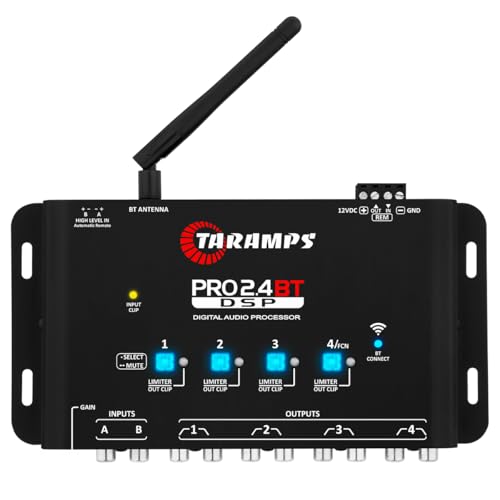
- Bluetooth app control with 2 in/4 out
- 15-band EQ, parametric EQ, and filters
- High-level input with auto turn-on
Best For: Advanced car audio builds needing wireless DSP tuning
Timpano Budget Crossover Pick
Timpano 3-Way Electronic Crossover TPT-360

- 3-way electronic crossover
- Remote subwoofer control
- Basic crossover-focused design
Best For: Basic crossover setups with sub control
Car DSP Tuning Pick
Taramps PRO 2.4S Car Audio DSP Equalizer

- 15-band graphic EQ and parametric EQ
- Active crossover with delay alignment and limiter
- RCA and high-level inputs for easy integration
Best For: Custom car audio systems and OEM upgrades
3-Way Car Audio Splitter
Skar Audio SKEC23 Electronic Crossover

- 3-way crossover with front, rear, and sub routing
- 3 RCA inputs and 3 RCA outputs
- 10Hz to 30kHz frequency response
Best For: Simple car audio systems needing basic 3-way signal splitting
PA Rack Crossover Choice
Professional 2/3-Way Stereo & 4-Way Mono Audio Crossover
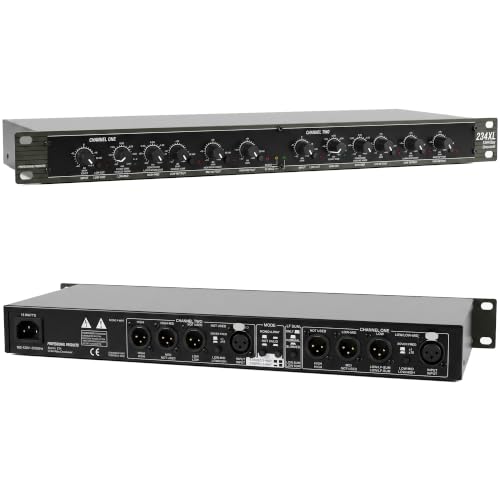
- Selectable 2/3-way stereo and 4-way mono modes
- Balanced XLR inputs and outputs
- Per-band gain, phase invert, and 40Hz low-cut controls
Best For: PA systems, studios, and live sound installations
4-Way Flex
PRV EX4.6PRO 4-In/6-Out RCA Crossover
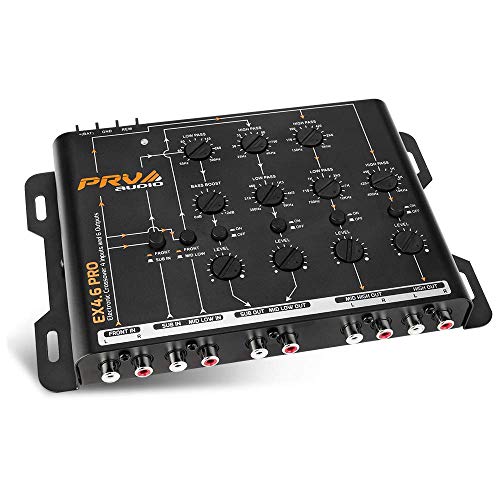
- 2/3/4 RCA input options
- 6 RCA outputs with channel on/off buttons
- Bass boost 0 to 12 dB at 45 Hz
Best For: Flexibly tuned 3-way or 4-way car audio builds
Compact 4-Channel Tuning
Taramp's CRX4 Compact 4-Way Crossover

- Compact 4-channel design
- RCA connectivity with bass boost
- Small footprint at 190 x 145 x 40 mm
Best For: Compact car audio installs needing basic crossover control
Flexible 3-Way Control
PRV EX3.5 Stereo 2/3-Way Crossover
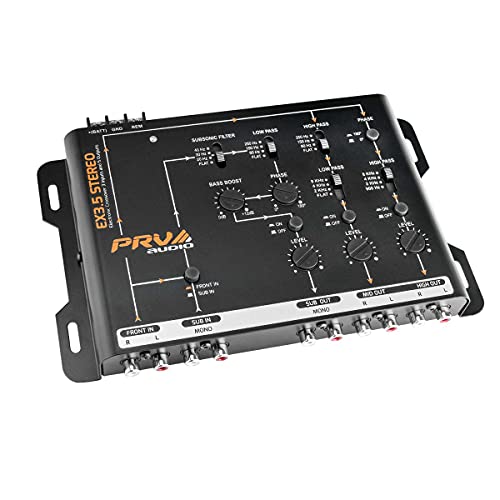
- 2-way or 3-way RCA routing
- Adjustable high-pass, low-pass, and bass boost
- Quick on/off buttons per channel
Best For: Stereo car audio builds needing flexible crossover tuning
PRV DSP Car Tuning Pick – PRV AUDIO Car Audio DSP 2.4X Digital Crossover
If you want an audio crossover that doubles as a DSP and equalizer, the PRV AUDIO DSP 2.4X gives you a flexible setup for car audio tuning. It offers 2 inputs, 4 independent outputs, a 15-band graphic EQ, and a parametric EQ section for more detailed adjustments.
Best For: Car audio builders who want real-time tuning control, preset EQ options, and sequenced system integration.
Pros:
- 2 inputs with source selection for each output
- 15-band graphic equalizer plus 12 EQ presets
- Parametric EQ with gain, frequency, and bandwidth control
- Sequencer feature can trigger other devices via remote connection
Cons:
- Designed for car audio tuning, not a general home-audio crossover
- Requires hands-on adjustment through its interface
This is a practical choice if you want a compact DSP crossover with more control than a basic analog unit. The built-in presets and real-time adjustment support make it easier to dial in a system without starting from scratch.
Clarion Sub Control Pick – Clarion MCD360 3-Way 6-Channel Electronic Crossover
Clarion Mobile Electronics Mcd360 3 Way 6 Channel Electronic Crossover with Subwoofer Control
Check Price On AmazonThe Clarion MCD360 is an audio crossover built around straightforward signal routing and subwoofer control. With 6/4/2-channel RCA inputs, 6-channel outputs, high-pass crossover controls, and a remote subwoofer level control, it fits systems that need simple but useful tuning.
Best For: Drivers who want a wired electronic crossover with dedicated subwoofer level control and basic multi-channel routing.
Pros:
- Front/rear/subwoofer lever controls for quick adjustments
- Remote subwoofer level control included
- 6-channel RCA outputs with gold-plated terminals
- High-pass crossover frequency multiplier for system tuning
Cons:
- Lacks the digital processing features of newer DSP units
- More limited than app-based or Bluetooth crossover options
For buyers focused on reliable analog-style control, the MCD360 keeps the setup simple and functional. It is a good fit when your priority is clean subwoofer management and basic crossover duties rather than advanced digital tuning.
Taramps Bluetooth DSP Pick – Taramps Pro 2.4 BT Bluetooth DSP Crossover
If you want an audio crossover with modern app control, the Taramps PRO 2.4 BT adds Bluetooth tuning to a full digital signal processor. It combines 2 inputs and 4 outputs with 15-band graphic EQ, parametric EQ, HPF/LPF filters, delay, phase inversion, and a limiter for advanced system setup.
Best For: DIY and pro-style car audio systems that need wireless tuning, high-level input, and deep DSP control.
Pros:
- Bluetooth 5.4 BLE app control for real-time adjustments
- 15-band EQ plus parametric EQ and crossover filters
- High-level input with auto turn-on for factory head units
- RCA input supports up to 9V RMS
Cons:
- Feature-rich setup may be more than basic systems need
- Requires app-based tuning for full use of its capabilities
This is the most feature-packed option in the group for users who want precise digital tuning and wireless convenience. The app workflow, preset sharing, and integration features make it especially appealing for custom installs and advanced car audio projects.
Timpano Budget Crossover Pick – Timpano 3-Way Electronic Crossover TPT-360
The Timpano TPT-360 is a straightforward audio crossover choice for systems that need 3-way electronic routing and remote subwoofer control. Since no detailed feature notes were supplied, it is best viewed as a simple, purpose-built crossover option rather than a full DSP solution.
Best For: Buyers looking for a basic 3-way electronic crossover with subwoofer control.
Pros:
- 3-way electronic crossover design
- Includes remote subwoofer control
- Positioned as an equalizer crossover unit
Cons:
- No detailed specifications were provided in the supplied notes
- Feature set cannot be compared as precisely as the other models here
If you mainly need a basic crossover with subwoofer control, the TPT-360 stays focused on that role. Because the supplied notes are limited, it is best evaluated by its core function rather than advanced tuning features.
Car DSP Tuning Pick – Taramps PRO 2.4S Car Audio DSP Equalizer
If you want an audio crossover that also works as a compact DSP, the Taramps PRO 2.4S gives you a lot of tuning control in one unit. It combines a 15-band graphic EQ, parametric EQ, active crossover functions, delay alignment, and limiter tools for detailed system setup in a car audio build.
Best For: Custom car audio systems, active speaker setups, and OEM upgrades that need DSP-style tuning.
Pros:
- 15-band graphic EQ plus parametric EQ for more precise sound shaping
- Active crossover, delay alignment, and limiter help refine system performance
- RCA and high-level inputs make it easier to integrate with factory or aftermarket radios
- Anti-Pop System and clip indicators add useful protection and startup/shutdown control
Cons:
- Best suited to users who want to spend time tuning rather than simple plug-and-play use
- Primarily focused on car audio applications, not general home or PA use
Overall, the PRO 2.4S is a strong pick if your priority is crossover control with tuning flexibility in a single compact processor. Its mix of EQ, routing, and protection features makes it a practical choice for more advanced car audio setups.
3-Way Car Audio Splitter – Skar Audio SKEC23 Electronic Crossover
The Skar Audio SKEC23 is a straightforward audio crossover built for 3-way car audio signal splitting. With 3 RCA inputs and 3 RCA outputs for front, rear, and subwoofer channels, it is aimed at systems that need simple electronic crossover routing without extra DSP features.
Best For: Car audio systems that need a basic 3-way electronic crossover for front, rear, and subwoofer control.
Pros:
- 3-way electronic crossover with dedicated front, rear, and subwoofer routing
- 3 RCA inputs and 3 RCA outputs for flexible signal connections
- Operates on 14.4V DC and supports up to 5V output level
- Wide 10Hz to 30kHz frequency response for full-range audio handling
Cons:
- Lacks the deeper DSP-style tuning options found in more advanced processors
- Designed specifically for car audio voltage and signal setups
In a roundup of audio crossover options, the SKEC23 stands out for keeping the job simple and focused on clean 3-way signal distribution. It is a practical choice when you need front, rear, and subwoofer channels handled by a dedicated electronic crossover.
PA Rack Crossover Choice – Professional 2/3-Way Stereo & 4-Way Mono Audio Crossover
This professional audio crossover is aimed at live sound and installed systems that need flexible routing. It supports selectable 2/3-way stereo or 4-way mono operation, with balanced XLR inputs and outputs for cleaner signal transfer in demanding audio setups.
Best For: PA systems, studio monitoring, live venues, houses of worship, and mobile DJ rigs.
Pros:
- Selectable 2/3-way stereo and 4-way mono crossover modes
- Independent output gain, phase invert, and 40Hz low-cut filters per band
- Balanced XLR I/O helps reduce noise on long cable runs
- LED indicators make mode and signal status easy to monitor
Cons:
- More specialized for pro audio than everyday home listening
- Requires proper setup to take full advantage of the routing options
For buyers comparing audio crossover units in a professional context, this model offers the routing and control features that matter most in PA work. Its balanced connections, per-band controls, and rugged design make it a sensible rack-ready option for serious installations.
4-Way Flex – PRV EX4.6PRO 4-In/6-Out RCA Crossover
If you’re shopping for an audio crossover that can handle a more advanced car audio layout, the PRV Audio EX4.6 PRO is built around flexible routing and level control. It supports 2, 3, or 4 RCA input signal options, offers 6 RCA outputs, and uses a Butterworth 12 dB/Octave slope for clean crossover behavior. The 9V RMS maximum output and per-channel quick on/off controls make it a practical choice for tuning a system without overcomplicating the setup.
Best For: Car audio users who want a flexible 3-way or 4-way electronic crossover with RCA control and bass boost.
Pros:
- Supports 2/3/4 RCA input signal options for flexible system layouts
- 6 RCA outputs and per-channel quick on/off buttons
- Bass boost adjustable from 0 to 12 dB at 45 Hz
- Butterworth 12 dB/Octave crossover slope
Cons:
- Requires an RCA-based car audio setup
- Not a simple plug-and-play speaker upgrade
- Best suited to users comfortable with tuning and channel management
This PRV crossover is aimed at buyers who need more control than a basic processor can offer. If your build benefits from selectable input routing, bass shaping, and multi-channel flexibility, it’s a strong fit.
Compact 4-Channel Tuning – Taramp's CRX4 Compact 4-Way Crossover
The Taramp’s CRX4 is a compact audio crossover designed for car audio systems that need straightforward sound adjustment in a small footprint. It offers 4 channels, RCA connectivity, bass boost support, and customizable sound adjustments, making it a practical pick when you want control without taking up much space. With compact dimensions and a light 560-gram weight, it fits well in tighter installs.
Best For: Car audio owners who want a compact electronic crossover with adjustable sound shaping.
Pros:
- Compact size for easier installation in limited spaces
- 4 channels with RCA connector type
- Customizable sound adjustments and bass boost
- Lightweight at 560 grams
Cons:
- Specifications are focused on car audio use only
- Not intended for users who want a simple fixed-output unit
- Less channel flexibility than some larger crossover options
For buyers prioritizing size and basic tuning control, the CRX4 is an easy-to-place option. It makes the most sense in systems where compact packaging and adjustable RCA-based processing matter more than advanced routing.
Flexible 3-Way Control – PRV EX3.5 Stereo 2/3-Way Crossover
The PRV EX3.5 Stereo is an audio crossover built for car audio users who want configurable 2-way or 3-way routing with RCA connections. It supports 2/4 RCA inputs and up to 6 RCA outputs, with adjustable high pass and low pass filters plus an adjustable bass boost on the sub out channel. Quick on/off buttons for each channel and a Butterworth 12 dB/Octave slope make it a versatile tuning tool for stereo system layouts.
Best For: Users who want a stereo electronic crossover with 2-way or 3-way flexibility and bass management.
Pros:
- Supports 2-way or 3-way crossover configurations
- 2/4 RCA inputs and up to 6 RCA outputs
- Adjustable high pass, low pass, and bass boost controls
- Quick on/off buttons for each channel
Cons:
- Designed specifically for car audio systems
- RCA-based setup may not suit every build
- More control than casual users may need
If you want a crossover that gives you detailed control over stereo system routing, the EX3.5 is the most flexible of the three. It’s a good match for buyers who need tuning options for highs, lows, and sub output in one processor.
How We Picked These Audio Crossover Options
We looked for models that match real-world car audio needs: solid channel configurations, useful control features, and enough output flexibility for common 2-way, 3-way, and more advanced systems. We also prioritized units with practical tuning tools such as subwoofer level control, gain control, and digital processing where appropriate.
Because an Audio Crossover should support system goals rather than complicate them, we favored products that offer clear installation value for both entry-level and experienced builders.
Quick Comparison
If you want simple analog control, a traditional electronic crossover is often the easiest route. If you want more precise tuning, a DSP-based Audio Crossover can add equalization, time correction-style flexibility, and app control on some models.
For basic upgrades, 2-way and 3-way crossovers are usually enough. For larger active systems or custom builds, 4-way units and digital processors offer more routing options and finer adjustments.
Key Buying Factors for Audio Crossover
System Type
Match the crossover to your speakers and amplifiers. A 2-way system may only need simple high-pass and low-pass filtering, while a 3-way or 4-way setup benefits from more output channels and more precise frequency management.
Input and Output Flexibility
Check how many RCA inputs and outputs the unit supports, and whether it can handle the way your system is wired. More outputs usually mean more room to expand, especially for active front stages or dedicated subwoofer channels.
Control Features
Subwoofer level control, gain adjustment, bass boost, and remote control can make tuning easier. DSP models may also add EQ and app-based control, which is useful if you want to dial in response changes without rewiring.
Signal Quality and Voltage
Higher output voltage can help maintain cleaner signal transfer in some systems. If you are running a more advanced build, that can be a meaningful advantage when paired with proper gain staging.
Who Should Buy Which Audio Crossover?
Beginners and straightforward daily-driver builds should look for an easy-to-use electronic crossover with enough channels for their speakers and sub. Enthusiasts chasing more control should consider a DSP-based Audio Crossover for deeper tuning and better system shaping.
If your goal is strong bass integration and simple front-stage management, a 3-way or 4-way analog unit may be the best fit. If you want maximum flexibility for a custom installation, a digital processor with EQ and app control is usually the smarter long-term choice.