A home ham station can be a compact mobile transceiver on a desk or a dedicated radio built for long-distance HF contacts. The right choice depends first on which bands and modes you want to use—not simply on transmit power.
These 10 options span starter-friendly VHF/UHF setups, 10-meter radios, HF transceivers, and broader all-mode stations. Use the guide below to narrow the field before comparing individual models.
Best 10 Base Station Ham Radios Picks for 2026
Best for Cross-Band Relay
Retevis MA1 Dual-Band Mobile Radio

- Cross-band relay helps bridge obstructed links.
- Detachable, reversible control panel.
- Noise reduction for receive and transmit audio.
Best For: Dual-band operators needing cross-band relay capability
Best for 10-Meter Modes
Retevis Ailunce HS4 10-Meter Radio

- Supports CW, SSB, AM, and FM.
- Dual watch monitors two channels.
- Includes SWR monitoring and voltage protection.
Best For: Operators building a dedicated 10-meter station
Best Compact Starter Setup

- Compact design suits desk or vehicle use.
- Rotatable display and illuminated controls.
- CHIRP-compatible with 200 channels.
Best For: Compact dual-band home and vehicle setups
Best Direct-Sampling Receiver

- Direct-sampling receiver.
- Listed receive coverage: 0.030–74.800 MHz.
- 100W output; 25W on AM.
Best For: Stations prioritizing direct-sampling reception
Wide-Coverage Pick
Yaesu FT-991A All-Mode Transceiver
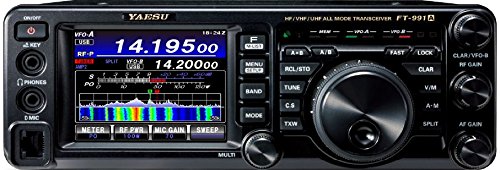
- 160 meters through 70 centimeters
- SSB, CW, FM, C4FM, and AM
- Touch panel with spectrum and waterfall displays
Best For: Operators seeking HF, VHF, and UHF in one radio
VHF/UHF Specialist
Icom IC-9700 D-STAR Transceiver

- VHF, UHF, and 1.2 GHz focus
- D-STAR model
- USB and Ethernet connectivity
Best For: Operators focused on VHF/UHF/1.2 GHz and D-STAR
Mobile-Style Station Kit
AT-778UV II with Magnetic Antenna

- Dual-band 144–148/420–450 MHz
- Selectable 25W, 15W, or 5W output
- Includes magnetic car antenna; no USB cable
Best For: Operators building a fixed setup around a mobile VHF/UHF kit
Dual-Band Mobile Pick

- 25-watt VHF/UHF operation
- Monitors up to three additional channels
- Base-station power supply sold separately
Best For: Dual-band use in a vehicle or at a desk
Tri-Band Flexibility Pick

- 25-watt 144/220/430 MHz operation
- Monitors up to three additional channels
- Relay sound possible during mixed-band monitoring
Best For: Operators who need 1.25-meter coverage
HF Desktop Pick

- 100-watt HF/50 MHz transceiver
- Software, cable, and quick card included
- 13.8-pound radio
Best For: HF/50 MHz operators wanting a programming bundle
Best for Cross-Band Relay – Retevis MA1 Dual-Band Mobile Radio
Among base station ham radios, the Retevis MA1 is worth considering when your setup needs cross-band relay capability. Its detachable, reversible control panel also gives you more flexibility in placing the radio and viewing its display.
Best For: Operators who want a dual-band radio that can relay calls between teammates beyond direct reach.
Pros:
- Cross-band relay can help extend communication past obstacles.
- Receiver filtering and transmit noise cancellation target interference and background noise.
- Detachable panel and upgraded mounting bracket support flexible installation.
- Receives FM/AM broadcasts and aircraft traffic on the A channel; aircraft reception is receive-only.
Cons:
- Not water resistant.
- Analog connectivity may not suit buyers looking for digital modes.
The MA1 makes the most sense when relay functionality is the priority. Check that its dual-band coverage and 13.8V power requirement fit your station before buying.
Best for 10-Meter Modes – Retevis Ailunce HS4 10-Meter Radio
If your search for base station ham radios is focused on the 10-meter band, the Retevis Ailunce HS4 offers CW, USB/LSB, AM, and FM in a unit designed for either vehicle or home use. Its specified frequency range is 28.000–29.700 MHz.
Best For: 10-meter operators who want several operating modes for contacts, DX, or contests.
Pros:
- CW, SSB, AM, and FM modes provide operating flexibility.
- Dual watch lets you monitor two channels.
- Noise reduction, auto squelch, and adjustable RF gain help manage interference.
- SWR monitoring and voltage protection help safeguard the radio.
Cons:
- Limited to the specified 10-meter frequency range.
- Home base-station use requires a proper power supply.
Choose the HS4 for its mode selection rather than broad multiband coverage. Its backlit LCD and VFO knob add straightforward controls to a dedicated 10-meter setup.
Best Compact Starter Setup – Retevis RT95 Dual-Band Radio
The compact Retevis RT95 is a practical option among base station ham radios for operators who also want vehicle installation. It covers the listed 2-meter and 70-centimeter frequencies and can monitor dual-band signals at the same time.
Best For: Operators setting up a compact home or field station that can also serve in a vehicle.
Pros:
- Compact design accommodates vehicle installation or a small station space.
- Rotatable color display and illuminated controls improve viewing flexibility.
- VFO tuning and CHIRP compatibility simplify frequency and channel management.
- Dual speakers, adjustable microphone gain, and an RCA audio output offer audio options.
Cons:
- A 13.8V/10A power source for base-station operation is not included.
- Not water resistant.
The RT95 offers a manageable route into dual-band operation, with 200 stored channels and controls usable without a computer. Budget for the required power source if it will live on a desk.
Best Direct-Sampling Receiver – ICOM 7300 02 Shortwave Radio
For shoppers comparing base station ham radios with an emphasis on receiver design, the ICOM 7300 02 uses direct sampling and lists receive coverage from 0.030 to 74.800 MHz. Its stated output is 100W, or 25W on AM.
Best For: Operators who prioritize direct-sampling reception and the listed receive coverage in a DC-powered station radio.
Pros:
- Direct-sampling receiver design.
- Listed receive frequencies span 0.030–74.800 MHz.
- Specified 100W output, reduced to 25W on AM.
- Includes a hand microphone and DC power cable.
Cons:
- The supplied notes do not specify its transmit-frequency coverage.
- At 8.4 pounds, it is less compact than the smaller mobile radios here.
The 7300 02 stands apart for its stated receiver architecture and receive range. Confirm the transmit bands and any station accessories you need before choosing it for a particular operating plan.
Wide-Coverage Pick – Yaesu FT-991A All-Mode Transceiver
Among base station ham radios, the Yaesu FT-991A stands out for covering 160 meters through 70 centimeters in one transceiver. It supports SSB, CW, FM, C4FM digital, and AM, making it a practical choice if you want several bands and modes at one operating position.
Best For: Operators who want HF, VHF, and UHF coverage in a single all-mode radio.
Pros:
- 100-watt output, with 50 watts on 2 meters and 70 centimeters.
- Real-time spectrum scope and multi-color waterfall display.
- 3.5-inch full-color touch panel and a three-year warranty.
Cons:
- At 12.99 pounds, it is heavier than a compact mobile-style unit.
- VHF/UHF output is lower than its stated 100-watt output on other covered bands.
Choose this model when broad band and mode coverage matter more than minimizing radio size and weight.
VHF/UHF Specialist – Icom IC-9700 D-STAR Transceiver
If your search for base station ham radios centers on VHF, UHF, and 1.2 GHz rather than HF, the Icom IC-9700 is the focused option here. Its listed USB and Ethernet connectivity also makes it worth considering for a compatible computer-connected setup.
Best For: Operators concentrating on VHF/UHF/1.2 GHz and D-STAR operation.
Pros:
- Designed for VHF, UHF, and 1.2 GHz operation.
- D-STAR capability is identified in the product title.
- USB and Ethernet connectivity; listed compatibility includes RS-BA1 Version 2 and CI-V command protocols.
Cons:
- No HF coverage is listed.
- Not water resistant.
This is a more targeted choice than an all-band transceiver: consider it if its supported bands, D-STAR, and connectivity match how you plan to operate.
Mobile-Style Station Kit – AT-778UV II with Magnetic Antenna
For shoppers comparing base station ham radios with compact mobile-style options, the AT-778UV II kit pairs a dual-band transceiver with a 20-inch magnetic-mount car antenna. Its listed 13.8-volt requirement is an important planning detail if you intend to use it at a fixed operating position.
Best For: Operators wanting a VHF/UHF mobile-radio kit that can also be planned into a fixed station.
Pros:
- Selectable 25W, 15W, and 5W output with 200 memory channels.
- 180-degree rotatable TFT display, VOX, and built-in cooling fan.
- Kit includes a microphone, magnetic-mount car antenna, fused power cable, and mounting hardware.
Cons:
- Requires 13.8-volt power; a station power supply is not listed among the included items.
- USB programming cable is not included, and CHIRP is not supported.
- Listed warranty is 90 days.
This kit suits operators who value the included mobile mounting and antenna accessories, provided they account for fixed-station power and any programming cable they need.
Dual-Band Mobile Pick – BTECH UV-25X2
BTECH UV-25X2 (Second Gen.) Mini Mobile 25 Watt Dual Band Base, Mobile Radio: VHF, UHF Amateur (Ham)
Check Price On AmazonAmong base station ham radios, the 25-watt BTECH UV-25X2 is a compact option for operators who also want a vehicle-mounted radio. It covers the 144 MHz and 430 MHz amateur bands and can monitor up to three additional frequencies or channels.
Best For: Operators who want one dual-band radio for a vehicle and a home or office setup.
Pros:
- Supports VHF-VHF or UHF-UHF operation.
- Includes mounting hardware, a speaker mic, a DC cable, and an RJ45-to-K1 audio adapter.
- K1 adapter provides access to compatible aftermarket audio accessories.
Cons:
- The optional RPS-30M power supply for home or office use is sold separately.
- Computer programming cable and recommended antenna are separate purchases.
Choose this model if dual-band coverage meets your needs and you value flexible mounting and audio options. Budget for the power supply if it will stay on a desk.
For shoppers comparing base station ham radios with 1.25-meter coverage, the 25-watt BTECH UV-25X4 adds 220 MHz operation alongside 144 MHz and 430 MHz. It can use any of those bands as the primary transmit/receive band while monitoring up to three other frequencies or channels.
Best For: Operators who want 144, 220, and 430 MHz access in a radio that can also be vehicle-mounted.
Pros:
- Tri-band operation includes the 220 MHz amateur band.
- Includes vehicle mounting hardware, a speaker mic, a DC cable, and an RJ45-to-K1 audio adapter.
- Offers 200 channels and multiple monitoring options.
Cons:
- The optional RPS-30M power supply for a home or office setup is sold separately.
- Monitoring 220 MHz alongside VHF/UHF can produce an audible relay-switch sound.
The extra band is the reason to choose the UV-25X4 over a dual-band model. If you regularly monitor 220 MHz with VHF/UHF, account for the relay sound noted by the manufacturer.
If your search for base station ham radios is focused on HF rather than VHF/UHF, this bundle pairs the 100-watt Icom IC-7300 HF/50 MHz transceiver with RT Systems programming software and cable plus a quick reference card.
Best For: Operators seeking an HF/50 MHz base transceiver with programming accessories included.
Pros:
- Provides HF and 50 MHz coverage with 100-watt output.
- Bundle includes RT Systems programming software and cable.
- Listed features include noise reduction and automatic digital tuning.
Cons:
- Does not list the 144 MHz, 220 MHz, or 430 MHz coverage offered by the other radios here.
- At 13.8 pounds, it is heavier than the compact mobile models in this roundup.
This is the distinct choice when HF/50 MHz capability matters more than a compact VHF/UHF mobile format. Check that its band coverage matches the contacts you plan to make.
How We Picked These Base Station Ham Radios
We grouped the selected radios by their practical role in a home station: local VHF/UHF operation, 10-meter use, HF contacts, or broader multimode coverage. We prioritized band and mode coverage, station flexibility, and what each listing actually includes. A mobile radio can work well on a desk, but it generally needs a separate DC power supply and a suitable external antenna; a bundled vehicle antenna does not automatically make it an effective home antenna.
Quick Comparison: Start with the Bands
- Local repeaters and nearby contacts: Consider dual-band VHF/UHF choices such as the Retevis MA1 or RT95, AT-778UV II, and BTECH UV-25X2. Check each radio’s supported bands, output power, and included accessories.
- Additional band options: The BTECH UV-25X4 adds a third band, while the Icom IC-9700 is aimed at operators seeking dedicated VHF/UHF and 1.2 GHz capabilities, including D-STAR.
- 10-meter operating: The Retevis Ailunce HS4 focuses on 10 meters and offers multiple listed modes. It is not a substitute for an HF radio covering several bands.
- HF and broader all-mode operation: The Icom IC-7300 listings suit buyers focused on HF and 50 MHz; compare the standalone listing with the software-and-guide bundle. The Yaesu FT-991A is the broader-coverage option spanning HF, 50 MHz, and VHF/UHF.
Key Buying Factors for Base Station Ham Radios
Bands, Modes, and Licensing
Choose the bands you can use and the contacts you want to make. FM VHF/UHF is common for local repeater activity; HF often calls for SSB or CW, and digital operation may require additional equipment or software. Confirm your license privileges and current local rules before transmitting. Do not assume that two radios covering the same band support the same modes.
Power and Antenna Planning
For a desk-mounted mobile transceiver, budget for a compatible regulated DC supply with enough current capacity, plus the correct connectors. Any station also needs an antenna suited to its bands, appropriate feed line, and a safe installation. Antenna choice and placement can matter more to everyday results than a small difference in advertised wattage. Check whether an antenna, power supply, microphone, mounting hardware, or programming cable is included rather than assuming it is.
Operating Features and Total Cost
Consider display readability, controls, memory programming, cross-band repeat, and supported digital voice features only where they match how you operate. A compact radio may save desk space but offer fewer direct controls. Compare the total station cost—including power, antenna, feed line, and optional software—not just the radio price. Verify current specifications and bundle contents with the seller, especially where listings describe different accessories.
Who Should Buy Which Base Station Ham Radios?
New local operators: Start with a straightforward VHF/UHF mobile-as-base setup if nearby repeaters are your priority. Space-conscious operators: Look at the compact BTECH models, provided their band coverage meets your needs. HF-focused buyers: Compare the IC-7300 listings by included extras and total price. Operators wanting one radio across HF and VHF/UHF: Consider the FT-991A. Dedicated VHF/UHF enthusiasts: The IC-9700 makes more sense when its specialized coverage and features justify the investment.