The best capture card with HDR10 passthrough lets you record or stream gameplay without sacrificing the HDR picture and responsive performance you see on your display.
We compared external and internal models across resolution support, refresh rates, connectivity, latency, compatibility, and ease of setup to help you find the right fit for your gaming and streaming workflow.
Best 10 Capture Card with Hdr10 Passthrough Picks for 2026
Best Overall
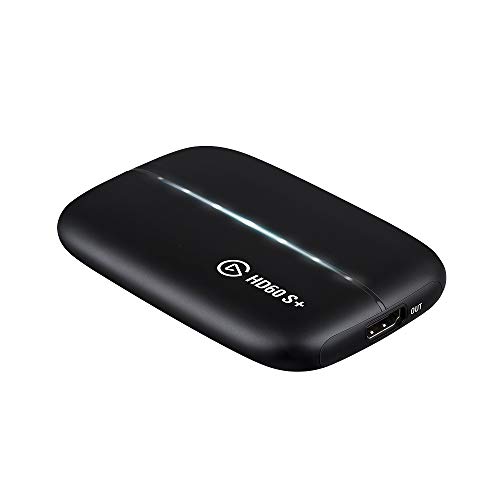
- 1080p60 HDR10 capture
- 4K60 HDR10 zero-lag passthrough
- Windows and macOS compatible
Best For: Console streamers who want reliable HDR10 passthrough
Best Value

- 4K60 capture support
- HDR10 passthrough with VRR
- Windows, macOS, and Linux support
Best For: Multiplatform streamers and content creators
Best Internal Card

- 4K60 HDR10 capture
- Zero-lag passthrough up to 240Hz
- PCIe design for Windows desktops
Best For: Dual-PC streamers and desktop creators
Best High-Refresh Option
Guermok 4K144 HDMI 2.1 Capture Card

- 4K144 HDR10 and VRR passthrough
- USB 3.2 Gen2 connectivity
- Flexible audio inputs and outputs
Best For: Competitive gamers and high-refresh streaming setups
Premium Internal Pick

- 4K60 HDR10 capture with 8K60 passthrough
- HDMI 2.1 and up to 1080p240 recording
- VRR support and ultra-low latency
Best For: High-end Windows and dual-PC streaming setups
Compact USB Choice

- 4K60 HDR passthrough with 1080p60 capture
- 1440p144 and 1080p240 high-refresh support
- Driver-free USB-C setup for multiple platforms
Best For: Simple, portable everyday streaming
High-Refresh External Pick

- 4K144 HDR10 passthrough over HDMI 2.1
- True 4K60 capture with 1080p120 support
- USB 3.2, VRR, and party chat capture
Best For: Competitive console and PC gaming streams
Premium HDR/VRR Pick

- 4K60 HDR and VRR passthrough
- 1440p144 and 1080p240 support
- Ultrawide and 5.1 audio features
Best For: Advanced console and PC streaming setups
Flexible High-Refresh Pick
PORTTA DX20R HDMI Capture Card

- 4K60 capture and passthrough
- 2K144Hz and 1080p240Hz support
- HDR, VRR, and multi-OS compatibility
Best For: Cross-platform high-refresh game streaming
Simple Audio-Friendly Pick
ezcap333P 4K HDMI Capture Card

- 4K60 capture and passthrough
- 1080p120 recording support
- Mic, headset, and line-in ports
Best For: Plug-and-play console streaming with audio mixing
Best Overall – Elgato HD60 S+
The Elgato HD60 S+ is a practical capture card with HDR10 passthrough for console players who want to preserve high-fidelity gameplay while recording or streaming. It captures up to 1080p60 HDR10 and passes through 4K60 HDR10 with zero-lag performance.
Best For: PS5, PS4 Pro, Xbox Series X/S, and Xbox One players using Windows or macOS.
Pros:
- Captures gameplay at 1080p60 HDR10.
- Supports 4K60 HDR10 zero-lag passthrough.
- Includes Instant Gameview, Flashback Recording, and unlimited hard-drive capture.
- Works with PC, Mac, OBS, and major gaming consoles.
Cons:
- Capture resolution is limited to 1080p60 despite 4K passthrough.
- Requires a compatible computer and available storage for recording.
The HD60 S+ is a well-rounded choice when smooth 4K HDR10 gameplay passthrough matters more than native 4K recording.
Best Value – OREI VC-4K60 Capture Card
The OREI VC-4K60 is a flexible capture card with HDR10 passthrough, 4K input and capture support, and USB 3.0 connectivity. It is designed for gaming, streaming, meetings, and content creation without requiring external power or driver installation.
Best For: Users seeking high-resolution capture across Windows, macOS, and Linux.
Pros:
- Supports input and capture up to 4K at 60Hz.
- Offers HDR10 passthrough and VRR support for smoother gameplay.
- Uses UVC/UAC protocols and supports 48kHz PCM audio.
- Works with cameras, consoles, and computers through USB 3.0 or USB 2.0.
Cons:
- The supplied notes do not state detailed system requirements.
- Warranty coverage is limited to one year.
With 4K60 capture, HDR10 passthrough, and broad operating-system compatibility, the OREI is a strong option for buyers who want versatile connectivity in a compact USB device.
Best Internal Card – Elgato 4K60 Pro MK.2
Elgato - 4K60 Pro MK.2 Recorder ,HDR10 Capture, Zero-Lag Passthrough (Renewed)
Check Price On AmazonThe renewed Elgato 4K60 Pro MK.2 is an internal PCIe capture card with HDR10 capture and zero-lag passthrough. It targets demanding desktop setups that need 4K60 recording, low-latency monitoring, and support for simultaneous streaming and local capture.
Best For: Windows desktop users building a high-performance or dual-PC streaming setup.
Pros:
- Captures 4K60 HDR10 footage.
- Provides ultra-low-latency Instant Gameview technology.
- Supports up to 240Hz passthrough for dual-PC configurations.
- Can stream while recording HDR10 video to a hard drive.
Cons:
- Requires a desktop with a PCI Express x16 interface.
- Windows is the listed operating-system platform.
- This listing is for a renewed product.
The 4K60 Pro MK.2 makes the most sense for desktop creators who prioritize high-quality 4K HDR10 capture and need an internal solution rather than a portable USB card.
Best High-Refresh Option – Guermok 4K144 HDMI 2.1 Capture Card
The Guermok 4K144 is a high-refresh USB capture card with HDR10 passthrough, VRR, and HDMI 2.1 connectivity. It is built for competitive gaming and supports high-refresh passthrough modes while offering multiple audio connections for streaming and recording.
Best For: Esports players, dual-PC streamers, and creators using high-refresh gaming displays.
Pros:
- Supports HDR10 and VRR passthrough up to 4K144Hz.
- Offers capture modes up to 4K144FPS on Windows and 4K60 on macOS.
- Includes HDMI audio, mic, line-in, line-out, and speaker-out connections.
- Uses USB 3.2 Gen2, UVC/UAC, and plug-and-play software compatibility.
Cons:
- Some of the highest capture frame rates depend on Windows and selected formats.
- Mac capture is limited to up to 4K60.
- High-refresh operation requires compatible HDMI 2.1 equipment.
For competitive setups, the Guermok stands out through its 4K144 HDR10 passthrough, VRR support, and unusually flexible audio routing, though its advanced modes require compatible hardware and settings.
Premium Internal Pick – Elgato 4K Pro
The Elgato 4K Pro is a strong choice if you need a capture card with HDR10 passthrough for a Windows desktop setup. Its HDMI 2.1 connectivity, 4K60 HDR10 capture, 8K60 passthrough, VRR support, and high-frame-rate recording make it suited to demanding gaming and streaming workflows.
Best For: Windows users building a high-performance internal or dual-PC streaming setup.
Pros:
- Supports 4K60 HDR10 capture and up to 8K60 passthrough.
- HDMI 2.1 enables recording up to 1080p240.
- VRR passthrough and ultra-low latency help keep gameplay smooth.
- Works with popular streaming and video-call apps, including OBS, Streamlabs, Twitch Studio, Zoom, and Teams.
Cons:
- Requires a Windows 10 computer with an available PCIe slot.
- An internal card is less portable than a USB capture solution.
Choose this model when maximum passthrough quality and advanced HDMI 2.1 features matter more than portability. It is particularly compelling for PC-based creators and dual-PC setups.
Compact USB Choice – AVerMedia StreamLine MINI+
The AVerMedia StreamLine MINI+ is a practical capture card with HDR10 passthrough for creators who want 4K60 HDR viewing while recording in 1080p60. Its driver-free USB-C design, broad device compatibility, and high-refresh passthrough make it easy to add to a console, PC, camera, or mobile streaming setup.
Best For: Beginners and everyday streamers who want simple USB connectivity across Windows, macOS, or compatible iPads.
Pros:
- Passes through 4K60 HDR while capturing up to 1080p60 SDR.
- Supports high-refresh passthrough up to 1440p144 HDR or 1080p240 HDR.
- Driver-free operation works with OBS, Camo Studio, and AVerMedia Streaming Center.
- Compatible with consoles, PCs, cameras, smartphones, tablets, Windows, macOS, and supported iPads.
Cons:
- Captured video is limited to 1080p60 SDR rather than HDR.
- Requires a compatible computer or iPad and USB 3.0 connection for capture.
This is a sensible option when smooth HDR gameplay on the display is more important than recording HDR footage. Its compact, driver-free format also suits first-time streamers and portable setups.
High-Refresh External Pick – Narvitech NJ700
The Narvitech NJ700 is an external capture card with HDR10 passthrough aimed at gamers who want smooth 4K gameplay while streaming at up to 4K60. HDMI 2.1, 4K144 HDR passthrough, USB 3.2 Gen 2, VRR support, and broad operating-system compatibility give it a flexible role in modern console and PC setups.
Best For: Competitive gamers and multi-platform streamers who prioritize high-refresh 4K passthrough.
Pros:
- Provides 4K144 HDR10 passthrough for high-refresh gaming.
- Captures true 4K60 video, with additional 2K60 and 1080p120 support.
- Plug-and-play USB 3.2 operation works with OBS, Streamlabs, and XSplit.
- Supports VRR, ultra-low latency, party chat capture, and Windows, macOS, Linux, SteamOS, iOS, and Android platforms.
Cons:
- High-end features may exceed the needs of basic 1080p streaming setups.
- Full performance depends on compatible HDMI 2.1, USB 3.2 Gen 2, and system hardware.
The NJ700 stands out for users who want an external solution without giving up high-refresh 4K passthrough. It is a strong fit for current consoles, gaming PCs, and creators who need flexible platform support.
Premium HDR/VRR Pick – AVerMedia Live Gamer Ultra S
If you want a capture card with HDR10 passthrough for high-refresh gaming, the AVerMedia Live Gamer Ultra S supports 4K60 HDR and VRR passthrough while also handling demanding 1440p and 1080p frame rates. It is designed for console and PC streaming workflows with OBS Studio and Streamlabs.
Best For: Gamers who need 4K60 HDR/VRR passthrough, ultrawide support, and advanced recording features.
Pros:
- Supports 4K60 HDR and VRR passthrough.
- Handles up to 1440p144 or 1080p240 gameplay passthrough.
- Offers ultrawide input support and 5.1-channel audio on Windows.
- Works with Windows, macOS, and iPadOS.
Cons:
- 5.1-channel audio capture is specified for Windows workflows.
- Some advanced features require AVerMedia Streaming Center software.
The GC553Pro stands out when passthrough flexibility matters as much as capture quality. Its support for HDR, VRR, high refresh rates, ultrawide resolutions, and 5.1 audio makes it a strong choice for feature-rich setups.
Flexible High-Refresh Pick – PORTTA DX20R HDMI Capture Card
The PORTTA DX20R is a practical capture card with HDR10 passthrough for streamers who want 4K60 capture alongside high-refresh passthrough modes. Its VRR and HDR support, USB 3.0 connectivity, and broad computer compatibility make it easy to integrate into a streaming setup.
Best For: Users seeking 4K60 capture, high-refresh passthrough, and cross-platform compatibility.
Pros:
- Captures at 4K60 and supports 2K144Hz and 1080p240Hz modes.
- Supports HDR and VRR for smoother gameplay.
- Compatible with Windows, macOS, and Linux without manual driver installation.
- CapHub software provides video, audio, EDID, VRR, and firmware controls.
Cons:
- Some customization features require the CapHub utility.
- Its capture resolution is listed at 4K60, rather than higher capture frame rates.
With its combination of 4K capture, high-refresh passthrough, HDR, VRR, and operating-system support, the DX20R is a versatile option for creators who want straightforward setup with additional configuration controls available when needed.
Simple Audio-Friendly Pick – ezcap333P 4K HDMI Capture Card
The ezcap333P is a straightforward capture card with HDR10 passthrough for creators who want 4K60 recording and low-latency 4K60 loop-out. Its integrated microphone, headset, and line-in connections also make it useful for mixing commentary and game audio.
Best For: Streamers who prioritize easy setup, 4K60 passthrough, and flexible analog audio connections.
Pros:
- Captures and passes through 4K60 video.
- Supports 1080p120 capture for fast-paced gameplay.
- Includes mic-in, headset, and line-in ports for audio mixing.
- Works with Windows and Mac and supports OBS, YouTube, Discord, and Twitch.
Cons:
- Compatibility is listed for Windows and Mac rather than Linux.
- HDR passthrough is not specifically detailed in the supplied specifications.
- It has a one-year manufacturer warranty.
The ezcap333P focuses on accessible streaming rather than a long list of advanced display controls. Its 4K60 passthrough, 1080p120 capture, plug-and-play setup, and built-in audio connections make it a convenient choice for console creators.
How We Picked the Best Capture Card with Hdr10 Passthrough
We focused on cards that clearly support HDR10 passthrough rather than treating HDR recording and passthrough as interchangeable features. The lineup includes USB and PCIe models, with options for 1080p60, 4K60, high-refresh 1440p, and HDMI 2.1 gaming setups.
Our comparison also considers input and passthrough bandwidth, advertised latency, operating-system support, connection type, recording capability, and practical setup requirements. Features such as VRR, RGB capture, UVC/UAC compatibility, and high-refresh passthrough can be important, but only when they match your console, PC, and display.
Quick Comparison
- Best overall flexibility: Choose a model supporting 4K60 HDR passthrough with simple USB connectivity.
- Best for a desktop streaming PC: An internal PCIe card can provide a clean, stable connection and reduce cable clutter.
- Best for HDMI 2.1 consoles: Look for 4K120 or 4K144 passthrough, VRR support, and sufficient bandwidth.
- Best for basic 1080p streaming: A 1080p60 capture card can lower cost and system demands while maintaining smooth video.
Key Buying Factors for a Capture Card with Hdr10 Passthrough
Resolution and Refresh Rate
Check both the capture resolution and the passthrough resolution. A card may pass 4K60 to your TV while recording at 1080p60. For PS5, Xbox Series consoles, or gaming PCs, confirm whether you need 4K120, 4K144, or 1440p120 support.
HDR, VRR, and HDMI Compatibility
HDR10 passthrough preserves compatible HDR output on the display, but the console, capture card, monitor, cables, and software must all support the selected signal. VRR support is equally important for tear-free high-refresh gaming. HDMI 2.1 models are generally the better choice for newer consoles and advanced gaming monitors.
Connection and Software
USB 3.0, USB-C, USB 3.2, and PCIe cards differ in installation and bandwidth. External cards are portable and easy to move between systems, while internal cards are better suited to permanent desktop setups. Also verify compatibility with OBS, your operating system, and any included utility software.
Latency and Recording Quality
Passthrough should feel effectively immediate, while the recorded signal may depend on the card, USB connection, software, and computer performance. Confirm supported codecs, color formats, audio handling, and maximum recording resolution if you plan to archive high-quality footage.
Who Should Buy Which Capture Card with Hdr10 Passthrough?
Console streamers should prioritize an external card with 4K HDR passthrough, dependable USB connectivity, and simple UVC/UAC support. Competitive gamers should choose a model with high-refresh passthrough and VRR support so capture does not force a lower-quality gaming signal. PC creators with a dedicated desktop should consider an internal PCIe card for consistent performance and fewer external cables. Traveling creators and casual streamers will usually benefit most from a compact USB model that supports the resolution they actually use rather than paying for unused 4K or HDMI 2.1 features.