Compact speaker selector switches make it easier to distribute audio to multiple rooms without overcomplicating your setup. Whether you want a simple A/B switch or a multi-zone hub, the right model can keep your system organized and easier to control.
In this roundup, we focus on practical options for home audio, small commercial installs, and budget-friendly speaker switching, with an eye toward power handling, wiring flexibility, and ease of use.
Best 10 Compact Speaker Selector Switches Picks for 2026
4-Zone Control for Whole-Home Audio
PROZOR 4-Zone Speaker Selector Switch

- Independent A/B/C/D zone buttons
- Built-in AMP master switch for mute/control
- Passive design; supports 4–16 ohm speakers
Best For: multi-room passive speaker setups with simple zone control
Classic A/B/C/D Speaker Routing
Pyle 4-Channel Stereo Speaker Selector

- Routes audio to up to 4 speaker pairs
- Accepts up to 14-gauge speaker wire
- Passive unit rated for 100W per channel
Best For: basic passive stereo systems needing simple 4-pair switching
Two-Way A/B Switching
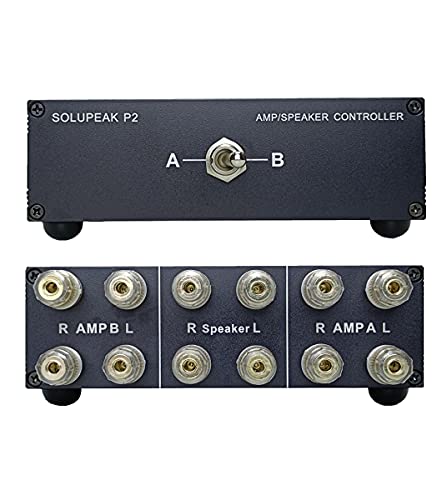
- Reversible 2-in-1-out or 1-in-2-out use
- One-press A/B switching for fast changes
- Passive box with gold-plated banana jacks
Best For: A/B amp or speaker comparison in a small passive system
Impedance-Protected Zone Control
Monoprice SS-4 Premium 4 Channel Selector

- Automatic impedance protection circuitry
- Individual zone on/off buttons
- Supports 12–16 AWG speaker wire
Best For: safe multi-speaker passive systems with impedance protection
Compact A/B Speaker Switching
PROZOR 2-in-1/2-out amp and speaker switcher

- Switches between two amps or two speaker pairs
- No external power; plug-and-play operation
- Gold-plated banana ports with 12-gauge support
Best For: Users who want simple A/B routing for amps or passive speakers
Dual-Zone Speaker Control
ADWITS 2-channel speaker selector box

- Runs two pairs of speakers from one amp
- Either-pair or both-pairs playback
- Metal housing with separate rocker switches
Best For: Affordable two-zone speaker switching from a single amplifier
Four-Zone Speaker Distribution
Pyle 4-zone speaker selector hub

- Controls up to 4 pairs of speakers
- Individual switches for each zone
- Built-in protection circuitry for safer operation
Best For: Multi-room systems that need independent speaker zone control
Compact two-zone pick
P21 2-way speaker selector switch box

- Controls 2 pairs from one stereo amp
- Passive metal tabletop design
- 8-16 ohm speakers, 14AWG wire support
Best For: Small home theater or stereo setups with two speaker pairs
Multi-room zone manager
Pyle PSS8 8-channel speaker selector
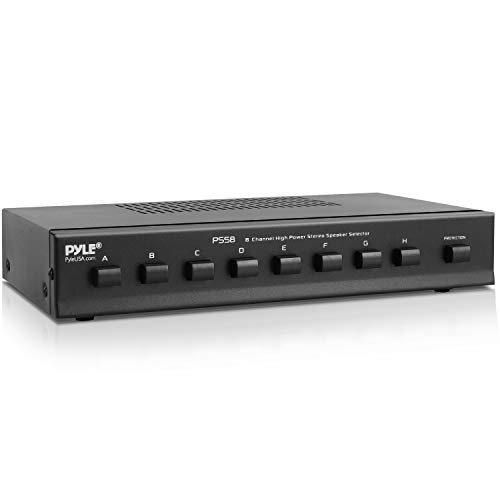
- Supports up to 8 speaker pairs
- Protection buttons help prevent overload
- Up to 100W per channel compatibility
Best For: Multi-room audio systems with up to eight speaker pairs
Flexible passive zone switch
PROZOR 2-zone speaker switch box

- 2-zone control for speaker sharing or source switching
- Passive design with no external power
- Supports 150W RMS and 164 ft runs
Best For: Flexible passive setups needing higher power handling
4-Zone Control for Whole-Home Audio – PROZOR 4-Zone Speaker Selector Switch
If you want compact speaker selector switches for a simple multi-room setup, this PROZOR unit makes it easy to share one amplifier across up to four pairs of passive speakers. The independent A/B/C/D buttons give you straightforward zone control, while the built-in AMP master switch adds a practical way to mute all zones at once.
Best For: Home, patio, shop, or studio setups that need simple on/off control for up to four passive speaker pairs.
Pros:
- Controls up to 4 speaker pairs from one amplifier with independent zone buttons.
- Built-in AMP master switch simplifies daily use and full-system muting.
- Passive design requires no external power adapter.
- Supports 4–16 ohm passive speakers and up to 150W RMS per channel.
Cons:
- Volume is controlled by the amplifier, not by the switch box.
- Not intended for powered/active speaker systems.
This is a solid pick if you want a no-frills distribution box for larger passive audio layouts. The metal housing and anti-slip feet make it feel built for regular use, and the long wire-run support is helpful for whole-home or commercial-style installs.
Classic A/B/C/D Speaker Routing – Pyle 4-Channel Stereo Speaker Selector
This Pyle model is one of the more straightforward compact speaker selector switches for feeding up to four speaker pairs from a single stereo system. It keeps the layout simple with A/B/C/D selection, and the published ratings make it easy to match with systems that stay within its power and impedance limits.
Best For: Buyers who want a basic 4-pair passive speaker selector for a standard stereo setup.
Pros:
- Handles up to 4 separate speaker pairs from one stereo system.
- Accepts speaker wire up to 14-gauge.
- Rated for 100 watts per channel.
- Passive design keeps setup simple with no external power.
Cons:
- Requires speaker systems with a minimum impedance of 8 ohms.
- No impedance protection circuitry is listed in the supplied notes.
If you need a basic selector rather than a feature-heavy distribution box, this Pyle unit is a practical option. It’s best suited to conventional passive speaker systems that fit its impedance and power requirements.
Two-Way A/B Switching – P2 Amp/Speaker Selector Box
Among compact speaker selector switches, this P2 box stands out if you want flexible A/B routing in either direction. It can work as a 2-amplifier-to-1-speaker-pair switch or as a 1-amplifier-to-2-speaker-pairs selector, making it useful for quick comparisons and simple two-way setups.
Best For: Comparing two amps or choosing between two speaker pairs in a compact passive setup.
Pros:
- Reversible 2-in-1-out or 1-in-2-out configuration.
- Simple one-press A/B switching.
- Gold-plated banana jacks accept up to 12-gauge wire.
- Passive, non-powered design with no external power required.
Cons:
- In 1-in-2-out mode, only one speaker pair works at a time.
- Requires banana plugs on speaker wire, not RCA cable.
This is a good choice when you want a compact switch for A/B comparison rather than multi-zone distribution. The heavy internal wiring and stated power handling add confidence for typical passive audio use, including tube amplifier setups when handled correctly.
Impedance-Protected Zone Control – Monoprice SS-4 Premium 4 Channel Selector
If safety and signal stability matter most, this Monoprice unit is one of the stronger compact speaker selector switches for multi-pair passive systems. It combines individual zone on/off buttons with automatic impedance protection, which helps make shared-amplifier setups easier to manage.
Best For: Passive speaker systems that need safe multi-zone switching with impedance protection.
Pros:
- Automatic impedance protection circuitry for safer amplifier matching.
- Individual zone on/off buttons for easy control.
- Supports 12–16 AWG speaker wire with heavy-duty screw terminals.
- Isolated left/right grounds help with floating-ground or bridged amplifiers.
Cons:
- 100 watts RMS per channel may be limiting for higher-power systems.
- Power and impedance limits depend on how many speakers are selected.
This is a sensible option when you want a selector that prioritizes protection and clean switching. The grounding design and impedance circuitry make it especially useful for more careful home audio installs where reliability matters.
Compact A/B Speaker Switching – PROZOR 2-in-1/2-out amp and speaker switcher
If you need compact speaker selector switches for simple A/B routing, this PROZOR box is built for either two amps into one speaker pair or one amp into two speaker pairs. It’s a practical, no-power solution for quick source or speaker changes without cable swaps, and the banana-plug layout keeps connections straightforward.
Best For: Home audio users who want a simple manual switch for comparing amps or sharing one amp between two passive speaker pairs.
Pros:
- Supports two amps to one speaker pair or one amp to two speaker pairs
- No external power required and no impact on sound quality
- Gold-plated banana plug ports support up to 12-gauge wire
- Rated for 100W RMS per channel and 200W peak
Cons:
- Only one position can be selected at a time
- Not designed for simultaneous playback from multiple inputs
Overall, this is a clean fit if your priority is simple switching in a compact speaker selector switch rather than advanced multi-zone distribution. The design is focused on easy, passive use with compatible amplifiers and speakers.
Dual-Zone Speaker Control – ADWITS 2-channel speaker selector box
A ADWITS 2-Channel Speaker Switcher Selector Box with Terminal Claps 150W RMS per Channel, Black
Check Price On AmazonFor shoppers comparing compact speaker selector switches, this ADWITS box keeps things simple with two channels and separate rocker switches. It lets you run either pair of speakers or both at the same time from one amplifier, making it a straightforward choice for basic distributed audio setups.
Best For: Budget-minded users who want easy two-zone speaker control from a single amplifier.
Pros:
- Controls two pairs of speakers from one amplifier
- Can play either pair or both at the same time
- Metal housing helps reduce interference and volume reduction
- Separate rocker switches make operation easy
Cons:
- Limited to two channels
- Uses terminal clamps rather than more premium connection hardware
This is a practical option if you want basic zone switching without a complicated install. Its appeal is the straightforward layout and low-cost approach to two-speaker-pair control.
Four-Zone Speaker Distribution – Pyle 4-zone speaker selector hub
If your search for compact speaker selector switches is really about managing more than a basic A/B setup, this Pyle hub is designed for up to four pairs of speakers from one amplifier. Each zone has its own on/off switch, so you can control rooms individually or run multiple areas together.
Best For: Whole-home or commercial audio setups that need independent control over up to four speaker pairs.
Pros:
- Controls up to 4 pairs of speakers from one amplifier
- Individual on/off switches for each zone
- Built-in protection circuitry helps prevent overload and burn-out
- Accepts up to 14-gauge wire with premium spring-loaded terminals
Cons:
- Larger and more installation-focused than a simple A/B switch
- Designed for passive speaker distribution, not source switching
This model stands out when you need flexible zone control instead of just one-to-one switching. The protection circuitry and dedicated zone switches make it a strong fit for larger systems that still need a compact footprint.
Compact two-zone pick – P21 2-way speaker selector switch box
If you want compact speaker selector switches for a simple home theater or stereo setup, this P21 box keeps the layout straightforward. It handles up to 2 pairs of speakers on a stereo amplifier, uses a slim metal tabletop housing, and works passively with no extra power supply needed.
Best For: Small home theater or stereo setups that only need to switch between two speaker pairs.
Pros:
- Controls up to 2 pairs of speakers from one stereo amplifier.
- Passive design requires no extra power supply.
- Supports 8-16 ohm speakers and up to 14AWG wire.
- Compact slim metal housing fits neatly on a tabletop.
Cons:
- Only supports 2 speaker pairs, so it is not for larger multi-zone setups.
- Power handling is limited to 80W max per channel.
This is a practical pick if you need a compact, low-fuss selector for a two-speaker-zone system. The main appeal is its simple passive operation and small footprint rather than advanced zone management.
Multi-room zone manager – Pyle PSS8 8-channel speaker selector
For buyers comparing compact speaker selector switches against a larger distribution hub, the Pyle PSS8 is built for serious multi-room use. It can play up to 8 pairs of Hi Fi speakers from one source amplifier, with clearly labeled controls and built-in protection buttons to help keep the system safe.
Best For: Multi-room or multi-zone audio systems that need control over up to eight speaker pairs.
Pros:
- Manages up to 8 sets of speakers from one amplifier.
- Independent on/off and selection controls are clearly labeled.
- Built-in protection buttons help guard against overload.
- Compatible with stereo receivers/amplifiers up to 100 watts per channel.
Cons:
- Larger and more complex than a basic 2-way selector.
- Best suited to systems designed for multiple speaker pairs.
This model makes sense when a small selector would be too limited and you need a centralized control point for more rooms. The tradeoff is size and complexity, but it offers far more zone capacity.
Flexible passive zone switch – PROZOR 2-zone speaker switch box
If you’re shopping for compact speaker selector switches that can do more than basic speaker sharing, the PROZOR 2-Zone switch box gives you flexible A/B control in a passive design. It can connect one amplifier to two pairs of speakers that both play at the same time, or switch two amplifiers to one pair of speakers, using independent push-button controls and spring clip terminals.
Best For: Users who want a passive 2-zone selector with flexible amp/speaker routing and strong power handling.
Pros:
- Works as a 2-zone selector for speaker sharing or source switching.
- Passive, no external power required.
- Supports up to 150W RMS per channel.
- Handles speaker wire runs up to 164 ft without audio degradation.
Cons:
- Only one switch should be on at a time when used with two amplifiers.
- Uses spring clip terminals rather than more robust binding posts.
This is a solid choice when you want a simple but capable selector with higher power support and flexible routing. Its passive design and long-run capability make it practical for homes, offices, or other distributed audio setups.
How We Picked the Best Compact Speaker Selector Switches
We looked for Compact Speaker Selector Switches that balance size, functionality, and everyday usability. Priority went to models with clear zone control, sensible power handling, straightforward wiring, and features that help protect speakers and amplifiers in real-world setups.
Quick Comparison
If you need a basic two-way switch, a small passive selector is often the simplest choice. For whole-home or multi-room audio, multi-zone units with individual on/off controls are more practical. If impedance matching matters in your system, that should narrow your list quickly.
Key Buying Factors for Compact Speaker Selector Switches
Number of Zones
Choose a selector that matches how many speaker pairs you plan to use now and in the near future. Buying a little extra capacity can save you from replacing the unit later.
Impedance Protection
When one amplifier feeds multiple speaker pairs, impedance protection helps reduce the risk of overloading the amp. This is especially important in multi-room installs and higher-power systems.
Power Handling and Wire Support
Check RMS power ratings, not just peak claims, and confirm the selector supports the speaker wire gauge you already use. Thicker wire support is helpful for longer runs and cleaner installations.
Switch Style and Control
Independent zone buttons, A/B routing, and simple selector knobs all serve different use cases. The best option depends on whether you want quick source switching or full room-by-room control.
Passive Design and Installation
Most Compact Speaker Selector Switches are passive, which makes them easy to integrate without external power. Look for clear terminals, durable housings, and labeling that makes installation less error-prone.
Who Should Buy Which Compact Speaker Selector Switches?
Choose a basic two-way selector if you just need to route one amp to two destinations or compare speakers. Pick a multi-zone selector if you want to manage several rooms from one amplifier. If you are building a more demanding audio setup, prioritize impedance protection and higher power ratings first, then narrow your choice by zone count and wiring convenience.
For buyers who value simplicity above all, the best Compact Speaker Selector Switches are the ones that match your exact layout without adding unnecessary features. For larger or more flexible systems, extra zones and better load protection are worth the added cost.