DMR radios with APRS combine digital voice, location sharing, and practical ham features in one setup. That makes them appealing for operators who want both clear communications and real-time position updates.
Below, you’ll find options for handheld and mobile use, along with a buying guide to help you choose the right radio for your operating style, license needs, and budget.
Best 9 DMR Radios with APRS Picks for 2026
Best with APRS and GPS
AT-D878UVII Plus Dual-Band DMR Handheld

- Built-in GPS with APRS TX/RX
- Dual-band DMR and analog support
- Includes two batteries and Bluetooth PTT
Best For: Hams and mobile operators who want APRS tracking, dual-band capability, and lots of memory in one handheld.
Best for Feature-Rich Mobile APRS
AnyTone AT-D578UVIII Plus Tri-Band DMR Mobile Radio

- APRS RX/TX support for location-aware operation
- Tri-band mobile radio with up to 50W VHF output
- Bluetooth audio plus loud speaker for easier in-car use
Best For: Mobile hams who want APRS, tri-band flexibility, and hands-free convenience.
Best for APRS Field Coordination
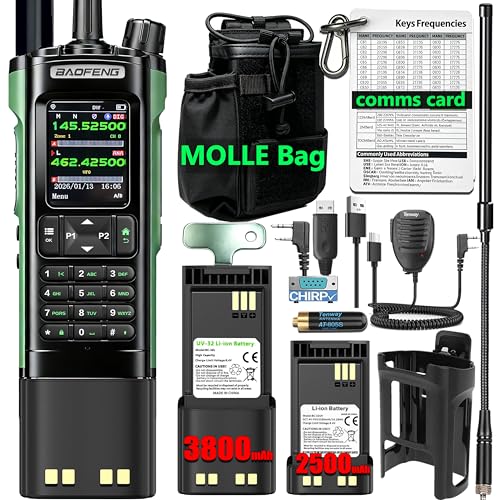
- GPS and APRS support for location sharing
- Dual digital and analog ham-radio operation
- 3800mAh battery with Type-C charging
Best For: Licensed ham operators and outdoor groups that want APRS location support in a feature-rich handheld kit.
Best for APRS Mobile Use
Radioddity DB-25D Pro DMR Mobile Radio

- Built-in GPS for APRS-capable mobile use
- Dual-band VHF/UHF with analog and DMR Tier II
- Compact 20W design with dual speakers
Best For: Drivers, off-roaders, and hams who want a compact DMR mobile radio with APRS support.
Best Emergency Weather Alert Radio
Midland ER40 Weather Alert Radio

- Automatic NOAA weather scan and severe-alert locking
- S.A.M.E. support for up to 25 counties and 80 alerts
- Solar, hand-crank, and rechargeable battery backup
Best For: Emergency preparedness buyers who want dependable weather alerts and backup power.
Best for Feature-Rich APRS Use
BAOFENG DM-32UV 10W DMR Handheld

- GPS and digital APRS support
- 10W dual-band Tier II DMR radio
- Aviation FM, NOAA, and 4000 channels
Best For: Hams who want a versatile APRS-capable DMR handheld with extra receive features.
Best for APRS Tracking
BTECH DMR-6X2 DMR/Analog Dual-Band Radio

- APRS TX-only with built-in GPS and Talker Alias
- Analog and DMR Tier 1/2 support with MOTOTRBO compatibility
- Includes two batteries, cables, and accessory kit
Best For: Hams and radio users who want a capable dual-band handheld for APRS, DMR, and mixed analog/digital use.
Best for APRS Team Tracking

- GPS and automatic APRS for live position sharing
- 10W dual-band DMR with analog compatibility
- 4,000 channels, USB-C charging, and NOAA alerts
Best For: Amateur operators and field teams needing APRS tracking with DMR voice support.
Best Heavy-Duty Pick
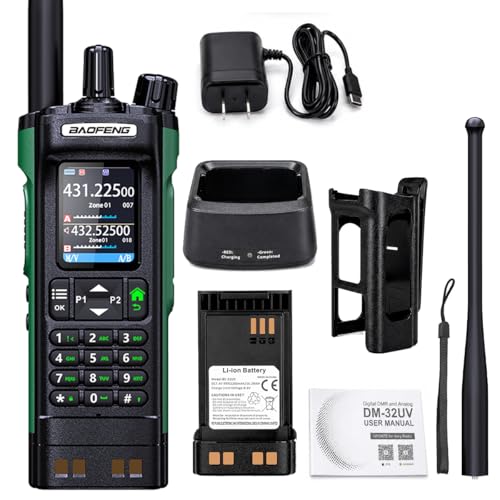
- Built-in GPS with APRS position reporting
- Dual-band VHF/UHF and 4,000 channels
- Recording, messaging, and fall detection features
Best For: Licensed operators who want GPS-based APRS and extra safety features in one handheld.
Best with APRS and GPS – AT-D878UVII Plus Dual-Band DMR Handheld
If you want one of the most feature-packed DMR radios with APRS, the AT-D878UVII Plus is a strong all-around pick. It combines dual-band DMR/analog operation, built-in GPS, APRS TX/RX, and Bluetooth PTT in a handheld that’s ready for road trips, field work, and everyday ham use.
Best For: Hams and mobile operators who want GPS-based APRS tracking, dual-band flexibility, and a large channel/talk-group capacity in one radio.
Pros:
- Built-in GPS with APRS TX/RX for position reporting and tracking
- Supports both digital DMR and analog modes for broad compatibility
- Includes two batteries and useful accessories like Bluetooth PTT and programming cable
- Large memory and contact capacity for bigger systems and active users
Cons:
- Requires proper licensing and setup for legal operation
- Feature depth may be more radio than casual users need
Overall, this is a compelling choice if you’re comparing DMR radios with APRS and want a proven handheld with strong feature coverage rather than a stripped-down starter model.
Best for Feature-Rich Mobile APRS – AnyTone AT-D578UVIII Plus Tri-Band DMR Mobile Radio
If you want one of the more capable DMR radios with APRS for an installed setup, the AnyTone AT-D578UVIII Plus stands out with tri-band coverage, 50W VHF output, APRS location data RX/TX, and extras like Bluetooth audio and air band reception. It’s a strong fit for hams who want a mobile rig that can do more than basic voice work.
Best For: Mobile amateur operators who want APRS, tri-band flexibility, and hands-free convenience in a single radio.
Pros:
- APRS location data receive/transmit support for position-aware operating
- Tri-band mobile design with strong power output for VHF and UHF use
- Bluetooth audio and a loud built-in speaker for easier in-car operation
- Included training material helps shorten the learning curve
Cons:
- Amateur radio use only, so it’s not a general-purpose two-way radio
- Feature-rich interface may feel complex for first-time DMR users
For buyers comparing DMR radios with APRS, this model is compelling because it combines mobile power, APRS support, and practical add-ons without forcing you to give up everyday usability. It’s especially appealing if you want a radio that can handle commuting, travel, and active monitoring from one install.
Best for APRS Field Coordination – BAOFENG DM32 10W DMR Handheld
If you want one of the more feature-packed DMR radios with APRS for field use, the BAOFENG DM32 is built around digital and analog operation plus GPS, NOAA weather alerts, and a full accessory bundle. It is aimed at licensed ham operators who want a handheld that can handle repeaters, simplex, and outdoor coordination without needing to piece together extra gear.
Best For: Licensed ham operators, trail groups, and emergency-preparedness users who want APRS location support in a rugged, ready-to-go handheld kit.
Pros:
- Built-in GPS and APRS support for location sharing and group coordination
- Dual digital/analog operation for repeater and simplex use
- 3800mAh battery plus Type-C charging for longer field sessions
- Includes useful extras like a speaker mic, programming cable, and MOLLE pouch
Cons:
- Best suited to licensed operators who already understand DMR setup
- Accessory bundle is helpful, but new users may still need programming time
As a value-oriented field radio, the DM32 stands out for APRS-equipped outing use more than polished out-of-box simplicity. For buyers comparing DMR radios with APRS, it is a practical choice if you want GPS-based coordination, weather monitoring, and a complete carry kit in one package.
Best for APRS Mobile Use – Radioddity DB-25D Pro DMR Mobile Radio
If you want one of the more practical DMR radios with APRS for mobile or overland use, the Radioddity DB-25D Pro stands out with built-in GPS, dual-band operation, and a compact 20W chassis. It handles both analog and DMR Tier II, so it can fit into mixed-radio setups while still giving you APRS support for location-based communication.
Best For: Drivers, off-roaders, and ham operators who want a compact dual-band DMR mobile radio with GPS/APRS capability.
Pros:
- GPS support makes APRS integration straightforward for mobile tracking and local data exchange
- Dual-band VHF/UHF plus analog and DMR Tier II compatibility adds flexibility
- 20W output, dual speakers, and a color screen make it easy to use in a vehicle
- Supports up to 500,000 DMR contacts for larger codeplug libraries
Cons:
- 20W output is modest compared with higher-power mobile radios
- Programming and contact management may still be more involved than basic analog radios
- APR S use depends on proper setup and compatible operating practices
For buyers comparing DMR radios with APRS, this model is appealing because it combines GPS, dual-band coverage, and a mobile-friendly form factor without jumping into a much larger or pricier radio class. It is a strong fit if your priority is an in-vehicle DMR/APRS setup with room for both casual and repeat use.
Best Emergency Weather Alert Radio – Midland ER40 Weather Alert Radio
If you’re comparing DMR radios with APRS for field use, this Midland unit stands out for a different reason: it’s built to keep you informed when severe weather hits. The ER40 focuses on NOAA alerts, S.A.M.E. county programming, and backup power options, making it a smart pick for anyone who wants reliable emergency coverage at home or on the go.
Best For: Buyers who want a compact emergency weather radio with alert automation, multiple charging options, and simple everyday use.
Pros:
- NOAA Weather Scan and alerts automatically lock onto the strongest local channel.
- S.A.M.E. programming supports up to 25 counties and 80 emergency alerts.
- Solar charging, hand crank backup, and a rechargeable battery improve outage readiness.
- Includes AM/FM radio, alarm clock, flashlight, and USB output for added utility.
Cons:
- Not a two-way radio, so it won’t replace communication-focused gear.
- More of a home/emergency radio than a rugged adventure-ready handheld.
For shoppers focused on DMR radios with APRS, this isn’t a communications radio, but it does fill an important support role in an emergency kit. If weather alerts and backup power matter more than radio networking features, the ER40 is a practical, easy-to-use choice.
Best for Feature-Rich APRS Use – BAOFENG DM-32UV 10W DMR Handheld
If you want one of the more feature-packed DMR radios with APRS, the BAOFENG DM-32UV packs a lot into a dual-band handheld: GPS, digital APRS, Tier II DMR support, aviation FM, NOAA alerts, and a large channel memory. It’s the kind of radio that makes sense when you want broader utility in one unit rather than a bare-bones daily carry.
Best For: Hams who want a versatile APRS-capable DMR handheld with extra receive features and lots of channel storage.
Pros:
- Built-in GPS and digital APRS for position reporting and tracking
- 10W dual-band output with Tier II DMR support
- Wide feature set: aviation FM, NOAA alert, and 4000 channels
- USB-C rechargeable with included case holder
Cons:
- Feature-rich radios can have a steeper setup curve
- Best suited to users who will actually use APRS and digital functions
Overall, this BAOFENG stands out for buyers comparing DMR radios with APRS and wanting maximum capability in a handheld form factor. If you value GPS/APRS tools and extra listening options, it’s a strong all-around pick.
Best for APRS Tracking – BTECH DMR-6X2 DMR/Analog Dual-Band Radio
If you want a feature-packed handheld for DMR radios with APRS, the BTECH DMR-6X2 stands out with analog and DMR Tier 1/2 support, GPS, Talker Alias, and APRS TX-only capability. It’s a strong fit for users who need flexible network compatibility plus extras like voice recording, encryption, and a color display.
Best For: Hams and radio users who want a capable dual-band handheld for APRS, DMR, and mixed analog/digital use.
Pros:
- Supports analog, DMR Tier 1/2, and MOTOTRBO compatibility
- Includes APRS TX-only, GPS, Talker Alias, and voice recording
- AES256 encryption adds privacy for professional or sensitive use
- Cargo includes two batteries and a full accessory kit
Cons:
- APRS is transmit-only, not full two-way APRS messaging
- Feature set may feel complex for first-time DMR users
- Programming and setup can take time compared with simpler radios
For buyers comparing DMR radios with APRS, this model is attractive because it combines location reporting, digital voice features, and a broad accessory bundle in one handheld. It’s especially compelling if you want more than basic DMR and need a radio that can grow with your setup.
Best for APRS Team Tracking – BAOFENG DM-32UV DMR Handheld
If you want one of the more feature-packed DMR radios with APRS, the BAOFENG DM-32UV stands out for its built-in GPS, automatic digital APRS, and full dual-band ham support. It’s aimed at users who need a versatile handheld for digital voice, location sharing, and everyday analog fallback in one package.
Best For: Amateur operators, field teams, and emergency-prep users who want APRS location tracking plus DMR and analog compatibility in a single handheld.
Pros:
- Built-in GPS and digital APRS for location sharing and team awareness
- 10W DMR output with Tier I/II support and dual-band VHF/UHF operation
- Large 4,000-channel memory plus text messaging and contact storage
- USB-C charging, NOAA alerts, and color display add practical everyday value
Cons:
- Feature-rich interface may take time to learn and program
- Not the most compact or minimalist option for casual users
This is a strong pick if you want DMR radios with APRS that emphasize tracking, channel capacity, and broad band coverage over simplicity. For buyers who need more than just basic handheld voice comms, it offers an impressive all-in-one feature set.
Best Heavy-Duty Pick – BAOFENG DM-32UV DMR Radio
If you want one of the more feature-packed DMR radios with APRS, the BAOFENG DM-32UV stands out with built-in GPS, automatic position reporting, dual-band VHF/UHF coverage, and a long list of digital features. It’s aimed at users who need location sharing, messaging, and recording in a single handheld, especially for field work or licensed amateur use.
Best For: Licensed operators who want GPS-based APRS, dual-band DMR capability, and extra safety features in one radio.
Pros:
- Built-in GPS and APRS position reporting for location-aware operation
- Dual-band VHF/UHF support with 4,000 channels for flexible use
- Digital recording, text messaging, and fall detection add practical utility
- Type-C rechargeable design and AES256 support add convenience and security
Cons:
- Licensed use only, so it’s not a casual plug-and-play choice
- Feature depth may be more than a beginner needs
- BAOFENG programming and menu setup can take time to learn
For buyers comparing DMR radios with APRS, this model’s biggest advantage is how much it bundles into one handheld: GPS tracking, messaging, recording, and emergency-oriented features. If you need APRS-centric functionality more than a bare-bones radio, it’s a strong value-oriented option.
How We Picked These DMR Radios with APRS
We focused on radios that offer usable APRS functionality, solid DMR support, and features that matter in real-world ham operation. That includes GPS performance, power output, channel capacity, dual-band or tri-band coverage, ease of programming, and overall value for the money.
We also considered whether a radio is better suited for handheld portability or mobile installs, since the best choice often depends on how and where you plan to use it.
Quick Comparison
Handheld models are best if you need portability, emergency readiness, or trail use. Mobile radios make more sense for vehicle installs, higher power, and better external antenna performance. If APRS is a priority, confirm whether the radio supports APRS transmit, receive, or both, since those capabilities are not always equal.
Key Buying Factors for DMR Radios with APRS
APRS Support
Check whether APRS is built in, requires menu setup, and supports transmit, receive, or both. For location sharing, true APRS TX is usually more useful than receive-only support.
Band Coverage and Power
Most buyers should decide between handheld convenience and mobile power first. Dual-band VHF/UHF is the most common choice, while tri-band mobile radios add flexibility for more operating scenarios.
GPS and Usability
Since APRS depends on location data, reliable GPS and straightforward menus matter. A radio that is difficult to program can erase the benefit of its feature list, especially for newer operators.
Programming and Memory
Look for enough channels, contact storage, and simple software support. If you use repeaters, talk groups, or multiple operating areas, memory capacity becomes a major advantage.
Durability and Accessories
Battery life, microphone quality, Bluetooth support, USB-C charging, and included accessories can make a big difference. For mobile use, speaker volume and mounting options matter more than lightweight form factor.
Who Should Buy Which DMR Radios with APRS?
Choose a handheld if you want an all-in-one radio for hiking, events, emergency kits, or everyday carry. Choose a mobile unit if you want stronger performance from a vehicle and expect to use APRS regularly on the road. Operators who mainly want simple weather and emergency listening may be better served by a basic scanner or emergency radio instead of a full DMR setup.
For most ham users, the best choice is the radio that matches your operating environment first and your feature list second. APRS is valuable, but only if the radio is easy to use and fits the way you actually communicate.