Magnetic loop shortwave antennas can be a smart upgrade when you want stronger receive performance without a bulky station setup. They’re popular for portable listening, SDR use, and broadband scanning across HF and beyond.
In this roundup, we focus on models that balance bandwidth, noise rejection, portability, and practical everyday use so you can choose the right antenna for your listening goals.
Best 10 Magnetic Loop Shortwave Antennas Picks for 2026
Best for Wideband Monitoring

- 0.1-180MHz active loop covers HF, FM, and VHF
- Adjustable low-noise preamp with multi-level gain
- Compact outdoor-friendly loop with built-in battery
Best For: SWL and SDR listeners who want a compact, wide-coverage active loop.
Best for Compact HF Setups
SW Mini Loop Shortwave Portable Loop Antenna

- Compact loop design for small spaces and portable use
- Wide claimed 9.9 kHz to 181 MHz frequency coverage
- SMA connector suits compatible receivers and hobby setups
Best For: Radio listeners and hobbyists who need a compact loop antenna for portable shortwave and HF use.
Best Wideband Receive
50kHz–500MHz Active Loop Antenna

- 50kHz–500MHz receive coverage
- About 17dB gain with active amplification
- Protection circuits and low-noise design
Best For: Hobbyists who want a compact wideband receive loop for shortwave, broadcast, and VHF listening.
Best for Urban Noise Rejection
GA490 Portable Shortwave Radio Antenna

- Wide 100kHz-179MHz coverage for MW, SW, and airband use.
- Active loop design helps reduce noise in crowded urban environments.
- Compact 50cm frame fits balconies, rooftops, and small outdoor spaces.
Best For: Urban listeners who need a compact active loop antenna with better noise rejection.
Best for Low-Noise SDRs
YouLoop Portable Passive Magnetic Loop Antenna

- Low-loss broadband balun for cleaner receiving
- Compact passive design with no tuning needed
- Covers HF and some VHF in a portable form
Best For: SDR listeners who want a compact receiving loop for noisy HF environments.
Best for Wideband SDR Listening

- Built-in MW/FM bandstop filters reduce interference.
- 0.5-500MHz coverage supports many radio services.
- Compact loop works well in tight outdoor spaces.
Best For: SDR users and shortwave listeners who need a compact, filtered wideband active loop.
Best for Easy Setup
GA800 Portable Active Shortwave Antenna

- No-tuning design makes setup fast
- Built-in amplification and noise suppression
- Compact 10-inch loop for small spaces
Best For: Beginners and space-limited listeners who want a compact active loop with minimal setup.
Best for Wideband Reception
GOOZEEZOO HFDY Active Loop Antenna

- 50kHz-500MHz receive range
- 17dB low-noise amplifier
- Compact 65cm outdoor-ready loop
Best For: Listeners who want a compact, wideband receive antenna for shortwave and SDR use.
Best Wideband Coverage
WV-601 Portable Shortwave Loop Antenna

- Covers LW through UHF in one passive antenna
- Easy to use with a low-hassle receiving setup
- Good choice for portable, multi-band listening
Best For: Listeners who want a single portable loop antenna for wideband, passive receiving.
Best for Easy Wideband Listening
GA800 Active Shortwave Loop Antenna
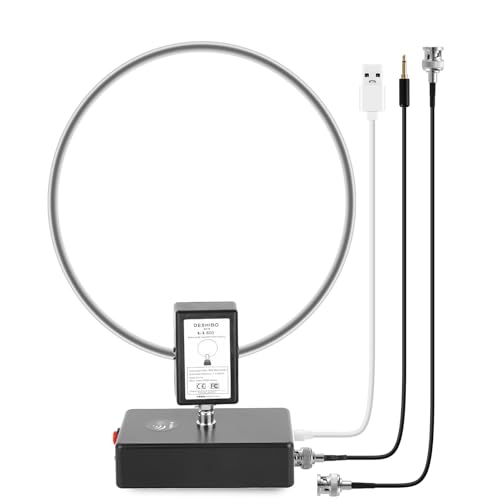
- 10KHz-159MHz receive coverage
- No tuning required
- Portable with BNC cable included
Best For: Listeners who want a simple, wideband receive antenna for multiple radio bands.
Best for Wideband Monitoring – K-180WLA Active Loop Antenna
If you want one of the more flexible magnetic loop shortwave antennas for a compact station, the K-180WLA is built to cover a very wide span from longwave through VHF. It is especially useful for listeners who want an active loop that can handle HF, FM, and aviation bands without taking up much space.
Best For: SWL and SDR users who want broad frequency coverage, a compact outdoor loop, and built-in active amplification.
Pros:
- Very wide 0.1-180MHz coverage for LF, MW, SW, FM, and VHF use
- Active design with adjustable gain and low-noise preamp
- Compact 55cm loop works well on balconies, windows, and rooftops
- Built-in battery and waterproof feed box support outdoor setups
Cons:
- Active antenna performance depends on battery charge and placement
- Not the simplest choice for users who only need a basic passive loop
For buyers comparing magnetic loop shortwave antennas, the K-180WLA stands out for range and convenience rather than pure portability. Its wideband coverage, adjustable gain, and SDR-friendly design make it a strong choice when you want one antenna to cover multiple listening needs.
Best for Compact HF Setups – SW Mini Loop Shortwave Portable Loop Antenna
If you want a small, adaptable option for listening across a wide frequency range, this mini loop is worth a look. It fits the needs of hobbyists comparing magnetic loop shortwave antennas for portable receivers, ham-related listening, and general bench use without taking up much space.
Best For: Radio listeners and hobbyists who want a compact loop antenna for portable shortwave and HF coverage.
Pros:
- Compact loop design is easy to place on a desk, shelf, or portable setup.
- Wide claimed coverage from 9.9 kHz to 181 MHz supports many listening targets.
- SMA connector makes it a straightforward match for compatible receivers.
- Useful for TEF6686-style receivers and other hobby radio applications.
Cons:
- Mini loop form factor may not match the performance of larger magnetic loops.
- Requires compatible hardware and setup knowledge to get the most from it.
As a compact accessory, this is a practical choice for experimenting with magnetic loop shortwave antennas when space, portability, and receiver compatibility matter more than maximum signal capture.
Best Wideband Receive – 50kHz–500MHz Active Loop Antenna
If you want one of the most flexible magnetic loop shortwave antennas for broad coverage, this active loop is built to receive from 50kHz up to 500MHz. That makes it a practical pick for longwave, MW, shortwave, FM broadcast, and even VHF aviation listening, especially if you value a compact loop with onboard amplification.
Best For: Listeners who want a single portable receive antenna with very wide frequency coverage and active gain for weak-signal monitoring.
Pros:
- Extremely wide 50kHz–500MHz receive range covers many bands in one antenna
- About 17dB gain, with claimed usable gain still around 7dB at 450MHz
- Built-in protection circuits add peace of mind for everyday use
- Low-noise active loop design helps reduce electric-field interference
Cons:
- Requires external 9–12V power, so it is not fully plug-and-play
- Primarily a receive antenna, not a transmit solution
- Performance claims are broad, so real-world results will depend on setup and environment
Overall, this is a strong option if you want magnetic loop shortwave antennas style reception with much wider coverage than a typical HF-only loop. It is especially appealing for hobbyists who monitor multiple services and want a compact active antenna that can travel well.
Best for Urban Noise Rejection – GA490 Portable Shortwave Radio Antenna
If you need one of the more practical magnetic loop shortwave antennas for a noisy apartment, balcony, or rooftop setup, the GA490 is built to help pull signals out of crowded RF environments. Its active loop design, wide 100kHz-179MHz coverage, and compact 50cm frame make it a flexible choice for SWL, MW, and ham listening when space is tight.
Best For: Urban listeners who want a compact active loop antenna that helps reduce interference and works with a wide range of shortwave receivers.
Pros:
- Wide 100kHz-179MHz coverage supports MW, SW, airband, and more.
- Built-in amplification and noise suppression are useful in interference-heavy locations.
- Compact 50cm loop is easier to place on balconies, rooftops, or other small spaces.
- Includes adapters and brackets for broader receiver compatibility.
Cons:
- Needs power and setup, so it is less plug-and-play than a passive antenna.
- The small loop size may not match the reach of larger outdoor antennas in all conditions.
For buyers comparing magnetic loop shortwave antennas, the GA490 stands out most for its urban-friendly footprint and noise-reduction focus rather than raw size. It is a sensible pick if you want a compact active loop that can improve reception without taking over your space.
Best for Low-Noise SDRs – YouLoop Portable Passive Magnetic Loop Antenna
If you need one of the more capable magnetic loop shortwave antennas for a quiet SDR setup, this YouLoop-style passive design is aimed at receiving weak signals in noisy RF environments. It covers HF from 10 kHz to 30 MHz and also reaches into VHF, making it a flexible choice for compact listening stations.
Best For: SDR users, especially Airspy HF+ Discovery owners and RTL-SDR listeners who want a portable receiving loop for challenging urban noise.
Pros:
- Very low-loss broadband balun helps preserve weak signal detail
- Passive, compact, and easy to assemble without tuning adjustments
- Works well for HF listening and has some VHF coverage too
- Good fit for limited-space setups and portable monitoring
Cons:
- Receiving-only antenna with very low maximum power handling
- Not waterproof, so outdoor use needs protection
- Best performance depends on a receiver with low noise and strong DSP features
For buyers comparing magnetic loop shortwave antennas, this model stands out for its portability, passive simplicity, and focus on reducing noise rather than maximizing transmit capability. It is a smart pick if your priority is cleaner reception from a small, easy-to-store loop.
Best for Wideband SDR Listening – K-480WLA Active Loop Antenna
If you want one of the most flexible magnetic loop shortwave antennas for a crowded RF environment, the K-480WLA stands out for its built-in bandstop filtering and broad 0.5-500MHz coverage. It’s aimed at listeners who need a compact outdoor loop that can handle shortwave, FM, airband, VHF, and SDR use without taking up much space.
Best For: SDR users, shortwave listeners, and ham radio hobbyists who want a space-saving active loop with selectable filtering and broad band coverage.
Pros:
- Built-in MW and FM bandstop filters help reduce out-of-band interference.
- Wide 0.5-500MHz range supports LW, MW, SW, FM, airband, and VHF/UHF use.
- Compact 68cm loop is easier to mount on balconies, rooftops, or small outdoor spaces.
- Adjustable gain and low-noise amplification suit SDR and receiver upgrades.
Cons:
- Active design needs power and is more complex than a passive loop.
- Performance depends on placement and local noise conditions.
- Not the simplest plug-and-play choice for absolute beginners.
For buyers comparing magnetic loop shortwave antennas, this model is attractive because it combines filtering, portability, and unusually wide coverage in one package. It’s a strong pick if you want a compact antenna that can do more than just shortwave listening.
Best for Easy Setup – GA800 Portable Active Shortwave Antenna
If you want one of the more plug-and-play magnetic loop shortwave antennas, the GA800 is built around convenience: no tuning, a built-in amp, and broad coverage from longwave through air and V bands. It’s aimed at listeners who want stronger reception with less setup hassle.
Best For: Beginners, SWL users, and ham operators who need a compact antenna that installs quickly in small spaces.
Pros:
- Free of tuning, so you can get started quickly
- Built-in amplification and noise suppression help improve reception
- Compact 10-inch, 1.4-pound design is easy to place on a window, balcony, or travel setup
- Wide 10kHz–159MHz coverage supports LW, MW, SW, FM, airband, and V-band use
Cons:
- Requires power for SW and MW performance
- FM, aviation, and U/V use may need the power turned off for best results
- Not the right pick if you specifically want a larger passive loop with manual tuning control
As a practical pick among magnetic loop shortwave antennas, the GA800 stands out for users who value simplicity and portability more than hands-on adjustment. It’s a sensible option if you want an active loop that works fast in tight spaces.
Best for Wideband Reception – GOOZEEZOO HFDY Active Loop Antenna
If you want one of the more flexible magnetic loop shortwave antennas for mixed-band listening, this GOOZEEZOO active loop is built to cover a very wide span from 50kHz to 500MHz. The improved low-noise amplifier and low input impedance help cut down electric-field noise, which can make a real difference on HF, AM, FM, VHF, and UHF receiving setups.
Best For: Listeners who want a compact, outdoor-friendly receiving antenna for shortwave, SDR, and general wideband monitoring.
Pros:
- Very wide 50kHz-500MHz receive range for multiple bands
- Improved amplifier design with 17dB gain and low-noise focus
- Compact 65cm loop is easier to place on balconies or rooftops
- Waterproof preamp box adds confidence for outdoor use
Cons:
- Receive-only antenna, so it is not intended for transmitting
- Small loop size may not outperform larger antennas in every location
- Needs a suitable mounting spot and coax run for setup
For buyers comparing magnetic loop shortwave antennas, this model stands out for its broad coverage and practical compact design rather than sheer size. It is a strong option when space is limited and you want a single antenna that can handle a lot of listening tasks.
Best Wideband Coverage – WV-601 Portable Shortwave Loop Antenna
If you want one accessory that can cover a very broad range of listening, the WV-601 is a practical pick among magnetic loop shortwave antennas. It’s a passive receiving antenna that supports LW, MW, SW, FM, AIR, VHF, and UHF, making it appealing for hobbyists who want flexibility without a complicated installation.
Best For: Listeners who want a single portable loop antenna for wideband, passive receiving across multiple radio services.
Pros:
- Very wide frequency coverage from 10KHz to 999MHz
- Passive design keeps setup simple and maintenance low
- Useful for portable listening across multiple bands
- Broad compatibility for general receiving use
Cons:
- Not designed for transmitting
- Wideband gear may not be as specialized as dedicated band-specific antennas
- Performance will depend heavily on your radio and environment
For buyers comparing magnetic loop shortwave antennas, the WV-601 stands out more for versatility than niche performance tuning. If you want a simple passive antenna that can handle a lot of bands in one package, it’s a solid all-around option.
Best for Easy Wideband Listening – GA800 Active Shortwave Loop Antenna
If you want a simple receive-only option for magnetic loop shortwave antennas, the GA800 is built for broad coverage and quick setup. It covers 10KHz-159MHz and arrives as an active, free-of-tuning antenna with a BNC cable, making it a practical pick for HF, LW, MW, SW, FM, air band, and VHF listening.
Best For: Beginners and casual listeners who want an easy-to-use, wideband receive antenna without manual tuning.
Pros:
- Wide 10KHz-159MHz receive range for multiple bands
- Active design with no tuning required
- Portable format with BNC cable included
- Useful for HF, SW, FM, air band, and VHF reception
Cons:
- Receive-only design, not intended for transmitting
- Active antennas can depend on a clean power/setup environment
- Loop-style performance may vary with placement and local noise
As one of the more straightforward magnetic loop shortwave antennas in this category, the GA800 stands out for buyers who value simplicity over fine-tuning. It is a sensible choice if you want broad band coverage and easy portability rather than a more specialized, manually adjusted loop.
How We Picked the Best Magnetic Loop Shortwave Antennas
We looked for options that make sense for real-world receiving, not just spec sheets. That means prioritizing frequency coverage, receiver compatibility, build quality, power needs for active models, and how easy the antenna is to deploy in the field or at home. We also considered whether a design is best suited to HF listening, wideband scanning, or mixed-use setups with SDRs and portable radios.
Quick Comparison
Broadly, the lineup splits into two groups: active Magnetic Loop Shortwave Antennas for wider coverage and easier signal pickup, and passive loop designs for simpler operation and lower-noise receive setups. Active loops are usually the better choice if you want convenience and broad tuning range. Passive loops can be appealing if you value low loss, fewer power requirements, and a more minimal setup.
Key Buying Factors for Magnetic Loop Shortwave Antennas
Frequency Range
Check the lower and upper limits carefully. Some Magnetic Loop Shortwave Antennas are optimized for HF listening, while others extend into VHF, UHF, airband, or even general broadband receive. Pick a range that matches the stations and services you actually monitor.
Active Vs. Passive Design
Active loops include amplification, which can improve usability across a wide span of frequencies and make setup easier. Passive loops rely more on the antenna geometry and matching network, so they may be simpler and quieter but less flexible for some use cases.
Portability and Power
If you plan to travel, camp, or operate from temporary locations, look at size, weight, mounting options, and power source. Built-in batteries, USB power, or simple BNC-style connections can make a big difference in convenience.
Noise and Placement
Loop antennas are often chosen for their ability to help manage local noise, but placement still matters. Keep the antenna away from power supplies, computers, and other electronics when possible. Even a great antenna can underperform if it is installed too close to interference sources.
Who Should Buy Which Magnetic Loop Shortwave Antennas?
If you want the easiest all-around option, choose an active model with broad frequency coverage and straightforward connectivity. If you mainly listen on HF and prefer a lighter, lower-complexity setup, a passive loop may be the better fit. SDR users and scanner enthusiasts should focus on compatibility across the bands they use most. For travelers and portable listeners, battery-powered or compact Magnetic Loop Shortwave Antennas are usually the most practical choice.