The right preamp can give a microphone more usable gain, lower background noise, and a better-matched signal before it reaches your interface or mixer. You do not need to spend thousands to get practical studio features.
We selected 10 microphone preamps under $500, ranging from compact inline boosters and budget tube units to 500 Series and feature-rich studio preamps. Use the guide below to narrow the list by microphone type, workflow, and connection needs.
Best 10 Microphone Preamp Under 500 Picks for 2026
Best Budget Tube Pick
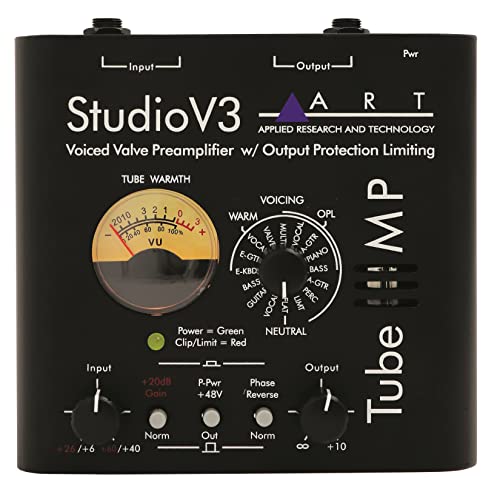
- Single-channel tube preamp
- Variable valve voicing
- Compact metal enclosure
Best For: Home studios and flexible instrument or vocal recording
Best 500-Series Value
Golden Age Project PRE-573 MKIII

- Up to 80 dB of mic gain
- Mic, line, and instrument support
- LED meter and switchable impedance
Best For: Modular 500 Series recording systems
Best Tube DI Combo

- 12AX7 tube and XMAX input stage
- Separate mic and instrument inputs
- Pad, filter, phantom power, and polarity reverse
Best For: Home studios recording vocals and instruments
Best Feature-Focused Compact Preamp

- Mic preamp and DI in one channel
- Air boost and high-pass filter
- +48V phantom power and polarity reverse
Best For: Desktop producers and high-impedance instrument recording
High-Gain Choice

- Up to 75 dB clean gain
- -120 dB EIN and 48V phantom power
- Balanced XLR plus dual 3.5mm outputs
Best For: Low-output microphones, vocals, and flexible desktop or mobile setups
Most Flexible Setup

- 0–72 dB adjustable gain
- Separate mic and instrument inputs
- USB-C, power-bank, and 48V phantom support
Best For: Streaming, podcasts, instruments, and portable recording
Simple Dynamic-Mic Booster

- 25 dB gain for dynamic and passive ribbon mics
- Balanced XLR input and output
- Compact metal housing with EMI/RFI shielding
Best For: Straightforward podcast, broadcast, and home-studio XLR setups
Versatile Gain Hub
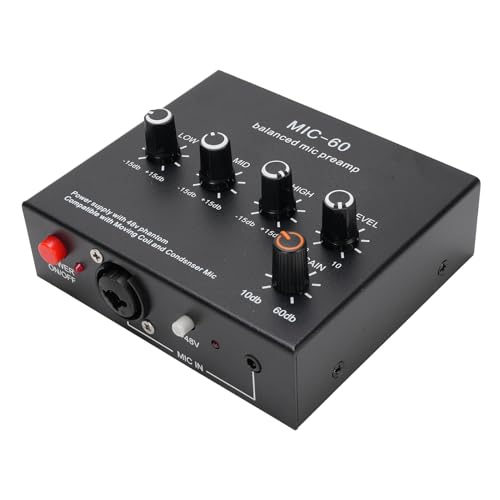
- Up to 60 dB of gain
- Supports dynamic and condenser mics
- XLR, 3.5mm, and 6.35mm outputs
Best For: Flexible home studios, podcasts, and live streaming
Dynamic Mic Booster

- Adds 29 dB of gain
- For dynamic and ribbon microphones
- Requires 48V phantom power
Best For: Podcasting, streaming, and stage setups with dynamic mics
Low-Noise Studio Upgrade

- 19–66 dB gain range
- Stated -120 dBV EIN
- Supports microphones and instruments
Best For: Budget recording setups needing flexible, portable gain
Best Budget Tube Pick – ART Tube MP Studio V3
If you want a microphone preamp under 500 with simple tube coloration, the ART Tube MP Studio V3 is a compact, single-channel option for vocals, instruments, and home-recording setups. Its variable valve voicing gives you a way to shape the preamp character while keeping the unit easy to place on a desktop or rack shelf.
Best For: Home studios, vocal recording, and musicians who want a compact tube microphone or instrument preamp.
Pros:
- Single-channel tube design with variable valve voicing.
- Supports microphones, guitars, keyboards, bass guitars, drums, and vocals.
- Compact metal enclosure and 2-year warranty.
Cons:
- Only one output channel is provided.
- Its tube-oriented design may be less suitable if you want a strictly clean, solid-state signal path.
The Tube MP Studio V3 is a practical choice when you want flexible source compatibility and tube-based voicing in a small enclosure. It is especially appealing for buyers prioritizing affordability and straightforward single-channel operation.
Best 500-Series Value – Golden Age Project PRE-573 MKIII
For shoppers seeking a microphone preamp under 500 that fits a 500 Series setup, the Golden Age Project PRE-573 MKIII combines mic, line, and instrument functionality in one channel. It offers up to 80 dB of microphone gain, plus controls and connections suited to varied recording sources.
Best For: 500 Series users who need substantial mic gain, instrument input, and flexible recording controls.
Pros:
- Provides up to 80 dB of microphone gain.
- Handles microphone, line, and instrument sources.
- Includes LED output metering, switchable impedance, phantom power, and DI functionality.
Cons:
- Single-channel design limits simultaneous source processing.
- Its 500 Series format is best suited to buyers who already use or plan to use compatible rack hardware.
With high available mic gain and useful input and impedance options, the PRE-573 MKIII is a feature-rich choice for a modular recording rig. Confirm that your setup supports the 500 Series format before buying.
Best Tube DI Combo – PreSonus TubePre v2
The PreSonus TubePre v2 is a useful microphone preamp under 500 for musicians who want both microphone and instrument connectivity. It pairs a 12AX7 tube circuit with a solid-state XMAX input stage and adds practical recording features such as phantom power, a high-pass filter, a pad, and polarity reversal.
Best For: Home recording, vocal tracking, and guitar or other instrument sources requiring a dedicated DI input.
Pros:
- Combines a 12AX7 tube stage with an XMAX solid-state input stage.
- Offers separate instrument and microphone inputs.
- Includes phantom power, high-pass filter, -20 dB pad, and polarity reverse.
Cons:
- It is a single-channel preamp and DI box.
- The listed warranty is one year, shorter than some alternatives in this group.
The TubePre v2 stands out for its combination of tube drive controls and practical signal-management features. It is a sensible pick for a compact setup that needs to accommodate both microphones and instruments.
Best Feature-Focused Compact Preamp – Pre73 Jr MKII
If you are comparing a microphone preamp under 500 for a compact computer-based studio, the Pre73 Jr MKII provides one channel of mic preamp and DI functionality. Its feature set includes +48V phantom power, polarity reverse, a high-pass filter, and an Air boost for shaping compatible sources.
Best For: Vocalists, home producers, and guitarists using Pro Tools, Ableton Live, or Reaper.
Pros:
- Combines microphone preamp and DI functionality in one channel.
- Includes +48V phantom power, polarity reverse, and high-pass filter.
- Offers an Air boost and support for high-impedance instruments.
Cons:
- Single-channel operation may not suit multi-microphone recording.
- The supplied connectivity details list XLR, so buyers needing other connection formats should verify compatibility.
The Pre73 Jr MKII is a focused option for producers who want essential preamp utilities and DI capability without a multi-channel unit. Its software compatibility and Air boost make it particularly relevant to modern desktop recording workflows.
High-Gain Choice – JCANOL MIC-1
If you need a microphone preamp under 500 with substantial clean gain, the JCANOL MIC-1 offers up to 75 dB of boost and a -120 dB EIN rating. Its phantom power, instrument input, and multiple output formats make it adaptable for vocal recording, desktop setups, and portable devices.
Best For: Recording low-output dynamic microphones, condenser microphones, vocals, and occasional instrument sources.
Pros:
- Up to 75 dB of gain with a stated -120 dB EIN noise performance.
- Includes 48V phantom power for condenser microphones.
- Offers balanced XLR plus independent 3.5mm mic and line outputs.
- Compact metal housing and a three-year warranty support portable use.
Cons:
- The microphone and instrument inputs cannot be used simultaneously.
- The product provides two auxiliary 3.5mm outputs rather than additional balanced outputs.
The MIC-1 is a versatile option when gain range and connection flexibility matter most. Its dual input modes and portable outputs are particularly useful for creators working across studio and mobile recording environments.
Most Flexible Setup – RO-04 Mic Preamp
For shoppers comparing a microphone preamp under 500, the RO-04 stands out with adjustable 0–72 dB gain, ultra-low stated noise, and separate microphone and instrument circuits. USB-C and power-bank support also make it a practical choice for portable recording and streaming.
Best For: Podcasters, livestreamers, musicians, and users who need both microphone and instrument connectivity.
Pros:
- Adjustable 0–72 dB gain accommodates quiet sources and demanding dynamic microphones.
- Offers -120 dBV EIN, 48V phantom power, HPF, and phase controls.
- Separate mic and 1 MΩ instrument inputs can support simultaneous sources.
- USB-C and power-bank operation improve portability for streaming or recording away from an outlet.
Cons:
- At 2.42 pounds, it is less lightweight than the other listed options.
- Its broader feature set may be more than needed for a simple single-microphone setup.
The RO-04 is the strongest fit for users who want one preamp to cover studio, streaming, microphone, and instrument duties. Its output-level options and portable power design add useful flexibility for mixed desktop and mobile workflows.
Simple Dynamic-Mic Booster – StudioMan CL-100
If your search for a microphone preamp under 500 centers on a straightforward dynamic-mic booster, the StudioMan CL-100 keeps the design focused. It supplies 25 dB of gain through balanced XLR connections in a compact metal enclosure for interfaces, mixers, podcasts, and live setups.
Best For: Dynamic microphones and passive ribbon microphones in home studios, broadcast chains, and live-streaming systems.
Pros:
- Designed specifically for dynamic and passive ribbon microphones.
- Provides 25 dB of clean gain through balanced XLR input and output.
- Compact metal housing offers EMI/RFI shielding and desk-friendly dimensions.
- Includes a 10 Hz–20 kHz frequency response and one-year warranty.
Cons:
- Its 25 dB gain is substantially lower than the other two preamps.
- It does not provide the listed 3.5mm outputs or dedicated instrument input.
- Its focused design is less suitable for users needing extensive controls or connectivity.
The CL-100 makes sense when you want a compact, no-frills XLR signal booster rather than a feature-heavy preamp. It is best matched with low-level dynamic or passive ribbon microphones and a conventional interface or mixer.
Versatile Gain Hub – 3-Input Microphone Preamp
If you need a microphone preamp under 500 for a flexible home studio, podcast setup, or live stream, this VBESTLIFE model offers substantial gain and broad connection options. It supports dynamic and condenser microphones, with up to 60 dB of gain and 48V phantom power for compatible condenser mics.
Best For: Users who need multiple inputs and outputs for recording, streaming, or small live-sound setups.
Pros:
- Up to 60 dB of gain for low-output microphones.
- Supports both dynamic and condenser microphones with 48V power.
- Provides XLR, 3.5mm, and 6.35mm connection options.
- Compact metal housing weighs about 315 g.
Cons:
- The manufacturer warranty is listed as 90 days.
- Its many connection formats may be more than a simple one-microphone setup requires.
This is a practical choice when connectivity matters as much as gain. Its three-channel design and varied outputs make it more adaptable than a basic inline booster, particularly for users building a compact, multi-device audio system.
Dynamic Mic Booster – StudioMan DPM1 XLR Preamp
For shoppers comparing a microphone preamp under 500, the StudioMan DPM1 is a focused solution for low-output dynamic and ribbon microphones. It adds 29 dB of gain between the microphone and interface or mixer, helping reduce the need to push a noisy built-in preamp.
Best For: Podcasters, streamers, and performers using dynamic or ribbon mics with an interface or mixer that supplies 48V phantom power.
Pros:
- Provides 29 dB of clean, transparent gain.
- Designed for dynamic and ribbon microphones such as SM7B-style or SM58-style mics.
- Compact plug-and-play XLR male-to-female design.
- Metal casing helps with durability and interference shielding.
Cons:
- Not compatible with condenser microphones.
- Requires 48V phantom power, which is not included.
- It is an inline booster rather than a multi-input preamp.
The DPM1 makes the most sense when your setup already has phantom power and your main problem is insufficient level from a dynamic or ribbon mic. Its limited compatibility is a drawback for mixed-microphone systems, but a benefit if you want a simple, purpose-built booster.
Low-Noise Studio Upgrade – RO03 66 dB Mic Preamp
If your priority is a microphone preamp under 500 with high usable gain and a low stated noise floor, the Rodyweil RO03 is worth considering. Its updated design offers 19–66 dB of gain, a stated EIN of -120 dBV, and support for dynamic, condenser, ribbon, and instrument sources.
Best For: Budget-conscious recording users who need flexible gain, instrument input support, and portable Type-C power.
Pros:
- Offers a practical 19–66 dB gain range.
- Supports dynamic, condenser, ribbon, and instrument sources.
- Includes XLR, TRS, and TS output options.
- Type-C power input improves portability and power compatibility.
Cons:
- The two input ports cannot be used simultaneously.
- The notes recommend connecting to an interface’s TRS line input for the lowest noise.
- It is a single-channel preamp.
The RO03 is the most feature-rich option here for users recording both microphones and instruments. To get the best reported noise performance, follow the recommended TRS line-input connection rather than automatically using an interface’s XLR input.
How We Picked the Best Microphone Preamp Under 500
We focused on useful performance and compatibility rather than price alone. The selection covers tube and solid-state designs, inline gain boosters, standalone preamps, and a 500 Series module. We compared advertised gain range, noise specifications, phantom-power support, input and output formats, controls, and practical features such as high-pass filtering, phase switching, Hi-Z input, and DI capability.
Because specifications and included accessories can vary by seller, confirm the current listing before buying—especially when a product name is abbreviated or includes multiple input and output options.
Quick Comparison
| Best For | Look For | Typical Choice From This List |
|---|---|---|
| Budget tube coloration | Tube circuitry, variable gain, output control | ART Tube MP Studio V3 or PreSonus TubePre V2 |
| 500 Series systems | Compatible rack or lunchbox chassis | PRE-573 MKIII |
| Low-output dynamic or ribbon microphones | High clean gain and low EIN | MIC-1, RO-04, or RO03 |
| Simple inline boosting | Compact XLR design and phantom power | StudioMan CL-100 XLR or DPM1 |
| Flexible desktop connections | Multiple inputs, outputs, and phantom power | Three-input microphone preamp |
Key Buying Factors for a Microphone Preamp Under 500
Gain and Noise
Choose enough gain for the quietest microphone you plan to use, not just your loudest source. Dynamic and passive ribbon microphones often need more clean gain than condenser microphones. A low EIN specification can indicate a quieter preamp, but real-world results also depend on cables, electrical noise, microphone sensitivity, and gain staging.
Inputs, Outputs, and Phantom Power
Check whether the unit uses balanced XLR connections and whether its output matches your interface or mixer. Phantom power is necessary for most condenser microphones and many inline boosters, but use care with ribbon microphones and follow the manufacturer’s instructions. If you need instruments, headphones, or consumer-style 3.5mm connections, verify those ports rather than assuming they are included.
Features and Character
A tube preamp may be useful when you want harmonic color and a softer, more shaped sound. A clean solid-state unit is usually the safer choice for transparent recording and heavy processing later. High-pass filters can reduce rumble, phase switches help with multi-microphone setups, and an Hi-Z input or DI function can make one preamp more versatile.
Who Should Buy Which Microphone Preamp Under 500?
Choose the ART Tube MP Studio V3 or PreSonus TubePre V2 if you want an affordable tube-style front end with basic studio flexibility. The PRE-573 MKIII is the better fit for anyone who already owns a compatible 500 Series chassis.
For low-output microphones and maximum clean gain, compare the MIC-1, RO-04, and RO03 while checking their exact noise and connection specifications. The StudioMan CL-100 and DPM1 suit users who want a compact XLR booster with minimal setup. If you need several input and output formats in one affordable box, the three-input preamp offers broader connectivity—but confirm its power and output requirements first.