The right microphone stand keeps your mic stable, your desk clear, and your recording position consistent. This roundup compares 10 options, from compact desktop tripods to adjustable boom arms and full-size floor stands.
Use the buying guide below to match stand type, base design, reach, thread compatibility, and workspace needs before choosing your next podcasting setup.
Best 10 Microphone Stands for Podcasting Picks for 2026
Best Adjustable Boom Arm
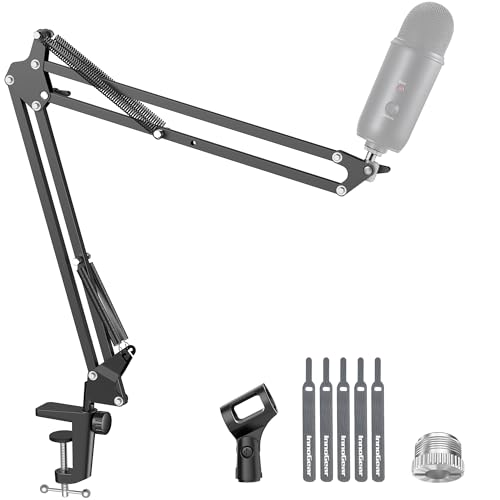
- 360-degree base rotation and wide arm adjustment
- Supports microphones up to 3.3 pounds
- Folds away and fits flat desk edges up to 2 inches
Best For: Flexible desk-based podcasting and streaming setups
Best Compact Tripod

- Low-profile 2.95-inch desktop design
- Folds for carrying and storage
- Rubber feet help prevent desk scratches
Best For: Portable tabletop podcasting with dynamic microphones
Best Weighted Desktop Stand

- Adjusts from 9 to 13 inches
- Round weighted base works on desks or floors
- Powder-coated finish resists chips and scratches
Best For: Stable short-height desktop podcasting
Best All-in-One Mic Arm

- Includes shock mount, pop filter, adapter, and cable ties
- Spring-loaded arm supports up to 1.5 kg
- Clamp fits desks up to 2 inches thick
Best For: Accessory-ready home podcasting and recording
Best All-in-One Kit
BILIONE Desktop Microphone Stand

- Includes stand, shock mount, pop filter, clip, and adapter
- 1.5-pound weighted base with anti-slip pads
- Adjusts to 14 inches and supports up to 0.7 kg
Best For: Podcasters building a complete desk recording setup
Best Heavy-Duty Choice
InnoGear Adjustable Boom Stand

- Supports up to 4.4 pounds with the boom halfway extended
- Boom arm adjusts independently for length and angle
- Height range runs from 11 to 15.8 inches
Best For: Podcasters using heavier microphones and flexible positioning
Best Compact Stand

- 1.85-pound weighted base with four non-slip pads
- Adjusts from 8 to 12.8 inches
- Supports up to 3.3 pounds and includes a thread adapter
Best For: Portable desk podcasting with common USB or dynamic microphones
Best Portable Boom Stand
InnoGear Tripod Boom Arm Stand

- 28.1–89.8-inch height range
- Detachable, highly adjustable boom arm
- Carrying bag and mic adapters included
Best For: Portable podcasting setups and flexible microphone positioning
Best All-in-One Creator Stand

- Built-in phone/tablet holder up to 10 inches
- Boom and height adjust to 70 inches
- Heavy-duty base for creator setups
Best For: Podcasting, streaming, and recording with a second device
Best Adjustable Boom Arm – InnoGear MU01 Mic Stand
For podcasters who need flexible microphone placement, the InnoGear MU01 is a desk-clamp boom arm with broad adjustment and a 1.5 kg load rating. It is designed for microphone stands for podcasting setups that need to move, fold away, and support a range of microphones.
Best For: Podcasting, streaming, and recording at a desk with a compatible flat-edged surface.
Pros:
- Offers 360-degree base rotation, 135-degree extension, up-and-down arm movement, and a 270-degree metal adapter.
- Supports up to 3.3 pounds, with steel construction, strong springs, and an extra positioning hole.
- Folds away for compact storage and includes 3/8-inch and 5/8-inch compatibility through its adapters.
Cons:
- The clamp is intended for flat, squared desk edges up to 2 inches thick.
- A shock mount is not included.
This is a practical choice when positioning flexibility and desk space matter. Verify your desk edge and microphone mounting requirements before buying.
Best Compact Tripod – Foldable Desktop Mic Stand
This compact foldable tripod is a straightforward option for microphone stands for podcasting when you want a low-profile desktop base. Its iron construction, rubber feet, and included thread adapter make it suitable for compatible dynamic microphones and portable setups.
Best For: Podcasts, meetings, lectures, online chats, and other applications using a low-positioned dynamic microphone.
Pros:
- Foldable design makes it easy to carry and store.
- Non-slip rubber feet help protect the desk from scratches.
- Includes a 5/8-inch male to 3/8-inch female metal threaded screw for standard mic clips.
Cons:
- Its 2.95-inch height is intended for low-profile use rather than raised microphone placement.
- It is described for use with dynamic microphones, so verify compatibility with your microphone.
Choose this stand when portability and a small footprint are more important than height adjustment. It is especially useful for tabletop conversations and travel.
Best Weighted Desktop Stand – On-Stage DS7200B
The On-Stage DS7200B offers a stable desktop alternative to boom arms, with adjustable 9- to 13-inch height and a round weighted base. For microphone stands for podcasting, it suits users who want a compact, conventional stand for a desk, table, podium, or floor.
Best For: Desktop recording, streaming, podcasting, and short-height miking with standard microphone clips.
Pros:
- Adjusts from 9 to 13 inches for more placement flexibility than a fixed desktop stand.
- Round weighted base supports short-height miking on desks or floors.
- Powder-coated black finish is designed to resist chips and scratches.
Cons:
- It has a 2-pound maximum weight recommendation, lower than the listed InnoGear boom arms.
- The stand uses a 5/8-inch thread, so microphones or accessories with other fittings may require an adapter.
This stand is a solid fit for a tidy, traditional desktop setup where a weighted base is preferable to a clamp. Its limited height range favors close, short-height microphone placement.
Best All-in-One Mic Arm – InnoGear MU059 Mic Arm Set
The InnoGear MU059 combines a clamp-mounted boom arm with a shock mount, pop filter, adapter, and cable ties. It is a convenient microphone stands for podcasting package for creators who want several recording accessories included with the stand.
Best For: Home podcasting, studio recording, and live sound setups needing an arm, pop filtering, shock isolation, and cable management.
Pros:
- Includes the stand, zinc-alloy desk clamp, shock mount, pop filter, thread adapter, and five cable ties.
- Strong springs are designed to reduce accidental dropping, shaking, and noise generation.
- Clamp adjusts for desks up to 2 inches thick and supports microphones up to 1.5 kg.
- Dual-screen pop filter helps contain air blasts before they reach the microphone.
Cons:
- The included shock mount is not designed to fit the Blue Yeti.
- Desk compatibility is limited to surfaces up to 2 inches thick.
This package offers strong value for a new podcasting workstation because it bundles common accessories into one setup. Check the microphone and desk dimensions, particularly if you use a Blue Yeti.
Best All-in-One Kit – BILIONE Desktop Microphone Stand
For shoppers comparing microphone stands for podcasting, the BILIONE desktop kit combines a height-adjustable stand with a shock mount, double-layer pop filter, mic clip, and thread adapter. Its weighted metal base and compact design suit desk-based recording, streaming, and broadcasting setups.
Best For: Podcasters who want a complete starter bundle with pop-filter and shock-mount accessories.
Pros:
- Includes a shock mount, double-layer pop filter, mic clip, and 3/8-inch to 5/8-inch adapter.
- Weighted 1.5-pound metal base includes three anti-slip pads.
- Height adjusts up to 14 inches and supports microphones up to 0.7 kg.
- Compatible with a range of microphones, including AT2020, AT2035, QuadCast, and SM58.
Cons:
- The included shock mount is not designed for Blue Yeti.
- The shock mount fits microphones from more than 1.77 inches to 2.05 inches in diameter.
- Its maximum supported weight is lower than the heavier-duty InnoGear option.
This is a practical value pick when you need more than a stand alone. Check your microphone’s diameter and weight before relying on the included shock mount.
Best Heavy-Duty Choice – InnoGear Adjustable Boom Stand
Among microphone stands for podcasting, this InnoGear model stands out for its cast-iron base, adjustable boom arm, and higher 4.4-pound load rating. The independent boom adjustments make it easier to position a heavier microphone while keeping the stand on a desk.
Best For: Podcasters using heavier microphones or needing flexible boom positioning.
Pros:
- Supports up to 4.4 pounds when the boom is extended halfway.
- Adjustable boom arm provides independent length and angle control.
- Height adjusts from 11 to 15.8 inches using a clutch mechanism.
- Heavy-duty powder-coated cast-iron base and rubber gasket help absorb vibrations.
Cons:
- The 4.4-pound load rating applies when the boom is extended halfway, not fully extended.
- Its 4.4-pound weight makes it less convenient to move than lighter desktop stands.
- The package includes a boom arm and clip but does not list a pop filter or shock mount.
This is the strongest choice of the three for a substantial microphone and adjustable reach. Its heavier construction is best suited to a mostly permanent desk or studio position.
Best Compact Stand – InnoGear Desktop Mic Stand
If you need microphone stands for podcasting that are easy to reposition, the InnoGear MS130 offers a compact all-metal design with a 1.85-pound weighted base. Its screw-in height adjustment and broad microphone compatibility make it a straightforward option for home studios, offices, and portable recording setups.
Best For: Podcasters who want a portable, space-saving stand for common USB and dynamic microphones.
Pros:
- Compact metal base weighs 1.85 pounds and uses four non-slip rubber pads.
- Height adjusts from 8 to 12.8 inches with a secure screw-in knob.
- Supports microphones and accessories up to 3.3 pounds.
- Includes a 3/8-inch to 5/8-inch adapter and fits models such as Blue Yeti, QuadCast, AT2020, and SM58.
Cons:
- The included mic clip accommodates microphones up to 1.26 inches in diameter.
- It has a shorter maximum height than the other stands in this roundup.
- The package includes the stand but does not list a shock mount or pop filter.
This stand balances stability and portability well for typical desk recording. Choose it when you value a smaller footprint and simple setup over boom-arm reach or bundled accessories.
Best Portable Boom Stand – InnoGear Tripod Boom Arm Stand
For podcasting setups that need flexible positioning and easy transport, the InnoGear Tripod Boom Arm Stand combines a broad height range with a detachable boom arm. Its tripod base, included adapters, and carrying bag make it a practical option for home recording or mobile use.
Best For: Podcasters who want a portable, height-adjustable boom stand that can also function as a straight stand.
Pros:
- Adjusts from 28.1 to 89.8 inches for seated or standing setups.
- 16- to 30-inch boom arm rotates 360 degrees horizontally and up to 180 degrees vertically.
- Includes two mic clips, a 3/8-inch-to-5/8-inch adapter, cable clips, and a carrying bag.
- Supports microphones weighing up to 2 kg according to the listed recommendation.
Cons:
- A tripod footprint can take up more floor space than a compact desk-mounted arm.
- At 4.2 pounds, it is portable but not the lightest stand option.
The broad adjustment range and detachable boom give this stand useful flexibility for podcasting, vocals, and other recording scenarios. It is especially appealing when portability and compatibility with several microphone types matter.
Best Weighted-Base Stand – InnoGear Weighted Floor Mic Stand
The InnoGear Weighted Floor Mic Stand is a sturdy choice among microphone stands for podcasting when a stable floor base is more important than maximum portability. Its weighted round base, thickened steel arm, and adjustable height suit fixed recording spaces and performance setups.
Best For: Podcasters and performers who prefer a stable weighted base for microphones weighing up to the listed 4.5-pound recommendation.
Pros:
- 4.5-pound weighted base with non-slip pads helps resist movement and tipping.
- Adjusts from 34 to 60 inches with a quick clutch for height changes.
- Thickened 1.5 mm steel arm is designed for heavier microphones.
- Disassembles into three parts and includes cable clips plus a 3/8-inch-to-5/8-inch adapter.
Cons:
- The 9.8-inch base diameter requires dedicated floor space.
- Its 6.6-pound weight makes it less convenient to carry than lighter stands.
- The listed compatibility notes specify that a shock mount is not included.
With a lower maximum height than the tripod boom model but a heavier base, this stand prioritizes steadiness for a studio or podcast corner. The detachable design still allows occasional transport, though its weight favors more permanent placement.
Best All-in-One Creator Stand – GUITTO GMS-04 Mic Stand
The GUITTO GMS-04 adds a phone or tablet holder to a floor microphone stand, making it a useful all-in-one option for microphone stands for podcasting, streaming, and recording. Its adjustable boom, 70-inch maximum height, and dual-device setup are aimed at creators who want fewer separate accessories.
Best For: Podcasters, streamers, and performers who want to mount a microphone and a phone or tablet on one stand.
Pros:
- Built-in holder accommodates phones and tablets up to 10 inches.
- Adjustable boom and height up to 70 inches support varied recording positions.
- Heavy-duty base is designed to help prevent wobbling or tipping.
- Includes a 3/8-inch-to-5/8-inch adapter and supports quick assembly and disassembly.
Cons:
- The device holder is limited to phones and tablets up to 10 inches.
- The supplied notes do not specify a microphone weight recommendation.
- Its 2.15 kg weight may be less convenient for frequent travel than a lighter stand.
This stand stands out for combining microphone support with a dedicated viewing or recording-device holder. It is a compelling fit for content creators who want a streamlined floor setup, while buyers with unusually heavy microphones may want to confirm load requirements first.
How We Picked the Best Microphone Stands for Podcasting
We focused on the features that matter during real recording sessions: stability, adjustability, footprint, compatibility, and ease of setup. The selection includes desk-mounted boom arms, weighted desktop stands, foldable tripod designs, and floor stands so different recording spaces and microphone types are represented.
We also considered practical details such as 3/8-inch and 5/8-inch thread support, shock-mount compatibility, cable-management potential, boom reach, and whether a stand can accommodate accessories such as a pop filter, phone, or tablet holder. Product descriptions and stated construction features were weighed alongside each stand’s intended use, including podcasting, streaming, singing, conferencing, and instrument recording.
Quick Comparison
| Stand Type | Best For | Main Advantage | Potential Trade-Off |
|---|---|---|---|
| Desk boom arm | Fixed home studios and streamers | Flexible positioning and clear desk space | Needs a secure clamp or mounting surface |
| Weighted desktop stand | Simple podcast and conference setups | Fast placement with no desk clamp | Uses more workspace |
| Tripod desktop stand | Portable or occasional recording | Folds and stores easily | Usually offers less reach and height |
| Floor stand | Standing vocals or spacious studios | Greater height range and positioning freedom | Requires more floor area |
Key Buying Factors for Microphone Stands for Podcasting
Desk Space and Stand Type
Choose a boom arm if you want the microphone suspended beside or above the desk and moved out of the way between sessions. A weighted desktop model is simpler when you record at different locations or cannot clamp to your desk. Floor stands make more sense for standing hosts, vocal work, or setups where the microphone must sit away from the tabletop.
Stability and Base Design
A heavy base can reduce movement and vibration, while non-slip feet help prevent sliding on smooth surfaces. Tripod stands are convenient but need a wide, level footprint. For heavier microphones or shock mounts, prioritize a robust base, strong joints, and a stand rated for the complete microphone and accessory load.
Reach, Height, and Adjustability
Check whether the boom can place the microphone close enough without forcing you to lean toward it. Height adjustment is particularly important for hosts who alternate between sitting and standing. Locking knobs or a twist clutch should hold the chosen position without gradual drooping.
Threads and Microphone Compatibility
Many microphone accessories use either 3/8-inch or 5/8-inch threads. Confirm the included adapter before buying, especially when pairing a stand with a Blue Yeti, HyperX QuadCast, Fifine microphone, or a third-party shock mount. The stand should also leave enough clearance for the microphone body and cable.
Noise, Vibration, and Accessories
A stand cannot eliminate every desk bump, but a stable base and careful placement can reduce transmitted vibration. If you use a pop filter, shock mount, phone holder, or tablet mount, account for its extra weight and reach. Keep accessories from making the arm top-heavy or obstructing your controls.
Who Should Buy Which Microphone Stands for Podcasting?
- Desk podcasters: Choose an adjustable boom arm or weighted desktop stand based on whether preserving desk space is more important than portability.
- Streamers and online presenters: Look for smooth positioning, dependable joints, and compatibility with your existing microphone and shock mount.
- Traveling or occasional creators: A foldable tripod stand is easy to pack and quick to deploy for calls, interviews, and temporary recording spaces.
- Singers and standing hosts: Select a floor stand with a broad height range and a stable base; a boom arm adds useful horizontal positioning.
- Multi-device creators: Consider a model with a phone or tablet holder, but verify that the added accessory weight will not compromise balance.
Before ordering, measure your desk or floor area, confirm the microphone’s thread size, and check the stand’s maximum reach and load capacity. Those simple checks usually matter more than appearance when building a reliable podcasting setup.