Live MIDI setups demand dependable connections, practical routing, and controls that remain easy to manage under pressure. The right interface can connect keyboards, controllers, instruments, and a computer without adding unnecessary complexity.
We selected 10 options ranging from dedicated MIDI hardware to compact USB audio interfaces with MIDI support, covering portable rigs, hybrid performances, and more connected stage setups.
Best 10 Midi Interfaces for Live Performances Picks for 2026
Best Routing Hub

- 3-in/3-out standalone MIDI routing
- Near-zero latency with broad message support
- USB-C works across major operating systems
Best For: Complex live MIDI routing and synchronization
Best Hybrid Audio Hub
Focusrite Scarlett 4i4 4th Gen

- MIDI In/Out plus extensive audio I/O
- 120dB dynamic range and 192kHz support
- Auto Gain, Clip Safe, and Air modes
Best For: Live MIDI setups that also need audio connectivity
Best Hands-On Mixer Control

- Eight channel faders plus a master fader
- 24 knobs and 16 performance buttons
- One-button Ableton Live mapping
Best For: Hands-on DAW mixing and software performance control
Best Compact Audio Interface
Focusrite Scarlett 2i2 4th Gen
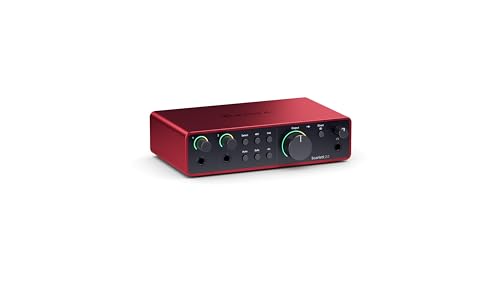
- Two mic preamps and two Hi-Z inputs
- 24-bit/192kHz audio with 120dB dynamic range
- Auto Gain, Clip Safe, and Air modes
Best For: Solo performers combining computer MIDI with basic audio inputs
Best Plug-and-Play MIDI Cable
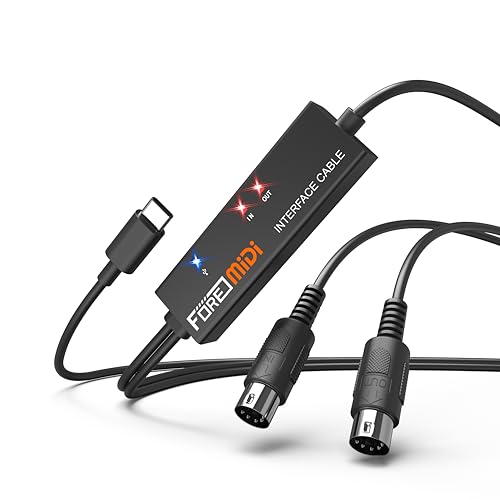
- One MIDI input and one MIDI output
- Plug-and-play with status LEDs
- Compatible with iOS, Android, Mac, and Windows
Best For: Simple 5-pin MIDI-to-USB-C connections
Best for Everyday Use
Focusrite Scarlett Solo 4th Gen

- XLR mic preamp and Hi-Z instrument input
- 24-bit/192kHz audio with 120dB dynamic range
- Includes Ableton Live Lite and other software
Best For: Solo vocal and guitar performance rigs
Best All-in-One MIDI Audio Interface
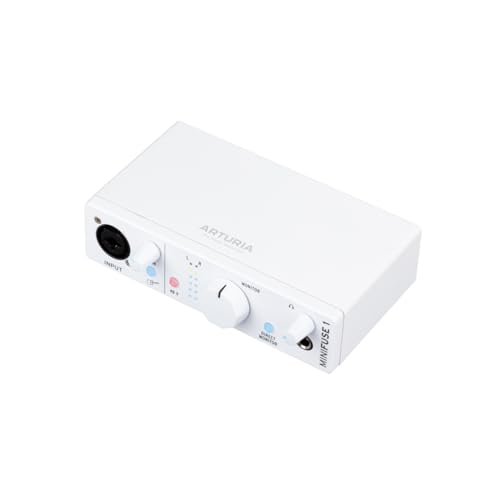
- Includes 5-pin MIDI input and output
- Combo audio input with 48V phantom power
- Balanced outputs, headphone control, and USB hub
Best For: Compact MIDI-and-audio performance setups
Versatile Entry Point

- Two combo inputs with phantom power
- Zero-latency USB/direct monitoring
- Includes MPC Beats and Ableton Live Lite
Best For: Small live setups needing flexible audio inputs
Dedicated MIDI Pick

- Dedicated MIDI I/O for live integration
- 24-bit/192 kHz, two-channel recording
- Bus-powered with zero-latency monitoring
Best For: Performers combining MIDI gear with two audio sources
Compact Solo Setup
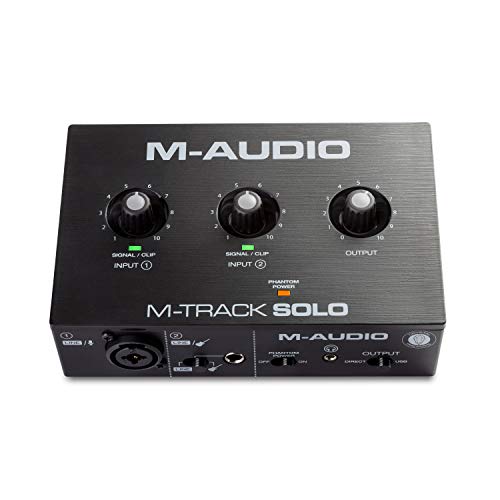
- Combo input plus line/instrument input
- Zero-latency USB/direct monitoring
- Lightweight 10.6-ounce design
Best For: Solo performers with simple audio requirements
Best Routing Hub – CME U6MIDI Pro
For performers comparing midi interfaces for live performances, the CME U6MIDI Pro is a focused choice for dependable MIDI routing. It offers three MIDI inputs and three outputs, near-zero-latency operation, and USB-C connectivity across major computer and mobile operating systems.
Best For: Live rigs requiring flexible MIDI splitting, merging, filtering, or standalone operation.
Pros:
- Standalone 3-in/3-out MIDI operation with router and filter functions.
- Supports MIDI channels and messages including clock, SysEx, MIDI timecode, and MPE.
- Compatible with macOS, iOS, Windows, Android, Linux, and Chrome OS.
- Designed for low-latency, jitter-free, error-resistant transmission.
Cons:
- Provides MIDI connectivity only, not audio inputs or outputs.
- Advanced routing and filtering setup uses software available for supported platforms.
The U6MIDI Pro stands out when reliable synchronization and complex MIDI routing matter more than audio recording features. Its compact design and standalone mode suit keyboards, synthesizers, drum machines, and digital pianos on stage.
Best Hybrid Audio Hub – Focusrite Scarlett 4i4 4th Gen
The Scarlett 4i4 4th Gen is a practical option among midi interfaces for live performances when your setup also needs substantial audio I/O. Along with MIDI In/Out, it provides microphone, instrument, and line connections in a USB-C interface with 24-bit/192kHz capability.
Best For: Performers who need MIDI alongside microphones, instruments, synths, drum machines, or studio monitors.
Pros:
- Includes MIDI In/Out, four line inputs, four line outputs, two mic preamps, and two Hi-Z inputs.
- Offers a 120dB dynamic range and up to 24-bit/192kHz operation.
- Auto Gain and Clip Safe help manage recording levels.
- Air mode adds presence and harmonic drive to vocals and guitars.
Cons:
- Larger and heavier than a dedicated MIDI-only interface.
- Its broader audio feature set may be unnecessary for MIDI-only live rigs.
Choose the 4i4 when a performance system combines MIDI hardware with live audio sources. It is more of an all-purpose audio hub than a specialized MIDI router, but its I/O can reduce the need for additional equipment.
Best Hands-On Mixer Control – Akai Professional MIDImix
The Akai Professional MIDImix takes a controller-focused approach to midi interfaces for live performances. Rather than handling standard 5-pin MIDI routing, it gives you tactile control over DAW mixes with eight channel faders, a master fader, 24 knobs, and 16 buttons over USB.
Best For: Performers who mix software instruments, effects, and tracks directly from a compact hardware controller.
Pros:
- Eight individual line faders plus a master fader provide hands-on mix control.
- Twenty-four knobs support EQ, bus sends, instrument parameters, and effects.
- Sixteen buttons handle mute, solo, and record-arm functions across two banks.
- Offers one-button mapping with Ableton Live, with Ableton Live Lite included.
Cons:
- Connects over USB and is not described as a standard 5-pin MIDI I/O interface.
- Its listed software support centers on Ableton Live.
- It does not provide audio inputs or outputs.
The MIDImix is best viewed as a live DAW control surface rather than a conventional MIDI port interface. Its compact metal construction and extensive controls make it useful for hands-on software mixing, especially in Ableton-based performances.
Best Compact Audio Interface – Focusrite Scarlett 2i2 4th Gen
The Scarlett 2i2 4th Gen suits performers who need a simple audio front end alongside a computer-based MIDI rig. While it is not a dedicated multi-port MIDI interface, its two mic preamps, two Hi-Z inputs, USB-C connection, and included software make it a useful compact component for live and recording setups.
Best For: Solo performers who pair computer-based MIDI with one or two microphones, guitars, or other instrument inputs.
Pros:
- Provides two mic preamps and two Hi-Z instrument inputs.
- Supports up to 24-bit/192kHz audio with a stated 120dB dynamic range.
- Auto Gain and Clip Safe help simplify level management.
- Air modes add presence and harmonic drive to vocals and guitars.
Cons:
- Offers fewer inputs and outputs than the Scarlett 4i4.
- It is an audio interface rather than a dedicated 5-pin MIDI routing hub.
- The supplied notes do not specify standard MIDI In/Out for this model.
The 2i2 is a sensible choice when audio capture is the priority and MIDI comes from USB-connected controllers or software. For multiple hardware keyboards or advanced MIDI routing, a dedicated MIDI interface would be a better fit.
Best Plug-and-Play MIDI Cable – FORE T1 USB-C MIDI Interface
For performers who need straightforward midi interfaces for live performances, the FORE T1 connects one 5-pin MIDI input and one MIDI output to a USB-C device. Its bus-powered design, built-in driver, and status LEDs make it a practical choice for sending MIDI between keyboards, synths, drum machines, and a computer or mobile device.
Best For: Musicians needing a simple 5-pin MIDI-to-USB-C connection for live setups, recording, or editing.
Pros:
- Offers one MIDI input and one MIDI output with 16 input and output channels.
- Plug-and-play operation with no extra driver installation required.
- Works with iOS, Android, Windows, and Mac systems and includes integrated cabling.
- LED indicators show power, signal transfer, and connection status.
Cons:
- It connects only one MIDI input and one MIDI output.
- The USB A-C adapter needed for some Type-A connections is not included.
- It is intended for 5-pin DIN MIDI devices rather than USB-only controllers.
The FORE T1 is a focused MIDI connection solution rather than a full audio interface. Its compact, bus-powered format and broad device compatibility suit performers who want a low-complexity way to integrate traditional MIDI hardware with modern computers or mobile devices.
Best for Everyday Use – Focusrite Scarlett Solo 4th Gen
The Focusrite Scarlett Solo 4th Gen is a compact audio interface for performers who need to record a microphone and instrument alongside a computer-based setup. While it is not a dedicated MIDI interface, its USB-C connection, low-latency-oriented studio workflow, and included software make it useful for live-performance rigs centered on vocals, guitar, and audio production.
Best For: Solo performers recording vocals and guitar while using separate MIDI hardware or software instruments.
Pros:
- Provides a dedicated XLR microphone preamp and Hi-Z instrument input.
- Offers 24-bit/192kHz recording and a 120dB dynamic range.
- Air modes can add presence and harmonic drive to vocals and guitars.
- Includes Ableton Live Lite, Pro Tools Intro+, Cubase LE, and additional production software.
Cons:
- It has one audio input and does not list 5-pin MIDI input or output.
- It is better suited to audio recording than direct MIDI hardware integration.
- Its two-channel design may be limiting for larger live setups.
The Scarlett Solo makes sense when your priority is capturing a voice and instrument with high-quality audio. For a rig requiring physical MIDI connections, pair it with a dedicated MIDI interface rather than relying on the Solo alone.
Best All-in-One MIDI Audio Interface – Arturia MiniFuse 1
The Arturia MiniFuse 1 combines audio recording features with 5-pin MIDI input and output, making it a versatile option for musicians comparing midi interfaces for live performances. Its compact enclosure supports microphones, instruments, synths, controllers, and drum machines, while balanced outputs, headphone monitoring, and a USB hub help simplify a mobile setup.
Best For: Performers who want one compact interface for MIDI gear, vocals, instruments, monitoring, and computer-based production.
Pros:
- Includes both 5-pin MIDI input and MIDI output connections.
- Provides a combo microphone/instrument/line input with 48V phantom power.
- Includes balanced 1/4-inch outputs, headphone output with volume control, and a USB Type-A hub.
- Comes with creative software and a five-year warranty.
Cons:
- It has one primary audio input, which may not suit multi-microphone performances.
- The USB hub is rated at 250mA, limiting the power available to connected devices.
- Its compact I/O may require expansion for larger live rigs.
MiniFuse 1 is the most complete choice here for performers who need both MIDI and audio connectivity in a small format. It is especially practical for synth-based sets, solo performance, and mobile production where balanced outputs and headphone monitoring matter.
Versatile Entry Point – M-Audio M-Track Duo
The M-Audio M-Track Duo is a compact two-channel USB audio interface for performers who need flexible inputs and straightforward monitoring. It can suit midi interfaces for live performances when you also need to connect microphones, instruments, or line-level sources to a Mac or PC.
Best For: Small live setups, home performers, podcasters, and creators who need two combo inputs.
Pros:
- Two combo XLR/line/instrument inputs with phantom power
- USB/direct switch enables zero-latency monitoring
- Balanced stereo outputs and a 1/4-inch headphone output
- Includes MPC Beats and supports Ableton Live Lite
Cons:
- Maximum sample rate is 48 kHz
- Does not list dedicated MIDI input or output
Choose the M-Track Duo if flexible audio connectivity matters more than dedicated MIDI ports. Its two inputs and direct-monitoring switch make it practical for compact performance and streaming rigs.
Dedicated MIDI Pick – Mackie Onyx Producer 2-2
Mackie Audio Interface, Onyx Producer 2X2 USB Audio Interface with MIDI (Onyx Producer 2-2)
Check Price On AmazonThe Mackie Onyx Producer 2-2 is the clearest fit here for midi interfaces for live performances because it combines two audio inputs and outputs with dedicated MIDI I/O. Its bus-powered design and zero-latency monitoring also support portable, low-clutter performance setups.
Best For: Musicians who need MIDI connectivity alongside microphones, instruments, or line-level sources.
Pros:
- Dedicated MIDI I/O for compatible controllers and instruments
- Two Onyx mic preamps with 48V phantom power
- Supports 24-bit/192 kHz recording
- Bus-powered USB 2.0 design requires no power adapter
Cons:
- Only two audio input channels are available
- Supplied notes specify a one-year warranty
For live performers prioritizing MIDI integration, the Onyx Producer 2-2 is the strongest match in this group. It adds dedicated MIDI connectivity without giving up useful instrument and microphone inputs.
Compact Solo Setup – M-Audio M-Track Solo
The M-Audio M-Track Solo is a lightweight USB interface for simple performance and recording rigs. For midi interfaces for live performances, it works best when your MIDI device connects through the computer or another MIDI-capable component, since the Solo provides audio inputs rather than dedicated MIDI ports.
Best For: Solo performers, mobile creators, and basic setups using one microphone plus one instrument or line source.
Pros:
- One combo XLR/line input plus a line/instrument input
- USB/direct switch supports zero-latency monitoring
- Lightweight 10.6-ounce design
- Includes MPC Beats and supports Ableton Live Lite
Cons:
- No dedicated MIDI input or output is listed
- Maximum sample rate is 48 kHz
- Uses RCA main outputs rather than 1/4-inch stereo outputs
The M-Track Solo is a sensible budget and portability choice for a streamlined rig. Select it for basic audio capture and monitoring, but choose a model with MIDI I/O if direct hardware MIDI connections are essential.
How We Picked the Best Midi Interfaces for Live Performances
We focused on connection options, portability, ease of setup, computer compatibility, and flexibility for real-world stage use. The lineup includes dedicated MIDI interfaces as well as audio interfaces with MIDI I/O, since many performers need both instrument recording and MIDI control in one device.
We also considered the needs of solo performers, keyboard players, electronic musicians, producers, and bands running software instruments or backing tracks. A good live interface should be straightforward to configure, stable during extended use, and equipped for the devices you actually plan to connect.
Quick Comparison
- Best for dedicated MIDI routing: CME U6MIDI Pro.
- Best for expanded studio-and-stage setups: Focusrite Scarlett 4i4 4th Gen.
- Best for compact audio and MIDI rigs: Arturia MiniFuse 1 or Mackie Onyx Producer 2-2.
- Best for simple two-channel setups: Focusrite Scarlett 2i2, Scarlett Solo, M-Audio M-Track Duo, or M-Track Solo.
- Best for MIDI mixing control: Akai Professional MIDImix.
- Best for basic USB MIDI connectivity: FORE T1.
Key Buying Factors for Midi Interfaces for Live Performances
MIDI Connections and Routing
Check whether you need traditional 5-pin MIDI, USB MIDI, or both. Dedicated MIDI hardware is generally the better fit for connecting several keyboards, drum machines, and hardware synths. Look for enough inputs and outputs to avoid swapping cables during a performance.
Audio Inputs and Outputs
If you sing, play guitar, or route external instruments through a computer, choose an audio interface with the required inputs. Balanced outputs can help connect powered speakers or a mixer, while headphone monitoring is useful for cueing and troubleshooting.
Power, Drivers, and Portability
Bus-powered models simplify mobile setups, but confirm that your computer or tablet can supply adequate power. Also check operating-system support and driver requirements before buying. A compact enclosure is valuable when your rig travels, though larger units may offer more controls and connections.
Latency and Monitoring
Low latency matters when triggering software instruments or monitoring live vocals. Direct monitoring can reduce perceived delay for audio, while efficient drivers and a well-optimized computer setup help MIDI performance feel responsive.
Who Should Buy Which Midi Interfaces for Live Performances?
Choose the CME U6MIDI Pro if your priority is dedicated hardware MIDI connectivity and routing. Choose the Scarlett 4i4 if you need more I/O for a hybrid live-and-recording setup. Choose the MIDImix when hands-on mixer-style control is more important than audio recording.
For compact rigs, the MiniFuse 1, Scarlett Solo, and M-Track Solo suit performers with modest audio requirements. The Scarlett 2i2, M-Track Duo, and Onyx Producer 2-2 are better choices when you need two-channel audio and MIDI capability in one setup. Choose the FORE T1 for straightforward USB MIDI duties when minimal size and cost matter most.