Looking for a simpler way to connect your TV audio to a serious sound system? The best network audio streamers with HDMI ARC can combine music streaming, TV sound, and system control in one cleaner setup.
This roundup focuses on buyer-friendly options for modern home audio, from all-in-one streamers and integrated amps to ARC extractors and extender solutions.
Best 10 Network Audio Streamers with HDMI ARC Picks for 2026
Editor’s Pick
WiiM Ultra Hi-Res Music Streamer
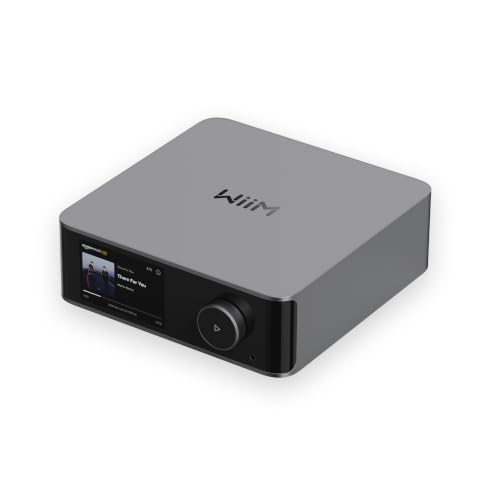
- HDMI ARC and subwoofer out for TV audio
- ESS DAC, Wi-Fi 6, Bluetooth 5.3, hi-res streaming
- Phono, optical, coaxial, USB, and headphone inputs
Best For: A flexible all-in-one streamer for TV, music, and multi-room use
Integrated Power Pick

- Built-in amplifier with HDMI ARC input
- Spotify, TIDAL, Qobuz, AirPlay 2, and Chromecast
- Phono, RCA, and COAX inputs for flexible hookup
Best For: A compact all-in-one stereo system with TV audio support
Long-Run Accessory Pick
OREI ARC & S/PDIF Audio Extender

- Extends HDMI ARC and optical audio up to 300 ft
- Supports PCM 2.0 and Dolby 5.1
- CEC pass-through and optical fallback for TVs without ARC
Best For: Long-distance TV audio extension to an amplifier or closet rack
Premium Audiophile Pick
Naim Uniti Star Network Streamer

- Network streamer with built-in DAC and 70W/ch amp
- CD ripping support with custom Naim software
- 2.4/5 GHz Wi-Fi and premium chassis design
Best For: A high-end all-in-one stereo system for serious music listening
HDBaseT ARC Extender
AV Access 4K60Hz ARC HDMI Extender

- ARC audio return with audio extraction
- S/PDIF and analog outputs built in
- HDMI extension over a single Cat cable
Best For: Long-distance TV audio routing in home theater installs
All-in-One Streamer
EVERSOLO DMP-A8 Music Streamer

- Streamer, DAC, DAP, and preamp in one
- ARC input plus multiple digital and analog inputs
- Touchscreen control with app support
Best For: Audiophile two-channel systems needing ARC and streaming
ARC/eARC Extractor
Neoteck HDMI ARC to Optical Extractor

- Pure ARC/eARC to optical audio extraction
- Supports PCM 2.0, Dolby 5.1, and DTS 5.1
- Plug-and-play with LED format indicators
Best For: Legacy optical systems that need simple TV audio extraction
Practical ARC Extractor
4K@60Hz Audio Splitter for TV and Soundbars

- 4K@60Hz passthrough with HDR10 and HDCP 2.2.
- Optical, RCA, and 3.5mm audio outputs.
- TV, 2.0CH, and 5.1CH mode options.
Best For: Buyers needing simple HDMI ARC audio extraction from TVs, consoles, or streamers.
Versatile HDMI Audio Extractor
4K HDMI to RCA and Optical with ARC Support
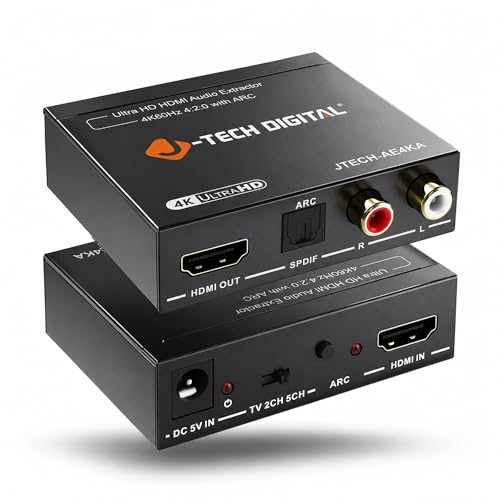
- 4K@60Hz (4:2:0) and 4K@30Hz (4:4:4) support.
- RCA stereo plus optical 5.1-channel output.
- ARC function and EDID modes for compatibility.
Best For: People connecting HDMI sources to older receivers, speakers, or sound systems.
Editor’s Pick – WiiM Ultra Hi-Res Music Streamer
If you want network audio streamers with HDMI ARC that can do a little of everything, the WiiM Ultra is a strong all-in-one choice. It combines hi-res streaming, room correction, a touchscreen, and broad input/output support, making it easy to connect to a TV, phono source, or external audio gear.
Best For: Buyers who want a versatile streamer for TV audio, music streaming, and multi-room setups in one compact unit.
Pros:
- Includes HDMI ARC plus subwoofer out for simple TV and movie audio upgrades.
- Offers ESS ES9038 Q2M DAC, Wi-Fi 6, Bluetooth 5.3, and hi-res playback up to 24-bit/192 kHz.
- Supports RCA, optical, coaxial, USB, headphone out, phono input, and multi-room control.
- Room correction and independent EQ help tailor sound to your space.
Cons:
- Not compatible with AirPlay and cannot act as an AirPlay receiver.
- Designed as a stereo streamer, so it is not a surround-sound solution.
The WiiM Ultra stands out for flexibility: it is easy to use, well connected, and built to slot into both modern streaming setups and older source-based systems.
Integrated Power Pick – Onkyo Muse Y-40 Streamer Amp
For network audio streamers with HDMI ARC that also replace a separate amplifier, the Onkyo Muse Y-40 is built to keep things simple. It combines streaming support, a full digital circuit, and a built-in Class D amplifier, so it can drive speakers while also pulling in TV sound through its HDMI ARC input.
Best For: Listeners who want a compact streamer-amplifier with TV connectivity and straightforward stereo performance.
Pros:
- Built-in 150W amplifier design with an Axign Class D output stage.
- Includes HDMI ARC, phono input, COAX input, and three pairs of analog RCA inputs.
- Supports Spotify Connect, TIDAL Connect, Qobuz Connect, AirPlay 2, and Chromecast.
- Features a 5.46-inch color LCD display and app control for easy operation.
Cons:
- It is a two-channel stereo system, so it is not meant for surround sound.
- Best suited to users who want an integrated amp format rather than a standalone streamer.
The Y-40 makes sense if you want one box to handle streaming, amplification, and HDMI ARC input without building a separate stack of components.
Long-Run Accessory Pick – OREI ARC & S/PDIF Audio Extender
The OREI ARC-EX300-K is not a streamer, but it is a useful companion for network audio streamers with HDMI ARC when your equipment is located far from the TV. It extends HDMI ARC and S/PDIF audio over Cat6, making it easier to move TV audio back to an amplifier or media closet with a long cable run.
Best For: Home theater and distributed audio setups that need a long-distance ARC or optical audio extension.
Pros:
- Extends HDMI ARC and S/PDIF audio over Cat5e/6/7 cable up to 300 feet.
- Supports PCM 2.0 and Dolby 5.1 audio formats.
- Includes CEC pass-through between ARC input and output.
- Provides an independent optical passthrough channel for TVs without ARC.
Cons:
- It is an audio extender, not a streamer or amplifier.
- Designed for television audio routing rather than general music streaming.
If your goal is to preserve HDMI ARC audio over a long run, this OREI box solves a very specific installation problem well.
Premium Audiophile Pick – Naim Uniti Star Network Streamer
The Naim Uniti Star is a premium network audio streamer for buyers who care more about music playback and system quality than HDMI ARC convenience. It focuses on high-end stereo listening with a built-in amplifier, CD ripping support, and strong Wi-Fi streaming, so it suits a refined two-channel setup.
Best For: Audiophiles who want an elegant all-in-one streamer, DAC, amplifier, and CD-ripping platform.
Pros:
- Combines network streaming, DAC, and a 70W per channel Class AB amplifier.
- Includes a CD-Rom drive with custom ripping software.
- Uses a massive custom toroidal transformer and temperature-controlled design.
- Supports 2.4 and 5 GHz Wi-Fi for modern wireless streaming.
Cons:
- No HDMI ARC is listed in the supplied details.
- It is aimed at stereo music systems rather than TV-centric setups.
The Uniti Star is best viewed as a high-end music hub: premium build, integrated amplification, and useful disc-ripping features in one substantial chassis.
HDBaseT ARC Extender – AV Access 4K60Hz ARC HDMI Extender
If you need one of the more practical network audio streamers with HDMI ARC for a home theater rack or distributed AV setup, this AV Access unit is built around long-distance TV audio routing. It can take ARC audio from a TV, extract it to S/PDIF or analog outputs, and carry video, audio, control, and power over a single Cat cable for a cleaner install.
Best For: Home theater installs that need ARC audio extraction and HDMI extension over Cat cable.
Pros:
- Supports ARC audio return and external S/PDIF input via DIP switch.
- Built-in audio extraction with digital S/PDIF and analog Phoenix outputs.
- Extends HDMI up to 131 ft at 4K/60 or 230 ft at 1080p over Cat6a/7.
- Includes bi-directional IR and RS232 for device control.
Cons:
- It is an extender/extractor, not a standalone music streamer.
- Best results depend on using the recommended Cat cable type.
This is a strong fit when the main challenge is getting TV audio and HDMI signals to an AVR or speaker system without running extra cables. It favors install flexibility and reliable ARC handling over streaming app features.
All-in-One Streamer – EVERSOLO DMP-A8 Music Streamer
For buyers comparing network audio streamers with HDMI ARC, the EVERSOLO DMP-A8 stands out as a full-featured music streamer, DAC, and preamp in one chassis. It adds ARC input alongside coaxial, optical, USB-B, analog, and HDMI IIS output options, making it flexible for a modern two-channel system that also needs TV integration.
Best For: Audiophile systems that want streaming, DAC, preamp, and ARC input in one component.
Pros:
- Combines music streamer, DAC, DAP, and preamp functions.
- Includes ARC input plus coaxial, optical, USB-B, and analog inputs.
- Supports major services like TIDAL, Qobuz, Amazon Music, and Spotify Connect Lossless.
- Offers touchscreen control, mobile app support, and VU meter/spectrum displays.
Cons:
- More of a premium source/preamp than a simple streamer.
- Its feature set may be more than needed for basic TV-audio use.
This model makes sense if you want one centerpiece component for streaming and system control, with HDMI ARC as part of a broader hi-fi setup. It is especially appealing for listeners who value detailed playback tools and multiple digital output paths.
ARC/eARC Extractor – Neoteck HDMI ARC to Optical Extractor
If your goal is to add HDMI ARC to an older audio system, this Neoteck extractor keeps the job simple. It is designed to pull pure digital audio from a TV’s ARC/eARC port and send it to optical gear, which makes it a straightforward pick for legacy soundbars, home cinema systems, and headphones.
Best For: Older optical audio systems that need clean ARC/eARC extraction from a TV.
Pros:
- Pure digital extraction from eARC/ARC to optical output.
- Supports PCM 2.0, Dolby 5.1, DTS 5.1, and up to 24-bit/192kHz.
- Plug-and-play design with no software or drivers required.
- LED indicators show 2.0 and 5.1 channel status at a glance.
Cons:
- Optical output only, so it is aimed at legacy digital audio systems.
- Not meant to add streaming features or broader source switching.
This is the most focused option in the group if you only need reliable TV audio extraction without extra complexity. It is a practical bridge between newer ARC/eARC televisions and older optical audio equipment.
Practical ARC Extractor – 4K@60Hz Audio Splitter for TV and Soundbars
If you want a straightforward option among network audio streamers with HDMI ARC, this HDMI ARC audio extractor is built more like a practical TV audio bridge than a streaming hub. It can pull audio from an HDMI source and send it to external speakers, soundbars, or an amplifier, while still supporting up to 4K@60Hz video pass-through for modern setups.
Best For: TV, console, or set-top box users who need HDMI ARC audio extraction with optical, RCA, or 3.5mm outputs.
Pros:
- Supports 4K@60Hz, HDR10, and HDCP 2.2 passthrough.
- Offers optical SPDIF, RCA, and 3.5mm outputs.
- Has TV, 2.0CH, and 5.1CH audio mode options.
- Compatible with HDMI sources like PS5, Fire TV, Blu-ray, and PCs.
Cons:
- Does not support CEC, so TV remote volume control is not available.
- L/R and optical cannot both output properly unless the source is set to PCM/stereo.
- ARC function is limited to HDTV input and ARC interface use.
Overall, this is a useful pick if you need flexible wired audio outputs from an HDMI source and want simple ARC support without extra setup complexity. It is best suited to buyers who prioritize compatibility and basic format support over advanced control features.
TV ARC/eARC Audio Extractor – HDMI ARC/eARC to Optical and Coaxial
For shoppers comparing network audio streamers with HDMI ARC support, this adapter is more of a TV audio output solution than a media streamer. It converts audio from a TV’s HDMI ARC/eARC port into optical and coaxial output, making it a clean way to feed external speakers, amplifiers, DACs, or headphone amps from built-in TV apps.
Best For: TVs with HDMI ARC/eARC that need optical or coaxial audio output for home theater gear.
Pros:
- Supports HDMI ARC/eARC input from the TV side.
- Provides simultaneous Toslink optical and coaxial outputs.
- Rated for up to 24-bit/192 kHz audio.
- Plug-and-play design with included HDMI, optical, and USB power cables.
Cons:
- Only works with HDTV ARC/eARC ports, not other HDMI devices.
- No CEC support, so volume control behavior may vary.
- Requires a compatible TV setup and may need ARC/eARC enabled in settings.
This is a focused solution for extracting TV audio when the display lacks the outputs your system needs. It makes the most sense for home theater owners who already know their TV supports ARC or eARC and want dual digital outputs.
Versatile HDMI Audio Extractor – 4K HDMI to RCA and Optical with ARC Support
If you need one of the more versatile network audio streamers with HDMI ARC-style audio extraction support, this J-Tech Digital model is aimed at users who want HDMI audio broken out to older or simpler sound systems. It can take an HDMI signal and send audio to RCA or optical outputs, while also offering an ARC function for pulling audio from a smart display into an external sound system.
Best For: Users who want HDMI audio extraction with ARC support for TVs, smart displays, and legacy speakers.
Pros:
- Supports 4K@60Hz (4:2:0) and 4K@30Hz (4:4:4).
- Provides RCA stereo output and optical 5.1-channel output.
- Includes ARC support for smart displays.
- Built-in EDID modes help with source-device compatibility.
Cons:
- Does not support eARC.
- RCA output does not downmix 5.1-channel audio.
- Some sources may need resolution lowered to 4K@30Hz or 1080p.
This extractor is a good fit if you want flexibility and compatibility features, especially for mixed old-and-new audio gear. It is less ideal if you specifically need eARC or automatic format conversion to analog.
How We Picked the Best Network Audio Streamers with HDMI ARC
We prioritized products that make TV-to-audio-system connections easier while still serving everyday streaming needs. That means clear HDMI ARC or eARC support where relevant, solid format compatibility, practical connectivity, and a feature set that matches the intended use case. For Network Audio Streamers with HDMI ARC, we also looked for ease of setup, system flexibility, and value across different budgets.
Quick Comparison
Not every item in this roundup does the same job. Some are full network streamers or streamer-amplifiers designed to sit at the center of a hi-fi system. Others are HDMI ARC audio extractors or extenders that solve a specific TV-audio routing problem. If you want an all-in-one music and TV hub, focus on streamer/DAC/amplifier models. If your main goal is moving ARC audio to speakers, optical, RCA, or over Cat6, the extractor and extender options are the better fit.
Key Buying Factors for Network Audio Streamers with HDMI ARC
ARC Versus EARC
ARC is widely supported and works well for stereo and many compressed surround formats. eARC offers higher bandwidth and broader compatibility, which can matter if you want more robust TV audio handling or newer equipment support.
System Role
Decide whether you need a streamer, a streamer plus amplifier, or a standalone ARC audio adapter. A network streamer is ideal if you want music playback and app-based control. A streamer-amplifier makes sense if you want to drive speakers directly. An extractor is the right choice when your current AVR, amp, or powered speakers already do the heavy lifting.
Audio Format Support
Check support for PCM, Dolby Digital, DTS, and high-resolution music formats. If you mainly watch TV and streaming apps, broad compatibility matters more than niche file support. If you care about music playback, look for strong DAC performance and hi-res streaming support.
Outputs and Integration
Consider whether you need optical, coaxial, RCA, 3.5mm, or HDMI pass-through. The right output path depends on your amplifier, speakers, or AVR. Good CEC support and stable lip-sync handling can also improve day-to-day usability.
Who Should Buy Which Network Audio Streamers with HDMI ARC?
Choose a full-featured network streamer if you want one device for music playback and TV audio integration. Choose a streamer with amplification if you want a compact all-in-one system for passive speakers. Choose an ARC extractor or extender if your setup is already built and you only need to route TV audio more cleanly. In short, the best option depends on whether you are upgrading the whole system or solving one connection problem.