Passive speaker selector switches make it easier to share one amplifier across multiple speaker pairs without adding a powered distribution system. They are a practical choice for whole-home audio, office setups, and simple A/B switching.
In this roundup, we focus on the best options for straightforward speaker routing, zone control, and impedance protection so you can choose a switch that fits your system and power needs.
Best 10 Passive Speaker Selector Switches Picks for 2026
4-Zone Stereo Routing

- Switches up to 4 speaker pairs
- 100W per channel handling
- Accepts 14-gauge speaker wire
Best For: Simple home stereo setups needing four speaker outputs
Reversible A/B Switching
P2 2 Way Amp/Speaker Switch Box
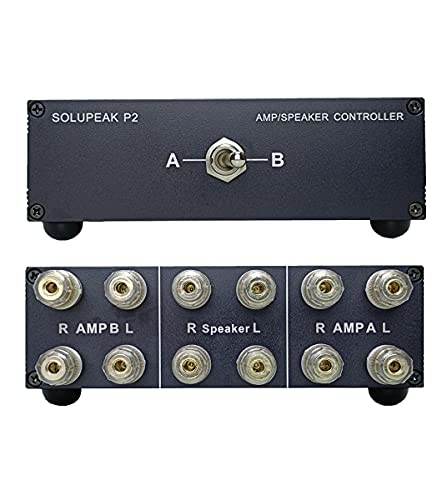
- Works as 2-in-1-out or 1-in-2-out
- Passive, no external power needed
- Gold-plated banana jacks up to 12 gauge
Best For: A/B comparisons and one-at-a-time speaker routing
Protected Multi-Zone Control
Monoprice SSVC-4.1 Speaker Selector
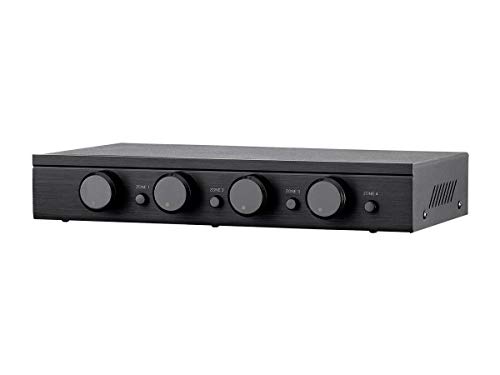
- Impedance protection circuitry included
- Individual zone buttons and volume controls
- 100W/ch continuous, 200W/ch peak
Best For: Multi-room setups needing safer switching and volume control
Dual-Use Amp Routing
PROZOR 2-in-1/1-in-2 Speaker Switcher

- Works in either routing direction
- Passive design needs no power
- Banana ports accept up to 12-gauge wire
Best For: Basic amp/speaker routing with one-at-a-time switching
8-Zone Control for Multi-Room Setups
Pyle PSS8 8-Channel Speaker Selector
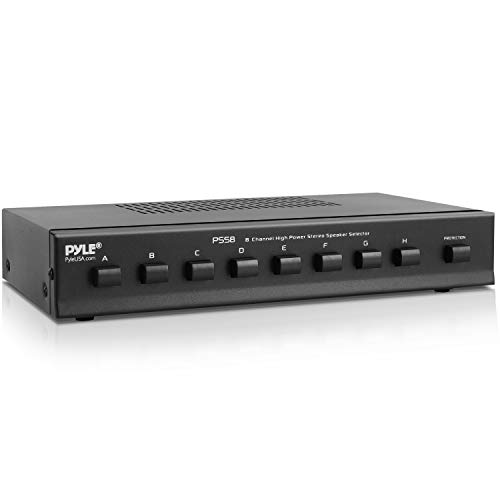
- Controls up to 8 speaker pairs
- Protection buttons help prevent overload
- Supports amps up to 100W per channel
Best For: Managing a large passive multi-room audio setup
Simple 2-Pair Switching Box
XtremPro 1 In 2 Out Speaker Selector

- Two rocker switches for easy control
- Heavy-duty terminal clamps for wiring
- Supports 4–16 ohm passive speakers
Best For: Switching one amplifier between two passive speaker pairs
Compact 4-Zone Distribution Hub
Pyle PSS4.2 4-Channel Speaker Selector

- Individually switches 4 speaker pairs
- Protection circuitry helps prevent damage
- Spring-loaded terminals simplify setup
Best For: Small multi-room systems with passive speakers
2-Zone Compact Stereo Control
2-Way Audio Stereo Speaker selector Switcher Box

- Controls 2 speaker pairs from one amp
- Works with 8–16 ohm passive speakers
- No extra power supply required
Best For: Small stereo setups needing simple 2-zone switching
4-Zone Passive Multi-Room Selector
PROZOR 4-Zone Speaker Selector Switch

- Connects one amp to 4 speaker pairs
- Independent A/B/C/D buttons with AMP master switch
- Passive design, no external power required
Best For: Whole-home or multi-room passive speaker control
Dual-Source 2-Zone Switch Box
PROZOR 2-Zone Speaker Switch Box

- Supports 1 amp to 2 speaker pairs
- Can switch between 2 amplifiers and 1 pair
- Passive box with no external power needed
Best For: Basic 2-zone switching or amp/source selection
4-Zone Stereo Routing – Pyle A/B/C/D Speaker Selector
If you need passive speaker selector switches for a simple multi-room setup, this Pyle selector lets a single stereo feed up to four separate speaker pairs. It is a straightforward option for systems that can handle 100 watts per channel and use speakers with a minimum 8-ohm impedance.
Best For: Home stereo owners wanting to route one amplifier to as many as four speaker pairs without adding power or complexity.
Pros:
- Supports up to 4 separate speaker pairs on one system
- Handles 100W per channel with minimum 8-ohm speaker systems
- Accepts speaker wire up to 14-gauge
- Compact physical size for shelf or rack placement
Cons:
- Requires compatible 8-ohm minimum speaker systems
- No volume controls or impedance protection features listed
Overall, this is a practical passive selector for basic four-zone speaker sharing. It focuses on simple routing and wire compatibility rather than added controls or protection circuitry.
Reversible A/B Switching – P2 2 Way Amp/Speaker Switch Box
Among passive speaker selector switches, this P2 box stands out for reversible 2-in-1-out or 1-in-2-out use. It is a plug-and-play, non-powered switcher designed for quick A/B comparisons between two amps or two pairs of speakers, with gold-plated banana jacks and no added noise from external power.
Best For: Users who want a simple passive A/B switch for comparing amplifiers or toggling between speaker pairs one at a time.
Pros:
- Reversible 2-in-1-out or 1-in-2-out configuration
- Passive design with no external power required
- Gold-plated banana jacks accept up to 12-gauge wire
- Rated for 100W RMS and 200W peak per channel
Cons:
- Only one speaker pair can play at a time in 1-in-2-out mode
- Requires banana-plug-style connections, not RCA cables
This is a straightforward switching box for users who value clean signal path and easy A/B toggling. It is best suited to simple comparison or one-at-a-time routing rather than simultaneous multi-speaker playback.
Protected Multi-Zone Control – Monoprice SSVC-4.1 Speaker Selector
If you’re comparing passive speaker selector switches for a more controlled home audio setup, the Monoprice SSVC-4.1 adds impedance protection, individual zone buttons, and volume controls. It is built to connect multiple speaker pairs to one amplifier while keeping switching accurate and noise-free.
Best For: Listeners who want multi-zone speaker control with built-in impedance protection and individual volume adjustment.
Pros:
- Automatic impedance protection circuitry
- Individual zone on/off buttons and volume controls
- Supports 100W/channel continuous and 200W/channel peak
- Heavy-duty screw-type connectors for 12-18 AWG wire
Cons:
- More complex than a basic passive switch box
- Requires attention to amplifier and speaker impedance limits
This model is a strong fit when you want more than basic speaker sharing. The added zone controls and protection features make it a practical choice for safer multi-speaker operation.
Dual-Use Amp Routing – PROZOR 2-in-1/1-in-2 Speaker Switcher
This PROZOR unit is a practical pick if you’re shopping for passive speaker selector switches that can work in either direction. It can connect two amps to one pair of speakers or one amp to two pairs of speakers, and it switches one position at a time with no power required.
Best For: Users who want a simple passive switch for routing one amp to two speaker pairs or comparing two amps on one speaker set.
Pros:
- Supports 2-in-1-out or 1-in-2-out use
- Passive plug-and-play design with no power required
- Gold-plated banana plug ports accept up to 12-gauge wire
- Rated at 100W RMS and 200W peak per channel
Cons:
- Only one position can be selected at a time
- One input or speaker path must remain inactive during use
For simple audio routing, this switcher covers the essential jobs without extra setup. It is best if you want clean passive switching and broad compatibility with amplifiers and passive speakers.
8-Zone Control for Multi-Room Setups – Pyle PSS8 8-Channel Speaker Selector
If you need passive speaker selector switches for a larger whole-home or multi-room system, the Pyle PSS8 is built to handle up to 8 speaker pairs from one amplifier. It gives you simple, clearly labeled control so you can turn zones on and off without rewiring, while built-in protection buttons help reduce overload risk.
Best For: Users who want to manage up to eight speaker pairs from a single stereo receiver or amplifier.
Pros:
- Controls up to 8 speaker pairs from one source
- Built-in protection buttons help guard against overload
- Clear labeling makes zone selection straightforward
- Supports stereo receivers/amplifiers up to 100 watts per channel
Cons:
- More capability than many smaller home setups need
- Best suited to passive speakers and compatible amplification
Overall, this is a practical choice when you want centralized control over multiple rooms without constantly switching speaker wires. Its strength is straightforward multi-zone management with basic protection features for safer everyday use.
Simple 2-Pair Switching Box – XtremPro 1 In 2 Out Speaker Selector
For smaller systems, this passive speaker selector switch keeps things simple with dedicated on/off rocker switches for each pair. It lets you run speaker pairs together or separately, and the isolated switching design is intended to help minimize interference and avoid unwanted volume reduction.
Best For: Home audio users who want an easy way to switch between one or two passive speaker pairs.
Pros:
- Two dedicated rocker switches for quick control
- Can use speaker pairs simultaneously or separately
- Heavy-duty terminal clamps support stable wiring
- Rugged metal enclosure adds durability
Cons:
- Only covers a small 1-in/2-out style setup
- Not designed for active speakers
This is a sensible pick when you want an uncomplicated selector for a modest home audio system. It focuses on convenience, sturdy connections, and compatibility with common passive speaker setups rather than advanced zone control.
Compact 4-Zone Distribution Hub – Pyle PSS4.2 4-Channel Speaker Selector
If you want passive speaker selector switches for a smaller multi-room layout, the Pyle PSS4.2 gives you individual on/off control for up to 4 pairs of speakers from one amp. It adds built-in protection circuitry and spring-loaded terminals, making it a practical option for neat, beginner-friendly installs.
Best For: Multi-room or commercial setups that need control over up to four passive speaker pairs.
Pros:
- Controls up to 4 speaker pairs from one amplifier
- Individual on/off switches for each channel
- Built-in protection circuitry helps prevent damage
- Spring-loaded terminals make installation easier
Cons:
- Lower channel count than larger selector boxes
- Designed for passive speaker wiring only
For compact zone management, this model balances simplicity with useful protection features. It is a good fit when you want dependable speaker switching without stepping up to a larger, more complex distribution hub.
2-Zone Compact Stereo Control – 2-Way Audio Stereo Speaker selector Switcher Box
If you need passive speaker selector switches for a simple 2-zone setup, this unit is built to manage two pairs of speakers from one stereo amplifier. It supports simultaneous playback or paired switching, works with 8–16 ohm speakers, and uses a passive design with no extra power supply required.
Best For: Small home theater or stereo setups that need easy control of two speaker pairs.
Pros:
- Controls up to 2 pairs of speakers from one stereo amplifier
- Supports 8–16 ohm passive speakers
- No extra power supply needed
- Accepts up to 14AWG speaker wire
Cons:
- Limited to 2 speaker pairs
- 80W max power per channel is lower than some larger zone selectors
This is a straightforward choice if you want a compact tabletop speaker selector without adding power adapters or complicated controls. The metal housing and slim footprint make it a practical fit for a basic multi-speaker audio setup.
4-Zone Passive Multi-Room Selector – PROZOR 4-Zone Speaker Selector Switch
For larger distributed audio setups, this passive speaker selector switch connects one amplifier or receiver to up to four pairs of passive speakers. Independent A/B/C/D buttons, a built-in AMP master switch, and passive operation make it a practical option for whole-home or multi-area use.
Best For: Multi-room audio systems that need independent control of up to four speaker zones.
Pros:
- Controls up to 4 pairs of passive speakers
- Independent A/B/C/D zone buttons plus AMP master switch
- Passive design requires no external power
- Supports 4–16 ohm speakers and up to 150W RMS per channel
Cons:
- More complex than a simple 2-zone selector
- Speaker volume is controlled by the amplifier, not the switch box
This model stands out when you want flexible zone control without adding powered components. It is especially useful if you need longer wire runs and want a metal-housed selector built for everyday use.
Dual-Source 2-Zone Switch Box – PROZOR 2-Zone Speaker Switch Box
This passive speaker selector switch is designed for either one amplifier to two speaker pairs or two amplifiers to one speaker pair, with simple A/B push-button control. It is a clean plug-and-play option if you want basic source or zone switching without an external power supply.
Best For: Users who need a simple 2-zone selector for either speaker sharing or amplifier switching.
Pros:
- Works with one amp to two speaker pairs, or two amps to one pair
- Independent A/B push-button controls
- Passive design with no external power required
- Supports up to 150W RMS per channel and 4–16 ohm speakers
Cons:
- Warning states only one amplifier input should be selected at a time
- Limited to 2 zones
It is a practical pick when you need flexibility between speaker zoning and source switching in a compact box. The metal housing, anti-slip feet, and support for long wire runs make it easy to drop into a home, office, or commercial audio setup.
How We Picked the Best Passive Speaker Selector Switches
We focused on Passive Speaker Selector Switches that are easy to wire, suitable for common home-audio use cases, and relevant to buyers who want simple multi-zone control. Important factors included number of zones, impedance protection, switch style, build quality, and whether the unit supports independent zone on/off control.
Quick Comparison
For basic two-speaker setups, compact A/B switch boxes are usually the simplest and most affordable choice. If you want to feed several rooms from one amplifier, a 4-zone or 8-zone selector is more appropriate. Models with volume control or impedance matching are better when you need safer operation across multiple pairs and a little more flexibility.
Key Buying Factors for Passive Speaker Selector Switches
Zone Count and Layout
Start with the number of speaker pairs you need to control now, then think about future expansion. Two-zone units work well for simple switching, while 4-zone and 8-zone selectors are better for distributed audio systems.
Impedance Protection
This is one of the most important features to look for in Passive Speaker Selector Switches. Without proper protection, running multiple speaker pairs can reduce the load resistance seen by the amplifier and risk overheating or shutdown. Look for impedance matching or protection if you plan to run more than one pair at a time.
Control Style
Some selectors use simple push buttons, while others use rotary or A/B-style switching. Independent on/off buttons are helpful when you want to enable only the rooms you need. Volume control can be useful, but it is not essential if your amplifier already handles level adjustment.
Power Handling and Speaker Compatibility
Match the selector’s wattage rating to your amplifier and speakers. Also confirm that the unit supports your speaker impedance, especially if you use 4-ohm speakers or multiple pairs in parallel.
Build and Installation
Look for secure binding posts or terminal clamps, a stable enclosure, and clear labeling. A well-designed passive selector should make installation straightforward and keep speaker runs organized.
Who Should Buy Which Passive Speaker Selector Switches?
If you want a simple way to switch between two speaker pairs, choose a compact 2-way selector. If you need to distribute one amplifier to several rooms, a 4-zone or 8-zone model is the better fit. Buyers who want safer multi-room operation should prioritize impedance-protected Passive Speaker Selector Switches, while those with a basic setup can save money by choosing a simpler switcher box.
For most shoppers, the best choice is the one that matches the number of zones you actually use, offers enough power headroom, and keeps the wiring and controls as simple as possible.