The best podcast recorder under $300 can simplify mobile interviews, solo episodes, and multi-person productions without requiring a full studio setup. This roundup covers dedicated field recorders, camera-friendly units, and compact voice recorders.
Consider your microphone connections, track requirements, monitoring options, and recording environment before choosing. A basic recorder may suit lectures or notes, while podcasters using XLR microphones will benefit from dedicated inputs and stronger control.
Best 10 Podcast Recorders Under 300 Picks for 2026
Best All-Arounder

- 32-bit float recording for clip-free audio
- Two XLR/TRS inputs for external gear
- USB-C recording with SD backup
Best For: Flexible podcast, interview, music, and video recording
Best for Multi-Mic Setups
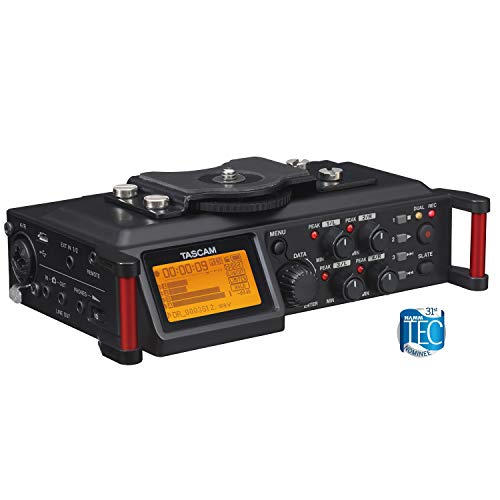
- Four balanced XLR inputs with phantom power
- Individual gain controls for each input
- Dual recording provides a lower-level safety copy
Best For: Panels, interviews, and camera-based production
Best Compact Option

- Lightweight 92-gram portable design
- 32-bit float stereo recording
- USB-C microphone mode for calls and streaming
Best For: Solo creators, interviews, voiceovers, and mobile recording
Best Budget Voice Recorder

- 8GB storage with MP3 and WAV support
- Voice activation helps reduce silent sections
- Up to 20 hours of continuous recording
Best For: Lectures, meetings, interviews, and simple voice capture
Best Flexible XLR Pick

- 32-bit/96kHz WAV recording
- Two locking XLR/TRS inputs
- OLED waveform level display
Best For: Podcasters using external microphones and instruments
Best for Long Voice Sessions

- 128GB internal storage
- Voice activation and playback
- Up to 54 hours of battery life
Best For: Speech-focused interviews, lectures, and portable notes
Best Multitrack Option

- Four XLR/TRS inputs
- Up to 24-bit/96kHz audio
- Multichannel USB audio interface
Best For: Multi-person podcasts and expandable recording setups
Maximum Storage Pick

- 136GB total storage with included TF card
- Up to 68 hours of continuous recording
- 1536 kbps PCM, noise reduction, and USB-C
Best For: Extended interviews and high-volume portable recording
Simple Budget Pick
Sunlan 16GB Digital Voice Recorder

- One-button recording and easy playback
- DSP noise reduction with 1536 kbps recording
- Up to 30 hours of continuous recording
Best For: Beginners recording interviews, lectures, and spoken notes
Feature-Rich Compact Pick

- Stereo recording with noise reduction
- Adjustable voice activation and variable playback speed
- MP3/WAV support with password protection
Best For: Compact stereo recording with flexible playback controls
Best All-Arounder – Zoom H4 Essential
For shoppers comparing podcast recorders under 300, the Zoom H4 Essential is a flexible choice for multi-person conversations, interviews, music, and video audio. Its built-in stereo microphones, two XLR/TRS inputs, four-track recording, and 32-bit float capture support a wide range of recording setups.
Best For: Podcasters and creators who need built-in mics plus inputs for external microphones or instruments.
Pros:
- 32-bit float recording helps provide clip-free audio.
- Two XLR/TRS inputs support external mics, instruments, mixers, and soundboards.
- Can record to a device over USB-C while saving a backup to an SD card.
- Spoken menu guidance can make operation more accessible.
Cons:
- Requires two AA batteries.
- Its larger feature set may be more than a solo podcaster needs.
The H4 Essential stands out when you want room to expand beyond simple voice recording. It is particularly practical for interviews, live performances, and podcast setups involving multiple audio sources.
Best for Multi-Mic Setups – TASCAM DR-70D
The TASCAM DR-70D is worth considering among podcast recorders under 300 when your setup needs several microphones or camera-mounted operation. It offers four balanced XLR inputs with phantom power, individual gain controls, and dual recording for a lower-level safety copy.
Best For: Interview, panel, and video-production setups using up to four external microphones.
Pros:
- Four balanced XLR inputs accommodate larger microphone setups.
- Phantom power supports compatible professional microphones.
- Individual gain controls allow adjustment for each input.
- Dual Recording mode creates a lower-level safety copy to help avoid distorted takes.
Cons:
- It is heavier than the other listed portable recorders at 1.2 pounds.
- It requires four AA batteries.
- The built-in microphones are a secondary option compared with its external-input design.
The DR-70D is a production-focused recorder rather than a minimalist pocket device. Choose it when multiple XLR sources, camera mounting, and level-management tools matter more than compact size.
Best Compact Option – Zoom H1 Essential
If portability is a priority, the Zoom H1 Essential is a straightforward option among podcast recorders under 300. Its compact 92-gram design combines X/Y stereo microphones, 32-bit float recording, and USB-C microphone mode for podcasts, calls, livestreams, and mobile content.
Best For: Solo creators, interviews, voiceovers, and mobile recording where a small recorder is helpful.
Pros:
- Lightweight 92-gram design is easy to carry.
- 32-bit float recording supports clip-free audio.
- USB-C microphone mode works with computers and smartphones for calls and streaming.
- X/Y stereo microphones capture voices, ambience, music, and room sound.
Cons:
- It does not list XLR/TRS inputs for external microphones or instruments.
- It uses two AAA batteries.
- Its stereo-focused design is less suited to larger multi-microphone productions.
The H1 Essential is the simplest fit for creators who want better audio than a phone or camera alone without carrying a larger multitrack recorder. Its USB microphone mode also adds useful flexibility for desktop and mobile work.
Best Budget Voice Recorder – HoTiyan 8GB Digital Recorder
For shoppers seeking a basic, low-cost option among podcast recorders under 300, this HoTiyan digital recorder focuses on voice capture, playback, and easy file transfer. It includes an 8GB memory, voice activation, a built-in microphone, and MP3/WAV recording support.
Best For: Lectures, meetings, interviews, notes, and simple voice recordings rather than multi-microphone podcast production.
Pros:
- Voice activation can reduce silent sections in recordings.
- 8GB storage supports extended recording times depending on quality settings.
- Rechargeable battery supports up to 20 hours of continuous recording according to the supplied notes.
- Includes playback tools such as A-B repeat, variable speed, and password protection.
Cons:
- It has a built-in microphone and no listed XLR inputs for external podcast microphones.
- The supplied details describe a maximum recording quality of 192 kbps, rather than 32-bit float capture.
- Micro USB transfer is less current than USB-C.
This recorder is best viewed as a practical voice-recording device with podcast-adjacent uses. It can work for informal interviews and notes, but creators building a higher-end podcast setup may prefer a recorder with dedicated external microphone inputs.
Best Flexible XLR Pick – Zoom H1 XLR
The Zoom H1 XLR is a strong choice for podcast recorders under 300 when you want a straightforward setup with professional connections. It records WAV audio at up to 32-bit/96kHz, includes two locking XLR/TRS inputs, and provides a waveform display for quick level checks.
Best For: Podcasters, filmmakers, and musicians using external microphones or instruments.
Pros:
- 32-bit/96kHz recording supports detailed, clip-free audio.
- Two XLR/TRS combo inputs accommodate microphones and instruments.
- OLED waveform display helps monitor recording levels.
- Supports SDXC cards up to 1TB and offers a 3.5mm input and headphone output.
Cons:
- Requires two AA batteries.
- Built-in microphone capabilities are not highlighted in the supplied specifications.
Choose the H1 XLR if your podcast setup centers on external microphones and you value high-resolution recording with simple visual monitoring. Its compact 6.4-ounce design also suits mobile recording.
Best for Long Voice Sessions – EVIDA 128GB Voice Recorder
The EVIDA digital voice recorder is worth considering among podcast recorders under 300 for interviews, notes, and voice-focused recording. It offers PCM recording up to 1536kbps, voice activation, password protection, and 128GB of storage, though its built-in mono microphone is designed more for speech capture than multi-microphone podcast production.
Best For: Interviewers, students, writers, and podcasters recording spoken conversations with a compact built-in microphone.
Pros:
- 128GB capacity stores up to 9,296 hours according to the supplied product notes.
- Voice activation can reduce silent sections and background gaps.
- Supports MP3 and WAV recording options, including 1536kbps WAV.
- Provides password protection, bookmarks, playback, and USB file transfer.
Cons:
- Uses a built-in mono microphone rather than XLR inputs.
- No headphone jack is listed in the supplied specifications.
- Continuous recording is listed at up to 54 hours, rather than unlimited battery operation.
This recorder makes the most sense when portability, storage, and speech-focused features matter more than stereo capture or an expandable microphone setup. It can also function as a USB flash drive and MP3 player.
Best Multitrack Option – Zoom H6 Portable Recorder
The Zoom H6 is a versatile option for podcast recorders under 300 when you need several inputs and multitrack flexibility. It records up to 24-bit/96kHz audio, includes four XLR/TRS inputs with individual gain controls, and can work as a multichannel USB audio interface for a computer, Mac, or iPad.
Best For: Multi-person podcasts, video crews, musicians, and users who need several microphone or instrument inputs.
Pros:
- Four XLR/TRS inputs support larger recording setups.
- Individual gain knobs, pads, and phantom power provide input control.
- Includes stereo microphone capsules for flexible recording.
- Works as a multichannel or stereo USB audio interface and records to SD cards up to 128GB.
Cons:
- Requires four AA batteries, adding more power demands than smaller recorders.
- Its 9.92-ounce body is heavier than the Zoom H1 XLR.
- The supplied details list a 2.5mm headphone jack, which may require checking cable compatibility.
The H6 is the better fit for expanding podcast productions because its four inputs and multitrack USB support can accommodate more complex sessions. Its included capsules and accessories also make it useful for stereo and location recording.
Maximum Storage Pick – Tonfarb 136GB Voice Recorder
For shoppers comparing podcast recorders under 300, the Tonfarb stands out for its unusually large storage capacity and long battery life. It records in MP3 or WAV, supports 1536 kbps PCM recording, and includes automatic noise reduction for interviews, conversations, and basic spoken-word podcast work.
Best For: Extended recording sessions, frequent interviews, and users who want substantial onboard storage.
Pros:
- 136GB total storage with the included 128GB TF card and 8GB built-in memory
- Up to 68 hours of continuous recording from the 1100mAh battery
- One-click recording, voice activation, USB-C transfers, and a 3.5mm headphone jack
- Metal casing, compact dimensions, A-B repeat, and password protection
Cons:
- The built-in microphone may be less flexible than a dedicated external microphone setup
- The recorder weighs about 100g, making it heavier than some compact alternatives
The Tonfarb is the strongest choice here for capacity and endurance. Its simple controls and noise-reduction features make it practical for portable podcast interviews, although creators seeking multi-microphone mixing or advanced podcast production will need additional equipment.
Simple Budget Pick – Sunlan 16GB Digital Voice Recorder
Among podcast recorders under 300, this Sunlan model is a straightforward option for capturing spoken audio without a complicated setup. Its one-button controls, DSP noise reduction, voice activation, and 1536 kbps recording support suit interviews, notes, lectures, and simple podcast recordings.
Best For: Beginners who prioritize easy operation and a lightweight recorder for short-to-medium sessions.
Pros:
- One-button recording with simple playback and A-B repeat controls
- DSP noise reduction and a sensitive built-in microphone for clearer speech
- Up to 30 hours of continuous recording on a charge
- Functions as an MP3 player and removable USB storage device
Cons:
- 16GB storage is substantially less than the Tonfarb model’s capacity
- Mono microphone operation may be limiting for stereo podcast capture
- Playback time is listed at about 7 hours
This is a practical entry-level recorder when convenience matters more than advanced podcast features. It is well suited to voice-focused recording, but podcasters wanting stereo capture, greater capacity, or longer playback should consider a more capable model.
Feature-Rich Compact Pick – HoTiyan 16GB Voice Recorder
This HoTiyan recorder is a versatile choice among podcast recorders under 300, combining stereo recording, voice activation, MP3/WAV support, and playback controls in a compact body. Its adjustable voice-activation threshold can help reduce silent sections and conserve storage during interviews or conversational recordings.
Best For: Users who want stereo recording plus playback, file-management, and accessibility features in a small device.
Pros:
- High-definition stereo recording with a sensitive microphone and noise reduction
- Voice-activated recording with adjustable sound thresholds
- Supports MP3 and WAV files, variable playback speed, and A-B repeat
- Includes password protection, timestamps, a built-in speaker, and a two-year warranty description
Cons:
- Battery life is rated at up to 20 hours of continuous recording
- Storage is limited to 16GB, with a maximum of 199 recording files noted
- Uses a Micro USB cable rather than USB-C for file transfers
The HoTiyan offers the broadest set of usability features in this group while remaining lightweight. It is a good fit for mobile spoken-word recording, though the shorter battery life and smaller storage make it less suitable for very long recording schedules.
How We Picked the Best Podcast Recorders Under 300
We focused on recording flexibility, input options, portability, monitoring, power, and practical use cases. The selection includes models with XLR/TRS combo inputs for dynamic or condenser microphones, handheld stereo recorders for quick setups, and inexpensive digital voice recorders for straightforward speech capture.
We also considered whether a recorder can serve as a USB audio interface, support external storage, offer overdubbing or multitrack capability, and provide useful controls such as limiters, low-cut filters, or adjustable gain. Because prices and packages can change, verify the current specifications and included accessories before buying.
Quick Comparison
| Best For | Look For | Typical Choice |
|---|---|---|
| Solo podcasts | Simple operation and a built-in stereo microphone | Compact handheld recorder |
| Two-person interviews | Two quality microphone inputs and headphone monitoring | Two-channel XLR recorder |
| Multiple guests | Four or more XLR/TRS inputs and multitrack recording | Multitrack field recorder |
| Video production | Camera compatibility, level controls, and a limiter | Portable camera audio recorder |
| Lectures and notes | Long battery life, voice activation, and simple playback | Digital voice recorder |
Key Buying Factors for Podcast Recorders Under 300
Inputs and Microphone Compatibility
Check whether the unit accepts XLR, 1/4-inch TRS, 3.5mm, or only its built-in microphone. XLR inputs are the most useful choice for conventional podcast microphones. Phantom power may be necessary for condenser microphones, while dynamic microphones typically need more gain.
Track Count and Workflow
A stereo recorder is often enough for a solo host or quick interview. Choose a four- or six-track model if you want separate guest tracks, multiple microphones, backup channels, or music and effects recorded independently. Separate tracks make editing easier than recording everyone into one mixed file.
Monitoring and Sound Control
Headphone monitoring helps catch cable problems, clipping, background noise, and muted channels before they ruin a session. A limiter, low-cut filter, and adjustable gain are valuable when recording unpredictable voices or outdoor interviews.
Storage, Power, and Portability
Confirm the memory-card format, maximum supported capacity, battery type, USB functions, and expected recording time. Built-in microphones are convenient, but a compact body, wind protection, and a dependable power setup matter more for mobile recording than headline storage numbers.
Who Should Buy Which Podcast Recorders Under 300?
Choose a compact handheld model if you want the fastest setup for solo shows, travel, ambient sound, or casual interviews. Pick a two-channel XLR recorder for a host-and-guest podcast using separate microphones. A four- or six-track unit is the better fit for panels, co-hosts, musicians, or productions that need independent tracks.
Camera operators should prioritize a recorder with camera-friendly connections, level control, and a limiter. If your main goal is recording lectures, meetings, or personal notes, a small voice recorder with voice activation and playback may be more convenient than a professional field recorder. In short, buy the simplest model that supports your microphones and the number of people you expect to record.