Resin printers can bring exceptional detail to classroom projects, prototypes, and STEM demonstrations—but only if the setup is practical for teachers and students.
This roundup of resin printers for schools focuses on ease of use, print quality, cleanup, and overall value so you can choose models that fit real classroom workflows.
Best 10 Resin Printers for Schools Picks for 2026
Easy-Setup Pick
ELEGOO Mars 5 Resin 3D Printer
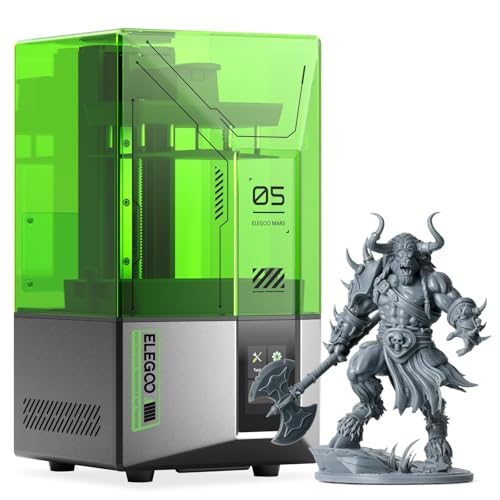
- One-click automatic leveling simplifies setup.
- Self-check and alarms help prevent failed prints.
- 4K mono LCD supports detailed classroom models.
Best For: school labs and makerspaces needing easier resin printer operation
Cast Materials Pick
Siraya Tech Cast True Blue Resin

- Wax-based formula burns out cleaner with less ash.
- Prints detailed models with a smooth surface finish.
- Compatible with most LCD, DLP, and SLA printers.
Best For: jewelry, casting, and metal-part projects in school programs
High-Detail Value Pick

- 10K mono LCD delivers high-precision detail.
- Large build volume suits classroom projects.
- Pre-calibrated and resume print support reduce waste.
Best For: schools that want detailed resin prints with a larger build area
Workflow Accessory Pick
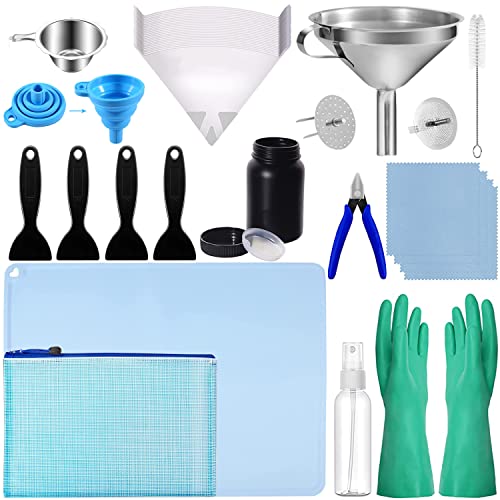
- Includes funnels, filters, gloves, and scrapers.
- Silicone mat helps contain spills during cleanup.
- Useful for transfer, storage, and post-processing.
Best For: school resin cleanup and finishing stations
Water-Wash Convenience
ANYCUBIC Water Washable Resin 2.0 8K

- Washes with water instead of alcohol
- Low odor for shared workspaces
- Compatible with most LCD resin printers
Best For: Schools and makerspaces wanting simpler cleanup
Safer Starter Printer
ELEGOO Mars 5 Beginner Resin Printer

- Automatic leveling simplifies setup
- Built-in sensor helps catch printing issues
- Overheat protection adds safety
Best For: Beginners and classrooms needing guided printing
Post-Processing Station

- Washes and cures in one machine
- 360° curing helps reach all angles
- Sealed container reduces solution loss
Best For: Shared school workflows needing faster post-processing
Classroom-Friendly Starter Pick
Creality HALOT R6 Resin Printer
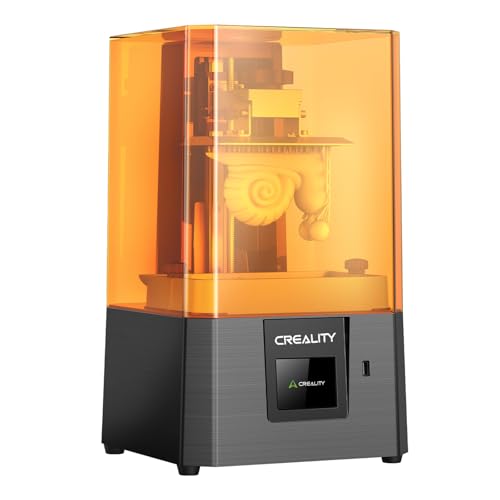
- Guided setup for first-time users
- Compact 2K printer for small spaces
- Uniform light source for even curing
Best For: Beginners and classrooms needing an easy, space-saving resin printer
Low-Odor Resin Supply
Siraya Tech Fast ABS-Like Resin

- Fast printing and curing
- Low odor and easy to clean
- Tough ABS-like finish with smooth detail
Best For: Classrooms and makerspaces that need a low-odor, durable resin
Auto-Leveling Classroom Value
MALYAN S100 Mini Resin Printer

- One-click calibration and auto leveling
- 5.5-inch 2K LCD for detailed prints
- Magnetic build plate simplifies cleanup
Best For: Small classrooms and makerspaces that want automatic leveling and simple operation
Easy-Setup Pick – ELEGOO Mars 5 Resin 3D Printer
If you’re comparing resin printers for schools, the ELEGOO Mars 5 stands out for classrooms that want simpler setup and safer day-to-day operation. Its one-click automatic leveling, self-check routine, and built-in alarms reduce the learning curve and help keep print sessions moving without constant manual adjustments.
Best For: School labs, makerspaces, and instructors who want a resin printer that is easier to start, monitor, and maintain.
Pros:
- One-click automatic leveling makes setup easier for beginners.
- Self-check before each print helps catch component issues early.
- Residue detection plus resin-shortage and leveling-failure alarms improve reliability.
- 4K mono LCD and COB light source support fine detail output.
Cons:
- Resin printing still requires supervision and cleanup procedures.
- Best suited to small-format projects rather than large school builds.
The Mars 5 is a practical choice when ease of use matters as much as print quality. For schools, its automation and safety features can help reduce downtime and make resin printing more approachable for staff and students.
Cast Materials Pick – Siraya Tech Cast True Blue Resin
For schools that need resin printers for schools to support jewelry, casting, or metals-focused projects, Siraya Tech Cast True Blue is a specialized material option. It is designed to burn out more cleanly, print with good detail, and work without demanding a very dry environment, which can be helpful in mixed classroom settings.
Best For: Caster-friendly classroom projects, jewelry design programs, and technical classes that need a castable resin.
Pros:
- Contains wax for easier burn-out and less ash during casting.
- Can be easier to print without a very dry environment or special additive.
- High resolution and smooth surface quality suit fine detail work.
- Works with most LCD, DLP, and SLA resin printers.
Cons:
- It is a specialty resin, not a general-purpose classroom material.
- More useful for casting workflows than for standard prototype prints.
This is less about the printer itself and more about expanding what a school resin workflow can do. If your program includes jewelry or cast-metal projects, this resin brings the right properties for cleaner burn-out and detailed output.
High-Detail Value Pick – ANYCUBIC Photon Mono 4
The ANYCUBIC Photon Mono 4 is a strong fit for schools that want high-detail resin printing without stepping up to a more complex system. Its 10K LCD, stable light source, and tested out-of-box setup make it a sensible option for classrooms that need precision for models, prototypes, and fine-feature parts.
Best For: Classroom teams that want detailed prints, a larger build area, and easy startup after unboxing.
Pros:
- 7-inch 10K mono LCD delivers very fine detail.
- LighTurbo matrix light source helps create smooth surfaces and reduce layer lines.
- Large build volume supports more ambitious school projects.
- Pre-assembled, calibrated, and tested before shipment for easier setup.
Cons:
- Requires initial leveling before first use.
- Resin printing still needs careful handling and post-processing.
For schools focused on accuracy and productivity, this model balances detail, print space, and convenience well. The resume-print feature also helps reduce waste if a power interruption occurs during a class session.
Workflow Accessory Pick – LCD 3D Printer Resin Tool Kit
When schools are using resin printers for schools, the support tools matter just as much as the printer. This LCD 3D printer accessory kit brings together funnels, filters, gloves, scrapers, a silicone mat, and storage items to make resin handling, cleaning, and transfer more organized in a classroom or lab.
Best For: Classroom resin cleanup stations, print finishing, and safer handling of resin and post-processed parts.
Pros:
- Includes a broad set of tools for resin transfer, filtering, and cleanup.
- Silicone mat helps catch spills and creates a dedicated work surface.
- Gloves and cleaning supplies support safer handling.
- Resin bottle and filters help with storage and recycling tasks.
Cons:
- It is an accessory kit, not a printer.
- Useful only if your school already has a resin printing workflow.
This kit is a practical add-on for reducing mess and keeping resin work more controlled. For schools, it can help standardize cleanup and post-processing routines around the printer.
Water-Wash Convenience – ANYCUBIC Water Washable Resin 2.0 8K
If you’re comparing resin printers for schools, the right resin can make cleanup simpler and workflow safer. ANYCUBIC Water Washable Resin 2.0 is designed to rinse with water instead of alcohol, which can reduce cleanup hassle and lower the need for extra solvent in a classroom or makerspace.
Best For: Classrooms, labs, and school makerspaces that want easier post-processing and broad printer compatibility.
Pros:
- Water-washable formula helps simplify cleaning without alcohol.
- Low odor design is better suited to shared indoor workspaces.
- Low viscosity supports faster printing and good flowability.
- Wide 365-405nm compatibility works with most LCD resin printers.
Cons:
- Still requires careful resin handling and cleanup procedures.
- Water washing may not replace all post-processing steps.
For schools that need an easier introduction to resin printing, this is a practical material choice. It focuses on convenience, low odor, and broad compatibility rather than specialty performance, which makes it a strong fit for educational use.
Safer Starter Printer – ELEGOO Mars 5 Beginner Resin Printer
For schools looking at resin printers for schools, the ELEGOO Mars 5 is built around ease of use and error prevention. Its automatic leveling, built-in mechanical sensor, and one-click self-check are useful when you want a classroom machine that reduces setup mistakes and flags problems early.
Best For: Beginner users, teachers, and school labs that want a more guided resin printer with safety checks.
Pros:
- Automatic leveling reduces repeated manual setup.
- Mechanical sensor can detect foreign objects and resin issues.
- One-click self-check helps verify machine status before printing.
- Overheat protection adds an extra layer of print and machine safety.
Cons:
- Resin printing still requires careful supervision and post-processing.
- The 4K screen and compact build are aimed at everyday printing, not large-format jobs.
This printer stands out for reducing common beginner frustrations. In a school setting, the automation and built-in checks can make resin printing feel more manageable, especially for first-time users.
Post-Processing Station – Creality Wash and Cure UW-01
If you’re building a resin printers for schools workflow, a wash-and-cure station can save time and keep post-processing more organized. The Creality UW-01 combines washing and curing in one machine, with a sealed container, 360° rotating curing tray, and light-suspending cover for a cleaner, more controlled process.
Best For: School labs and makerspaces that need an all-in-one washing and curing station for resin prints.
Pros:
- Combines washing and curing in one unit to streamline post-processing.
- 360° rotating tray and UV bead layout help cure models evenly.
- Large washing container supports bigger models.
- Sealed container helps reduce cleaning solution volatilization.
Cons:
- Designed for post-processing, so it does not replace a printer.
- Best results still depend on matching the model and platform size.
For schools, this is a useful companion machine when print cleanup and curing need to be faster and more repeatable. It is especially helpful if multiple users are sharing one resin printing workflow.
Classroom-Friendly Starter Pick – Creality HALOT R6 Resin Printer
For schools looking at resin printers for schools, the Creality HALOT R6 is built around simplicity and compact size. It offers out-of-the-box setup, intelligent guidance for first-time use, and a small footprint that fits easily on a classroom desk or in a lab corner.
Best For: Beginners, student makers, and classrooms that want a compact resin printer with low setup friction.
Pros:
- Built-in intelligent guidance helps new users get through networking and basic configuration.
- Compact 2K, 6.08-inch design is space-saving and easy to place in a classroom.
- Integrated light source with over 90% light uniformity supports even layer curing.
- Anti-collision, corrosion-resistant alloy shell adds durability for shared-use environments.
Cons:
- Smaller build and 2K screen mean it is more of a starter machine than a large-production printer.
- Best suited to straightforward classroom projects rather than high-volume output.
The HALOT R6 is a sensible entry point for schools that need a resin printer students can actually learn quickly. Its guided setup and compact body make it practical for supervised classroom use, while the stronger light source and stable motion system help support reliable prints.
Low-Odor Resin Supply – Siraya Tech Fast ABS-Like Resin
For schools using resin printers for schools, the right resin matters as much as the machine itself. Siraya Tech Fast ABS-Like Resin is designed for fast printing, low odor, and easy cleaning, which makes it a practical material choice for classroom projects and shared lab spaces.
Best For: Schools and makerspaces that want a low-odor, fast-curing resin for detailed student prints.
Pros:
- Fast printing and curing can help improve throughput and success rate.
- Low odor is useful in shared indoor environments.
- ABS-like toughness makes prints less brittle and more durable.
- High resolution and smooth surface finish reduce post-processing work.
Cons:
- This is resin only, so it does not include a printer.
- Works best within the limits of compatible LCD and DLP machines.
This resin is a smart add-on for schools that already have compatible printers and want easier cleanup plus better durability. Its low odor and fast curing are especially helpful in busy educational settings where multiple prints may be run in sequence.
Auto-Leveling Classroom Value – MALYAN S100 Mini Resin Printer
If you are comparing resin printers for schools, the MALYAN S100 stands out for its one-click calibration and auto leveling. The 5.5-inch 2K LCD, magnetic build plate, and beginner-friendly workflow make it a practical choice for small learning spaces and student projects.
Best For: Entry-level classrooms and makerspaces that want an easy-to-run mini resin printer with automatic leveling.
Pros:
- Auto-calibrates and levels the platform whenever a print starts.
- 5.5-inch 2K LCD helps restore model detail with high-precision output.
- Magnetic build plate makes removal and cleanup easier between print jobs.
- Upgraded 57W parallel LED array provides stable, uniform light to reduce layer and grid lines.
Cons:
- Small 115 x 65 x 110 mm build area limits larger classroom models.
- Different resins may require matching print parameters for best results.
The S100 is a good fit when ease of use matters more than build size. Automatic leveling and a removable build plate reduce the friction that can slow down a classroom workflow, while the 2K screen and upgraded light source support detailed prints for demos and student assignments.
How We Picked These Resin Printers for Schools
We focused on models and accessories that make classroom use simpler: beginner-friendly controls, reliable print quality, manageable build sizes, and lower-friction post-processing. For Resin Printers for Schools, consistency matters as much as detail, since instructors need predictable results for lessons, labs, and student projects.
We also considered whether the setup supports shared use, including leveling convenience, cleanup needs, odor control, and compatibility with common resins and wash/cure workflows.
Quick Comparison
Smaller, easier-to-operate printers are usually best for introductory classes and tight lab spaces. Higher-detail models are a better fit for design, engineering, and jewelry or model-making programs. Accessories such as wash and cure stations, funnels, filters, and silicone pads can matter just as much as the printer itself because they reduce mess and speed up turnaround.
Key Buying Factors for Resin Printers for Schools
Ease of Use
Look for auto-leveling, straightforward menus, and simple resin handling. In a school environment, fewer setup steps means fewer failed prints and less staff time spent troubleshooting.
Safety and Cleanup
Resin printing requires careful cleanup and ventilation. Water-washable or low-odor resin can help, but schools still need gloves, PPE, spill control, and a dedicated post-processing area. Wash and cure stations can streamline this process and improve consistency.
Print Size and Detail
Choose build volume based on the kinds of assignments students will complete. Miniatures, dental-style models, and concept parts need fine detail; larger prototypes need more space. For most classrooms, a modest build area is easier to manage and less wasteful.
Durability and Material Choice
Classroom prints often need to survive handling, so ABS-like or other tougher resins are worth considering. Castable resins are useful for specialized programs, while standard resins work well for general instruction and demonstrations.
Who Should Buy Which Resin Printers for Schools?
Elementary and middle school STEM labs: Choose the simplest, most forgiving printer with minimal setup and dependable results.
High school makerspaces: Prioritize reliable print quality, moderate build volume, and wash/cure support for frequent student use.
Career and technical education programs: Look for higher-detail machines and stronger resin options for prototypes, product design, and applied engineering work.
Budget-conscious classrooms: A compact printer plus essential cleanup accessories is often the smartest starting point.
For most schools, the best choice is not the most advanced machine; it is the one that fits staffing, safety procedures, and the type of projects students will actually make.