If you want to explore radio signals without spending a lot, RTL-SDR receiver kits are one of the easiest ways to get started. They can handle everything from broadcast and utility listening to ADS-B and general signal hunting.
This roundup focuses on practical choices for beginners and hobbyists, with an eye on software compatibility, tuner quality, antenna bundles, and overall value.
Best 10 RTL SDR Receiver Kits Picks for 2026
Premium All-Band Starter
Nooelec RTL-SDR v5 Bundle with 3 Antennas
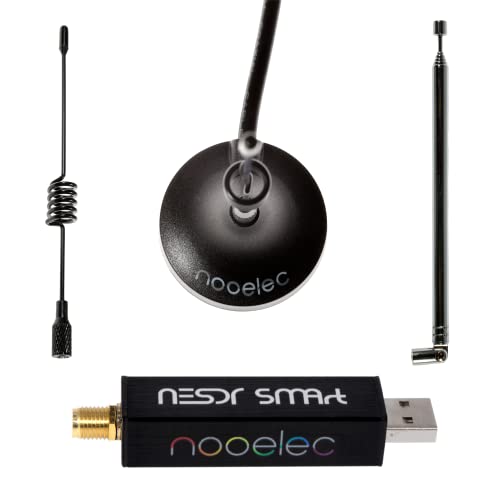
- 100kHz to 1.75GHz tuning range
- Includes magnetic base plus 3 antenna masts
- 0.5 PPM TCXO and aluminum enclosure
Best For: A more capable all-around RTL-SDR kit with useful bundled extras
Budget USB Receiver Set

- 27MHz to 1700MHz tuning range
- Includes antenna and SDR software support
- Simple low-cost USB stick setup
Best For: Beginners who want an inexpensive SDR dongle
Satellite-Ready Antenna Kit

- 500 kHz to 1.7 GHz tuning range
- Includes dipole antenna kit for portable use
- 1 PPM TCXO with bias tee and SMA connector
Best For: Beginners and hobbyists wanting a portable VHF/UHF setup
Low-Cost ADS-B Pick

- 24MHz to 1750MHz coverage
- Improved R820T2 tuner and ESD-safe design
- Includes a free telescopic antenna
Best For: Budget-minded users who want a compact SDR for general listening
Top Beginner Pick

- Includes dongle and dipole antenna kit
- R828D tuner, TCXO, and HF upconverter
- 500 kHz to 1.7 GHz tuning range
Best For: Beginners wanting a complete VHF/UHF starter bundle
Budget Compact Choice
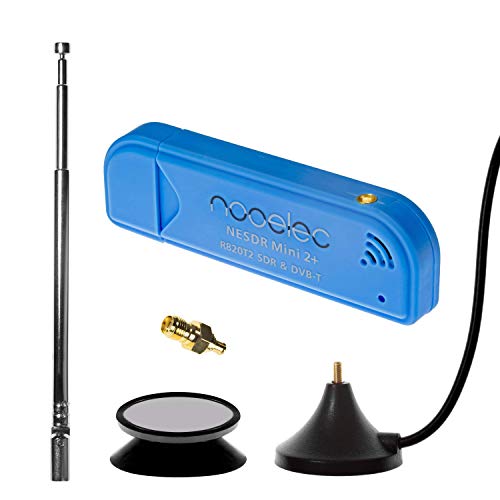
- Includes antenna, mount, and SMA adapter
- Lower-noise design with reduced power use
- R820T2 tuner for improved performance
Best For: Budget buyers who want a small SDR bundle with accessories
Solo Dongle Upgrade

- Dongle-only version with no extras included
- 1 PPM TCXO, SMA connector, and bias tee
- 500 kHz to 1.7 GHz tuning range
Best For: Users who already own antennas and want a standalone dongle
Premium Starter Bundle
NESDR SMArTee v2 with Bias Tee

- Integrated bias tee with 250mA power capability
- 0.5 PPM TCXO for strong frequency accuracy
- Includes antenna base and 3 antenna masts
Best For: Beginners who want a ready-to-use premium RTL-SDR bundle
Compact Budget Receiver
SDR-V4 Blog RTL SDR V4 with Antenna

- R828D and RTL2832U-based SDR receiver
- 1 PPM TCXO for frequency stability
- Compact build with multipurpose antenna included
Best For: Portable DIY projects and casual radio monitoring
Premium Receiver Only

- 3 dB average noise reduction claim
- 0.5 PPM TCXO and SMA input
- Integrated 4.5V bias tee in compact enclosure
Best For: Experienced users who already have antennas
Premium All-Band Starter – Nooelec RTL-SDR v5 Bundle with 3 Antennas
If you’re comparing RTL SDR receiver kits for broad, everyday use, this Nooelec bundle stands out for its wide tuning range and included antenna options. It covers everything from broadcast and airband-style listening to ADS-B, AIS, weather satellites, and more, while also adding a 0.5 PPM TCXO and a solid aluminum enclosure for better stability.
Best For: Buyers who want a more capable all-around RTL-SDR kit with useful extras for VHF, UHF, and some HF experimentation.
Pros:
- Wide 100kHz to 1.75GHz range with up to 3.2MHz instantaneous bandwidth
- Includes a magnetic base antenna and three antenna masts for VHF/UHF use
- 0.5 PPM TCXO and aluminum enclosure for improved tuning accuracy and durability
- Supports Windows, Mac OS, Linux, and Android
Cons:
- HF reception below 25MHz requires direct sampling and a suitable antenna
- HF performance may still be better with an external upconverter
- Some accessories mentioned for HF use are sold separately
This is a strong choice if you want one of the more refined RTL SDR receiver kits with a broad feature set and bundled antennas. It is especially appealing when you want better frequency accuracy and a ready-to-use setup right away.
Budget USB Receiver Set – Nooelec RTL-SDR FM+DAB Stick
For shoppers looking at RTL SDR receiver kits on a tighter budget, this Nooelec USB stick keeps the setup simple and practical. It offers a wide tuning range for common SDR use, includes an antenna, and is designed to work with popular software like SDR#.
Best For: Beginners who want an inexpensive, no-frills SDR dongle for general listening and software experimentation.
Pros:
- Includes RTL2832U and R820T tuner ICs
- Approximate 27MHz to 1700MHz tuning range
- Compatible with many SDR software packages, including SDR#
- Includes an antenna and a 1-year warranty
Cons:
- Lower-cost design with fewer extras than larger kits
- Uses MCX input instead of SMA
- HF coverage is not highlighted without additional accessories
This is the most straightforward option in the group if you want to get started without paying for a more feature-rich kit. It makes sense when price and simplicity matter more than bundled accessories or advanced reception features.
Satellite-Ready Antenna Kit – RTL-SDR Blog V3 with Dipole
If you want RTL SDR receiver kits with a stronger antenna setup, this RTL-SDR Blog bundle is built around a well-equipped dongle and a portable dipole kit. It can tune from 500 kHz to 1.7 GHz, includes a 1 PPM TCXO, and adds a bias tee plus an aluminum shielded case for a more polished receiving setup.
Best For: Beginners and hobbyists who want a portable VHF/UHF setup with better antenna support and satellite-friendly use.
Pros:
- Includes RTL-SDR dongle and multipurpose dipole antenna kit
- 500 kHz to 1.7 GHz tuning range with up to 3.2 MHz bandwidth
- 1 PPM TCXO, SMA connector, aluminum shielded case, and bias tee
- Designed for portable and temporary outdoor VHF/UHF use
Cons:
- HF reception below 24 MHz is in direct sampling mode with reduced performance
- Not suitable for HF reception
- Outdoor use is not recommended in poor weather
This bundle is a good fit if you care more about VHF/UHF and satellite listening than HF coverage. The included antenna kit makes it easier to set up quickly, especially for portable use.
Low-Cost ADS-B Pick – Nooelec NESDR Mini 2 USB Set
Among RTL SDR receiver kits, this Nooelec NESDR Mini 2 keeps costs down while still covering the core bands most beginners want to explore. It pairs the RTL2832U with the improved R820T2 tuner, includes a telescopic antenna, and supports a broad 24MHz to 1750MHz range.
Best For: Budget-minded users who want a compact SDR for general listening and ADS-B experimentation.
Pros:
- Improved R820T2 tuner with better sensitivity and SNR than R820T
- Approximate 24MHz to 1750MHz frequency coverage with no gaps in that range
- Includes a free high-quality telescopic antenna
- USB, ESD-safe design with 1-year warranty and support
Cons:
- HF expansion below 100kHz requires a separate Ham It Up upconverter
- Uses MCX-style antenna input rather than SMA
- Less premium feature set than larger antenna bundles
This is a practical entry-level option if you want a small, inexpensive receiver that still has solid core performance. It is best when you need a simple dongle for experimentation rather than a fully accessorized kit.
Top Beginner Pick – RTL-SDR Blog V4 Kit
If you’re comparing RTL SDR receiver kits for a first setup, this RTL-SDR Blog V4 package is a practical choice because it combines the dongle with a multipurpose dipole antenna kit. The V4 adds a built-in HF upconverter, activatable bias tee, TCXO stability, and an aluminum shielded case, making it a well-rounded option for terrestrial and satellite reception.
Best For: Beginners who want a ready-to-use kit for VHF/UHF listening and portable antenna setup.
Pros:
- Includes both the V4 dongle and a dipole antenna kit
- R828D tuner, 1 PPM TCXO, and built-in HF upconverter
- Can tune from 500 kHz to 1.7 GHz with up to 3.2 MHz instantaneous bandwidth
- Improved filtering, SMA connector, and passive-cooled shielded case
Cons:
- Requires a driver update and careful installation
- RX only, so it cannot transmit
- Not suitable for HF reception with the included antenna
This kit stands out for buyers who want strong out-of-the-box hardware and an included antenna, but it still rewards careful setup. If you want a modern starter bundle with clear performance upgrades, it is a strong pick.
Budget Compact Choice – Nooelec NESDR Mini 2+
For shoppers looking at RTL SDR receiver kits on a tighter budget, the Nooelec NESDR Mini 2+ keeps the package compact while still adding useful extras. It ships with an antenna, magnetic mount, and a female SMA adapter, and its redesigned circuitry focuses on lower noise, better sensitivity, and lower power use.
Best For: Entry-level users who want a compact, low-cost SDR bundle with included antenna accessories.
Pros:
- Includes antenna, magnetic mount, and MCX-to-SMA adapter
- Redesigned for lower noise, better sensitivity, and lower power consumption
- R820T2 tuner offers improved performance over R820T-based devices
- Designed with shielded power and a cleaner 3.3V supply
Cons:
- Uses an MCX connector, so adapter management matters
- More compact kit than larger bundles
- Specific frequency range and bandwidth are not listed in the supplied notes
This is a sensible pick if you want a small, affordable receiver set with a few performance-oriented upgrades. It is especially appealing when you value included accessories and straightforward USB SDR basics.
Solo Dongle Upgrade – RTL-SDR Blog V3 Dongle Only
RTL-SDR Blog V3 R860 RTL2832U 1PPM TCXO SMA Software Defined Radio (Dongle Only) (Black)
Check Price On AmazonIf you already have antennas and accessories, this dongle-only option is a straightforward way to upgrade your RTL SDR receiver kits setup without paying for extras you do not need. The RTL-SDR Blog V3 adds a 1 PPM TCXO, SMA connector, aluminum shielded case, and activatable bias tee, while still covering the wide tuning range the brand is known for.
Best For: Users who want a proven dongle-only SDR with their own antenna gear already in hand.
Pros:
- Dongle-only format avoids paying for duplicate accessories
- Includes 1 PPM TCXO, SMA F connector, and bias tee
- Tunes from 500 kHz to 1.7 GHz with up to 3.2 MHz instantaneous bandwidth
- Compatible with laptops, desktops, tablets, smartphones, and Raspberry Pi
Cons:
- No antenna is included
- RX only, so it cannot transmit
- HF reception below 24 MHz uses direct sampling with reduced performance
This version makes the most sense for buyers who already know the antenna setup they want and just need a capable receiver. It is a flexible, no-frills option for building a custom SDR station around existing gear.
Premium Starter Bundle – NESDR SMArTee v2 with Bias Tee
If you want RTL SDR receiver kits that are ready to use right out of the box, this NESDR SMArTee v2 bundle is built for convenience and stronger signal handling. It combines the SDR with an antenna base and three antenna masts, so you can start experimenting without buying extras.
Best For: Beginners and hobbyists who want a premium RTL-SDR bundle with an integrated bias tee and included antennas.
Pros:
- Integrated always-on 4.5V bias tee with independent ultra-low-noise power supply
- 0.5 PPM TCXO for very accurate frequency stability out of the box
- Redesigned PCB claims an average 3 dB noise reduction
- Includes antenna base plus 3 antenna masts to get started immediately
Cons:
- Higher-end bundle may be more than a basic starter needs
- Best value depends on whether you will use the included antenna accessories
This is a practical pick if you want a more complete SDR setup with quality-focused hardware. The aluminum enclosure, SMA input, and bundled antennas make it an easy choice for users who want less setup hassle and more flexibility.
Compact Budget Receiver – SDR-V4 Blog RTL SDR V4 with Antenna
For shoppers comparing RTL SDR receiver kits on a budget, this SDR-V4 Blog unit focuses on simple setup and broad compatibility with radio software. It includes a multipurpose antenna and a compact form factor, making it easy to carry and use for basic signal work.
Best For: DIY electronics projects, portable use, and casual radio enthusiasts who want a compact RTL-SDR package.
Pros:
- R828D chip and RTL2832U-based design for software-defined radio use
- 1 PPM TCXO for better frequency stability than basic no-name dongles
- Includes a multipurpose antenna for added versatility
- Compact size is ideal for portable use and easy setup
Cons:
- Brand and model information are less established than premium alternatives
- Single-antenna bundle offers fewer included accessories than fuller kits
This is a straightforward option if you want a compact receiver with the essentials included. It is most appealing when portability and software compatibility matter more than a feature-rich accessory bundle.
Premium Receiver Only – NESDR SMArTee v2 RTL-SDR
If you already have antennas and want a refined RTL SDR receiver kit component, this NESDR SMArTee v2 keeps the focus on receiver performance. It delivers the same premium core features as the bundle version, including the integrated bias tee, aluminum enclosure, and low-noise design.
Best For: Users who want a premium RTL-SDR receiver without bundled antenna accessories.
Pros:
- Redesigned PCB claims an average 3 dB reduction in noise
- 0.5 PPM TCXO for accurate out-of-the-box frequency tolerance
- Always-on 4.5V bias tee with independent ultra-low-noise power supply
- Compact SMArt form factor avoids USB occlusion and works well side-by-side
Cons:
- Does not include antenna base or antenna masts
- Better suited to users who already have compatible antenna gear
This version makes sense if you want the premium receiver hardware but do not need the starter bundle extras. It is a strong fit for users who value noise reduction, frequency accuracy, and a clean physical design.
How We Picked the Best RTL SDR Receiver Kits
We looked for kits that offer a strong mix of usability, software support, stable frequency accuracy, and useful accessories. Priority went to models with TCXO stability, bias tee support, broad tuning range, and bundles that make first-time setup easier.
We also considered whether the kit is a better fit for casual listening, ADS-B monitoring, HF experimentation, or all-around use. That matters because the best choice is not always the most feature-rich one.
Quick Comparison
For most buyers, the main differences come down to tuner variant, included antenna package, and extras such as a metal case or integrated bias tee. Entry-level kits are usually best for learning and general listening, while premium bundles are more convenient if you want fewer add-ons to buy separately.
If you already own antennas and accessories, a dongle-only option may be the better value. If you are starting from scratch, a full kit often saves time and confusion.
Key Buying Factors for RTL-SDR Receiver Kits
Tuner and Frequency Stability
Look for a stable oscillator, ideally a TCXO, if you want better long-term accuracy. That is especially useful for narrowband signals, digital modes, and monitoring where drift becomes annoying fast.
Antenna and Accessory Bundle
The included antenna matters more than many buyers expect. A decent starter antenna can make a basic kit far more usable, while upgraded mounts, adapters, and bias tees can improve convenience and performance.
HF, VHF, and UHF Coverage
Make sure the kit matches what you plan to listen to. Some RTL-SDR receiver kits are optimized for general VHF/UHF use, while others are better suited to broader experimentation, including HF with the right setup.
Software Compatibility
Most mainstream options work with popular SDR software, but it is still worth confirming support for your platform and preferred apps. Good software compatibility can make the learning curve much easier.
Who Should Buy Which RTL SDR Receiver Kits?
Beginners should prioritize a complete bundle with a simple antenna and solid plug-and-play support. ADS-B users should look for a stable receiver with the right antenna placement options. If you want more advanced experimentation, choose a kit with better frequency stability, bias tee support, and flexible connectors.
If you already know your setup, a bare dongle can be the smartest buy. If you want the least hassle, a premium bundle is usually worth the extra cost.