The best voice recorders for lectures make it easier to revisit complex explanations, capture ideas accurately, and focus on listening instead of constant note-taking. This roundup compares straightforward digital recorders with newer AI models that transcribe, summarize, and translate recordings.
Before choosing, consider recording quality, storage, battery life, transcription features, and how discreetly the device fits into your study routine. The right option depends on whether you want dependable audio playback or a complete lecture-to-notes workflow.
Best 10 Voice Recorders for Lectures Picks for 2026
Best High-Capacity Pick
EVISTR L357 Digital Voice Recorder

- 64GB storage for extended recording libraries
- Voice activation with seven sensitivity levels
- WAV/MP3 recording and variable-speed playback
Best For: Students and professionals recording frequent lectures
Best Simple Sony Option
Sony ICD-PX370 Digital Voice Recorder

- Easy MP3 recording for everyday use
- Up to 57 hours of battery life
- Built-in USB for direct PC transfers
Best For: Users wanting a familiar, uncomplicated recorder
Best AI Note-Taking Pick

- One-tap recording with AI transcription
- Creates summaries, action items, and conversation maps
- Up to four days of battery life
Best For: Users who want lecture recordings turned into organized notes
Best Storage-and-Playback Value
Holyask 160GB Digital Voice Recorder

- 160GB total storage with included memory card
- WAV recording for lectures and interviews
- A/B repeat, speaker, and password protection
Best For: Users managing large lecture archives and frequent reviews
Best AI-Powered Pick

- Transcribes and summarizes recordings
- Supports translation and speaker identification
- 80GB storage with touchscreen controls
Best For: Students wanting automated lecture notes
Best Storage and Battery

- 128GB storage for extensive recording archives
- Up to 33 hours of continuous recording
- AI transcription and summaries through the app
Best For: Frequent recording and long lecture sessions
Best Simple Budget Option
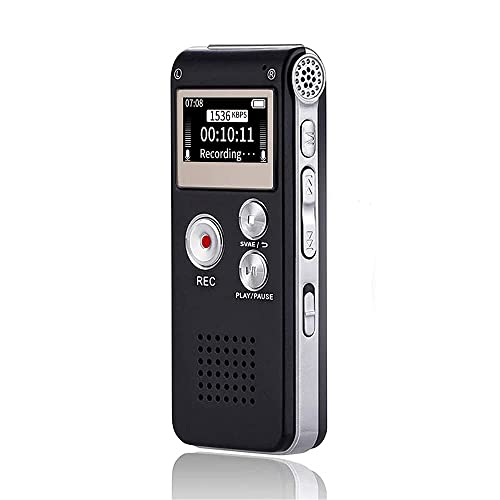
- One-button recording and easy playback
- Voice activation and DSP noise reduction
- Up to 30 hours of recording capacity
Best For: Simple, occasional lecture recording
Best AI Transcription Pick
iFLYTEK Offline AI Voice Recorder

- Offline transcription in five languages
- Six-microphone noise reduction
- Long battery life and flexible exports
Best For: Students and professionals who need offline lecture transcription
Best Heavy-Duty Pick
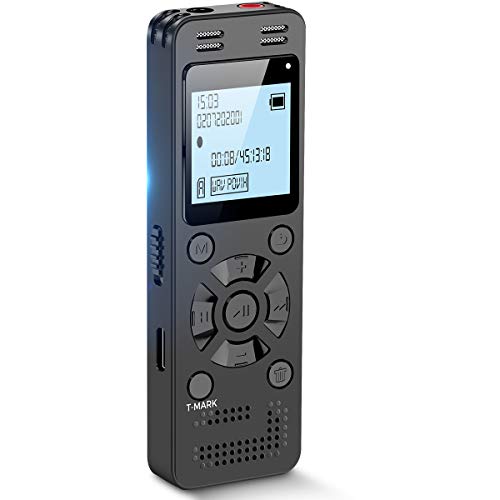
- 128GB storage for extensive archives
- Voice-activated recording
- Playback, bookmarks, and password protection
Best For: Frequent lecture recording and users who prioritize storage
Best Simple Pick

- Straightforward three-button controls
- Stereo MP3/WAV recording
- Compact design with headphone jack
Best For: Students wanting simple, portable lecture recording
Best High-Capacity Pick – EVISTR L357 Digital Voice Recorder
If you need voice recorders for lectures that can handle long-term use, the EVISTR L357 combines substantial storage, voice activation, and adjustable recording controls. Its 64GB capacity and 32-hour continuous recording claim make it practical for students who regularly capture classes, meetings, or interviews.
Best For: Students and professionals who want high storage capacity, voice activation, and playback controls for reviewing lectures.
Pros:
- 64GB storage can hold up to 4,660 hours at 32Kbps.
- Voice activation with seven sensitivity levels can reduce silent sections.
- Supports WAV and MP3 recording, variable-speed playback, and A-B repeat.
- Type-C transfer works with Windows and Mac computers.
Cons:
- The many settings may be more than casual users need.
- Its advertised 32-hour continuous recording time requires recharging for longer sessions.
The L357 is a feature-rich option for lecture recording, especially if you value storage and efficient playback. Its automatic file naming and voice activation also make organizing and reviewing recordings easier.
Best Simple Sony Option – Sony ICD-PX370 Digital Voice Recorder
Sony ICD-PX370 Mono Digital Voice Recorder with Built-In USB Voice Recorder,black
Check Price On AmazonFor shoppers seeking straightforward voice recorders for lectures, the Sony ICD-PX370 focuses on easy MP3 recording and convenient file transfer. Its built-in USB connection and up to 57 hours of battery life suit users who prefer a familiar, uncomplicated recorder.
Best For: Students and everyday users who want a simple Sony recorder with long battery life and direct computer connectivity.
Pros:
- Records MP3 audio quickly and easily.
- Offers up to 57 hours of battery life according to the supplied specifications.
- Built-in USB connection supports quick transfers to a PC.
- Compact 4.49-inch-long design is easy to carry.
Cons:
- Its 4GB storage is much smaller than the capacity of several competing models.
- Uses two AA batteries rather than a rechargeable battery.
- The supplied specifications list a 2.5mm headphone jack, which may require an adapter for some headphones.
The ICD-PX370 is a sensible pick when ease of use matters more than advanced lecture features. It lacks the larger storage and voice-activation controls of some alternatives, but direct USB transfer and long battery life are useful for routine recording.
Best AI Note-Taking Pick – Pocket AI Voice Recorder
The Pocket takes a different approach to voice recorders for lectures by pairing one-tap recording with transcription, summaries, and searchable insights. It is designed for users who want more than an audio file and are comfortable using a smartphone-connected device.
Best For: Students and professionals who want recordings transformed into summaries, action items, and question-based notes.
Pros:
- One-tap recording is designed for quick capture without typing.
- AI tools can create transcriptions, summaries, action items, and conversation maps.
- “Ask Pocket” lets users ask questions grounded in their recordings.
- Up to four days of battery life supports extended everyday use.
Cons:
- Additional premium features may require an optional subscription.
- Its smartphone compatibility and Bluetooth-focused design may be less convenient for users wanting a standalone recorder.
- The supplied details emphasize AI productivity features rather than traditional lecture-specific recording controls.
Pocket is most compelling for people who want to review the substance of a lecture quickly instead of manually replaying the entire recording. Before buying, consider whether its optional subscription model and smartphone-oriented workflow fit your needs.
Best Storage-and-Playback Value – Holyask 160GB Digital Voice Recorder
If storage and straightforward playback are priorities, this Holyask model is one of the more practical voice recorders for lectures. It combines 32GB of internal storage with an included 128GB card, plus WAV recording, a built-in speaker, and review-friendly controls.
Best For: Students, professionals, and language learners who need extensive storage and convenient playback features.
Pros:
- Provides 160GB total storage through internal memory and the included memory card.
- Records in WAV format for clear audio capture in lectures and interviews.
- Built-in speaker, headphone support, and A/B repeat simplify review.
- Voice activation, password protection, USB transfer, and a 56-hour battery specification add practical flexibility.
Cons:
- The supplied details list WAV as the recording format, offering less format flexibility than models supporting both WAV and MP3.
- Its feature set may require more menu navigation than a basic recorder.
- The included memory card contributes to the advertised 160GB total, rather than all storage being internal.
The Holyask stands out for users who archive many recordings or want to revisit sections repeatedly. Its large storage, A/B repeat, and password protection make it well suited to lecture review, though buyers should note how the storage is divided.
Best AI-Powered Pick – HUREWA AI Voice Recorder
For shoppers comparing voice recorders for lectures, the HUREWA stands out as an all-in-one option for recording, transcription, summaries, and translation. Its 4.1-inch touchscreen, dual microphones, and claimed 6–8 metre capture range make it suited to classroom and study use, while its AI tools can turn recordings into organized notes.
Best For: Students who want lecture recordings converted into searchable text, summaries, and study materials.
Pros:
- Unlimited transcription is advertised across 13 major languages, with ChatGPT-assisted summaries, meeting minutes, and to-do lists.
- Dual microphones and noise reduction are designed to capture clearer speech in noisy environments.
- 80GB total storage, a 1500mAh battery, speaker identification, translation, and image features provide broad functionality.
Cons:
- Some AI assistant functions and additional cloud storage require a subscription or have usage limits.
- Continuous recording is rated at 5–7 hours, which may require recharging during especially long sessions.
- Its larger 4.1-inch touchscreen and many features may be more complex than a basic recorder.
This is the most feature-rich choice of the three, particularly if transcription and study organization matter as much as recording. Review the service terms and charging needs before relying on it for lengthy lectures.
Best Storage and Battery – EVISTR L359 AI Recorder
The EVISTR L359 is a practical choice among voice recorders for lectures when long battery life, generous storage, and post-recording transcription are priorities. It records at up to 3072Kbps, offers noise reduction and voice-activated recording, and connects to a phone through wired OTG for processing in the AI DVR Link app.
Best For: Students and professionals who record frequently and want substantial storage with app-based transcription and summaries.
Pros:
- 128GB storage can hold up to 9,216 hours of recordings at 32kbps.
- Up to 33 hours of continuous recording is useful for extended classes, interviews, and meetings.
- The app supports transcription in 113 languages, summaries, mind maps, speaker identification, and Ask AI insights.
- One-button recording, a HOLD switch, password encryption, and wired OTG transfer support straightforward use.
Cons:
- AI transcription and organization depend on the AI DVR Link app and a compatible phone connection.
- The mono microphone configuration may be less suitable when you want a wider stereo soundstage.
- It lacks the touchscreen and built-in translation features described for the HUREWA model.
Choose the L359 if you value endurance and capacity over an on-device touchscreen experience. Its lightweight design and wired transfer workflow make it a strong everyday recorder for a busy class schedule.
Best Simple Budget Option – Sunlan 16GB Voice Recorder
If you want straightforward voice recorders for lectures without app-based AI features, this Sunlan model keeps the controls simple. One-button recording, playback, A-B repeat, voice activation, and DSP noise reduction cover the essentials for capturing and reviewing class material.
Best For: Buyers seeking an uncomplicated, compact recorder for occasional lectures and basic playback.
Pros:
- Simple REC, STOP, and PLAY controls are easy to operate during class.
- Voice-activated recording can reduce silent sections and help conserve storage and power.
- 16GB storage supports up to 30 hours of recording, with up to 7 hours of playback.
- USB file transfer, WAV recording, a built-in speaker, and a 3.5mm headphone jack add everyday convenience.
Cons:
- It does not include transcription, summaries, translation, or other AI organization tools.
- Its 16GB capacity is much smaller than the storage offered by the other two recorders.
- The supplied notes specify a mono microphone, so it may be less suited to capturing wide room ambience.
This is the best fit when reliable basic recording matters more than automated note-taking. Its low-complexity design makes it easy to start using, though you will need to review or transcribe lectures manually.
Best AI Transcription Pick – iFLYTEK Offline AI Voice Recorder
For shoppers comparing voice recorders for lectures, the iFLYTEK 302Pro stands out for offline transcription, playback, and long battery life. It can transcribe speech in five languages, import recordings for transcription, and export files as PDF, Word, or TXT.
Best For: Students, language learners, and professionals who want offline transcription and extended recording for lectures, seminars, or meetings.
Pros:
- Offline AI voice-to-text supports English, Chinese, Japanese, Korean, and Russian.
- Six-microphone noise reduction and four recording modes accommodate different environments.
- Up to 190 hours of listed recording time, with timeline playback and smart bookmarks.
- Supports multiple audio formats and can export transcripts as PDF, Word, or TXT.
Cons:
- Recognition may be affected by background noise or accents.
- There is no listed headphone jack.
- The supplied notes give different battery figures, listing both 175 and 190 hours.
This is the most feature-rich option here for lecture recording when searchable text and offline processing matter. Its broader feature set may be more than needed if you only want basic audio capture.
Best Heavy-Duty Pick – EVIDA 128GB Lecture Recorder
The EVIDA VR01 is a practical choice among voice recorders for lectures when storage capacity is the priority. Its 128GB memory, voice activation, playback, password protection, and selectable MP3 or WAV recording modes suit frequent recording and file storage.
Best For: Students, teachers, and business users who record regularly and want extensive built-in storage with voice-activated capture.
Pros:
- 128GB capacity is listed for up to 9,296 hours of recording storage.
- Voice activation can reduce blank sections and quieter snippets.
- Offers PCM recording, playback, A-B repeat, bookmarks, and password protection.
- Functions as a voice recorder, USB flash drive, and MP3 player.
Cons:
- Listed continuous battery life is 54 hours, shorter than the storage capacity might suggest.
- The supplied details list no headphone jack.
- Voice activation requires choosing an appropriate decibel level.
The VR01 makes the most sense for users who want to keep a large archive of lectures without frequently managing storage. It is less compelling if compact, high-end transcription features are more important than capacity.
Best Simple Pick – HoTiyan 16GB Voice Recorder
The HoTiyan H-10001 keeps lecture recording straightforward with three-button operation, voice activation, stereo recording, and playback controls. It is a compact option for shoppers seeking voice recorders for lectures without adding transcription or more complex features.
Best For: Students and occasional users who want an affordable, simple recorder with repeat listening and adjustable playback speed.
Pros:
- Simple three-button operation enables quick recording, saving, and playback.
- Voice activation can reduce silent sections and whisper fragments.
- Supports stereo recording, MP3/WAV files, A-B repeat, and variable playback speed.
- Compact 1.6-ounce design includes a 3.5mm headphone jack and USB file transfer.
Cons:
- Battery life is listed at 20 hours for recording and 8 hours of playback with earphones.
- Its 16GB storage is considerably lower than the EVIDA model’s 128GB.
- Voice activation requires setting an appropriate sound threshold.
This recorder offers a useful balance of portability and essential lecture features. Choose it for uncomplicated recording and review, but consider another model if you need transcription, very long battery life, or a large recording archive.
How We Picked the Best Voice Recorders for Lectures
We focused on the features that matter most in classrooms, seminars, and study sessions: clear voice capture, dependable battery performance, useful storage, simple controls, and convenient file transfer. We also included AI-enabled models for shoppers who want automatic transcription, summaries, translation, or searchable notes.
Capacity claims can vary depending on recording quality and file format, so treat advertised recording hours as estimates rather than guaranteed results. For AI devices, check whether transcription requires an app, internet connection, subscription, or account.
Quick Comparison
| Best For | What to Look For |
|---|---|
| Simple lecture recording | Physical controls, playback, strong battery life |
| Frequent long sessions | Large storage, rechargeable battery, automatic recording options |
| Study notes and summaries | AI transcription, speaker separation, export tools |
| Privacy-conscious recording | Local storage, offline transcription, password protection |
| Sharing files across devices | Built-in USB or straightforward app connectivity |
Key Buying Factors for Voice Recorders for Lectures
Audio Quality and Microphone Performance
A recorder should capture the lecturer clearly from your normal seat, not just at close range. Noise reduction can help in busy rooms, but microphone placement and classroom acoustics still matter. Stereo recording may provide more spatial detail, while mono recording can use less storage and remain perfectly adequate for speech.
Storage, Battery Life, and File Management
Choose enough capacity for several classes if you do not want to transfer files constantly. Rechargeable models are convenient, while replaceable batteries may be preferable for extended trips. Confirm how recordings are copied to a computer or phone, and check whether the device supports familiar formats such as MP3 or WAV.
Transcription, Summaries, and Privacy
AI features can save substantial time, especially when reviewing multiple lectures. However, accuracy depends on accents, background noise, technical vocabulary, and microphone distance. Offline transcription and password protection are valuable when recordings contain private classroom discussions or sensitive research.
Who Should Buy Which Voice Recorders for Lectures?
Choose a basic digital recorder if you mainly need reliable audio playback, long battery life, and simple controls. These models are often the best value for students who already take notes manually.
Choose a high-capacity recorder if you record frequently, attend lengthy lectures, or want to keep multiple weeks of files on the device. Prioritize easy file transfer and clear folder organization.
Choose an AI voice recorder if your main goal is converting lectures into searchable text, summaries, or translated notes. Verify ongoing costs and supported languages before buying.
Choose an offline or security-focused model if privacy is a priority. Local processing, password protection, and minimal cloud dependence can make these devices better suited to sensitive academic or professional use.