Choosing among today’s VR headsets means balancing display quality, comfort, tracking, game libraries, and the hardware you already own. Standalone models are the easiest place to start, while PC-focused systems can deliver sharper visuals and more demanding simulator experiences.
This roundup compares 10 options across premium PC VR, all-in-one gaming, renewed bargains, and smartphone-based viewing so you can find the right fit for your budget and use case.
Best 10 Vr Headsets Picks for 2026
Best Standalone Pick
Meta Quest 3S 128GB Gorilla Tag Bundle

- Wireless standalone VR with no PC required
- Snapdragon XR2 Gen 2 and 8GB RAM
- Color passthrough plus Gorilla Tag extras
Best For: Wireless gaming and mixed reality
Best for Simulation Detail
Pimax Crystal Super VR Headset

- 3840x3840 resolution per eye
- Wide 140-degree field of view
- Eye tracking and Mini-LED local dimming
Best For: High-end flight and racing simulation
Best Value Standalone

- Wireless VR without a PC or console
- Hand tracking and Touch controllers included
- Supports gaming, fitness, and social apps
Best For: First-time and casual VR users
Best Hybrid PC VR
HTC VIVE Focus Vision Wired Bundle
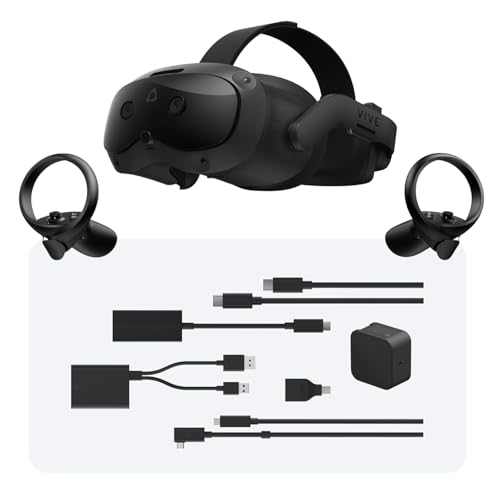
- Standalone and DisplayPort PC VR modes
- 2448x2448 resolution per eye at 90Hz
- Hot-swappable battery and mixed-reality tracking
Best For: PC VR and extended mixed-reality sessions
Best Renewed Standalone Pick
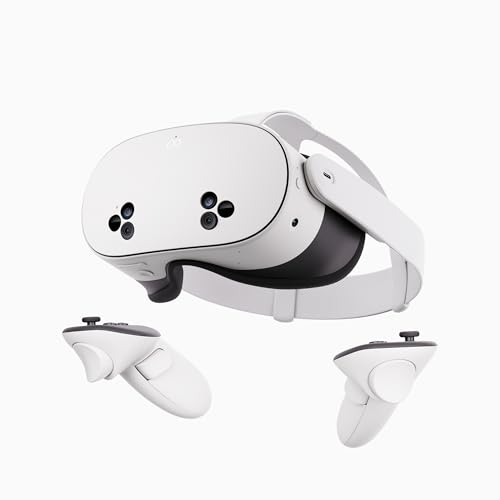
- Standalone wireless VR with Snapdragon XR2 Gen 2
- Full-color passthrough and hand tracking
- Includes three-month access to 40+ games
Best For: Wireless gaming and mixed reality on a renewed headset
Best Phone-Based Budget Option

- Fits phones with 4.7- to 7.2-inch screens
- Bluetooth controller included
- Lightweight design with adjustable lenses
Best For: Casual phone-based VR, videos, and virtual tours
Best High-Capacity Gaming Bundle
Meta Quest 3 512GB Gorilla Tag Bundle

- 512GB storage for a large VR library
- 4K+ display with up to 120Hz refresh rate
- Includes Gorilla Tag extras and two Touch Plus controllers
Best For: Dedicated gamers wanting premium standalone VR and ample storage
Best Premium Mixed-Reality Headset

- Standalone headset with 256GB of storage
- Full-color passthrough and pancake lenses
- Includes Touch Pro controllers and one-month VR field trips
Best For: Premium gaming, mixed reality, multitasking, and learning
Best Renewed VR Value

- Standalone headset with 256GB storage
- 1832 x 1920 resolution per eye at 90Hz
- Includes controllers, grip covers, and knuckle straps
Best For: Adults seeking affordable standalone gaming and entertainment
Best Standalone Pick – Meta Quest 3S 128GB Gorilla Tag Bundle
For shoppers seeking accessible VR headsets, the Meta Quest 3S offers a wireless, standalone setup with 128GB of storage and no PC required. Its Snapdragon XR2 Gen 2 processor, color passthrough, and included Gorilla Tag extras make it a versatile choice for gaming and mixed-reality exploration.
Best For: Wireless gaming, mixed reality, and families or newcomers who want an all-in-one headset.
Pros:
- Standalone design eliminates the need for a PC or console.
- Snapdragon XR2 Gen 2 processor and 8GB of RAM support responsive performance.
- Dual RGB cameras provide full-color passthrough.
- Includes Gorilla Tag items and a three-month Meta Horizon+ trial.
Cons:
- Battery life is approximately 2 to 2.5 hours.
- 128GB may feel limited for users with a large game library.
- Display resolution is lower than the specialist PC VR models in this roundup.
The Quest 3S is the practical all-rounder here: easy to set up, portable, and capable of both conventional VR and passthrough experiences. It is a strong fit when convenience matters more than maximum display resolution.
Best for Simulation Detail – Pimax Crystal Super VR Headset
The Pimax Crystal Super is aimed at PC users who prioritize visual clarity and peripheral awareness. With 3840×3840 resolution per eye, a 140-degree field of view, eye tracking, and a DisplayPort connection, it is one of the most specialized VR headsets for demanding simulation setups.
Best For: Flight and racing simulators, enthusiast PC VR, and users with capable gaming PCs.
Pros:
- Very high 3840×3840-per-eye resolution with 50 pixels per degree.
- 140-degree field of view expands peripheral vision.
- QLED and Mini-LED display technology includes local dimming.
- Eye tracking, inside-out tracking, and refresh rates up to 90Hz support immersive play.
Cons:
- Requires a Windows PC and wired DisplayPort connection.
- Its advanced specifications demand suitable PC and GPU hardware.
- Designed more for dedicated PC VR than portable use.
This is the visual specialist of the group. The combination of sharpness, wide viewing area, and simulation-focused features makes it compelling for serious PC VR users, provided their computer can support the workload.
Best Value Standalone – Meta Quest 2 128GB
The Meta Quest 2 remains a straightforward entry point for shoppers comparing standalone VR headsets. It combines wireless operation, built-in tracking, hand tracking, controllers, and access to a broad library of gaming, fitness, social, and entertainment experiences without requiring a PC or console.
Best For: First-time VR buyers, casual gaming, fitness, and portable entertainment.
Pros:
- All-in-one wireless design works without a PC or console.
- 128GB of storage supports a selection of apps and games.
- Offers hand tracking, 3D positional audio, and included Touch controllers.
- Supports gaming, fitness, social, multiplayer, and entertainment use.
Cons:
- Uses older hardware than the Quest 3S.
- Battery capacity is 3640mAh, so extended sessions require recharging.
- Accounts are for users aged 10 and older, with safety guidance applying.
Quest 2 is best viewed as a simple, flexible gateway into VR. It delivers the essential standalone experience and a broad range of uses, though buyers seeking newer processing hardware may prefer the Quest 3S.
Best Hybrid PC VR – HTC VIVE Focus Vision Wired Bundle
HTC Vive Focus Vision Wired Bundle — XR Headset with DisplayPort PC VR Streaming Kit
Check Price On AmazonThe HTC VIVE Focus Vision is a hybrid option for buyers who want standalone functionality alongside high-quality PC VR. Its DisplayPort mode, 2448×2448-per-eye resolution, eye and hand tracking, depth sensing, and hot-swappable battery make it a capable choice among premium VR headsets.
Best For: PC VR gaming, mixed reality, VRChat, and longer sessions that benefit from replaceable power.
Pros:
- Supports standalone and PC VR experiences.
- DisplayPort mode provides lossless, high-fidelity PC visuals.
- 5K-class display offers 2448×2448 pixels per eye at up to 90Hz.
- Auto-IPD, eye tracking, hand tracking, and depth sensing improve interaction and fit.
Cons:
- DisplayPort mode requires a compatible PC connection.
- Its advanced feature set may be more than casual users need.
- PC VR streaming depends on a suitable network setup, including an Ethernet-connected PC.
The Focus Vision stands out for flexibility. It can serve as an all-in-one headset while also offering a wired PC VR route, and its hot-swappable battery is particularly useful for users who regularly play longer sessions.
Best Renewed Standalone Pick – Meta Quest 3S 128GB
The Meta Quest 3S 128GB is a practical choice for shoppers seeking standalone VR headsets without cables or a separate computer. Its Snapdragon XR2 Gen 2 processor, hand tracking, Touch Controllers, and full-color passthrough support gaming, video, exercise, and mixed-reality experiences.
Best For: Buyers who want a renewed, wireless VR headset with modern performance and a lower storage capacity.
Pros:
- Standalone, wireless design with no PC or console required.
- Snapdragon XR2 Gen 2 processor and 8GB of RAM support responsive gaming.
- Dual RGB cameras provide full-color passthrough for blending virtual and physical spaces.
- Includes a three-month trial offering access to 40+ games.
Cons:
- Renewed Premium condition may not appeal to shoppers wanting a new device.
- 128GB of storage is more limited than higher-capacity Quest models.
- Battery life is rated at roughly two to three hours.
This Quest 3S is a well-rounded entry point for wireless VR, especially if you value current processing power and mixed-reality features over maximum storage. As a renewed model, verify the seller’s condition details before purchasing.
Best Phone-Based Budget Option – TECKNET VR Headset for Phone
The TECKNET VR Headset is a phone-powered alternative for shoppers exploring affordable VR headsets. It holds smartphones with 4.7- to 7.2-inch screens and pairs with an included Bluetooth controller for compatible VR games, videos, virtual tours, and educational content.
Best For: Families and casual users who already own a compatible iPhone or Android phone and want an inexpensive introduction to phone-based VR.
Pros:
- Supports a broad range of smartphones measuring 4.7 to 7.2 inches.
- Includes a Bluetooth controller for easier interaction with compatible apps.
- Lightweight 268g design with an adjustable headband, soft nose rest, and foam mask.
- Adjustable focal length and pupil distance, plus blue-light protection lenses.
Cons:
- Requires a smartphone and compatible apps; it does not create 3D content automatically.
- Experience depends on the phone’s screen, performance, and available VR software.
- Phone-based VR generally offers fewer standalone features than dedicated headsets.
This TECKNET model makes sense when low cost and phone compatibility matter most. Check your phone’s dimensions and app support before buying, since the headset is a viewer and controller accessory rather than a standalone VR system.
Best High-Capacity Gaming Bundle – Meta Quest 3 512GB Gorilla Tag Bundle
The Meta Quest 3 512GB is a premium standalone choice among VR headsets, combining wireless play with a high-resolution 4K+ Infinite Display, 120Hz refresh rate, mixed-reality passthrough, and substantial storage. This version also includes a Gorilla Tag bundle with exclusive items and 2,000 Shiny Rocks.
Best For: Dedicated gamers and mixed-reality users who want generous storage, sharper visuals, and a bundled Gorilla Tag experience.
Pros:
- 512GB of storage provides room for a large game and media library.
- 4K+ display resolution, up to 120Hz refresh rate, and nearly 30% higher resolution than the prior generation.
- Wireless standalone operation with Snapdragon XR2 Gen 2 processing and 8GB of RAM.
- Includes two Touch Plus controllers, a three-month Meta Horizon+ trial, and Gorilla Tag extras.
Cons:
- Battery life is listed at approximately 2.2 hours.
- The Gorilla Tag bundle may add limited value if you do not play that game.
- Higher-capacity hardware may be more than casual VR users need.
With its large storage capacity and sharper display, this Quest 3 bundle is the strongest fit for frequent players who want to avoid uninstalling games. Its short rated battery life remains the main limitation, so plan on regular charging during longer sessions.
Best Smartphone VR Headset – DESTEK V5 with VR Movies
The DESTEK V5 is a practical entry point for shoppers comparing vr headsets that use a smartphone instead of a dedicated operating system. It fits phones from 5.5 to 7.2 inches, includes a Bluetooth controller, and provides access to more than 50,000 free VR movies without a subscription. Android users get the broadest controller functionality, while iPhone controller use is limited mainly to YouTube and music controls.
Best For: Families, children, and beginners who want phone-based VR viewing, simple games, and a low-cost starter setup.
Pros:
- Compatible with iPhone, Samsung, and other smartphones measuring 5.5 to 7.2 inches.
- Includes a controller, touch buttons, and access to 50,000-plus free VR movies.
- Features a 110-degree field of view, anti-blue-light lenses, and lightweight breathable padding.
- Includes access to 128 hand-picked VR apps covering viewing, play, teaching, and exploration.
Cons:
- Requires a compatible smartphone; it is not a standalone VR headset.
- Full controller interaction is available on Android, while iOS support is limited.
Choose the DESTEK V5 if your priority is affordable, phone-powered entertainment rather than advanced standalone gaming. Its included content and simple controls make it an accessible first VR headset, especially for family use.
Best Premium Mixed-Reality Headset – Meta Quest Pro 256GB
The Meta Quest Pro is aimed at shoppers who want advanced vr headsets for gaming, social interaction, work, and mixed-reality use. Its standalone design includes 256GB of storage, high-resolution pancake lenses, full-color passthrough, Touch Pro controllers, and multiple resizable screens. The purchase also includes a one-month Optima Academy Online virtual field-trip subscription.
Best For: Users who want premium standalone VR and mixed-reality features for gaming, collaboration, multitasking, and immersive learning.
Pros:
- Standalone headset with 256GB storage, 12GB RAM, spatial audio, and Meta Quest OS.
- Full-color mixed-reality passthrough helps blend virtual spaces with the physical environment.
- Pancake lenses, increased pixel density, local dimming, and quantum dot technology support visual clarity.
- Touch Pro controllers provide self-tracking, finger-action control, and advanced haptics.
Cons:
- Its advanced feature set may be more than casual VR viewers need.
- The included Optima Academy Online access is described as a one-month subscription.
The Quest Pro is the strongest option here for users who value mixed reality, multitasking, and refined input over simple phone-based viewing. It makes the most sense when you will use its productivity, social, and premium display capabilities.
Best Renewed VR Value – Meta Quest 2 256GB
The renewed Meta Quest 2 is a sensible choice for shoppers seeking capable vr headsets without stepping up to a newer premium model. It is a standalone system with 256GB of storage, a 1832 x 1920-per-eye display, motion-sensing controllers, hand tracking, and headset casting. The package also includes controller grip covers and adjustable knuckle straps.
Best For: Adults who want standalone VR gaming and entertainment with generous storage and useful controller accessories.
Pros:
- Standalone Quest 2 platform with 256GB of storage for games and entertainment.
- 1832 x 1920 resolution per eye and a 90Hz refresh rate support a smooth viewing experience.
- Includes motion-sensing controllers, anti-slip grip covers, and adjustable knuckle straps.
- Supports headset casting for sharing the VR experience.
Cons:
- This is a renewed product rather than a new unit.
- It has a 90-day limited warranty and a narrower 90-degree field of view than the Quest Pro listed here.
The renewed Quest 2 offers a strong balance of standalone capability, storage, and included accessories. It is a practical value pick for buyers focused on VR gaming and entertainment who are comfortable choosing a renewed headset.
How We Picked These Vr Headsets
We selected this list to represent the main ways people use virtual reality in 2026: standalone gaming, PC VR, flight and racing simulation, social experiences, media viewing, and low-cost smartphone VR. We considered display resolution, field of view, tracking, processing hardware, software compatibility, storage, comfort, connection requirements, and overall value.
The selection includes current Meta Quest models, a premium Pimax simulator headset, an HTC PC VR bundle, renewed devices, and smartphone viewers. Because these products serve different audiences, the “best” choice depends more on your intended use than on specifications alone.
Quick Comparison
| Best For | Recommended Type | What to Look For |
|---|---|---|
| Most people | Standalone headset | Wireless operation, inside-out tracking, and a broad app library |
| Premium simulation | PC VR headset | High resolution, wide field of view, eye tracking, and a powerful computer |
| Budget gaming | Entry-level standalone or renewed model | Compatible software, adequate storage, and battery condition |
| Phone-based viewing | Smartphone VR viewer | Phone fit, lens adjustment, comfort, and compatible content |
Key Buying Factors for Vr Headsets
Standalone or PC-Powered
Standalone headsets contain their own processor, battery, storage, and tracking cameras. They are simpler and more portable, making them suitable for casual gaming and shared spaces. PC VR systems can provide better graphics and higher-end simulation features, but require a gaming computer, cables or wireless networking, and more setup.
Display, Lenses, and Field of View
Resolution matters, but lens clarity, refresh rate, edge-to-edge sharpness, and field of view also affect immersion. Higher specifications are particularly valuable for cockpit instruments, distant objects, and long sessions. Check whether the headset supports glasses, lens adjustment, and your preferred interpupillary distance.
Tracking, Controllers, and Software
Inside-out tracking is convenient because it does not require external base stations. Confirm that the included controllers support the games you want to play and that the headset has access to the relevant store or PC platform. Hand tracking can be useful, but it does not replace controllers for every game.
Comfort, Battery, and Storage
A lighter headset, adjustable strap, balanced weight, and adequate ventilation can make a bigger difference than small specification gains. Standalone models typically offer limited battery life, while storage determines how many large games can remain installed. Renewed products should be checked for warranty coverage, battery health, and included accessories.
Who Should Buy Which Vr Headsets?
Choose a Meta Quest 3 or Quest 3S if you want the easiest all-around experience without buying a gaming PC. The Quest 3 is the stronger choice for sharper mixed reality and more storage, while the Quest 3S is aimed at lowering the entry price.
Choose a premium PC VR model if flight or racing simulation is your priority and your computer can support demanding resolutions. A wired PC headset may also suit users who value consistent performance over portability.
Choose a Quest 2 or renewed headset if you want access to established VR games at a lower cost. Compare the savings with the older hardware, available storage, battery condition, and expected software support.
Choose a smartphone viewer only for basic 360-degree video, simple VR content, or occasional experimentation. These viewers are inexpensive, but they do not provide the tracking, controllers, performance, or software ecosystem of dedicated Vr Headsets.