If you live near county lines or travel between regions often, a standard weather radio may miss important alerts. The right model can monitor multiple county codes, helping you catch warnings faster and with less guesswork.
Below, we focus on weather radios with multiple county alerts that balance alert coverage, ease of programming, backup power, and everyday usability.
Best 10 Weather Radios with Multiple County Alerts Picks for 2026
Best for Multi-County Monitoring
Reecom R-200 SAME NOAA Weather Alert Radio

- Monitors multiple NOAA channels/stations in standby
- Stores up to 26 SAME county codes
- Flexible voice, siren, and alert-disable modes
Best For: Users who need configurable weather alert coverage across multiple counties or locations.
Best for Multi-County Alerts
RunningSnail NOAA Weather Radio
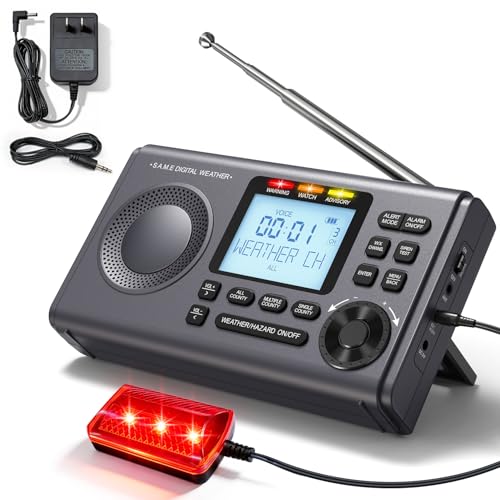
- Up to 23 county codes with S.A.M.E. targeting
- 80+ alerts and selectable voice, siren, or light
- AC power plus battery backup for outages
Best For: Households that need precise NOAA alerts across multiple counties.
Best Budget
Reecom R-500 Weather Alert Radio

- Standby monitoring for multiple NOAA stations
- 26 county codes and 51 event memories
- EOM detection returns to normal operation automatically
Best For: People who want broad multi-county alert coverage with detailed alert history.
Best for Localized Alerts
DreamSky NOAA Weather Radio with S.A.M.E.

- S.A.M.E. county code programming for targeted warnings
- 80+ emergency alerts with 3 alert tones
- Plug-in power plus battery backup
Best For: Households that want county-specific alerts and a dependable home weather radio.
Best for Long-Range Group Use
Midland GXT3000 GMRS Radio 2-Pack

- 50 GMRS channels with 142 privacy codes
- NOAA weather support plus SOS siren
- Rechargeable two-pack for group coordination
Best For: Families, outdoor groups, and large-property users who need long-range communication with weather-alert support.
Best for Multi-County Coverage
Midland WR120B NOAA Weather Alert Radio

- Programs up to 25 counties
- Alerts for 60+ emergency types
- Color-coded warnings and selectable tones
Best For: People who need targeted NOAA alerts across several counties.
Best for Power Backup
QAUYYW 37000mWh NOAA Crank Radio

- Large 37000mWh battery for extended emergency use
- USB-C, solar, and hand-crank charging options
- Includes NOAA radio, SOS siren, flashlight, and reading light
Best For: Households and travelers who want a rechargeable emergency radio with strong backup power.
Best Heavy-Duty Pick
Midland Deluxe Home and Travel Emergency Radio

- Programs up to 25 counties with S.A.M.E. alerts
- Receives NOAA, AMBER, and all-hazard warnings
- Solar, hand-crank, and rechargeable battery power
Best For: Travelers and households that need county-specific alerts across a wide area.
Best Simple Pick
NOAA Weather Radio with S.A.M.E. Alerts

- Supports up to 23 counties with S.A.M.E. programming
- 80+ emergency alerts with multiple alert modes
- Battery backup and external antenna input for outages and weak signals
Best For: Households that need county-specific weather alerts across several nearby areas.
Best for Multi-County Monitoring – Reecom R-200 SAME NOAA Weather Alert Radio
If you want weather radios with multiple county alerts, the Reecom R-200 stands out for its ability to monitor multiple NOAA channels/stations in standby while storing up to 26 SAME county codes. It’s built for travelers, campers, and households that need alerts across more than one location, with useful extras like event history, countdown timing, and customizable siren/voice settings.
Best For: People who need multi-county weather alert coverage, especially if they split time between home, travel, or outdoor use.
Pros:
- Monitors multiple NOAA channels/stations in standby for broader alert coverage
- Stores up to 26 county codes, making it a strong fit for weather radios with multiple county alerts
- Flexible alert modes, including voice, siren, timer, and alert disable options
- Helpful event memory, countdown display, and EOM detection for easier tracking
Cons:
- Interface and feature set may feel complex if you only need a basic radio
- Designed more for alert coverage than for audio or entertainment features
Overall, the R-200 is a practical pick if your priority is dependable, configurable severe-weather monitoring across several counties. Among weather radios with multiple county alerts, it offers unusually deep memory and alert-management features for users who want more control.
Best for Multi-County Alerts – RunningSnail NOAA Weather Radio
If you want one of the more configurable weather radios with multiple county alerts, this RunningSnail model stands out for its S.A.M.E. programming and support for up to 23 county codes. It’s a practical choice for households that want targeted warnings without getting blasted by every nearby alert.
Best For: Homes, cabins, and storm-prone areas that need localized NOAA alerts across more than one county.
Pros:
- Supports All, Multiple, or Single County S.A.M.E. modes for targeted alerts.
- Receives 80+ emergency alert types with customizable voice, siren, or visual notifications.
- Dual power with AC and battery backup helps keep alerts coming during outages.
- External antenna and warning light add flexibility for louder, clearer emergency use.
Cons:
- Setting up county codes takes a little time up front.
- Batteries are not included for backup operation.
Overall, this is a strong fit if you’re comparing weather radios with multiple county alerts and want broad NOAA coverage with more control over what actually gets through. It leans toward preparedness and customization rather than simplicity alone.
Best Budget – Reecom R-500 Weather Alert Radio
If you need weather radios with multiple county alerts, the Reecom R-500 is built around standby monitoring of more than one NOAA channel, plus S.A.M.E. county code support for more targeted emergency notifications. It also adds EOM detection, event memory, and a clear LCD, making it a practical pick for homes, travelers, and anyone who wants broader alert coverage without constant setup.
Best For: Users who want to monitor several counties or stations at once and still keep a weather radio ready for everyday AM/FM use.
Pros:
- Monitors multiple NOAA stations in standby mode for broader alert coverage
- Supports 26 county codes and 51 event memories for review after alerts
- EOM detection automatically returns the radio to its prior state after an alert
- Adjustable siren and voice levels help tailor alarms to your space
Cons:
- Programming multiple counties and channels can take a little setup time
- Backup batteries are not included
- Feature set may be more than casual users need
For shoppers comparing weather radios with multiple county alerts, the R-500 stands out for its combination of multi-station standby monitoring, detailed alert history, and automatic return-to-operation behavior. It is a strong choice when you want wider coverage and more control than a basic single-channel weather radio.
Best for Localized Alerts – DreamSky NOAA Weather Radio with S.A.M.E.
If you want one of the most practical weather radios with multiple county alerts, this DreamSky model stands out for S.A.M.E. county code programming, letting you narrow alerts to the areas that matter most. It also adds FM radio, a plug-in design with battery backup, and 80+ emergency alert coverage for everyday reliability.
Best For: Buyers who want targeted county-level alerts, simple home use, and a backup-ready weather radio that can double as an alarm clock.
Pros:
- S.A.M.E. localized county code programming for more targeted alerts
- Covers 80+ emergency alerts with 3 selectable alert tones
- Plug-in power with battery backup for outage readiness
- Includes FM radio and alarm clock functions for everyday use
Cons:
- Not as portable as battery-only emergency radios
- Setup may take a little time if you want precise county programming
Overall, this is a strong pick if you want weather radios with multiple county alerts without paying for extra complexity. It focuses on localized warning coverage and practical home features, making it a sensible fit for households that want dependable alerts and simple operation.
Best for Long-Range Group Use – Midland GXT3000 GMRS Radio 2-Pack
If you need weather radios with multiple county alerts for trips, worksites, or large properties, the Midland GXT3000 gives you a practical mix of range, channel flexibility, and NOAA weather support. The 50-channel layout and 142 privacy codes help cut down on interference, while the SOS siren adds a useful emergency layer.
Best For: Families, outdoor groups, and property owners who want a two-pack radio set with long-range communication and weather-alert coverage.
Pros:
- 50 GMRS channels and 142 privacy codes help maintain clear group communication
- NOAA weather radio support is handy for alert monitoring during severe weather
- Long-range design suits camping, hiking, and coordination across larger areas
- Rechargeable battery setup reduces the need for constant disposable replacements
Cons:
- GMRS use may require a license in the U.S.
- Actual range can shrink significantly in forests, hills, or urban areas
- Weather alerts depend on signal reception and local coverage
For buyers comparing weather radios with multiple county alerts, this model stands out more for communication flexibility than for a dedicated emergency receiver. It is a solid pick if you want radio chatter, weather awareness, and SOS features in one affordable two-pack.
Best for County-by-County Coverage – Weather Alert Radio with 23 County Codes
If you want one of the more targeted weather radios with multiple county alerts, this model stands out for its 23 pre-programmed county codes, NOAA/SAME filtering, and simple setup. It’s a practical pick for households that want alerts tied to a specific area rather than broad regional warnings.
Best For: Homes, cabins, and storm-prone areas where localized NOAA alerts and backup power matter most.
Pros:
- 23 county codes with SAME/FIPS programming for localized alerts
- 80+ emergency alert types, including severe weather and civil emergencies
- Three alert modes: voice, siren, and light display
- AC power plus AA battery backup for outage protection
Cons:
- Battery backup requires 4 AA batteries, which are not included
- Feature-rich setup may be more than some casual users need
This is a strong fit if you want weather radios with multiple county alerts that prioritize location-specific warnings over generic NOAA broadcasting. The combination of county code selection, audible/visual alert options, and backup power makes it especially useful for emergency preparedness.
Best for Multi-County Coverage – Midland WR120B NOAA Weather Alert Radio
If you want one of the most practical weather radios with multiple county alerts, the Midland WR120B is built around S.A.M.E. localized programming and customizable warning coverage. It can monitor up to 25 counties, making it a strong fit for people who need alerts for home, work, and nearby travel zones.
Best For: Buyers who want targeted NOAA alerts across several counties without constant false alarms.
Pros:
- Programs up to 25 counties for localized alert coverage
- Receives 60+ emergency and weather alert types
- Color-coded indicators make alert severity easier to read
- Alert override and selectable tones improve warning visibility
Cons:
- Setup takes time if you want to enter multiple county codes
- Display and controls are functional, not especially modern
For shoppers comparing weather radios with multiple county alerts, the WR120B stands out for its broad county support and straightforward NOAA alert handling. It is a sensible pick if you prioritize coverage and dependable emergency notifications over extra bells and whistles.
Best for Power Backup – QAUYYW 37000mWh NOAA Crank Radio
If you want one of the more capable weather radios with multiple county alerts for storm prep, this QAUYYW model stands out for its large battery, triple charging options, and built-in lighting. It’s designed to keep you informed during hurricanes, tornadoes, and other outages while also giving you a way to charge a phone and signal for help.
Best For: Households and travelers who want a rechargeable emergency radio with strong battery backup, USB charging, and practical survival features.
Pros:
- 37000mWh battery supports long radio, light, and flashlight runtime
- USB-C, solar, and hand-crank charging cover emergency power loss
- NOAA, AM, and FM reception with SOS siren and flashing light
- Built-in USB output can top up a phone in a pinch
Cons:
- No true multi-county alert zoning details are listed in the specs
- Bulkier than ultra-compact backup radios
- Lighting and radio controls may be more than some casual users need
Overall, this is a strong all-around emergency pick if you value endurance and charging flexibility over minimalist size. For shoppers comparing weather radios with multiple county alerts, it offers the core storm-alert essentials plus extra survival tools that make it useful before, during, and after an outage.
Best Heavy-Duty Pick – Midland Deluxe Home and Travel Emergency Radio
If you want weather radios with multiple county alerts that can cover a larger response area, the Midland Deluxe Home and Travel Emergency Radio is built around S.A.M.E. county programming and broad NOAA alert support. It can store up to 25 counties and listen for 80 emergency alerts, making it a strong fit for people who travel, live near county borders, or want backup coverage for home and cabin use.
Best For: Travelers, households, and outdoor users who need county-specific NOAA alerts across a wide area.
Pros:
- Programs up to 25 counties with S.A.M.E. digital alerts
- Delivers visual and audio NOAA weather warnings plus AMBER alerts
- Offers solar, hand-crank, rechargeable battery, and USB charging
Cons:
- Feature set is more complex than a basic weather radio
- Compact design may feel less like a full-size home base unit
For shoppers comparing weather radios with multiple county alerts, this Midland model stands out because it combines wide-area alert coverage with practical backup power and everyday features like an alarm clock and AM/FM radio. It is a smart choice if you want one radio that can handle emergencies at home and still travel easily.
Best Simple Pick – NOAA Weather Radio with S.A.M.E. Alerts
If you want weather radios with multiple county alerts, this NOAA unit is built for exactly that job. It uses S.A.M.E. localized programming to target specific counties, offers 80+ emergency alert types, and can stay active through outages with battery backup.
Best For: Homeowners, storm-prone households, and anyone who wants county-specific alerts without constant irrelevant warnings.
Pros:
- Multiple-county S.A.M.E. programming supports up to 23 counties
- Over 80 selectable emergency alerts with ALL, SINGLE, and MULTIPLE modes
- Battery backup, alarm clock, snooze, and missed-alert memory add convenience
- External antenna input and flashing warning light help improve usability in weak-signal areas
Cons:
- Setup may take a little time if you want to program several counties
- More features than a basic alert radio, so it may feel complex for simple use
For buyers comparing weather radios with multiple county alerts, this model stands out for flexible S.A.M.E. targeting and strong emergency coverage. It’s a practical pick if you want tailored alerts, backup power, and clear warning options in one desktop radio.
How We Picked the Best Weather Radios with Multiple County Alerts
We focused on Weather Radios with Multiple County Alerts that support localized NOAA/S.A.M.E. programming, clear alert coverage, and practical backup power. We also favored models with straightforward setup, audible alarms, and useful extras like AM/FM reception, flashlights, or rechargeable options where they add real value.
Quick Comparison
The best choice depends on how many counties you need to monitor and where you plan to use the radio. Desktop home models are usually easier to keep powered and programmed for long-term alerting, while portable emergency radios make more sense for travel, outages, and evacuation kits. If you want broader coverage across several counties, look for multi-channel monitoring or flexible county-code storage rather than a basic single-zone unit.
Key Buying Factors for Weather Radios with Multiple County Alerts
County-Code Capacity and Alert Monitoring
Check how many county codes the radio can store and whether it can monitor them simultaneously or only one at a time. For people near state lines or in large metro areas, that distinction matters more than raw alert count.
Alert Types and Customization
More alert categories can be useful, but only if the radio lets you set the alarms the way you want. Look for selectable alerts, volume control, and clear display indicators so you can prioritize severe weather and emergency notices without unnecessary noise.
Power Options and Backup Reliability
Battery backup is essential if you want alerts during an outage. For portable use, consider crank, solar, or rechargeable power. For home use, a plug-in radio with backup batteries is usually the most dependable setup.
Reception and Readability
Good NOAA reception, strong antenna design, and a screen that is easy to read in low light all improve day-to-day reliability. If you’ll use the radio at night or in a bedroom, backlighting and loud, distinct alarms are worth prioritizing.
Who Should Buy Which Weather Radios with Multiple County Alerts?
If you want a simple home alert station, choose a desktop NOAA radio with S.A.M.E. programming and strong county-code support. If you need something for travel or storms on the go, a portable emergency radio with multiple power sources is the better fit. And if you want broader neighborhood or regional coverage, pick one of the Weather Radios with Multiple County Alerts that can monitor more than one code without constant reprogramming.
In short, buy for your geography first, then for features. The best model is the one that matches how many counties you need to watch, how you’ll power it, and how quickly you need to hear the warning.