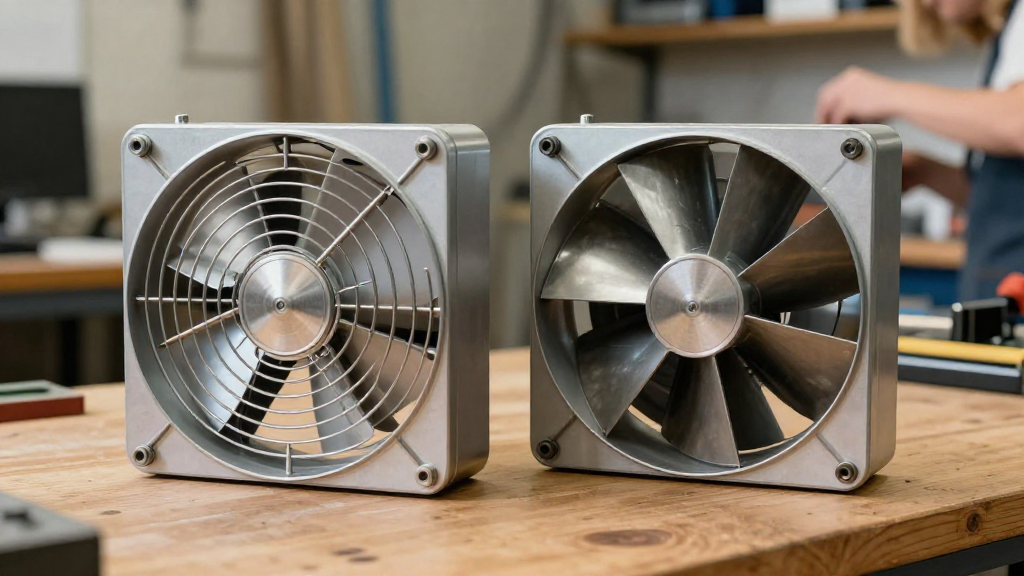
When it comes to ventilation and air management, understanding the difference between inline and axial fans is crucial for choosing the right solution for your needs.
What Are Inline Fans?
Inline fans are typically used in duct systems to move air along the length of the duct.
These fans are designed to be installed within the ductwork, making them efficient for air circulation and extraction.
Key Characteristics of Inline Fans:
-
Design: They generally have a cylindrical structure that fits easily within ducting.
-
Airflow: Inline fans push air in a straight line, making them effective for long duct runs.
-
Noise Level: They tend to operate more quietly compared to axial fans, especially at high speeds.
-
Application: Commonly used in residential and commercial HVAC systems, hydroponics, and other setups where air needs to be transported over a distance.
What Are Axial Fans?
Axial fans, on the other hand, function by moving air along the axis of the fan itself.
These fans can be found in various applications ranging from small household units to large industrial systems.
Key Characteristics of Axial Fans:
-
Design: The fan blades are aligned parallel to the airflow, resembling helicopter blades.
-
Airflow: Axial fans are effective for moving large volumes of air over short distances.
-
Noise Level: They can be noisier than inline fans, especially when operated at high RPMs.
-
Application: Commonly used in cooling applications, exhaust systems, and as part of general ventilation in buildings.
What Is the Key Difference Between Inline and Axial Fans?
The difference between inline and axial fans primarily lies in airflow direction, design, and application.
How Does Airflow Direction Impact Performance?
-
Inline Fans: Since they are installed in ductwork, they excel at moving air in a straight line.
-
Axial Fans: These fans push air parallel to the fan blades, making them more suitable for short-range airflow.
What Are The Typical Applications for Each Fan Type?
-
Inline Fans are ideal for:
-
Ventilating long duct runs.
- Removing stale air from enclosed spaces such as bathrooms and kitchens.
-
Supporting systems that require constant airflow, such as hydroponic systems.
-
Axial Fans are typically used for:
-
Cooling electronic equipment and machinery.
- Exhausting hot air from manufacturing processes.
- Providing ventilation in open spaces.
Which Fan Is More Efficient?
When evaluating the difference between inline and axial fans, efficiency can vary based on the application.
What Determines Fan Efficiency?
-
Fan Design: The blade design and size can greatly affect airflow efficiency.
-
Ductwork: Inline fans are more efficient when used with well-designed duct systems.
-
Motor Type: The type of motor (AC vs. DC) in the fan also influences consumption and performance.
Are There Size and Capacity Differences?
When studying the difference between inline and axial fans, you’ll find there are notable size and capacity differences as well.
What Sizes Do These Fans Come In?
-
Inline Fans:
-
Available in various sizes, but they tend to be compact to fit within ducts.
-
They range from 4 inches to 12 inches and larger for industrial applications.
-
Axial Fans:
-
Generally larger, with sizes ranging from small desktop fans to industrial fans exceeding 5 feet in diameter.
How Do Size and Capacity Affect Choice?
-
Inline Fans are often chosen for embedded systems or tightly confined spaces.
-
Axial Fans are more suitable for applications needing high capacity and larger volumes of airflow.
What Are the Installation Considerations?
Understanding the difference between inline and axial fans also includes installation.
How Easy Is It to Install Each Type?
-
Inline Fans: Usually require installation in ductwork with appropriate fittings.
-
Installation might include securing the fan and ensuring proper airflow direction.
-
Axial Fans: Often easier to mount on walls, ceilings, or stands due to their standalone design.
What Are Potential Challenges?
-
Inline Fans can be trickier to install since they must be part of the duct system, which may require additional tools and adjustments.
-
Axial Fans might present challenges related to noise levels in residential areas, requiring sound dampening measures.
Are There Noise and Maintenance Considerations?
Assessing the difference between inline and axial fans also involves understanding noise output and maintenance needs.
How Do They Compare in Noise Levels?
-
Inline Fans are quieter, which makes them preferable for residential settings.
-
Axial Fans can produce more noise, especially at higher speeds.
What About Maintenance Needs?
-
Inline Fans generally require less maintenance due to fewer moving parts hidden within ductwork.
-
Axial Fans may need more frequent attention due to exposed blades collecting dust and debris.
Which Fan Is More Cost-Effective?
Last but not least, consider cost when evaluating the difference between inline and axial fans.
How Do Prices Compare?
-
Inline Fans tend to be more expensive upfront because of their specific design for duct integration.
-
Axial Fans are usually more affordable and available in a wide range of price points.
What Affects Long-Term Cost?
-
Energy Efficiency: Inline fans may consume less power over time, offsetting higher upfront costs.
-
Lifespan and Maintenance: Axial fans may incur more costs related to maintenance and replacements.
Conclusion: Which One Should You Choose?
Understanding the difference between inline and axial fans is essential for making informed decisions for your ventilation needs.
If you need efficient air movement through ductwork, an inline fan should be your choice.
For applications requiring high volumes of air over short distances, axial fans may better suit your needs.
Evaluate your specific requirements, including space, noise levels, and airflow needs, to make the best decision for your situation.