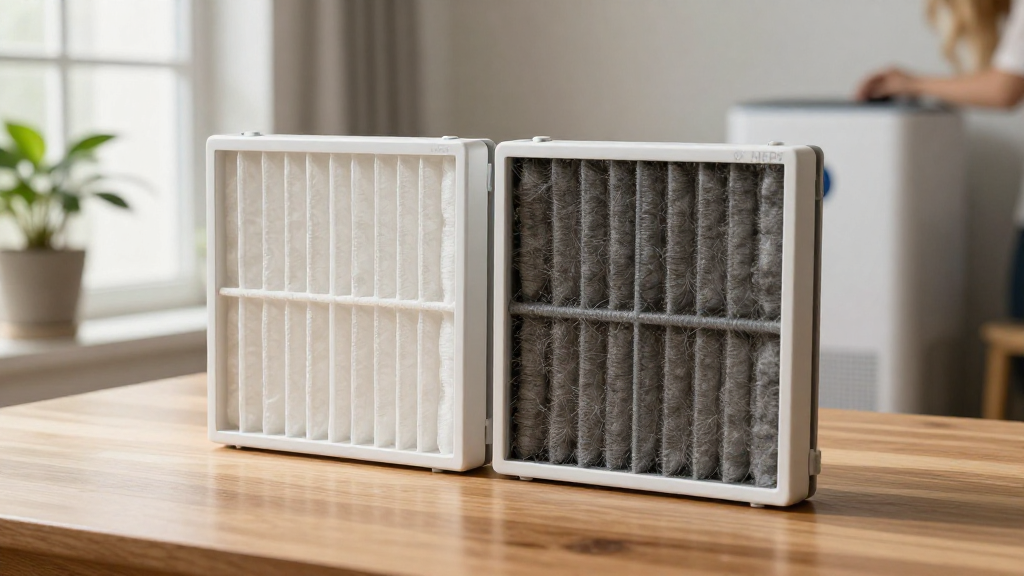
When searching for the best air filtration solution, understanding the difference between MERV and HEPA filters is essential.
What is MERV?
MERV stands for Minimum Efficiency Reporting Value.
This rating system was developed by the American Society of Heating, Refrigerating, and Air-Conditioning Engineers (ASHRAE) to provide a standardized measure of how effective an air filter is at trapping particles of varying sizes.
What Does MERV Measure?
- Efficiency: The MERV rating ranges from 1 to 16, with higher numbers indicating a greater ability to capture smaller particles.
- Particle Size: MERV filters can capture particles ranging from 0.3 to 10 microns in size, depending on their rating. For example:
- MERV 1-4: Primarily removes large particles like dust and pollen.
- MERV 5-8: Captures mold spores and pet dander.
- MERV 9-12: Effective against fine dust, smoke, and smog.
- MERV 13-16: Can capture bacteria, viruses, and airborne pathogens.
How Do MERV Filters Work?
MERV filters are typically made from fiberglass or synthetic material, which traps particles as air passes through them.
They are commonly used in residential, commercial, and industrial HVAC systems, providing good performance and efficiency for various applications.
What is HEPA?
HEPA is an acronym for High-Efficiency Particulate Air.
HEPA filters are designed to meet stringent standards for air cleanliness.
What Makes HEPA Unique?
- Efficiency: To qualify as a true HEPA filter, it must remove at least 99.97% of particles that are 0.3 microns in size or larger.
- Particle Size: In terms of particle capture, HEPA filters are particularly effective against very small particles, including allergens, pet dander, smoke, and dust mites.
Where Are HEPA Filters Used?
HEPA filters are commonly found in:
- Air purifiers
- Vacuum cleaners
- Medical facilities (to create sterile environments)
- Industrial applications that require clean air spaces
What’s the Key Difference Between MERV and HEPA Filters?
The difference between MERV and HEPA primarily revolves around their efficiency ratings and applications.
-
Rating System:
– MERV filters have a broader rating system with values ranging from 1 to 16.
– HEPA filters meet a specific standard that guarantees their performance. -
Particle Size Efficiency:
– MERV filters vary in their ability to capture particles; even the highest-rated MERV filters do not capture the small particles as effectively as HEPA filters.
– HEPA filters excel at trapping extremely small particles that MERV filters may not effectively filter out. -
Applications:
– MERV filters are suitable for typical residential and commercial use.
– HEPA filters are often utilized in environments requiring cleanroom conditions, such as laboratories and hospitals.
Which One Should You Choose?
Choosing between MERV and HEPA filters depends on your specific needs.
Consider Your Environment
- Residential Use:
- If you have pets or suffer from allergies, a high-MERV filter (MERV 13 or higher) could be ideal.
-
For general use, a MERV filter rated 5-8 may provide sufficient filtration.
-
Commercial or Industrial Use:
- Those needing to filter out very fine particles and allergens should consider HEPA filters for their superior efficiency.
Cost vs. Efficiency
- MERV filters tend to be more cost-effective and are often easier to find.
- HEPA filters may have a higher upfront cost, but their exceptional filtration can lead to better air quality, reducing health risks in the long run.
Can You Combine MERV and HEPA Filters?
Yes, in some HVAC systems, it’s possible to use both MERV and HEPA filters in tandem to capture a wide range of contaminants effectively.
How Does Combining Work?
- Pre-Filters: MERV filters can be used as pre-filters to capture larger particles before they reach the HEPA filter.
- Enhanced Filtration: This combination allows for the effective filtration of both larger and smaller particles, which can improve the efficiency of the entire air system.
How to Maintain Your Filters?
Proper maintenance is crucial regardless of which filter type you choose.
Tips for MERV Filters
- Change Regularly: Replace MERV filters every 3 months or as recommended by the manufacturer.
- Check for Clogs: Regularly inspect your filter for clogs that might impede airflow.
Tips for HEPA Filters
- Replace as Needed: HEPA filters usually last 6-12 months but check manufacturer guidelines.
- Clean Supplementary Air: If your HEPA filter is used in an air purifier, clean or replace the pre-filters to maintain efficiency.
Conclusion: MERV vs. HEPA Filters
Understanding the difference between MERV and HEPA filters can significantly enhance your air quality choices.
MERV filters are more versatile and can handle general residential and commercial filtration needs.
On the other hand, HEPA filters provide unparalleled protection against fine particulates, making them perfect for specialized environments.
By considering your specific needs and the context in which the filters will be used, you can make an informed decision that leads to cleaner, healthier air.
In summary, whether you opt for a MERV filter or a HEPA filter, prioritizing air quality will benefit your home or workspace significantly.
Choose wisely, and enjoy the health benefits of clean air!