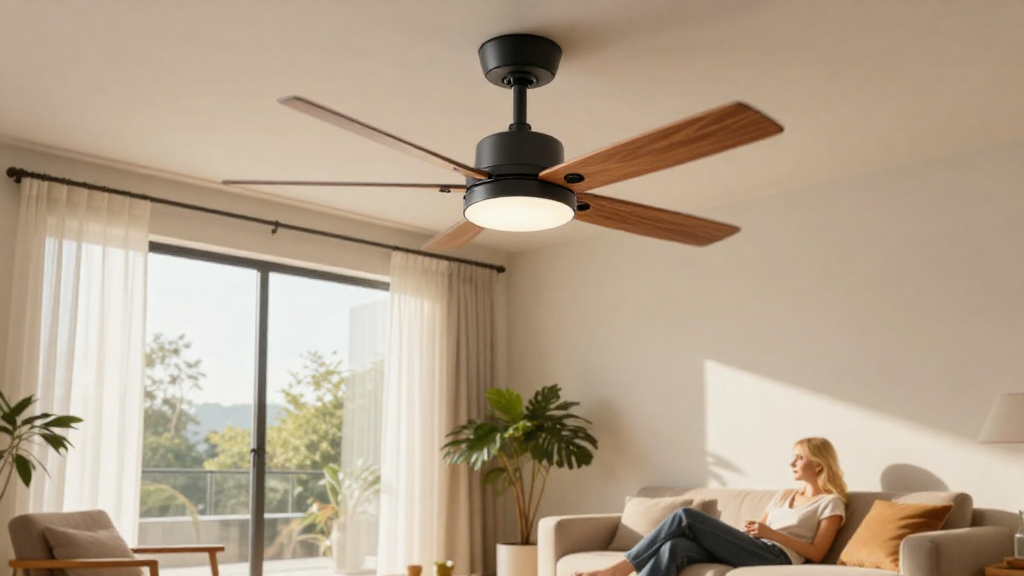
Understanding how do ceiling fans work to cool a room can lead you to make more informed decisions about using them effectively and efficiently in your home.
What Is the Science Behind Ceiling Fans?
At the core of ceiling fan operation is basic physics.
- Air Movement: Ceiling fans create a breeze effect by rotating their blades.
- Evaporation: The moving air increases the rate of evaporation of moisture on your skin.
- Wind Chill Effect: This phenomenon makes you feel cooler even when the room temperature remains unchanged.
How Do Ceiling Fans Create a Cool Breeze?
When asking how do ceiling fans work, it’s essential to recognize how they achieve that refreshing coolness:
-
Direction of Airflow: Most ceiling fans allow you to change the direction of the blades.
-
Counterclockwise: This direction pushes air down.
-
Clockwise: This pulls air up and redistributes warm air without creating a direct breeze.
-
Blade Pitch and Design: The angle and style of the fan blades play a crucial role. Blades pitched at a greater angle effectively move more air, increasing the cooling effect.
How Effective Are Ceiling Fans in Cooling a Room?
So, can you rely on ceiling fans for cooling?
Yes, but how do ceiling fans work in terms of efficiency?
-
Lower Energy Costs: Ceiling fans use significantly less electricity than air conditioning units. In many cases, using a ceiling fan can help elevate your thermostat by 4°F without sacrificing comfort.
-
Comfort Over Temperature: Rather than lowering the air temperature, ceiling fans can create a perceived drop in temperature, making it feel cooler.
What Factors Affect Ceiling Fan Performance?
Multiple variables impact how do ceiling fans work regarding their effectiveness:
-
Fan Size: The diameter of the ceiling fan is essential. Larger fans can move more air.
-
Room Height: In rooms with higher ceilings, fans must be mounted higher. Installation at the right height ensures optimal airflow.
-
Blade Material and Design: Wooden blades can trap more dust, while plastic or metal blades may promote improved airflow.
-
Room Layout: Furniture placement can restrict airflow. To maximize cooling, allow for a clear path for the moving air.
How Can You Maximize Ceiling Fans’ Cooling Benefits?
Knowing how do ceiling fans work isn’t enough without understanding how to maximize their efficiency.
Here are some tips to help you get the most from your ceiling fan:
-
Use with Air Conditioning: For warmer months, adjust your air conditioning to a slightly higher temperature while running your ceiling fan.
-
Regular Maintenance: Dust builds up on blades, diminishing airflow. Clean them regularly for optimal performance.
-
Smart Controls: Invest in smart fans or controls to operate your fan remotely or set schedules to promote energy efficiency.
-
Insulation: Ensure your home’s insulation is adequate. A well-insulated house retains cool air better and reduces reliance on cooling systems.
Are Ceiling Fans Only for Cooling?
While the primary function of a ceiling fan is to cool, they can also contribute to heating.
Here’s how do ceiling fans work for that purpose:
-
Reversing Direction in Winter: Set the fan to rotate clockwise to circulate warm air that rises to the ceiling, thus distributing more heat throughout the room.
-
Boosting Heating Systems: By redistributing warm air, ceiling fans can reduce the amount of energy necessary to heat your home.
Do Ceiling Fans Have Any Environmental Impacts?
One of the great advantages of knowing how do ceiling fans work is their environmentally friendly nature.
-
Energy Efficient: They consume significantly less energy than traditional heating and cooling systems.
-
Reduced Carbon Footprint: Using fans responsibly can lead to lower electricity usage, contributing to a smaller carbon footprint.
When Should You Use Ceiling Fans?
Knowing when to utilize your ceiling fan can also enhance your comfort level.
-
During Seasonal Changes: Use ceiling fans in spring and fall when temperatures are moderate.
-
When Entertaining: Increase air circulation to create a comfortable environment for guests.
How Do Ceiling Fans Compare to Other Cooling Methods?
When evaluating different cooling options, consider this comparison:
- Ceiling Fans vs. Air Conditioning:
- Cost: Ceiling fans use less electricity, leading to lower bills.
- Cooling Effect: Air conditioning cools the actual air temperature, while fans enhance comfort through airflow.
- Ceiling Fans vs. Portable Fans:
- Range: Ceiling fans can cool a large space more uniformly compared to portable electric fans.
- Aesthetics: Ceiling fans can be decorative, adding style to the room.
Conclusion: Understanding How Ceiling Fans Work for Effective Cooling
Now that you grasp how do ceiling fans work, you can leverage their benefits for a more comfortable living environment.
- Increased Airflow: Creates a wind chill effect that feels cooler even when temperatures rise.
- Energy Savings: Lower utility bills by using fans in conjunction with your HVAC system or independently.
- Year-Round Use: Switching directions allows for heating in winter while maintaining cooling in summer.
Whether cool breezes provide relief on a hot day or warm air circulation improves winter coziness, ceiling fans are an essential component for any comfortable home. By understanding and employing the principles of how do ceiling fans work, you can maximize your home’s comfort while minimizing energy costs.