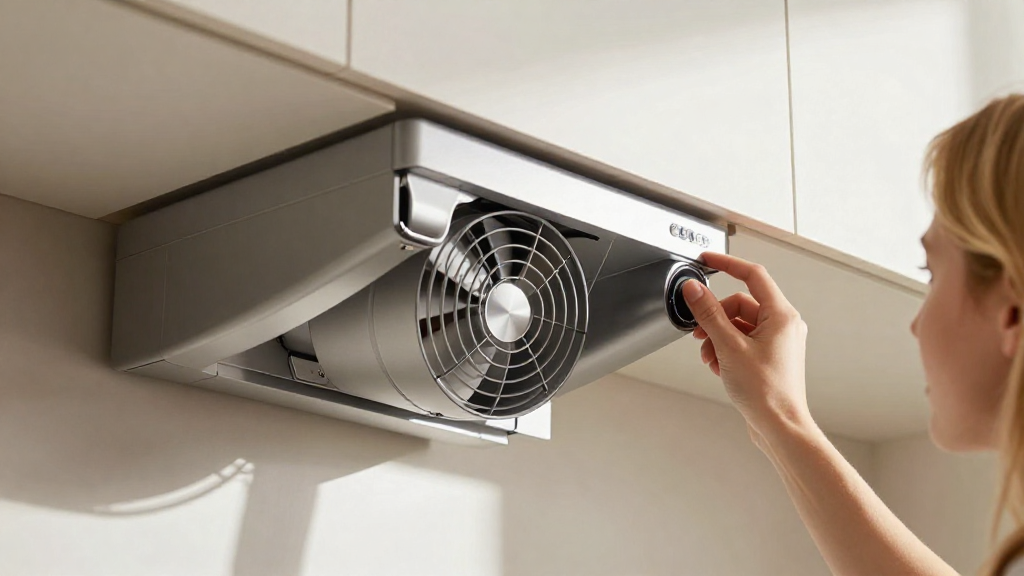
When assessing ventilation systems, a crucial factor is understanding “what is CFM in exhaust fans.”
This article delves into CFM, its significance, and how it can impact your environment’s air quality.
What is CFM in Exhaust Fans?
CFM, or Cubic Feet per Minute, measures the airflow rate of a fan.
In the context of exhaust fans, CFM indicates how much air a fan can move in one minute.
This measurement plays a pivotal role in various applications, from residential kitchens to industrial settings.
Understanding CFM can help you make informed decisions about the proper exhaust fan for your space.
Why Does CFM Matter for Exhaust Fans?
The importance of CFM in exhaust fans cannot be overstated. Here’s why:
-
Air Quality Improvement:
– Exhaust fans are designed to remove stale air, smoke, odors, and humidity.
– A fan with the right CFM will efficiently replace contaminated air, significantly improving overall air quality. -
Energy Efficiency:
– Choosing an exhaust fan with the appropriate CFM helps to conserve energy.
– Overly powerful fans can use more energy than necessary, leading to inflated utility bills. -
Proper Ventilation:
– Different spaces require different CFM ratings for optimal ventilation.
– Kitchens, bathrooms, and workshops all have unique airflow needs, and knowing what is CFM in exhaust fans can guide you in selecting the right model. -
Noise Levels:
– Fans with higher CFM ratings are often louder.
– Finding a balance between CFM and acceptable noise levels is crucial for comfort. -
Regulations and Standards:
– Many building codes dictate minimum ventilation requirements based on the CFM of exhaust fans.
– Understanding what is CFM in exhaust fans helps ensure compliance with local regulations.
How is CFM Calculated for Exhaust Fans?
Calculating CFM can be straightforward if you know a few basic measurements.
Here’s a simplified method to estimate the required CFM for any space:
-
Measure the Room:
– Calculate the volume of the room in cubic feet (Length x Width x Height). -
Determine Air Changes Per Hour (ACH):
– ACH indicates how many times the air in a room should be completely replaced in one hour.
– For kitchens, a common recommendation is 15-30 ACH; for bathrooms, it’s around 8-12 ACH. -
Calculate Required CFM:
– Use the formula:
[
\text{CFM} = \left(\text{Room Volume in Cubic Feet} \times \text{ACH}\right) \div 60
]
– This will give you the CFM needed for effective ventilation.
What Factors Influence CFM Needs?
Several factors can affect the necessary CFM for exhaust fans:
- Size of the Room: Larger areas typically require higher CFM ratings.
- Number of Appliances: In kitchens, the type and number of cooking appliances can influence CFM requirements.
- Humidity Levels: Areas with high humidity need more airflow to maintain comfort and prevent mold growth.
- Intended Use: Workshops may need additional ventilation for fumes, while bathrooms often require less.
How to Choose the Right Exhaust Fan Based on CFM?
Selecting the right exhaust fan based on CFM involves several considerations.
Here’s how to approach it systematically:
-
Identify the Room Usage:
– Is it a kitchen, bathroom, or workshop?
– Different spaces have varying airflow needs. -
Measure Room Dimensions:
– As mentioned earlier, measure the length, width, and height of the space. -
Calculate Required CFM:
– Use the formula discussed previously to determine the necessary airflow rate. -
Consider Fan Ratings:
– Research fans with CFM ratings that match or exceed your calculation.
– Check reputable brands known for efficient airflow. -
Evaluate Additional Features:
– Look for features like noise rating (measured in sones), energy efficiency, and ease of installation.
– Some fans come with built-in timers or humidity sensors, enhancing functionality.
What Are the Consequences of Incorrect CFM Choices?
Choosing an exhaust fan with an improper CFM rating can lead to several issues:
- Insufficient Ventilation:
- Low CFM can result in poor air quality, trapping moisture and odors.
- Energy Waste:
- An oversized fan can lead to increased energy bills without providing additional benefits.
- Increased Noise Levels:
- A fan with higher CFM than necessary can create excessive noise, disrupting comfort.
- Shortened Fan Lifespan:
- Running a fan constantly at or over its capacity can lead to premature wear and tear.
Maintenance Tips for Exhaust Fans
Maintaining your exhaust fan ensures that it operates efficiently and lasts longer.
Here are some essential maintenance tips:
-
Regular Cleaning:
– Dust and debris can accumulate and affect airflow. Clean the fan blades and housing quarterly. -
Check for Obstructions:
– Ensure that the exhaust vent is free from obstructions like lint or debris. -
Inspect the Motor and Wiring:
– Regularly inspect for signs of wear or damage. Replace any faulty components immediately. -
Monitor CFM Performance:
– If you notice a drop in airflow, it may be time to assess the fan’s performance or replace it.
Conclusion: Understanding CFM for Better Ventilation
So, what is CFM in exhaust fans?
It is a critical measurement that determines how effectively an exhaust fan can ventilate a space.
Knowing the importance of CFM helps ensure that you select the right fan for your specific needs.
By assessing factors like room size, intended use, and necessary air changes, you can make an informed decision that greatly improves your indoor air quality while optimizing energy efficiency.
Ultimately, a proper understanding of CFM can lead to a more comfortable and healthier environment in your home or workspace.