A GMRS base station can keep your household or group connected, but advertised wattage is only part of the story. Antenna placement, coaxial cable, and the power supply often make a bigger difference to usable range.
These eight radios span 20W to 50W advertised output and include models suited to fixed installations or mobile use. Here’s how to choose one that fits your setup without paying for features you won’t use.
Best 8 High Power Gmrs Base Radios Picks for 2026
Maximum Output

- 50W output with repeater support
- NOAA weather scan and alert
- 12V power required
Best For: High-output vehicle or powered base installations
Flexible Controls
Retevis RA87 GMRS Mobile Radio

- Dual watch and dual display
- CHIRP and microphone-keypad programming
- 13.8V DC power required
Best For: Users managing multiple channels or changing setups
Compact Waterproof Pick
Rugged Radios GMR25 25W GMRS Radio

- 25W output and repeater support
- Compact 4.19-inch-wide body
- IP67 waterproof rating
Best For: Space-limited, wet vehicle installations
Channel Customization
Radioddity DB40-G 40W GMRS Radio

- Up to 40W output
- 169 customizable channels
- Dual watch and repeater support
Best For: Travelers using varied repeater setups
Best for Dual-PTT Flexibility

- Up to 25W; 200 channels
- PTT on radio and microphone
- NOAA alerts and VOX
Best For: Drivers wanting flexible transmit controls
Best for Repeater Customization
Radioddity DB20-G 20W GMRS Radio

- 20W output; 500 channels
- Nine customizable repeater channels
- Controls on the microphone
Best For: Off-road users configuring multiple repeaters
Best for Compact Dual Monitoring
Wouxun KG-XS20G Plus GMRS Radio

- Up to 20W output
- Dual-monitoring color display
- Up to 999 PC-programmed channels
Best For: Space-limited installations needing dual monitoring
Best for Adjustable Output
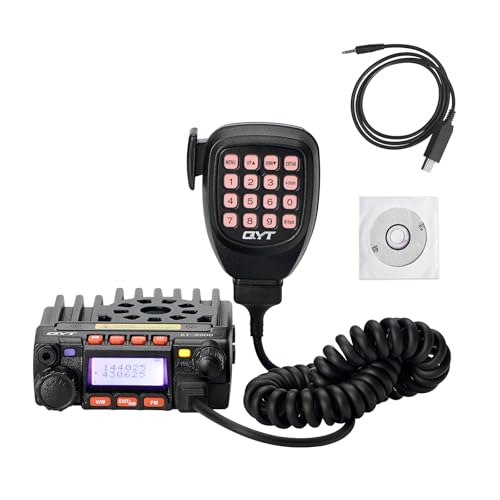
- 20W, 10W, and 5W settings
- Eight listed repeater channels
- Separate antenna required
Best For: Buyers who want selectable output and can source an antenna
Maximum Output – Midland MXT500 50W GMRS Radio
Among high power GMRS base radios, the Midland MXT500 stands out for its 50W output and weather-ready design. It runs on 12V power and offers repeater capability, making it worth considering for a vehicle installation or a base setup with a suitable power supply.
Best For: Buyers who want maximum listed output, weather alerts, and a water-resistant installation.
Pros:
- 50W output and repeater capability.
- IP-rated protection for wet conditions.
- NOAA weather scan and alert, plus mic gain control.
Cons:
- Requires 12V power rather than plugging directly into a household outlet.
- Supplied notes conflict on the channel count and IP rating; confirm the exact version before buying.
The MXT500 is a strong fit if output power and weather features matter most. Plan for the power and antenna setup your installation needs.
For shoppers comparing high power GMRS base radios, the Retevis RA87 offers more ways to manage channels than a basic mobile unit. It supports repeater channels, dual watch, keypad frequency entry, and CHIRP programming, with a 13.8V DC power requirement.
Best For: Users who want programmable channels and simultaneous monitoring of two channels.
Pros:
- Dual display and dual watch for monitoring two channels.
- CHIRP support and microphone-keypad entry for adjustments.
- Repeater support, VOX, and selectable high/low power.
Cons:
- The supplied notes do not specify its wattage.
- Requires a suitable 13.8V DC power source for base use.
Choose the RA87 for control flexibility rather than a specific advertised power figure. Its programming options are useful if your channel setup changes between trips or groups.
The Rugged Radios GMR25 is a compact alternative among high power GMRS base radios, rated at 25W and designed primarily for vehicle mounting. Its 4.19-inch-wide body and IP67 rating make particular sense where space and exposure to water matter.
Best For: Small vehicle installations that need a waterproof GMRS radio.
Pros:
- Compact body with an IP67 waterproof rating.
- 25W output and eight repeater channels.
- Magnetic hand-mic mounting and a universal mounting bracket.
Cons:
- Lower stated output than the 40W and 50W models in this roundup.
- Vehicle-focused design means a base installation needs separate planning.
The GMR25 trades maximum output for a smaller, weather-protected package. It is the more practical choice when mounting space is tight or the radio may get wet.
The Radioddity DB40-G brings 40W output and extensive channel customization to the high power GMRS base radios category. It offers 199 channels, including 169 customizable channels, plus GMRS repeater support and UHF reception.
Best For: Drivers and base users who want customizable repeater channels and dual-channel monitoring.
Pros:
- Up to 40W output.
- 169 customizable channels and configurable repeater access codes.
- Dual watch, dual display, and microphone controls with VOX.
Cons:
- UHF capability is receive-only outside its GMRS transmit functions.
- Requires 13.8V power, so household base use needs a suitable supply.
The DB40-G is a good middle ground between output power and channel flexibility. Its customizable repeater settings are especially useful when traveling across areas with different repeater configurations.
Best for Dual-PTT Flexibility – ABBREE AR-8118 25W GMRS Radio
Among high power gmrs base radios, the compact ABBREE AR-8118 offers up to 25W output and repeater capability for a vehicle or base-station setup. Its dual-PTT design lets you transmit from either the radio body or the microphone.
Best For: Drivers and off-road groups who want flexible transmit controls and NOAA weather alerts.
Pros:
- Up to 25W output with 200 channels.
- Body and microphone PTT options, plus VOX hands-free operation.
- NOAA weather alerts and a programming cable are included.
Cons:
- Not water resistant.
- Dual-Watch can produce a ticking sound unless switched off.
It is a practical pick if microphone placement is awkward in your installation. Treat the advertised 10–30 km range as setup- and terrain-dependent, rather than guaranteed coverage.
Best for Repeater Customization – Radioddity DB20-G 20W GMRS Radio
The Radioddity DB20-G is a compact option among high power gmrs base radios, offering 20W output, 500 channels, and GMRS repeater access. Its microphone puts the controls in one handset, which is convenient when the radio is mounted out of easy reach.
Best For: Road-trip and off-road users who want configurable repeater channels and handset-based controls.
Pros:
- Nine extra customizable GMRS repeater channels.
- Display can show channel name, frequency, and channel number together.
- Includes a programming cable, 12V car charger, and mounting bracket.
Cons:
- 20W output is lower than the 25W models listed here.
- Advertised talking distances depend on operating conditions.
The DB20-G stands out for repeater setup and accessible controls, not for a guaranteed distance. Its listed open-air and mountain-trail ranges are best read as examples of differing conditions.
Best for Compact Dual Monitoring – Wouxun KG-XS20G Plus GMRS Radio
The Wouxun KG-XS20G Plus brings a full-color, dual-monitoring display to the high power gmrs base radios category. It transmits at up to 20W and has a compact body suited to vehicles or equipment with limited mounting space.
Best For: Operators who want to monitor two frequencies while fitting a radio into a tight space.
Pros:
- Two display areas for monitoring two frequencies at once.
- Supports up to 999 custom channels through PC programming.
- Includes a 12V cigarette-lighter adapter and NOAA weather mode.
Cons:
- Custom-channel setup requires PC programming.
- 20W maximum output is below the listed 25W alternatives.
This is the display-focused choice for a compact installation. Its out-of-box GMRS simplex and repeater channels provide a starting point, while PC programming offers room to expand.
Best for Adjustable Output – QYT KT-8900 GMRS Mobile Radio
The compact QYT KT-8900 is worth considering among high power gmrs base radios if selectable output is a priority. Its listing describes 20W, 10W, and 5W settings, along with repeater channels and a microphone with a DTMF keypad.
Best For: Buyers comfortable choosing an antenna and working within the radio’s stated software requirements.
Pros:
- Selectable 20W, 10W, and 5W output settings.
- Eight listed repeater channels and CTCSS/DCS codes.
- Small chassis with a cigarette-plug DC cable and mounting bracket included.
Cons:
- Antenna is not included and must be connected before use.
- Manufacturer states its software supports only computer versions below Windows 11 and warns against other software.
- Not water resistant.
Check the power figures carefully: the listing also describes up to 25W on VHF and up to 20W on UHF, with actual output affected by voltage and measurement. The required separate antenna makes this less plug-and-play than it may first appear.
How We Picked the Best High Power Gmrs Base Radios
We focused on radios sold for GMRS use that can serve as a fixed station with suitable accessories, then compared advertised transmit power, repeater capability, controls, weather features, and installation demands. A mobile radio does not become a ready-to-use home station on its own: budget for a compatible DC power supply, antenna, coaxial cable, and any needed mounting hardware. Specifications and included accessories can vary by listing, so confirm them before buying.
Quick Comparison: Power and Priorities
For buyers prioritizing advertised output, the Midland MXT500 is rated at 50W and the Radioddity DB40-G at 40W. The Rugged Radios GMR25, ABBREE AR-8118, and QYT KT-8900 are listed at 25W, while the Radioddity DB20-G is listed at 20W. Compare the Retevis RA87 and Wouxun KG-XS20G Plus against their current specifications and your feature needs rather than assuming a wattage from their names. Higher output can help, but it cannot overcome a poorly placed antenna or terrain blocking the signal.
Key Buying Factors for High-Power GMRS Base Radios
Antenna and Installation
Put antenna height, location, and cable quality ahead of a small difference in radio wattage. Choose an antenna intended for GMRS frequencies, mount it safely, and use appropriately rated coaxial cable. A fixed antenna may also need grounding and lightning protection; follow local electrical requirements and the antenna manufacturer’s instructions.
Power Supply and Duty Cycle
Check the radio’s required input voltage and maximum transmit current, then select a regulated supply with adequate headroom. If you expect long conversations, verify ventilation and the manufacturer’s operating guidance. Waterproof or weather-resistant claims do not replace proper cooling or make every installation suitable for outdoor exposure.
Repeaters, Controls, and Compliance
If local repeaters matter, confirm the radio supports the required GMRS repeater channels and tones. A clear display and accessible controls are useful at a desk; programming options matter more if you manage several channel or tone setups. Check the specific model’s FCC GMRS certification before purchase. In the United States, transmitting on GMRS generally requires an FCC license, and permitted power varies by channel.
Who Should Buy Which High Power Gmrs Base Radios?
Choose the Midland MXT500 or Radioddity DB40-G if advertised output is your leading criterion and you can support a well-planned installation. Consider the 25W options if you want a middle ground; the GMR25 is worth a closer look when weather resistance matters. The DB20-G may suit a buyer who needs less output but values its listed channel capacity. Compare the RA87 and KG-XS20G Plus on controls, programming, repeater setup, and verified specifications. Whatever you choose, spend enough of the budget on the antenna system and power supply to let the radio perform as intended.