Choosing the right active audio crossover can make a major difference in clarity, balance, and overall system control.
Whether you are building a simple front-stage setup or a more advanced multi-amp system, the right crossover helps split frequencies cleanly and makes tuning easier.
Best 10 Active Audio Crossovers Picks for 2026
3-Way 6-Channel Control
Clarion MCD360 Active Crossover

- Front/rear/subwoofer lever control
- 6/4/2-channel RCA inputs and 5V outputs
- Remote sub level control included
Best For: Simple analog tuning with separate subwoofer control
DSP Tuning Suite
Taramps PRO 2.4S Digital Crossover

- 15-band graphic EQ and parametric EQ
- Active crossover with delay alignment and limiter
- RCA and high-level inputs
Best For: Detailed DSP tuning in custom car audio systems
Basic 3-Way Control
American Bass 3-Way Active Crossover

- 3-way active crossover design
- Remote level control included
- Red LED power indicator
Best For: Simple 3-way systems needing basic remote level control
Flexible 3-Way Routing
PRV EX3.5 Stereo Car Audio Crossover
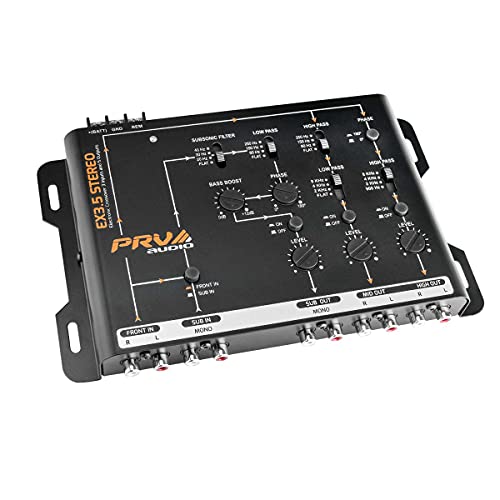
- 2-way or 3-way crossover operation
- 4-in/6-out RCA channel flexibility
- Adjustable HPF, LPF, and bass boost
Best For: Flexible car audio setups that need simple electronic routing
Six-Way Custom Tuning
Audiopipe 6-Way Active Crossover
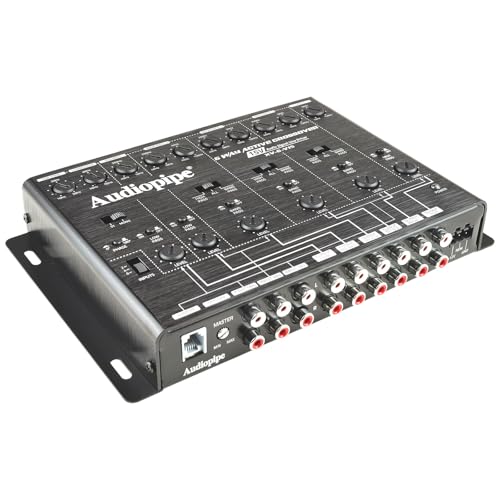
- Separate front, rear, and sub inputs
- Multiplier switch for variable crossover frequency
- Remote bass knob with subwoofer boost
Best For: custom installs needing detailed channel control
Simple 6-Channel Layout
Skar Audio SKEC23 3-Way Crossover

- 3-way, 6-channel electronic crossover
- 3 RCA inputs and 3 RCA outputs
- Compact design with 10Hz-30kHz response
Best For: compact installs that need simple RCA routing
Versatile Bass Control
Hifonics HFXR Active Crossover
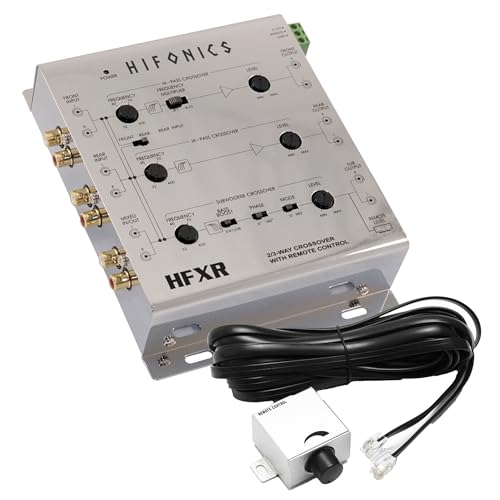
- 2-way/3-way crossover with 2/4 channel input selection
- Remote bass control with 45Hz boost
- High-pass and low-pass filters for front, rear, and sub
Best For: flexible car audio builds that need bass tuning
Half-DIN EQ/Crossover Controller
Autotek ATEQ709 4-Band EQ with Active Crossover

- 4-band preamp EQ with front/rear active crossover
- Built-in line driver outputs 9 volts through RCA
- Source selector and level controls help match inputs
Best For: Compact installs needing EQ, source switching, and crossover control
3-Way Active Processor
DS18 XM3 3-Way Active Crossover with 11V Driver

- Independent front, rear, and sub tuning
- Built-in 11V line driver for cleaner pre-output
- Remote sub level control includes clip indicator
Best For: Advanced car audio builds needing flexible 3-way tuning
Rack-Style PA Crossover
Professional 2/3-Way Stereo & 4-Way Mono Crossover
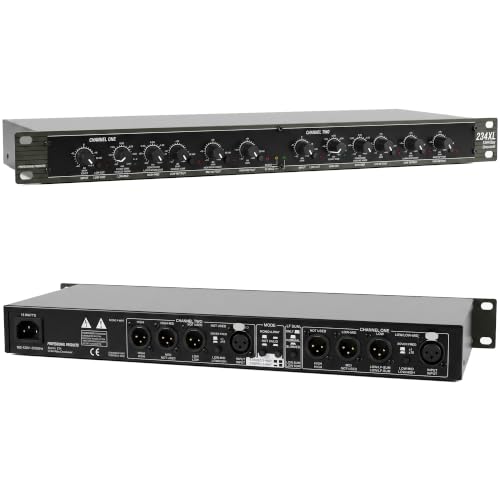
- Selectable 2/3-way stereo and 4-way mono modes
- Independent gain, phase, and 40Hz low-cut controls
- Balanced XLR I/O suits long cable runs
Best For: PA, studio, and installed audio systems needing balanced routing
3-Way 6-Channel Control – Clarion MCD360 Active Crossover
Clarion Mobile Electronics Mcd360 3 Way 6 Channel Electronic Crossover with Subwoofer Control
Check Price On AmazonIf you want active audio crossovers that are built for straightforward system tuning, the Clarion MCD360 gives you front/rear/subwoofer lever control, 6/4/2-channel RCA inputs, and 6-channel RCA outputs. It’s a practical pick for car audio setups that need simple adjustment of sub level and crossover behavior without adding a complicated processor.
Best For: Drivers who want a dedicated analog crossover with easy front/rear/subwoofer control and included remote sub level adjustment.
Pros:
- Front/rear/subwoofer lever control for quick tuning
- 6/4/2-channel RCA inputs with 6-channel 5-volt outputs
- Remote subwoofer level control included
- Gold-plated terminals and sub EQ/boost controls
Cons:
- Wired unit, so it’s less flexible than DSP-based processors
- Limited to a 1-year warranty
- Best suited to users comfortable with manual crossover setup
Overall, the MCD360 is a solid option if you want active audio crossovers with clear channel control and basic but useful tuning tools. It focuses on dependable analog signal routing rather than advanced digital processing.
DSP Tuning Suite – Taramps PRO 2.4S Digital Crossover
The Taramps PRO 2.4S is aimed at users who want active audio crossovers with more precise control than a basic analog unit. Its 15-band graphic EQ, parametric EQ, active crossover, delay alignment, limiter, and flexible HPF/LPF routing make it a strong fit for custom car audio tuning.
Best For: Builders who want a compact DSP processor for OEM integration, active speaker setups, and detailed sound shaping.
Pros:
- 15-band graphic EQ plus parametric EQ for detailed tuning
- Active crossover with delay alignment and limiter
- RCA and high-level inputs for OEM or aftermarket integration
- Anti-Pop System and clip indicators for system protection
Cons:
- More complex than a basic crossover
- Best value depends on whether you need DSP features
- Compact processor format may require more setup time
For shoppers comparing active audio crossovers, this one stands out because it combines crossover duties with DSP-style tuning tools in a single unit. It’s the most feature-rich option in this group for users who want professional-style control.
Basic 3-Way Control – American Bass 3-Way Active Crossover
The American Bass 3-Way Active Crossover is a simple, no-frills choice for shoppers looking for active audio crossovers with basic level control. Based on the supplied details, it centers on a red LED power indicator and remote level control, which keeps the feature set focused and easy to understand.
Best For: Users who want a straightforward 3-way active crossover with remote level adjustment and minimal complexity.
Pros:
- 3-way active crossover design
- Remote level control included
- Red LED power indicator for quick status checks
Cons:
- Very limited feature details in the supplied notes
- Less advanced than DSP-based crossovers
- May not suit users needing extensive tuning options
This model makes sense if you want the core function of an active crossover without extra processing features. It’s best viewed as a simple control component rather than a deep tuning tool.
Flexible 3-Way Routing – PRV EX3.5 Stereo Car Audio Crossover
The PRV EX3.5 is a versatile option in active audio crossovers, offering 2-way or 3-way operation, 4-in/6-out RCA channel flexibility, and adjustable high-pass and low-pass filters. It also adds per-channel output level control and bass boost on the sub out channel, making it useful for users who want hands-on sound shaping.
Best For: Car audio users who want a flexible electronic crossover with selectable 2-way or 3-way routing and straightforward control.
Pros:
- Supports 2-way or 3-way crossover configurations
- 4-in/6-out RCA layout for flexible routing
- Adjustable HPF, LPF, and bass boost on sub out
- Butterworth 12 dB/octave slope with channel on/off controls
Cons:
- Requires manual tuning to get the best results
- Wired RCA-based setup only
- Less advanced than a full DSP processor
Among active audio crossovers, the PRV EX3.5 is a strong middle ground between basic analog control and full DSP processing. It gives you useful flexibility without moving into the complexity of a full digital sound processor.
Six-Way Custom Tuning – Audiopipe 6-Way Active Crossover
If you want active audio crossovers with lots of tuning control, the Audiopipe XV-6-V15 is built for custom car audio installs. It offers separate front, rear, and subwoofer inputs, plus variable crossover frequency adjustment with a multiplier switch for precise signal shaping.
Best For: Drivers building a custom system who want flexible crossover control, remote bass adjustment, and dedicated front/rear/subwoofer routing.
Pros:
- Separate inputs for front, rear, and subwoofer channels
- Variable crossover frequency with multiplier switch
- Remote bass knob for convenient subwoofer level control
- Ground loop isolation input circuit and 105dB signal-to-noise ratio
Cons:
- Designed for custom installation, so setup may take more time
- More tuning options may be more than a basic system needs
The Audiopipe stands out when you need detailed control rather than a simple plug-and-play solution. Its bandpass, high-pass, and non-fade low-pass outputs make it a strong fit for systems that need cleaner frequency separation and adjustable bass management.
Simple 6-Channel Layout – Skar Audio SKEC23 3-Way Crossover
The Skar Audio SKEC23 is a straightforward option in active audio crossovers for systems that need 3-way, 6-channel routing. With three RCA inputs and three RCA outputs, it is geared toward front, rear, and subwoofer signal management in a compact electronic crossover.
Best For: Builders who want a compact 3-way crossover with simple RCA-based channel routing.
Pros:
- 3-way electronic crossover with 6-channel support
- Three RCA inputs and three RCA outputs
- Compact size for easier system integration
- 10Hz to 30kHz frequency response
Cons:
- No remote bass control listed
- Less feature-heavy than some competing active crossovers
This model is a practical pick if you want basic crossover routing without extra extras. The 5V max output and 2-year manufacturer warranty add useful value for a clean, uncomplicated install.
Versatile Bass Control – Hifonics HFXR Active Crossover
The Hifonics HFXR is one of the more flexible active audio crossovers for car systems that need 2-way or 3-way control. It supports 2/4 channel input selection, mono/stereo control, and high-pass/low-pass filtering for front, rear, and subwoofer channels.
Best For: Drivers who want adjustable crossover filtering and remote bass control in a compact car audio setup.
Pros:
- Supports 2-way and 3-way active crossover configurations
- Flexible 2/4 channel input selection and mono/stereo control
- Remote control bass adjustment with 45Hz boost
- Compact rack-mountable design
Cons:
- Listed dimensions are compact, but it still needs proper installation space
- Feature set may be more than needed for simple speaker upgrades
Hifonics aims at users who want real tuning flexibility without moving to a much larger processor. Its quasi-parametric equalizer and subwoofer-friendly controls make it a strong choice when bass shaping is part of the build.
Half-DIN EQ/Crossover Controller – Autotek ATEQ709 4-Band EQ with Active Crossover
If you want active audio crossovers with a built-in EQ in one compact unit, the Autotek ATEQ709 gives you a practical way to shape system output from the dash. Its 4-band preamp EQ, front/rear active crossover, and selectable 12dB high-pass crossover make it a straightforward fit for systems that need both level control and crossover flexibility.
Best For: Drivers who want a half-DIN EQ/crossover with source switching and 9-volt preamp output.
Pros:
- 4-band preamp EQ with front/rear active crossover
- Built-in line driver delivers 9 volts through the RCA outputs
- Audio input selector lets you switch between the head unit and another source
- Input level controls and master volume help match and manage source levels
Cons:
- Only offers a selectable 12dB high-pass crossover on the described feature set
- Half-DIN format may not suit every dashboard setup
- Geared toward signal control rather than standalone playback features
The ATEQ709 is best viewed as a control hub for tuning and routing, especially if you want active crossover management without adding separate boxes. For compact installs that need EQ, source selection, and stronger preamp output, it covers the essentials well.
3-Way Active Processor – DS18 XM3 3-Way Active Crossover with 11V Driver
For active audio crossovers that do more than split frequencies, the DS18 XM3 combines 3-way control with a built-in line driver and remote bass adjustment. It is designed for systems that need independent front, rear, and sub tuning, plus adjustable filters and a high-voltage pre-out for cleaner signal feed.
Best For: Enthusiasts building a 3/2/1-way car audio system with on-the-fly sub control.
Pros:
- Independent front, rear, and subwoofer tuning for 3-way control
- Built-in 11V line driver for stronger pre-output
- Remote subwoofer level controller with clip indicator
- Adjustable HPF and LPF ranges for flexible system setup
Cons:
- Focused on system tuning, so it adds complexity compared with simpler crossover units
- Best value comes in builds that actually need 3-way control
- Requires proper integration to take advantage of the line driver and remote controller
The XM3 stands out if you want active crossover control with enough flexibility for more advanced car audio layouts. Its combination of 11V output, remote bass control, and adjustable filtering makes it a strong fit for tunable systems.
Rack-Style PA Crossover – Professional 2/3-Way Stereo & 4-Way Mono Crossover
If your active audio crossovers need to live in a rack or on a stage, this professional crossover is built around flexible routing and clear signal control. With selectable 2/3-way stereo and 4-way mono modes, independent gain and phase controls, and balanced XLR I/O, it is aimed at clean frequency distribution in PA and installed audio setups.
Best For: Live sound, installed PA, and studio users who need balanced crossover routing.
Pros:
- Selectable 2/3-way stereo and 4-way mono crossover modes
- Independent output gain, phase invert, and 40Hz low-cut per band
- Balanced XLR inputs and outputs for noise-resistant signal transfer
- Front-panel LED indicators simplify mode and signal monitoring
Cons:
- More specialized than basic consumer audio crossovers
- Designed for professional systems, so it may be more than some installs need
- XLR-based setup is best suited to rack, PA, or studio environments
This crossover is a solid match when you need precise band control and reliable balanced connections rather than car-audio features. For venues, studios, and mobile rigs, the mode flexibility and straightforward monitoring are the main strengths.
How We Picked These Active Audio Crossovers
We focused on models that offer practical channel flexibility, useful tuning controls, and enough output voltage to integrate well with modern car audio systems. We also favored units with subwoofer level control, bass boost options, and layouts that fit both entry-level and more advanced installs.
Quick Comparison: What Matters Most
In Active Audio Crossovers, the main comparison points are channel count, crossover modes, output voltage, and how much adjustment you get for sub integration. A 2-way unit is usually enough for a simple front/rear setup, while 3-way or multi-channel designs are better for dedicated mids, highs, and subs.
Key Buying Factors for Active Audio Crossovers
Channel Layout and System Design
Match the crossover to your build. If you are running tweeters, mids, and subs separately, a 3-way or 6-channel design is usually the better fit. If your system is simpler, a compact 2-way crossover may be all you need.
Voltage and Signal Strength
Higher output voltage can help reduce noise and improve signal transfer to amplifiers, especially in systems with long RCA runs or multiple amp stages. Look for line driver features if you want stronger output and better integration.
Adjustment Controls
Remote bass control, variable bass boost, and crossover slope or frequency adjustment can make tuning much easier. These features are especially useful if you regularly change listening levels or want more control over sub response.
Installation Space and Ease of Use
Some Active Audio Crossovers are compact half-DIN units, while others are built more like signal processors. Choose based on available dash or trunk space, wiring complexity, and how much tuning access you want after installation.
Who Should Buy Which Active Audio Crossovers?
If you want a simple upgrade for a basic multi-amp system, a straightforward 2-way or 3-way crossover is usually the best starting point. If you are building a more refined system with separate drivers and a sub, choose a unit with more channels, stronger output, and remote bass control. For tuning-focused buyers, a crossover with EQ or DSP-style control offers the most flexibility. For compact installs, prioritize smaller units with clear controls and easy access to adjustment settings.
In short, the best Active Audio Crossovers are the ones that match your system layout, give you enough tuning range, and fit your installation without adding unnecessary complexity.