The right audio interface gives a condenser microphone the phantom power, gain control, and clean conversion it needs to sound its best. It also determines how easily you can monitor recordings, connect instruments, and expand your setup.
We compared 10 options ranging from affordable 2-in/2-out interfaces to ready-to-use studio bundles, focusing on connectivity, recording quality, monitoring features, and overall value.
Best 10 Audio Interface for Condenser Microphone Picks for 2026
Best All-Around Pick
Focusrite Scarlett Solo 3rd Gen
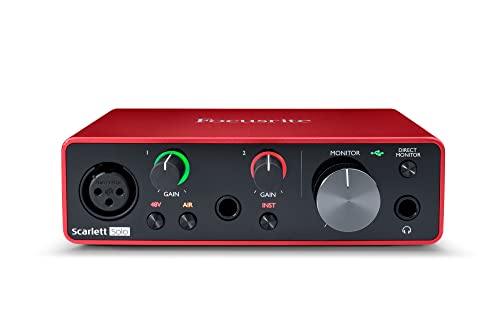
- Air mode adds vocal and instrument clarity
- XLR mic and Hi-Z instrument inputs
- 24-bit/192kHz recording with software bundle
Best For: Home recording, vocals, podcasts, and guitar
Best Complete Starter Kit
PreSonus AudioBox Go Creator Bundle

- Includes interface, condenser mic, and headphones
- Portable 24-bit/96kHz USB-C recording
- Studio One 6 Artist Edition included
Best For: Beginners and portable all-in-one recording setups
Best for Dynamic Range
Focusrite Scarlett Solo 4th Gen

- 120dB dynamic range and 24-bit/192kHz support
- Improved Air mode for vocal presence
- XLR mic and Hi-Z instrument inputs
Best For: Songwriters and vocalists seeking updated recording performance
Best Budget 2-Input Option

- Two combo inputs with 48V phantom power
- 24-bit/192kHz USB-C recording
- Direct monitoring, loopback, and 3.5mm output
Best For: Two-input home recording and mobile creator setups
Best Compact Pick
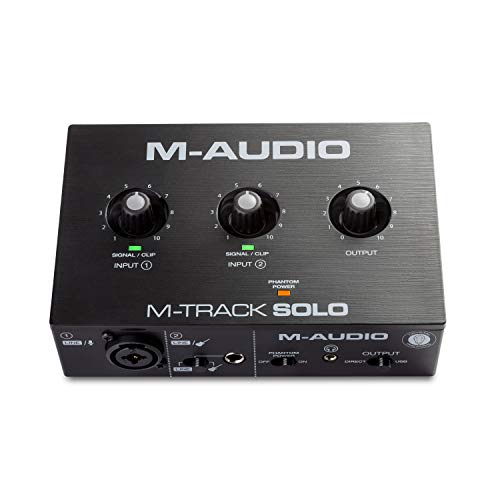
- XLR input with phantom power for condenser mics
- Zero-latency USB/Direct monitoring
- Lightweight design with MPC Beats included
Best For: Solo creators building a compact recording or streaming setup
Best Budget Starter
XTUGA Q-12 USB Audio Interface

- 48V phantom power for condenser microphones
- XLR and 3.5mm microphone inputs
- USB-powered plug-and-play setup
Best For: Beginners and students making basic computer recordings or streams
Best Two-Mic Value
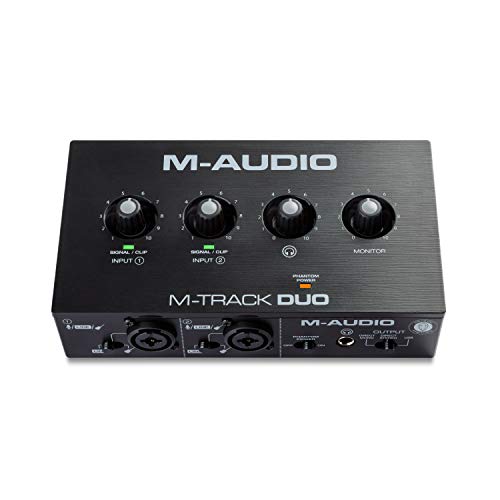
- Two combo XLR/line/instrument inputs
- Phantom power for condenser microphones
- Zero-latency monitoring and MPC Beats included
Best For: Two-person podcasts, dual vocals, and small recording sessions
Complete Studio Bundle

- Includes condenser mic, headphones, cables, and interface
- 24-bit/192kHz recording with 120dB dynamic range
- Includes Air mode and a broad software bundle
Best For: Songwriters and beginners wanting an all-in-one home studio
Portable Value Pick

- 48V phantom power for condenser microphones
- Three selectable monitoring modes
- Lightweight design with computer and mobile compatibility
Best For: Portable podcasting, streaming, and mobile recording
Creator Control Pick
USB-C Interface with Echo Control

- 48V phantom power and dual XLR/TRS inputs
- Direct monitoring for low-latency listening
- Independent gain, monitor, and echo controls
Best For: Streaming, podcasting, karaoke, and live vocal performance
Best All-Around Pick – Focusrite Scarlett Solo 3rd Gen
The Focusrite Scarlett Solo 3rd Gen is a strong audio interface for condenser microphone setups that also need a dedicated instrument input. Its XLR mic preamp, switchable Air mode, and 24-bit/192kHz recording support suit vocals, acoustic instruments, guitar, and podcasts.
Best For: Home recordists who want a compact interface for vocals, podcasts, and guitar.
Pros:
- Switchable Air mode can add clarity to recordings.
- Includes an XLR mic preamp and Hi-Z instrument input.
- Supports recording and mixing up to 24-bit/192kHz.
- Includes recording software and the Hitmaker Expansion bundle.
Cons:
- Only one XLR microphone preamp is provided.
- The supplied specifications list a two-year warranty, while the product notes also mention three years; verify the applicable warranty.
The Solo 3rd Gen is a practical choice when you need reliable vocal recording, clean monitoring, and guitar connectivity without moving to a larger interface.
Best Complete Starter Kit – PreSonus AudioBox Go Creator Bundle
The PreSonus AudioBox Go Creator Complete Studio Bundle is an audio interface for condenser microphone recording that includes the main accessories needed to begin. It pairs a compact 24-bit/96kHz USB-C interface with a cardioid condenser microphone, monitoring headphones, and Studio One 6 Artist Edition.
Best For: Beginners and portable creators who need an interface, microphone, headphones, and software in one package.
Pros:
- Includes the AudioBox Go interface, M7 condenser microphone, and HD7 headphones.
- Compact design weighs 8.16 ounces.
- Supports 24-bit/96kHz recording over USB-C.
- Includes Studio One 6 Artist Edition and works with several major DAWs.
Cons:
- Its maximum sample rate is 96kHz rather than 192kHz.
- The bundle’s one-year manufacturer warranty is shorter than some alternatives.
This bundle is especially convenient if you are starting from scratch, since it combines the interface and core recording accessories instead of requiring separate purchases.
Best for Dynamic Range – Focusrite Scarlett Solo 4th Gen
The Focusrite Scarlett Solo 4th Gen is an audio interface for condenser microphone recording when you want updated conversion and a broad dynamic range. It provides one XLR mic preamp, a Hi-Z instrument input, improved Air modes, and 24-bit/192kHz support in a compact USB-C design.
Best For: Songwriters and vocalists who want a modern solo interface for detailed recordings.
Pros:
- Offers a 120dB dynamic range using converters from Focusrite’s flagship interfaces.
- Improved Air mode adds presence and harmonic drive.
- Supports 24-bit/192kHz recording.
- Includes Pro Tools Intro+, Ableton Live Lite, Cubase LE, and Hitmaker Expansion.
Cons:
- Only one XLR microphone input is available.
- It is designed for solo recording rather than multi-microphone sessions.
Compared with the previous generation, the Solo 4th Gen is the more advanced pick for users who prioritize conversion performance and a polished vocal or guitar sound.
Best Budget 2-Input Option – PIYONE Q2 Alloy Red Interface
The PIYONE Q2 Alloy Red is a two-channel audio interface for condenser microphone recording with USB-C connectivity, 48V phantom power, and two combo inputs. Its 24-bit/192kHz capability, direct monitoring, loopback function, and compact one-cable setup make it suited to home and mobile recording.
Best For: Creators who need two inputs, phantom power, and simple monitoring for PC, Mac, or iOS setups.
Pros:
- Two combo inputs support microphones and Hi-Z instruments.
- Integrated 48V phantom power supports condenser microphones.
- Offers 24-bit/192kHz recording and USB-C bus power.
- Provides zero-latency direct monitoring, loopback, and a 3.5mm headphone jack.
Cons:
- The supplied operating-system details list Windows, so verify compatibility for other platforms.
- Brand-specific recording software is not listed in the supplied notes.
- Its 0.74 kg weight is heavier than the smallest interfaces in this group.
The Q2 Alloy Red is a flexible choice for users who want two microphone or instrument connections and practical streaming features without an external power supply.
Best Compact Pick – M-Audio M-Track Solo
The M-AUDIO M-Track Solo is a compact audio interface for condenser microphone setups, offering a balanced XLR input with switchable phantom power alongside an instrument or line input. Its 48kHz recording, direct monitoring, and lightweight design suit simple podcasting, recording, and streaming workflows.
Best For: Solo creators who need a small, straightforward interface for one condenser microphone and an additional instrument or line source.
Pros:
- Balanced XLR input with phantom power supports condenser microphones.
- USB/Direct switch provides zero-latency monitoring.
- Compact 10.6-ounce design and included MPC Beats software are convenient for mobile or beginner setups.
Cons:
- Only one XLR input is available for microphones.
- Maximum sample rate is 48kHz.
- Monitoring uses an 1/8-inch headphone output and stereo RCA outputs, which may be less flexible for some studio setups.
Choose the M-Track Solo when portability and simple one-microphone operation matter most. It covers common recording and streaming tasks without adding unnecessary complexity.
Best Budget Starter – XTUGA Q-12 USB Audio Interface
The XTUGA Q-12 is a budget-friendly audio interface for condenser microphone users who want a simple USB connection to a computer. It provides 48V phantom power, XLR and 3.5mm inputs, 16-bit/48kHz resolution, and a plug-and-play design for beginner recording, karaoke, and streaming.
Best For: Students and beginners who want an uncomplicated two-channel interface for computer-based recording or live streaming.
Pros:
- Switchable 48V phantom power can drive condenser microphones.
- Offers both XLR and 3.5mm microphone inputs.
- USB-powered operation requires no external adapter.
- Compatible with Audacity, Ableton Live, FL Studio, and Pro Tools.
Cons:
- Resolution is limited to 16-bit/48kHz.
- Computer operating-system compatibility is described broadly rather than listing specific platforms.
- The supplied notes do not specify dedicated output or headphone-monitoring connections.
The Q-12 is a practical entry point for basic computer recording and streaming. Its phantom power and dual input types make it flexible, while the USB-powered workflow keeps setup simple.
Best Two-Mic Value – M-Audio M-Track Duo
The M-AUDIO M-Track Duo is a useful audio interface for condenser microphone recording when you need two microphone inputs. Its two combo XLR/line/instrument inputs, phantom power, 48kHz audio, and USB/Direct monitoring support podcasting, vocal recording, and live streaming from a compact desktop unit.
Best For: Two-person podcasts, dual-vocal sessions, or creators who want room for two condenser microphones and instruments.
Pros:
- Two combo inputs accept microphones, line-level sources, or instruments.
- Phantom power and Crystal Preamps support condenser microphone recording.
- USB/Direct switch enables zero-latency monitoring.
- Includes MPC Beats software and works with Windows, macOS, iOS, and Android.
Cons:
- Maximum sample rate is 48kHz.
- Its compact two-channel design may not suit larger multi-microphone sessions.
- USB Type-B connectivity may require an appropriate cable or adapter for some devices.
For buyers comparing an audio interface for condenser microphone use, the M-Track Duo stands out when two inputs are more important than maximum resolution. It adds useful expansion over a single-input interface while remaining portable and easy to monitor.
Complete Studio Bundle – Scarlett Solo 4th Gen Studio
If you want an audio interface for condenser microphone recording without assembling a separate setup, the Scarlett Solo Studio 4th Gen bundles the core pieces together. It includes a CM25 MkIII condenser microphone, SH-450 headphones, a mic preamp, and USB connectivity, with up to 24-bit/192kHz recording and 120dB dynamic range.
Best For: Songwriters, vocalists, and beginners building a compact home recording setup.
Pros:
- Includes the interface, condenser microphone, headphones, XLR cable, and USB cable.
- Offers 24-bit/192kHz recording and a stated 120dB dynamic range.
- Air mode adds presence and harmonic drive to vocals and guitars.
- Includes Pro Tools Intro+, Ableton Live Lite, Cubase LE, and Hitmaker Expansion.
Cons:
- Provides one XLR mic preamp, so it is not designed for multi-microphone recording.
- The bundle is less suitable if you already own a microphone and headphones.
As a complete starter package, this is the most convenient option of the three. Its higher-resolution recording support, included accessories, and software bundle make it a strong choice for creating a ready-to-use vocal or guitar workstation.
Portable Value Pick – Synido USB-C 2×2 Interface
The Synido USB-C interface is a compact audio interface for condenser microphone use with a 48V phantom-power switch, 24-bit/48kHz recording, and a 2×2 layout. Its three monitoring modes and portable design make it practical for recording, streaming, podcasting, and mobile setups.
Best For: Mobile creators, podcasters, and streamers who need a lightweight interface with flexible monitoring.
Pros:
- Includes 48V phantom power for compatible condenser microphone setups.
- Offers Stereo, Mix, and USB monitoring modes for different workflows.
- Compact 300g design supports portable recording with computers and mobile devices.
- LED level indicators help monitor volume and avoid distortion.
Cons:
- Maximum recording specification is 24-bit/48kHz, lower than the Focusrite option.
- The manufacturer recommends a third-party universal ASIO driver for improved DAW compatibility.
This interface emphasizes portability and straightforward monitoring rather than high-end recording specifications. It is a sensible fit for creators who want phantom power and flexible computer or mobile connectivity in a small package.
Creator Control Pick – USB-C Interface with Echo Control
This USB-C audio interface for condenser microphone recording combines 48V phantom power with dual XLR/TRS combo inputs and direct monitoring. Independent gain controls plus an adjustable echo effect give singers, podcasters, streamers, and other creators more hands-on control during recording or live content.
Best For: Streamers, podcasters, and performers who want direct monitoring and built-in echo control.
Pros:
- Provides 48V phantom power for condenser microphones.
- Dual XLR/TRS inputs support microphones, instruments, and line-level sources.
- Direct monitoring is designed for real-time, low-latency listening.
- Independent controls cover mic/line gain, instrument gain, echo, and monitor volume.
Cons:
- Maximum sample rate is 48kHz.
- The listed warranty period is only three months.
- Its echo feature may be unnecessary for users focused solely on conventional studio recording.
With two combo inputs and performance-oriented controls, this model is more flexible for live creation than a basic single-input interface. Choose it when direct monitoring and adjustable echo matter as much as straightforward microphone recording.
How We Picked the Best Audio Interface for Condenser Microphone
We focused on the features that matter most in a home recording, streaming, or podcasting setup: reliable 48V phantom power, suitable XLR microphone inputs, adjustable gain, low-latency monitoring, and compatibility with common computers and mobile devices. We also considered whether each interface is easy for beginners to use and whether its input and output layout fits the intended workload.
The selection includes established models from Focusrite, PreSonus, and M-Audio, along with compact alternatives that emphasize portability or low cost. Product bundles were considered for buyers who need a microphone and accessories as well as an interface.
Quick Comparison
- Best for a simple solo setup: Focusrite Scarlett Solo models and the M-Audio M-Track Solo.
- Best for two microphones or stereo sources: M-Audio M-Track Duo and 2X2 interfaces.
- Best complete starter package: PreSonus AudioBox Go Creator Complete and Scarlett Solo Studio bundles.
- Best for streaming controls: Models with direct monitoring, echo control, or dedicated monitor outputs.
- Best for portability: Compact USB-C interfaces with bus-powered operation.
Key Buying Factors for an Audio Interface for Condenser Microphone
Phantom Power and Microphone Inputs
Most studio condenser microphones require 48V phantom power through an XLR connection. Confirm that the interface provides switchable phantom power and a genuine microphone preamp. Combo XLR/TRS inputs are useful if you may also connect an instrument or line-level source.
Input and Output Count
A one-input interface is sufficient for voice recording, solo music, and many streams. Choose a 2-in/2-out model if you plan to record two microphones, a microphone and guitar simultaneously, or stereo equipment. Also check whether headphone and monitor outputs can be used at the same time.
Monitoring and Latency
Direct monitoring sends the input signal straight to your headphones, helping you hear yourself without distracting software delay. Separate headphone volume and monitor controls are especially useful for streaming and recording. Echo or loopback features can help with live broadcasts, but they are not essential for basic recording.
Connection, Resolution, and Compatibility
USB-C is convenient for newer computers and mobile devices, although some interfaces use USB-A cables or adapters. Sample rates up to 96kHz or 192kHz can be useful in specific production workflows, but clean preamps, stable drivers, and easy software support usually matter more than headline resolution. Check compatibility with your operating system and recording application before buying.
Who Should Buy Which Audio Interface for Condenser Microphone?
Choose a compact single-input model if you record one condenser microphone at a time and want the simplest setup. Choose a 2X2 interface if you expect to add a second microphone, instrument, or stereo source. Choose a studio bundle if you are starting from scratch and want coordinated accessories in one purchase. Choose an interface with direct monitoring and streaming controls if you mainly create podcasts, livestreams, or video voiceovers.
Before purchasing, verify the included cable, software, power requirements, and microphone accessories. A capable Audio Interface for Condenser Microphone use should provide enough clean gain and phantom power now, while leaving room for the recording setup you expect to build next.