The right channel strip for voiceover can make spoken-word recordings clearer, more even, and easier to mix. These 10 picks cover streamlined USB workflows, tube coloration, classic preamp designs, and professional analog processing.
Whether you record audiobooks, podcasts, commercials, or e-learning narration, prioritize clean gain, controlled dynamics, low noise, and practical monitoring features for your studio setup.
Best 10 Channel Strip for Voiceover Picks for 2026
Versatile Voiceover Control

- Compression, de-esser, enhancer, and expander/gate
- XLR mic, TRS line, insert, and loop-out connections
- Rack-mountable 1U design with status metering
Best For: Hands-on mono voiceover processing
Tube Warmth and Digital I/O

- Tube preamp with warmth and definition
- Compressor, expander, de-esser, and gate
- USB plus ADAT, AES/EBU, S/PDIF, and TOSLink
Best For: Connected studios wanting tube-style voice processing
Classic EQ and Preamp Character

- Up to 80 dB of microphone preamp gain
- Transformer-balanced Class A circuitry
- Three-band EQ with highpass filter and polarity reverse
Best For: Voiceover preamp and tonal shaping
Simple USB Voice Setup

- One-channel mic/line preamp and USB interface
- Built-in compressor, gate/expander, and de-esser
- Supports sample rates up to 192 kHz
Best For: Direct-to-computer voiceover recording
Premium Analog Control
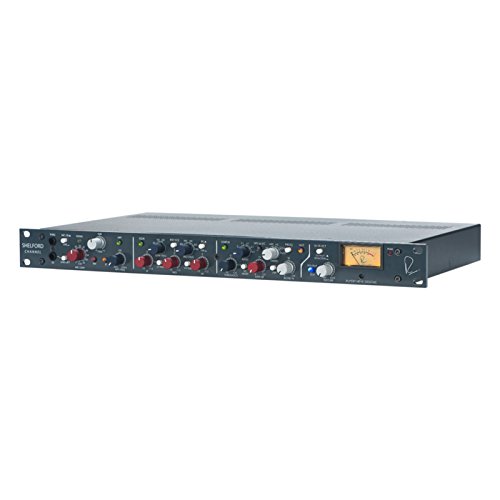
- Transformer-gain mic preamp
- Inductor EQ and diode-bridge compressor
- Sidechain link plus sends/returns
Best For: Premium voiceover studio setups requiring integrated analog processing
Tube Voice Shaping

- Class A 12AX7 tube preamp
- VCA compressor with auto attack/release
- Three-band EQ with variable-Q mids
Best For: Flexible studio voiceover chains needing tube character and detailed control
Compact 500-Series Processing
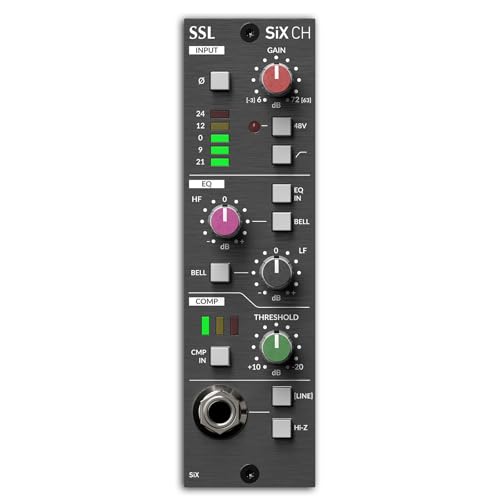
- Mic preamp, EQ, and single-knob compressor
- +48V phantom power and 75 Hz HPF
- Front-panel TRS line and Hi-Z input
Best For: Existing 500 Series racks seeking streamlined mono voiceover processing
Class-A Detail Pick

- Class A mic/line preamp
- Custom transformer outputs with Silk enhancement
- 8-segment metering and compressor
Best For: Voiceover users seeking preamp character and controlled dynamics
Tube Versatility Pick
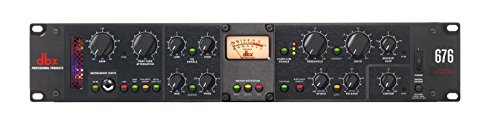
- 250-volt Class-A tube preamp
- Compressor/limiter with side-chain insert
- 3-band parametric EQ and flexible I/O
Best For: Voiceover rigs needing tube tone plus extensive dynamics and EQ control
Flexible Tube Control Pick

- Mono tube channel strip
- Switchable microphone impedance
- Opto/FET compression and 4-band semi-parametric EQ
Best For: Voiceover users wanting flexible compression and hands-on EQ shaping
Versatile Voiceover Control – dbx 286s Channel Strip
The dbx 286s is a practical channel strip for voiceover work, combining a microphone preamp with compression, de-essing, enhancement, and expander/gate controls. Its status LEDs, rack-mountable 1U design, and loop-out connection make it suitable for shaping spoken-word audio before recording or mixing.
Best For: Voiceover creators who want dedicated dynamics, sibilance, and noise-control tools in one analog channel strip.
Pros:
- Includes compression, de-esser, enhancer, and expander/gate processing.
- Floating balanced XLR microphone input and additional 1/4-inch TRS line input.
- Loop-out and insert connectivity support external processors.
- Rack-mountable 1U chassis with metering LEDs.
Cons:
- Single-channel design is focused on mono recording workflows.
- Uses corded power and does not list a digital audio connection.
The 286s is a strong all-in-one choice when hands-on voice processing matters more than digital integration. It offers the essential tools for a polished voiceover chain without requiring separate compressor, de-esser, and gate units.
Tube Warmth and Digital I/O – ART VoiceChannel
The ART VoiceChannel is a flexible channel strip for voiceover that pairs a tube preamp with compressor, expander, de-esser, and gate controls. Its broad digital connectivity, USB direct connection, and support for sample rates up to 192 kHz make it a useful option for studios that need both analog tone and computer integration.
Best For: Voiceover users seeking tube-style preamp character with USB and multiple digital-output options.
Pros:
- ART tube preamp design provides warmth and definition.
- Includes compressor, expander, de-esser, and gate processing.
- Offers ADAT, AES/EBU, S/PDIF, TOSLink, and USB connectivity.
- Supports Windows, macOS, and Linux environments.
Cons:
- Its 5.5 kg weight may be substantial for a compact setup.
- Advanced digital connectivity may be unnecessary for simple voiceover rigs.
Choose the VoiceChannel if you want more than basic analog processing and expect to connect the channel strip directly to a computer or digital system. It is particularly adaptable for users building a more connected recording setup.
Classic EQ and Preamp Character – Neve 1073SPX Preamp and EQ
The Neve 1073SPX is a premium preamp and EQ option for voiceover, built around transformer-balanced Class A circuitry and up to 80 dB of gain. Its highpass filter, polarity reverse, and three-band EQ provide focused tonal shaping, although it is more centered on preamp and EQ duties than a full dynamics channel strip.
Best For: Voiceover engineers prioritizing high-gain microphone preamplification and three-band tonal shaping.
Pros:
- Provides up to 80 dB of microphone preamp gain.
- Uses transformer-balanced Class A circuitry.
- Includes a three-band EQ, highpass filter, and polarity reverse.
- Supports mic, line, and DI sources.
Cons:
- Notes do not list compression, de-essing, gating, or expansion.
- Requires an external power supply.
- Its premium feature set may be more than needed for basic voiceover recording.
The 1073SPX is best viewed as a characterful preamp/EQ centerpiece rather than a complete one-box voiceover processor. Add separate dynamics and sibilance control if your workflow requires comprehensive channel-strip processing.
Simple USB Voice Setup – Behringer Ultravoice UV1
The Behringer Ultravoice UV1 combines a one-channel microphone/line preamp with a USB audio interface and voice-focused processing. With compression, gate/expander, and de-esser functions plus USB connectivity, it offers a straightforward channel strip for voiceover users who want to connect directly to a computer.
Best For: Computer-based voiceover recording with built-in compression, noise gating, and de-essing.
Pros:
- Combines a mic/line preamp and USB audio interface.
- Includes compressor, gate/expander, and de-esser controls.
- Supports sample rates up to 192 kHz.
- Designed for Windows 10 and Mac OS X 10.4 or later.
Cons:
- Single-channel design limits multichannel recording.
- Notes specify USB connectivity but do not list additional digital-output formats.
The UV1 is a convenient choice for a computer-centered voiceover chain that needs core processing in one unit. It is less suited to users seeking extensive routing or a broad selection of analog and digital connections.
Premium Analog Control – Shelford Channel
Rupert Neve Designs Shelford Channel Microphone Preamp, Inductor EQ & Diode Bridge Compressor
Check Price On AmazonThe Rupert Neve Designs Shelford Channel is a premium channel strip for voiceover work when you want a transformer-gain microphone preamp, musical tone shaping, and compression in one analog unit. Its diode-bridge compressor and inductor EQ provide dedicated processing for shaping a finished vocal signal.
Best For: Voiceover engineers and studios seeking an all-in-one analog preamp, EQ, and compressor with transformer-based gain.
Pros:
- Combines a transformer-gain mic preamp, inductor EQ, and diode-bridge compressor.
- Includes sidechain stereo link and sends/returns for flexible routing.
- Uses XLR and 1/4-inch TRS connectors and includes a two-year warranty.
Cons:
- Its 12-pound, corded design is better suited to permanent studio setups than portable rigs.
- Offers a premium feature set that may be more than a simple voiceover chain requires.
The Shelford Channel is a focused choice for users who want comprehensive analog processing before recording or conversion. Its substantial construction and dedicated signal-shaping sections make it especially appropriate for a permanent voiceover studio.
Tube Voice Shaping – PreSonus StudioChannel
The PreSonus StudioChannel is a versatile channel strip for voiceover that combines a Class A 12AX7 vacuum-tube preamplifier, VCA compressor, and three-band EQ. It also includes a high-pass filter, pad, polarity reverse, and phantom power for accommodating different microphones and recording situations.
Best For: Project and professional studios wanting tube preamp character with adjustable compression and equalization.
Pros:
- Provides a high-voltage Class A 12AX7 tube mic and instrument preamplifier.
- Includes a VCA compressor with automatic attack/release and selectable knee settings.
- Offers a three-band EQ with a variable-Q mid band and shelving or peak options.
- Accepts instrument, line, and microphone inputs in a rugged 1U rack-mount chassis.
Cons:
- The one-year warranty is shorter than some competing options.
- Its extensive controls may take more setup time than a simpler channel strip.
With its tube preamp and broad control set, the StudioChannel gives voiceover users room to shape tone and dynamics at the recording stage. It is a practical fit when flexibility across microphones and other studio sources matters.
Compact 500-Series Processing – SSL SiX Channel
Solid State Logic SiX Channel Strip 500 Series | Mic-Pre, EQ, and Single Knob Compressor
Check Price On AmazonThe SSL SiX Channel is a compact 500 Series channel strip for voiceover setups that already use a compatible rack. It combines a mic preamp, EQ, and single-knob compressor, with phantom power, a switchable high-pass filter, and a front-panel high-impedance instrument input.
Best For: 500 Series users who want streamlined vocal processing in a compact modular format.
Pros:
- Combines mic preamp, EQ, and a single-knob channel compressor.
- Includes +48V phantom power for compatible condenser microphones.
- Provides a switched 75 Hz, 12 dB/octave high-pass filter.
- Offers a front-panel TRS line input with a 1 MΩ Hi-Z switch.
Cons:
- Requires a compatible 500 Series chassis and power system.
- The single-knob compressor offers less adjustment than more fully featured compressors.
- Its one-channel design is intended for individual mono sources.
The SiX Channel suits voiceover producers who value a compact workflow and already own 500 Series hardware. Its simplified compressor and focused EQ section make it easy to integrate without taking up a full rack unit.
Class-A Detail Pick – Rupert Neve Designs Newton
The Rupert Neve Designs Newton is a focused channel strip for voiceover with a Class A mic/line preamp, custom transformer outputs, Silk harmonic enhancement, metering, and compression. It suits users who want a dedicated mono front end with practical tone-shaping and dynamics control.
Best For: Voiceover setups that prioritize Class A preamp character, transformer output coloration, and straightforward compression.
Pros:
- Class A mic/line preamp in a mono channel-strip format.
- Custom transformer outputs and Silk harmonic enhancement provide tonal options.
- Includes an 8-segment LED meter and compressor.
Cons:
- Mono design may be limiting for users needing multiple channels.
- Its feature set is centered on preamp, enhancement, metering, and compression rather than a full EQ section.
The Newton is a streamlined choice when your voiceover chain benefits from preamp character and controlled dynamics without requiring a more extensive channel-strip layout.
Tube Versatility Pick – dbx 676FX Tube Channel Strip
The dbx 676FX is a substantial channel strip for voiceover built around a high-voltage Class-A tube preamp, compressor/limiter, and 3-band parametric EQ with sweepable mids. Its connectivity and rack-mountable 2U format make it suitable for integrated studio or live setups.
Best For: Voiceover users who want tube-based tonal choices plus compression, limiting, and adjustable EQ in one rack unit.
Pros:
- 250-volt Class-A tube preamp supports warm, clear, or dirtier tones.
- Combines compressor/limiter, side-chain insert, and 3-band parametric EQ.
- Offers XLR and 1/4-inch connections, a front-panel instrument input, and a VU meter.
Cons:
- The 2U rack-mountable design is larger than a compact desktop unit.
- Its listed weight is 13 pounds, which may matter in portable rigs.
The 676FX stands out for buyers who want broad control over voice tone and dynamics, especially when a tube preamp and sweepable mid EQ are useful parts of the recording chain.
Flexible Tube Control Pick – ART Pro Channel III
The ART Pro Channel III is a mono tube channel strip for voiceover with switchable microphone impedance, selectable opto/FET compression voicings, and a 4-band semi-parametric EQ. It is designed for users who want several ways to shape a single microphone signal.
Best For: Voiceover recording chains that benefit from impedance choices, alternate compression styles, and hands-on semi-parametric EQ.
Pros:
- Mono tube channel-strip design tailored to one signal path.
- Switchable microphone impedance provides additional preamp flexibility.
- Selectable opto/FET compression voicings and 4-band semi-parametric EQ support detailed shaping.
Cons:
- Mono operation does not address multi-channel recording needs.
- The supplied notes do not specify included metering or connectivity details.
The Pro Channel III is a practical option when compression character and adjustable EQ are central to your voiceover workflow, particularly for users who like to shape the signal before it reaches the interface.
How We Picked the Best Channel Strip for Voiceover
We evaluated these channel strips by focusing on the needs that matter most for spoken-word recording: preamp quality, available headroom, noise performance, compression control, de-essing or sibilance management, EQ flexibility, connectivity, and ease of use. We also considered whether each unit suits a home booth, mobile setup, project studio, or professional rack.
A good Channel Strip for Voiceover should help you capture a strong, controlled signal without making the voice sound unnatural. Built-in processing is useful, but it should remain adjustable enough to accommodate different microphones, rooms, speaking styles, and delivery distances.
Quick Comparison
- Best for simple spoken-word processing: dbx DBX286S, with dedicated compression, de-essing, enhancement, and gating.
- Best for USB convenience: Behringer Ultravoice UV1, which combines channel processing with an audio interface.
- Best for classic high-end character: Neve 1073SPX or Rupert Neve Designs Shelford Channel.
- Best for flexible project studios: ART Pro Channel III, ART VoiceChannel, or Rupert Neve Designs Newton.
- Best for compact analog integration: Solid State Logic SiX Channel Strip 500 Series.
Key Buying Factors for a Channel Strip for Voiceover
Preamp Quality and Gain Range
Your preamp should provide enough clean gain for the microphone you use, particularly with low-output dynamics and ribbon microphones. Look for quiet operation, useful input and output connections, and enough headroom to handle energetic narration without clipping.
Compression and De-Essing
Compression can keep narration intelligible and consistent, while a de-esser helps control harsh “s” and “sh” sounds. For voiceover, gentle, adjustable processing is generally more useful than aggressive coloration. A gate or expander can reduce room noise, but overly fast or heavy settings may cut off word endings.
EQ and Tonal Character
Parametric EQ offers precise problem-solving, while fixed-band or inductive EQ designs can provide faster, more musical shaping. Consider whether you want transparent cleanup, tube warmth, transformer color, or a recognizable vintage-style voice tone.
Workflow and Connectivity
Check the channel format, rack requirements, digital outputs, USB interface features, and monitoring options. A USB-equipped model can simplify a small recording system, while a 500 Series or rack unit may be better for an established interface and outboard setup.
Who Should Buy Which Channel Strip for Voiceover?
Choose the dbx DBX286S if you want an accessible, voice-focused processor with useful one-box controls. The Ultravoice UV1 is a practical choice for creators who need processing and USB connectivity without assembling separate hardware. For premium preamp tone, the Neve 1073SPX and Shelford Channel suit buyers who value distinctive analog character and professional construction.
The ART VoiceChannel, ART Pro Channel III, and dbx DBX676FX fit project studios seeking broad analog control and tube coloration. Consider the PreSonus StudioChannel if you want a straightforward tube-based channel strip, the SSL SiX Channel for compact 500 Series integration, and the Rupert Neve Designs Newton for refined, flexible studio processing. Before buying, confirm that the unit’s connectors, format, and processing controls match your microphone, interface, and recording environment.