The best compact loop stations make it easier to build layered performances without giving up valuable pedalboard or desktop space. The right model can handle simple practice loops, rhythm-backed songwriting, or more advanced stereo arrangements.
This roundup compares 10 options across beginner-friendly pedals, feature-rich performance stations, and rhythm-focused loopers so you can match your workflow, inputs, and budget to the right tool.
Best 10 Compact Loop Stations Picks for 2026
Professional Compact Looping

- 32-bit processing for high-quality audio
- 13 hours of stereo recording with 99 phrase memories
- 57 rhythms, MIDI, USB, and color LCD
Best For: Advanced performers and pedalboard-based looping setups
Dual-Loop Creativity
Electro-Harmonix 22500 Dual Stereo Looper

- Two independent loops with sequential and parallel modes
- 16 built-in drum loops plus undo-redo
- Selectable microphone input with phantom power
Best For: Performers creating multi-section stereo loop arrangements
Simple Stompbox Looping

- Straightforward recording, overdub, undo, and redo controls
- 12 minutes of stereo recording time
- 24-segment LED loop-mode indicator
Best For: Beginners and players wanting an easy stereo looper
Budget-Friendly Extended Looping
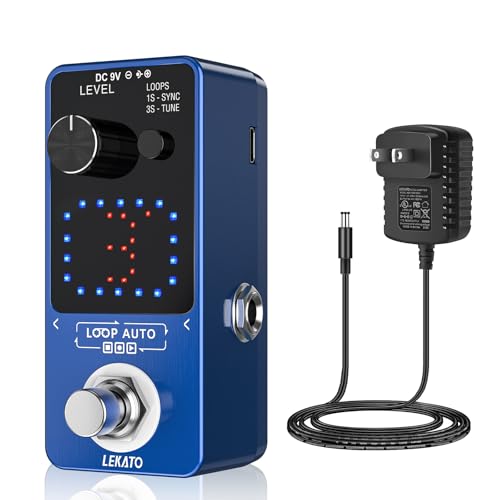
- Three loops with 18 minutes of total recording time
- Sync recording, tuner, and visual time indicator
- 24-bit uncompressed audio with USB WAV transfer
Best For: Guitarists wanting long recording time and practical extras
Simple Stereo Looper

- Up to 12 minutes of stereo recording
- Clear 24-segment loop-status indicator
- Bundle includes power adapter and cables
Best For: Straightforward stereo looping
Modern Performance Looper

- 100 stereo drum-machine options
- Seven customizable performance effects
- USB and headphone connectivity
Best For: Looping with drums, effects, and silent practice
Tabletop Creative Looper

- Two simultaneous stereo phrase tracks
- Eight input and track effects total
- 64 phrase memories with MIDI and USB
Best For: Layered live performances and hands-on control
Best Compact Value
SORAN JLP-01 Stereo Loop Pedal

- 360 seconds of stereo looping
- Eight drum styles with smart tempo sync
- USB-C WAV export and import
Best For: Portable guitar practice and songwriting
Best Tabletop Controller
BOSS RC-202 Hands-On Loop Station
- Two simultaneous stereo tracks
- 64 phrase memories
- Extensive inputs, effects, USB, and MIDI
Best For: Electronic performance and beatboxing
Best Rhythm-Focused Choice

- 280 preset rhythm styles
- Sixteen drum kits and six hours of recording
- Two-part song looping with phrase storage
Best For: Structured guitar performances with backing rhythms
Professional Compact Looping – BOSS RC-5 Loop Station
The BOSS RC-5 is a strong choice among compact loop stations for players who want professional audio processing, extensive phrase storage, and versatile rhythm accompaniment in a pedalboard-friendly format. Its color display and broad connectivity also make it suitable for more advanced setups.
Best For: Musicians who need high-quality looping, long recording time, onboard rhythms, and MIDI or USB integration.
Pros:
- 32-bit AD/DA conversion and 32-bit floating-point processing support professional-grade sound.
- Offers 13 hours of stereo recording and storage for 99 phrase memories.
- Includes 57 rhythms with A/B variations, seven drum kits, reverse playback, MIDI, USB, and external control support.
- Multi-color LCD makes loop status and settings easier to monitor.
Cons:
- Its advanced controls and connectivity may be more than beginners need.
- PSA adapter is optional rather than the only listed power source.
The RC-5 stands out when flexibility and recording capacity matter as much as compact size. It is a particularly capable option for performers building layered arrangements or integrating a looper with other equipment.
Dual-Loop Creativity – Electro-Harmonix 22500 Dual Stereo Looper
The Electro-Harmonix 22500 brings two independent loops to the compact loop stations category, giving performers more ways to arrange phrases. Sequential and parallel modes support both structured song sections and simultaneous loop playback.
Best For: Players who want dual-loop arrangements, verse-and-chorus switching, or layered stereo performances.
Pros:
- Sequential looping mode supports switching between verse and chorus sections.
- Parallel looping mode allows two loops to play simultaneously.
- Includes 16 built-in drum loops and undo-redo for the last recording or overdub.
- Selectable microphone input includes phantom power.
Cons:
- The 22500 is larger and heavier than some compact single-loop pedals.
- Its feature set may require more setup and learning than a basic looper.
Choose the 22500 if two-loop control is more important than the smallest possible footprint. Its flexible playback modes make it well suited to performers who organize loops as distinct song sections.
Simple Stompbox Looping – BOSS RC-1 Loop Station Pedal
The BOSS RC-1 is one of the more straightforward compact loop stations for guitar, bass, and keyboard players. It focuses on recording, playback, overdubbing, and undo-redo controls, with a clear loop indicator to show the current operating mode.
Best For: Beginners and players who want an uncomplicated stereo looper with a familiar stompbox format.
Pros:
- Simple controls support recording, playback, overdubbing, undo, and redo.
- Provides 12 minutes of stereo recording time.
- 24-segment LED indicator displays the current loop mode.
- Recorded phrases remain in memory after the pedal is turned off.
Cons:
- It has less recording capacity and fewer creative features than the RC-5.
- AC adapter is optional, while the included battery provides approximately 4.5 hours of use.
The RC-1 is a practical pick when ease of use matters more than extensive memories, rhythms, or connectivity. Its stereo I/O and clear indicator make it a sensible starting point for live layering.
Budget-Friendly Extended Looping – LEKATO Guitar Looper Pedal
The LEKATO Guitar Looper is a practical option among compact loop stations for players who want multiple saved loops, a tuner, and USB file transfer. It provides three loops, uncompressed audio, and a supplied power adapter for a flexible pedalboard setup.
Best For: Guitarists seeking extended recording time, synchronized overdubbing, tuning, and computer-based loop management.
Pros:
- Three loops provide 18 minutes of total recording time, with up to six minutes per loop.
- Sync recording can begin during playback, helping capture phrases without a discordant interruption.
- Built-in tuner, visual time indicator, and automatic saving add practical performance features.
- 48 kHz/24-bit uncompressed audio, analog dry-through, and USB WAV import/export support quality and flexibility.
Cons:
- The supplied notes provide fewer details about external control or advanced rhythm features.
- Its blue metal enclosure may not match every pedalboard aesthetic.
The LEKATO is appealing when recording time and useful extras matter on a budget. Its tuner and USB transfer make it especially convenient for guitarists who want to practice, perform, and manage loops from a computer.
Simple Stereo Looper – Boss RC-1 Loop Station
Boss RC-1 Loop Station | Bundle with Gearlux Power Supply, Instrument Cable, Patch Cable, and Picks
Check Price On AmazonThe Boss RC-1 is a straightforward choice among compact loop stations for musicians who want quick recording, overdubbing, and playback without a complicated interface. Its circular 24-segment LED makes the current loop mode easy to see, while stereo connections support instruments, effects, and amplifiers.
Best For: Guitarists and performers seeking an easy-to-operate stereo looper with extended recording time.
Pros:
- Offers up to 12 minutes of stereo recording time.
- 24-segment circular LED shows Rec, Overdub, and Play status.
- Recorded phrases remain stored after the pedal is turned off.
- Bundle includes a power adapter, instrument cable, patch cable, and picks.
Cons:
- Optional external footswitches and AC-adapter options may add to the setup cost.
- Runs for approximately 4.5 hours on a single 9-volt alkaline battery.
The RC-1 keeps looping accessible while providing stereo flexibility and useful included accessories. It is a practical pick for players who value uncomplicated operation over built-in drum machines or extensive effects.
Modern Performance Looper – Valeton VLP-400 Loop Station
The Valeton VLP-400 expands the compact loop stations category with a stereo drum machine, customizable effects, USB connectivity, and color-coded status indicators. Its assignable controls are designed for hands-on performance, while the headphone output supports quiet practice and recording.
Best For: Performers who want looping combined with synchronized drums, onboard effects, computer connectivity, and silent practice.
Pros:
- Includes 100 stereo drum-machine options with tempo synchronization and AUTO mode.
- Provides seven effects, including Octave, Reverse, Freeze, Half, Fade, Once, and Solo.
- USB connectivity supports software updates, audio import/export, and project management.
- 3.5mm headphone output enables noise-free practice and recording.
Cons:
- Requires a 9-volt DC power supply rather than battery operation.
- Its larger listed dimensions may take more pedalboard or desk space than simpler loopers.
With drums, effects, assignable controls, and USB integration, the VLP-400 is suited to players who want more than basic loop capture. It offers a broader performance workflow, though its extra features may be unnecessary for minimal setups.
Tabletop Creative Looper – BOSS RC-202 Loop Station
The BOSS RC-202 is a tabletop alternative among compact loop stations, built for hands-on control while playing guitar, keyboards, or other instruments. It provides two simultaneous stereo phrase tracks, extensive phrase storage, and separate input and track effects for layered performances.
Best For: Live performers and creators who need two-track stereo looping, real-time saving, effects, and expanded external control.
Pros:
- Two simultaneous stereo phrase tracks have dedicated controls and status indicators.
- Offers four input effects and four track effects for DJ- and sampler-style processing.
- Stores 64 phrase memories across eight banks, with two tracks per memory.
- Supports optional footswitches, an expression pedal, MIDI, and USB connectivity.
Cons:
- Its tabletop design and listed dimensions require more space than a typical compact pedal.
- It uses corded electric power and is heavier than the other listed options.
The RC-202 is the most control-focused choice here, favoring layered arrangements and real-time manipulation over pedal simplicity. Choose it when tabletop access, phrase storage, and extensive effects are central to your performance setup.
Best Compact Value – SORAN JLP-01 Stereo Loop Pedal
The SORAN JLP-01 is a practical choice for guitarists seeking compact loop stations with built-in rhythm support. It records up to 360 seconds in stereo, includes eight drum styles, and uses smart tempo sync to match beats to your recorded phrase.
Best For: Guitarists who want an affordable, portable looper for practice, songwriting, and basic live jams.
Pros:
- 360 seconds of 24-bit/44.1kHz stereo loop recording
- Eight drum styles with smart tempo sync and tap tempo
- USB-C export and import for WAV loops and backing tracks
- Compact metal enclosure with buffered bypass
Cons:
- Power supply is not included
- Single-footswitch operation may be less convenient for complex live control
Its independent loop and drum volume controls make mixing straightforward, while the USB-C connection adds useful computer workflow options. The JLP-01 is especially appealing when portability and core looping features matter more than extensive effects or phrase memory.
Best Tabletop Controller – BOSS RC-202 Hands-On Loop Station
The BOSS RC-202 is a compact tabletop option for creators who prefer fingertip control over footswitch operation. It provides two simultaneous stereo tracks, extensive phrase storage, onboard rhythms, and effects suited to electronic music, beatboxing, and progressive performance.
Best For: Club performers, electronic musicians, beatboxers, and creators who want hands-on tabletop looping.
Pros:
- Two stereo phrase tracks with dedicated controls and status indicators
- 64 phrase memories across eight banks
- Four input effects and four track effects available simultaneously
- XLR microphone input with phantom power plus instrument and aux inputs
Cons:
- Footswitches and expression controls are optional extras
- Tabletop operation may not suit guitarists wanting a traditional pedal format
With USB phrase transfer, DAW integration, MIDI, and 17 rhythm patterns, the RC-202 offers a deep performance platform in a relatively small desktop enclosure. Its broad input and effects selection makes it more specialized than a basic guitar looper.
Best Rhythm-Focused Choice – BOSS RC-10R Song Loop Station
The BOSS RC-10R combines song-based looping with dynamic rhythm accompaniment in a small pedal footprint. For shoppers comparing compact loop stations, its 280 preset rhythm styles, two-part loop operation, and six hours of recording provide a strong balance of backing tracks and performance control.
Best For: Guitarists who want structured song sections, realistic rhythms, and a compact pedalboard-friendly format.
Pros:
- More than 280 rhythm styles with intros, endings, and fills
- 16 drum kits sourced from BOSS and Roland rhythm libraries
- Six hours of stereo loop recording with two-track song operation
- 99 phrase memories and 50 user rhythm slots
Cons:
- Rhythm-focused controls may be more than simple loopers require
- Power supply is required for operation
The RC-10R is a compelling pick for performers who build arrangements in sections rather than repeating a single loop. Its selectable output filter also helps tailor the sound for a guitar amplifier or full-range system, increasing flexibility between practice and performance setups.
How We Picked the Best Compact Loop Stations
We focused on the features that matter most in real playing situations: loop length, recording workflow, track arrangement, rhythm support, connectivity, stereo operation, and foot-control design. We also considered whether each unit suits a specific audience, from first-time users who want straightforward overdubbing to experienced performers building complete songs live.
Because the lineup includes both pedal-style loopers and tabletop performance stations, we compared each product within its intended use rather than treating every model as interchangeable. Reliability, editing flexibility, synchronization, and ease of learning were also important considerations.
Quick Comparison
| Best For | Look For | Typical Advantage |
|---|---|---|
| Simple practice and overdubbing | One-track operation and intuitive controls | Fast setup with a short learning curve |
| Songwriting with rhythm support | Drum patterns, tempo sync, and phrase structure | More complete backing arrangements |
| Advanced live looping | Multiple tracks, memories, MIDI, and USB | Greater control over complex performances |
| Stereo instruments or effects chains | Stereo inputs, outputs, and dual-track recording | Preserves spatial detail and routing options |
Key Buying Factors for Compact Loop Stations
Looping Workflow
Consider how you want to start and stop loops. A basic single-track pedal is often easiest for guitar practice and vocal layering, while multiple tracks or phrase memories are better for structured songs and repeatable live sets.
Rhythm and Tempo Features
Built-in drums can turn a loop into a complete musical idea, but the quality and flexibility vary. Check the number of styles, fills, kits, tempo controls, and whether rhythms can follow or trigger loop changes.
Controls and Connectivity
Footswitch spacing, overdub behavior, and visual feedback matter when you are performing rather than recording at a desk. USB, MIDI, external footswitch support, and input/output options become especially valuable for synchronized rigs and computer-based production.
Size, Power, and Stereo Support
Confirm the unit’s power requirements and available pedalboard space before buying. Stereo operation is useful for keyboards, stereo effects, and wider guitar rigs, while a compact mono pedal may be the better choice when portability and simplicity come first.
Who Should Buy Which Compact Loop Stations?
Choose a straightforward single-switch looper if you are new to looping or mainly need quick practice overdubs. A model with dedicated rhythm features is a better fit for solo performers and songwriters who want drums without carrying additional gear.
Players building layered arrangements should prioritize multiple tracks, phrase memories, and hands-free control. If you use MIDI devices, a computer, or several synchronized instruments, select a station with the connectivity and timing features to support that setup. Finally, guitarists and keyboard players with stereo signal chains should avoid assuming that every compact pedal preserves stereo routing—check the input and output configuration first.