Quiet microphones can make an otherwise capable recording setup feel underpowered. The best compact microphone preamps add useful clean gain without taking up much room, making them practical for podcasts, vocals, streaming, and mobile recording rigs.
This roundup compares 10 options ranging from simple inline boosters to feature-rich preamps with phantom power, adjustable gain, high-pass filtering, and instrument inputs. Use the guide below to match the design and controls to your microphone, interface, and recording goals.
Best 10 Compact Microphone Preamps Picks for 2026
Low-Noise Choice

- Class-A JFET amplification
- Shielded compact enclosure
- Four matched JFETs
Best For: Compact, low-noise signal boosting
Dynamic-Mic Specialist

- Adds 29dB of gain
- For dynamic and ribbon mics
- Requires 48V phantom power
Best For: Boosting low-output dynamic microphones
Stealth Streaming Pick
Coda MB-Stealth Mic Gain Booster
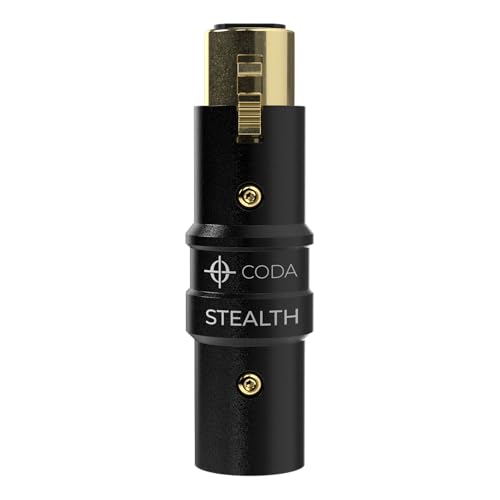
- Adds 28dB of clean gain
- -70dB noise rating
- Matte-black aluminum housing
Best For: Compact podcasting and livestream setups
Rugged Desktop Option

- Provides 25dB of gain
- Balanced XLR input and output
- Shielded compact metal chassis
Best For: Durable desktop and mobile XLR setups
Portable Pick
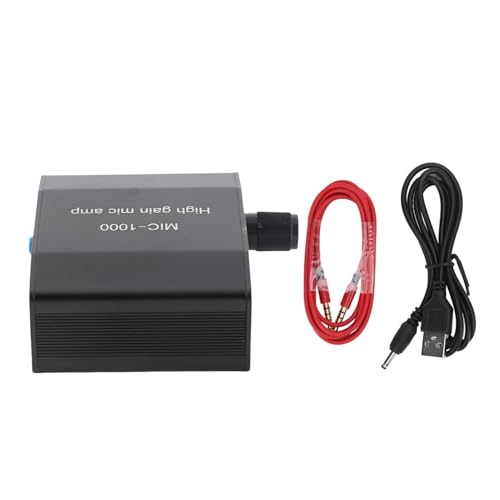
- 63 x 52 x 22mm aluminum-alloy housing
- High sensitivity with 1000x amplification
- 3.5mm headphone and mobile-recording connectivity
Best For: Mobile recording, headphone listening, karaoke, and voice-over setups
Dual-Channel Value

- Two channels with +25dB clean gain
- Balanced XLR input and output
- Phantom-powered for dynamic and passive ribbon mics
Best For: Two-mic home studios, podcasts, streaming, and live sound
Most Versatile

- 0–72dB adjustable gain with -120dBV EIN
- Dedicated mic and high-impedance instrument inputs
- USB-C, power-bank, 48V, and dual-output support
Best For: Flexible studio, instrument, mobile-streaming, and low-output-mic setups
Portable 20dB Mic Booster

- 20dB balanced gain with low-noise operation
- Supports 3.5mm, 6.35mm, and XLR connections
- Lightweight metal case with included cables
Best For: Portable home studio, podcasting, and streaming setups
High-Gain Low-Noise Pick

- 19–66dB variable gain range
- Lists -120dBV EIN ultra-low-noise performance
- Type-C power plus XLR, TRS, and TS connections
Best For: High-gain vocal, ribbon, and instrument recording
Simple 48V Booster

- Clean, transparent 20dB balanced gain
- 48V power for dynamic and condenser microphones
- Lightweight metal case for portable use
Best For: Simple home-studio, vocal, and streaming setups
Low-Noise Choice – Triton Audio FetHead
The Triton Audio FetHead is one of the more compact microphone preamps for adding low-noise gain in a streamlined XLR setup. Its Class-A JFET design, double single-ended amplifier topology, and shielded enclosure make it a practical option when you want a compact signal boost without adding a larger desktop unit.
Best For: Users seeking a compact, shielded preamp with Class-A JFET amplification.
Pros:
- Low-noise Class-A JFET amplifier design
- Shielded enclosure helps support a clean signal path
- Compact 5.05-inch form factor and lightweight 2.72-ounce build
- Uses four matched JFETs
Cons:
- The supplied notes do not specify a gain rating
- The listed 24-volt requirement should be checked against your setup
- Its two-channel specification may require confirming how it applies to your intended connection
The FetHead stands out for its circuit-focused design and compact enclosure. It is best suited to buyers who prioritize low-noise amplification and want a small preamp rather than a feature-heavy desktop device.
Dynamic-Mic Specialist – StudioMan DPM1 XLR Preamp
The StudioMan DPM1 is a plug-and-play option among compact microphone preamps, designed to add 29dB of gain to low-output dynamic and ribbon microphones. It fits between the microphone and interface or mixer, but it requires 48V phantom power and is not intended for condenser microphones.
Best For: Podcasters, streamers, and studio or stage users with dynamic or ribbon microphones that need additional clean gain.
Pros:
- Provides a substantial +29dB signal boost
- Designed specifically for dynamic and ribbon microphones
- Compact metal housing helps with durability and interference shielding
- Includes a one-year manufacturer warranty and technical support
Cons:
- Requires 48V phantom power, which is not included
- Strictly not for condenser microphones
- Phantom power does not pass through to the microphone
The DPM1 is a focused solution for quiet dynamic or ribbon microphones. Its high gain rating and simple XLR connection make it appealing for users whose existing interface becomes noisy when its built-in preamp is turned up substantially.
Stealth Streaming Pick – Coda MB-Stealth Mic Gain Booster
The Coda MB-Stealth is a compact microphone preamp for dynamic and ribbon microphones, using 48V phantom power to provide 28dB of clean gain. Its matte-black aluminum housing and in-line XLR format suit podcasting, livestreaming, and recording setups where a discreet footprint matters.
Best For: Podcasters, streamers, and musicians who want a compact 28dB booster with a low-noise rating.
Pros:
- Provides 28dB of gain for dynamic and ribbon microphones
- Specified -70dB noise rating for a quieter signal path
- Compact matte-black aluminum enclosure
- 20Hz–20kHz frequency response
Cons:
- Does not work with condenser microphones
- Requires 48V phantom power
- The supplied dimensions are relatively long for an in-line accessory
The MB-Stealth combines a useful gain boost with a simple, understated enclosure. It is a sensible match for dynamic or ribbon microphones in compact recording and streaming chains, provided your interface or mixer supplies phantom power.
Rugged Desktop Option – StudioMan CL-100 XLR Preamp
The StudioMan CL-100 is a compact microphone preamp with dual balanced XLR input and output, a 25dB gain circuit, and a metal chassis. It is designed for dynamic and passive ribbon microphones and can fit into home studios, podcast stations, mobile rigs, and live sound setups.
Best For: Users who want a durable, desk-friendly XLR booster for dynamic or passive ribbon microphones.
Pros:
- Provides +25dB of clean gain
- Dual balanced XLR input and output support straightforward integration
- Metal housing provides EMI/RFI shielding and rugged protection
- Includes a one-year warranty and technical support
Cons:
- Designed for dynamic and passive ribbon microphones rather than condensers
- Requires a setup compatible with 48V phantom power
- The orange-and-black finish may not suit every studio aesthetic
The CL-100 emphasizes practical construction and easy XLR connectivity. Its 25dB boost is less than some competing options in this roundup, but its metal enclosure and stated wide frequency response make it a versatile choice for fixed or mobile audio setups.
Portable Pick – Mini Mic Preamp
If you need compact microphone preamps for a phone, headphone setup, or basic home recording, this miniature model emphasizes portability and simple 3.5mm connectivity. Its aluminum-alloy housing and automatic level control make it a practical option for boosting weaker sounds without adding much bulk.
Best For: Mobile recording, headphone listening, karaoke, podcasting, and voice-over setups using 3.5mm connections.
Pros:
- Very compact 63 x 52 x 22mm design is easy to store and carry.
- High sensitivity and 1000-times amplification help bring out weak sounds.
- ALC automatic level control supports more consistent listening levels.
- Can directly drive headphones or connect to a mobile phone for recording.
Cons:
- Its 3.5mm interface is less suited to professional balanced XLR setups.
- The supplied notes do not specify a gain-control range or phantom-power support.
This is the simplest and most travel-friendly choice of the three. Choose it when small size and 3.5mm compatibility matter more than studio routing flexibility.
Dual-Channel Value – StudioMan CL-200
The StudioMan CL-200 is one of the more focused compact microphone preamps for dynamic and passive ribbon microphones. It provides two channels of clean gain, uses balanced XLR connections, and draws power from standard 48V phantom power supplied by a mixer or audio interface.
Best For: Home studios, podcasts, live streaming, and stage setups using two dynamic or passive ribbon microphones.
Pros:
- Dual-channel design can process two microphone signals simultaneously.
- Provides a +25dB clean gain boost for passive microphones.
- Balanced XLR input and output support professional audio connections and longer output cable runs.
- Compact metal housing and phantom-power operation avoid the need for a separate power adapter.
Cons:
- It cannot pass phantom power to condenser microphones and is not compatible with them.
- The mic-to-booster connection is recommended to use a short XLR cable under 30 feet.
For compatible microphones, the CL-200 offers a straightforward way to add two channels of gain without pushing an audio interface’s preamps to their limits. Confirm your microphone type before buying, especially if you use condensers.
Most Versatile – RO-04 Adjustable Mic Preamp
The RO-04 is the most flexible of these compact microphone preamps, combining adjustable 0–72dB gain with mic and instrument inputs. Its low-noise design, selectable output levels, USB-C power, and 48V phantom power make it suitable for desktop, mobile, and streaming-oriented recording chains.
Best For: Users who need clean gain for demanding microphones, instrument input, mobile streaming, or portable recording.
Pros:
- Wide 0–72dB gain range accommodates low-output dynamic microphones and quieter sources.
- Rated -120dBV EIN supports a low-noise recording signal.
- Separate microphone and 1MΩ instrument inputs support simultaneous vocals and instruments.
- USB-C and power-bank operation improve portability while retaining 48V phantom power support.
Cons:
- At 2.42 pounds, it is less lightweight than the smaller options.
- Its broader feature set may be more than needed for a basic 3.5mm recording setup.
Choose the RO-04 when flexibility is the priority. It is the strongest fit for a setup that may shift between microphones, instruments, computer recording, and mobile streaming.
Portable 20dB Mic Booster – Compact 48V Mic Preamp
This compact microphone preamp is a practical choice for home studios, podcasting, recording, and live streaming. Its balanced 20dB gain circuit is designed for clean, low-noise amplification, while support for 5V/48V power and 3.5mm, 6.35mm, and XLR connections adds flexibility.
Best For: Users who want a lightweight mic booster for dynamic or condenser microphones, including setups using microphones such as the SM7B or 55SH.
Pros:
- Compact 10.5-ounce design is easy to carry and store.
- Balanced 20dB gain circuit aims to deliver clean sound without added coloration.
- Supports dynamic and condenser microphones with 5V/48V power options.
- Includes sound and USB power cables, with three connector types supported.
Cons:
- 48V operation for condenser microphones is listed at 3–5 hours.
- Its 20dB gain may be less suitable when a much larger boost is required.
Choose this model when portability, straightforward connectivity, and a sturdy metal case matter more than extensive controls or high maximum gain.
High-Gain Low-Noise Pick – RO03 66dB Mic Preamp
The RO03 stands out among compact microphone preamps for its adjustable 19–66dB gain range and stated -120dBV EIN noise performance. Type-C power supports portable setups, while XLR, TRS, and TS outputs accommodate microphones, interfaces, mixers, and instrument recording.
Best For: Vocalists, streamers, and musicians who need substantial, adjustable gain for dynamic, condenser, ribbon, or instrument sources.
Pros:
- 19–66dB variable gain range is designed for practical high-gain applications.
- Updated design lists -120dBV EIN and a 120dB signal-to-noise ratio.
- 1MΩ instrument input impedance improves compatibility for DI-style instrument use.
- Type-C power input supports more portable recording scenarios.
Cons:
- The two input ports cannot operate simultaneously.
- The manufacturer recommends using a suitable TRS line input on an audio interface for the lowest noise.
- At 400g and roughly 3.54 x 3.94 x 4.33 inches, it is less pocketable than simpler boosters.
This is the more versatile choice for users who need high gain and instrument support, provided they follow the recommended TRS connection approach.
Simple 48V Booster – Compact 20dB Mic Preamplifier
This compact microphone preamp focuses on straightforward 20dB balanced amplification for vocal, recording, podcasting, and streaming setups. It includes 48V power for condenser microphones and uses a metal case intended to reduce electromagnetic interference.
Best For: Home-studio and streaming users who need a simple, lightweight gain boost for dynamic or condenser microphones.
Pros:
- Balanced circuitry provides clean, transparent 20dB gain.
- 48V power supports a range of dynamic and condenser microphones.
- Compact 8.8-ounce design is easy to transport and store.
- Black metal casing is rugged and designed to help reduce EMC interference.
Cons:
- The supplied notes do not specify additional connector options beyond the XLR output.
- Its fixed 20dB gain offers less adjustment than the RO03 model.
Consider this model for a minimal, portable setup where clean gain and 48V support are the priorities and advanced routing is not required.
How We Picked These Compact Microphone Preamps
We focused on Compact Microphone Preamps that address a common problem: insufficient microphone level before the signal reaches an audio interface, mixer, recorder, or camera. The selection includes inline gain boosters, single- and dual-channel units, and more fully featured preamps for home studios and performance systems.
We considered advertised gain, noise performance, connectivity, phantom-power support, controls, channel count, and likely use cases. Because specifications and included accessories can vary by seller or revision, confirm the current product listing before purchase—especially when compatibility with ribbon microphones or condenser microphones matters.
Quick Comparison
| Type | Best suited to | What to prioritize |
|---|---|---|
| Inline booster | Dynamic microphones and portable rigs | Clean gain, phantom-power compatibility, short signal path |
| Single-channel preamp | Podcasts, vocals, and one-mic setups | Gain range, noise floor, XLR input/output, monitoring needs |
| Two-channel preamp | Interviews, stereo sources, and small recording setups | Independent channel control and consistent performance |
| Feature-rich preamp | Home studios and flexible routing | Phantom power, HPF, phase, Hi-Z input, and metering |
Key Buying Factors for Compact Microphone Preamps
Gain and Microphone Sensitivity
Dynamic and passive ribbon microphones often need more gain than condenser microphones. An inline booster may provide enough additional level for a modestly quiet dynamic mic, while difficult-to-drive microphones may benefit from a preamp with a wider, adjustable gain range. Avoid adding excessive gain if it raises hiss or overloads the next input stage.
Noise Performance
Look for a low equivalent input noise figure when the manufacturer provides one, but also consider the rest of the signal chain. A preamp cannot remove room noise, cable interference, or noise already captured by the microphone. Clean gain is most useful when the microphone is positioned correctly and the interface input is set conservatively.
Phantom Power and Compatibility
Inline boosters commonly rely on 48V phantom power from the interface or mixer, even when the connected microphone itself is dynamic. Verify the unit’s requirements and use extra care with passive ribbon microphones unless the manufacturer explicitly confirms safe operation. Condenser microphones generally require phantom power directly.
Connections and Controls
Most compact models use XLR input and output, while advanced designs may add Hi-Z instrument input, high-pass filtering, phase reversal, or separate channel controls. Choose only the features you will use; a simple inline adapter is often easier to pack and deploy than a desktop unit.
Channel Count and Placement
A single channel is sufficient for solo recording, streaming, and voice-over work. Two channels make more sense for interviews, stereo recording, or simultaneous performers. Check dimensions, power requirements, and whether the preamp can be mounted or positioned securely near your interface.
Who Should Buy Which Compact Microphone Preamps?
For a Simple Dynamic-Mic Upgrade
Choose an inline booster such as the Triton Audio FetHead, Coda MB-Stealth, or a similar compact adapter when you want a straightforward gain increase with minimal setup and no extra desktop controls.
For Podcasts and Voice-Over
A single-channel XLR preamp is a practical choice when you need more gain control than an inline unit provides. Prioritize low noise, sturdy metal construction, and compatibility with your existing interface or mixer.
For Interviews or Two-Microphone Recording
Select a two-channel model when both microphones need independent gain adjustment. This avoids relying on a second improvised signal path and keeps the setup organized.
For a Flexible Home Studio
Feature-rich models with adjustable gain, phantom power, HPF, phase controls, or Hi-Z connectivity offer more room to adapt as your microphone collection grows. They are the better fit when you record multiple source types rather than only boosting one dynamic microphone.