The best compact stage monitors make it easier for performers to hear vocals, instruments, and backing tracks without taking over the stage. The right model balances volume, clarity, portability, and feedback control for your setup.
Our selection spans small personal monitors, compact powered PA speakers, and higher-output wedges, so you can match your monitor to the venue, performer count, and available mixer outputs.
Best 10 Compact Stage Monitors Picks for 2026
Best All-Around Pick

- 1000-watt peak Class-D power
- Advanced DSP and selectable contours
- Works as monitor, main PA, or instrument amp
Best For: Portable performers needing a versatile 8-inch speaker
Best Coaxial Monitor

- 800-watt active stage monitor
- 10-inch driver with 1-inch tweeter
- FOH/Monitor selector and coaxial cabinet
Best For: Live stages and DJ booths needing a dedicated 10-inch monitor
Best Bluetooth Value

- 350-watt bi-amplified 8-inch speaker
- Bluetooth and True Wireless Stereo
- Built-in two-channel mixer
Best For: Mobile DJs, small gigs, presentations, and home studios
Best Ultra-Compact Personal PA

- Portable 7.6-pound personal PA
- 150-watt Class-D power
- Mic and line inputs for small setups
Best For: Solo performers, presenters, classrooms, and small rooms
Portable Studio Pick
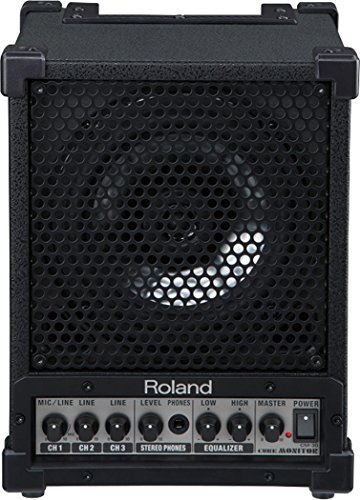
- Battery-powered, briefcase-friendly design
- Stereo sound with built-in effects
- 30-watt 6.5-inch monitor for studio or stage
Best For: Portable monitoring, home studios, and small performances
Feature-Packed PA Pick

- 150-watt active Class-D amplification
- Four-channel mixer with three-band EQ
- Built-in USB MP3 player
Best For: Vocal, keyboard, multimedia, and intimate-gig monitoring
High-Output Pair Pick

- Two powered 10-inch stage monitors
- 300-watt amplifier in each speaker
- Compression drivers, EQ, and XLR daisy chaining
Best For: Live performances, rehearsals, bars, and churches
Compact Power Pick

- 250-watt powered 12-inch monitor
- Adjustable feedback filter and limiter
- Broad wired connectivity options
Best For: Live performers needing a powered 12-inch monitor
Personal Monitor Pick

- Tiny 3-inch, 25-watt monitor
- Stand and wall mount included
- Weighs just 16 ounces
Best For: Personal monitoring in space-constrained setups
High-Output Monitor Pick

- 300-watt active two-way design
- 12-inch woofer with 1-inch compression driver
- Feedback filter, limiter, and sound processor
Best For: Live setups needing stronger powered monitoring
Best All-Around Pick – QSC CP8
The QSC CP8 is a strong choice for shoppers seeking compact stage monitors that can also handle main-PA and instrument-amplification duties. Its 8-inch driver, 1000-watt peak Class-D amplifier, selectable contours, and advanced DSP provide a versatile setup for portable performances.
Best For: Musicians and performers who want one compact speaker for stage monitoring, small PA applications, and instrument amplification.
Pros:
- Compact, lightweight, and highly portable design
- 1000-watt peak Class-D amplifier module
- Selectable contours and Intrinsic DSP support sound quality and speaker protection
- Can be used as a monitor, main PA, or instrument amplifier
Cons:
- Not waterproof or water resistant
- Frequency response begins at 56 Hz, so deep bass may require a subwoofer
- Offers a single 8-inch speaker rather than a dedicated low-frequency system
The CP8 stands out as a flexible compact stage monitor for users who value portability without giving up substantial output. Its pole socket and multiple intended applications make it easy to adapt as your setup changes.
Best Coaxial Monitor – Samson RSXM10A
The Samson RSXM10A is designed specifically for stage monitoring, making it a practical option among compact stage monitors for live performers, DJs, and sound engineers. It combines an 800-watt output section with a coaxial 10-inch driver and compact wedge-style cabinet.
Best For: Live performers, DJ booths, and sound engineers who prefer a dedicated active monitor with a 10-inch low-frequency driver.
Pros:
- 800 watts of output from a lightweight Class-D amplifier
- 10-inch low-frequency driver with 1-inch tweeter
- Coaxial design keeps the cabinet compact
- FOH/Monitor selector helps optimize the speaker for its use
Cons:
- At 30 pounds, it is heavier than several smaller monitors
- Limited to a 55 Hz frequency-response specification
- Not waterproof or water resistant
With its dedicated monitoring layout, coaxial construction, and FOH/Monitor switch, the RSXM10A is a focused choice for stage use. It is especially appealing when a 10-inch driver is preferred over the smallest portable formats.
Best Bluetooth Value – ALTO TX408
The ALTO TX408 is one of the most compact stage monitors in the TX Series, with Bluetooth, a built-in two-channel mixer, and 350 watts of bi-amplified power. Its wedge-monitor shape, ergonomic handles, and pole socket make it useful for small gigs, DJs, presentations, and home studios.
Best For: Mobile DJs, small bands, presenters, and home-studio users who want Bluetooth playback and simple onboard mixing.
Pros:
- Compact 8-inch powered design with 350 watts of Class-D amplification
- Bluetooth and True Wireless Stereo support
- Two-channel mixer accepts microphone, line-level, and Bluetooth sources
- Metal grille, handles, and 36mm pole socket support portable use
Cons:
- Not waterproof or water resistant
- Lower rated output than the larger monitors in this roundup
- Bluetooth and TWS features may be unnecessary for users seeking a strictly wired monitor
The TX408 is a well-rounded pick when convenience matters as much as monitoring. Bluetooth, dual-source operation, and a built-in mixer make it particularly practical for compact event and presentation systems.
Best Ultra-Compact Personal PA – Mackie SRM150
The Mackie SRM150 is a small personal PA suited to close-range vocal monitoring, classrooms, meetings, busking, and other modest setups. As compact stage monitors go, it prioritizes one-handed portability and simple mic-plus-music operation over full-band volume or deep bass.
Best For: Solo performers, presenters, classrooms, meetings, and small rooms where clear vocals and easy transport matter most.
Pros:
- Lightweight 7.6-pound enclosure with a top carry handle
- 150-watt Class-D power and a 5.25-inch full-range driver
- Supports microphone and line-level sources
- Can be placed on a tabletop, pole mounted, or integrated with a mic stand
Cons:
- Not intended to serve as a full-band PA
- 100 Hz to 17.5 kHz response offers less bass extension
- Lower output than the larger monitors in this roundup
The SRM150 makes sense when portability and vocal clarity are more important than high output. It is a convenient compact stage monitor and personal PA for intimate settings, but users needing strong bass or full-band coverage should choose a larger model.
Portable Studio Pick – Roland Cube Monitor/PA
The Roland CM-30 is a highly portable option for anyone comparing compact stage monitors that can also serve in a home studio or computer-based setup. Its 6.5-inch speaker, stereo output, built-in effects, and battery operation make it flexible for small performances and mobile use.
Best For: Portable monitoring, home studios, small live performances, and computer audio setups.
Pros:
- Compact, briefcase-friendly design with battery operation.
- Stereo sound with built-in overdrive, chorus, delay, and reverb.
- Suitable for studio, stage, vocal, instrument, and computer use.
- Offers auxiliary, coaxial, and XLR connectivity.
Cons:
- Its 30-watt output is more suited to compact setups than larger venues.
- It uses a single 6.5-inch driver rather than a larger two-way monitor design.
The CM-30 stands out when portability and versatility matter more than maximum volume. It is a practical compact stage monitor for rehearsals, small gigs, and mobile audio work.
Feature-Packed PA Pick – Behringer EUROLIVE B207MP3
Behringer EUROLIVE B207MP3 Active 150 Watt 6.5" PA/Monitor Speaker System with MP3 Player
Check Price On AmazonThe Behringer EUROLIVE B207MP3 is a practical choice among compact stage monitors when you need an active speaker with mixing and playback features. It combines a 150-watt amplifier, four-channel mixer, three-band EQ, and built-in MP3 player in a relatively lightweight enclosure.
Best For: Vocal and keyboard monitoring, intimate gigs, meetings, home recording, and multimedia playback.
Pros:
- Integrated 150-watt Class-D amplification.
- Four-channel mixer with three-band EQ for basic tone control.
- Built-in MP3 player supports audio files from a USB stick.
- Includes XLR and 1/4-inch TRS connectivity in a lightweight design.
Cons:
- Its 6.5-inch driver is less substantial than larger stage-monitor formats.
- It is corded rather than battery powered.
The B207MP3 is more than a basic wedge monitor, adding useful mixing and media-playback functions for compact events. It makes sense when flexible inputs and self-contained operation are priorities.
High-Output Pair Pick – Sound Town METIS-10MPW 2-Pack
The Sound Town METIS-10MPW pair is a strong option for buyers who need two compact stage monitors with more output and low-frequency presence. Each powered wedge combines a 10-inch woofer, 1-inch compression driver, integrated 300-watt amplifier, three-band EQ, and daisy-chain output.
Best For: Live performance, rehearsal spaces, bars, churches, and floor monitoring with two speakers.
Pros:
- Includes two powered stage monitor speakers.
- Each unit has a 10-inch woofer and 1-inch compression driver.
- Integrated 300-watt amplifier per speaker, for 600 watts across the pair.
- Low-profile wedge cabinets include three-band EQ, XLR output, and reinforced construction.
Cons:
- The pair is larger and less portable than single 6.5-inch monitor options.
- No wireless communication technology is included.
- The speakers are corded and not water resistant.
For a stereo monitoring setup or multiple performers, the METIS-10MPW pair offers considerably more scale than compact single-speaker alternatives. Its powered design and road-ready wedge construction make it well suited to recurring live-use applications.
Compact Power Pick – Behringer EUROLIVE F1220D
The Behringer EUROLIVE F1220D is a practical choice when compact stage monitors need to deliver substantial volume without the weight of a traditional passive setup. Its 12-inch woofer, 250-watt output, Class-D amplifier, feedback filter, and integrated limiter suit live performance and general music playback.
Best For: Performers and small live setups that want a powered 12-inch monitor with feedback control.
Pros:
- 250-watt powered design with a 12-inch woofer and 3-inch tweeter
- Adjustable feedback filter and integrated limiter help with system control and speaker protection
- Class-D amplification keeps the speaker relatively light at 23.6 pounds
- Offers XLR, 1/4-inch, RCA, and Speakon connectivity
Cons:
- Its 12-inch enclosure is less compact than personal-monitor designs
- Requires corded power and is not water resistant
Choose the F1220D if you need a conventional floor or tabletop monitor with useful feedback management and broad wired connectivity. It is a strong middle-ground option for users prioritizing output and flexibility over the smallest footprint.
Personal Monitor Pick – Galaxy Audio NSPA Nano Spot
The Galaxy Audio NSPA Nano Spot is designed for situations where compact stage monitors must take up very little space. With a 3-inch ceramic driver, 25-watt output, included stand/wall mount, and a 16-ounce weight, it works well as a personal monitoring solution for smaller performance or installation environments.
Best For: Personal monitoring, compact installations, and users who need flexible stand or wall mounting.
Pros:
- Very small and lightweight 3-inch monitor design
- Includes a stand/wall bracket mount kit, power supply, and rubber feet
- Supports 24VDC phantom power and includes an 18VDC power supply
- Three-year limited warranty is listed in the supplied specifications
Cons:
- 25-watt output and 150Hz–17kHz frequency response are more limited than larger monitors
- Its 3-inch driver is intended for personal monitoring rather than full-range stage reinforcement
- It is corded and not water resistant
The NSPA makes the most sense when portability and mounting flexibility matter more than deep bass or high output. Its small enclosure is particularly useful where a conventional 12-inch monitor would be excessive.
High-Output Monitor Pick – Behringer EUROLIVE F1320D
The Behringer EUROLIVE F1320D gives compact stage monitors a higher-output option with a 300-watt two-way design. Its 12-inch woofer, 1-inch compression driver, feedback filter, limiter, and integrated sound processor make it suited to live and playback applications where controlled, strong monitoring is important.
Best For: Live performers and playback setups that need a powerful two-way powered monitor.
Pros:
- 300-watt active monitor with a 12-inch woofer and 1-inch compression driver
- Adjustable feedback filter and integrated limiter support system control
- Integrated sound processor and 3-band EQ provide additional control
- Class-D amplifier technology combines high output with a lighter design than some traditional systems
Cons:
- At 33.1 pounds and roughly 19.5 inches deep, it is not the smallest monitor option
- Connectivity is wired, and the speaker requires corded power
- It is not water resistant
The F1320D is a better fit than ultra-small personal monitors when stage volume and two-way performance are the priority. Its larger cabinet and 300-watt output favor live use, while the feedback filter and processing help make setup more manageable.
How We Picked These Compact Stage Monitors
We focused on powered monitors that are practical for live performance, rehearsals, worship services, DJ setups, and small PA systems. Key considerations included cabinet size, amplifier output, woofer and tweeter design, input flexibility, portability, feedback-management features, and overall suitability for stage use. Because “compact” means different things to different performers, the list includes very small personal monitors as well as portable 10- and 12-inch wedges that offer more headroom.
Quick Comparison
Smaller models such as the Mackie SRM150, Galaxy Audio Nano Spot, Roland Cube Monitor/PA, and Behringer B207MP3 are easier to place near a vocalist, keyboard, presenter, or solo performer. Eight-inch options such as the QSC CP8 and Alto TX408 provide a useful balance of portability and fuller low-end response. Ten- and 12-inch monitors from Sound Town, Samson, and Behringer are better suited to louder stages, larger rooms, or performers who need more projection.
Before buying, confirm whether you need one monitor or a pair, whether the speaker includes the inputs you use, and whether its power rating describes amplifier output or a manufacturer’s peak figure. A powered monitor can connect directly to a mixer or source, reducing the need for a separate amplifier.
Key Buying Factors for Compact Stage Monitors
Size, Output, and Headroom
An 8-inch monitor is often a strong all-purpose choice for small stages. Smaller cabinets save space but may have less bass and maximum volume. If the monitor must compete with a loud band, drums, or DJ playback, choose a larger woofer and additional headroom rather than running a small speaker at its limit.
Inputs and Connectivity
Check for the connectors and controls your system requires, such as XLR, TRS, combo inputs, volume control, and a link or pass-through output. Bluetooth or MP3 playback can be convenient for rehearsals, but it is not a substitute for the mixer connectivity needed in a live rig.
Feedback Control and Placement
Feedback filters, EQ controls, and a clear monitor angle can make setup easier, but placement still matters. Aim the monitor toward the performer’s ears, keep microphones behind the speaker’s main coverage area, and avoid pointing the cabinet directly at an open microphone.
Portability and Durability
Consider cabinet weight, carrying handles, wedge angles, and whether the enclosure can also serve as a front-of-house speaker. A lighter monitor is valuable for frequent transport, while a sturdier, higher-output cabinet may be preferable for permanent installations or demanding stages.
Who Should Buy Which Compact Stage Monitors?
Choose a personal monitor for a solo performer, presenter, keyboard player, or compact practice setup. Pick an 8-inch powered wedge for general small-venue monitoring and easy transport. Move to a 10- or 12-inch model when you need stronger projection, more low-frequency support, or reliable volume against a full band. For larger stages or multiple performers, buying matched pairs can provide more consistent coverage and a simpler setup.