The right condenser microphone can bring out vocal detail, clarity, and presence in a home studio or professional recording setup. The best choice depends on your voice, room, interface, and budget.
We selected 10 strong options across popular price ranges and use cases, including microphones for singers, podcasters, streamers, and project studios.
Best 10 Condenser Microphone for Vocals Picks for 2026
Reliable Studio Standard

- Cardioid XLR condenser for home studios
- Handles high SPL and wide dynamics
- Includes mount, adapter, and pouch
Best For: Home-studio vocals and project recording
Budget Vocal Workhorse

- Affordable large-diaphragm condenser
- Cardioid pattern reduces ambience
- Shock mount and XLR cable included
Best For: Affordable home-studio vocal recording
Flexible Vocal Detail

- Large diaphragm for smooth, natural sound
- Switchable 80 Hz filter and 10 dB pad
- Includes custom shock mount
Best For: Vocals, podcasts, streaming, and studio work
Quiet Complete Vocal Kit

- Very low 4.5 dBA self-noise
- Tight cardioid vocal-focused pickup
- Shock mount, pop filter, and cable included
Best For: Quiet home vocal recording and streaming
Flexible Studio Classic

- Three selectable polar patterns
- Pad and high-pass filter included
- Shockmount and five-year warranty
Best For: Versatile vocal, instrument, and podcast recording
Mix-Ready Vocal Kit
Shure SM4 Studio Condenser Mic

- Uniform cardioid noise rejection
- Integrated pop filter and RF shielding
- Includes shock mount and carrying case
Best For: Close-miked vocals, podcasts, and home studios
Focused Vocal Polish
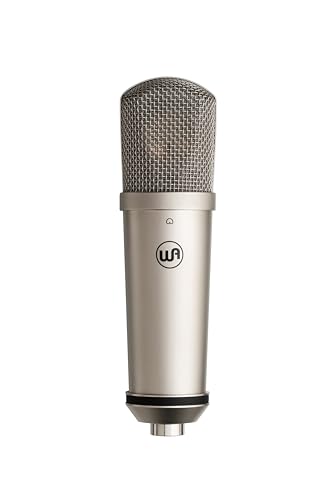
- Fixed cardioid vocal pickup
- Clear top end and low self-noise
- Hard mount, pouch, and five-year warranty
Best For: Straightforward vocal and voice recording
Quiet Studio Pick
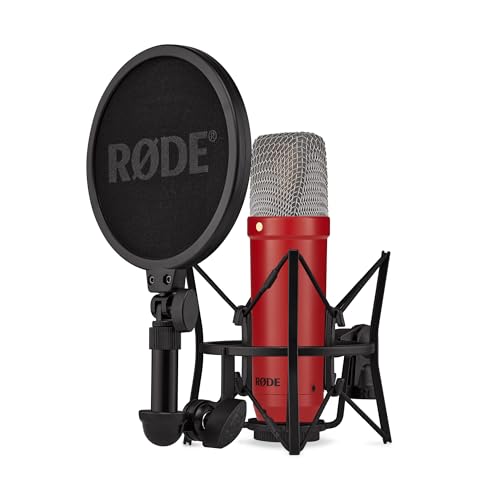
- Exceptionally low 4 dBA self-noise
- Includes shock mount, pop filter, and XLR cable
- 10-year warranty with registration
Best For: Vocalists building a quiet XLR home studio
Versatile Broadcast Choice

- Detailed large-diaphragm cardioid sound
- 100Hz high-pass filter and -20dB pad
- Shock mount and storage box included
Best For: Streaming, podcasting, and flexible vocal recording
Budget Studio Workhorse

- Clear vocals and instrument recording
- Handles sound levels up to 150 dB SPL
- Includes bass-cut filter and -20dB pad
Best For: Affordable home-studio vocal and instrument recording
Reliable Studio Standard – Audio-Technica AT2020
If you want a dependable condenser microphone for vocals in a home or project studio, the Audio-Technica AT2020 is a practical XLR option. Its cardioid pattern helps reduce sound from the sides and rear, while high SPL handling and a wide dynamic range support varied recording applications.
Best For: Home-studio vocal recording, project studios, and buyers seeking strong price-to-performance value.
Pros:
- Cardioid pattern improves isolation of the desired sound source.
- High SPL handling and wide dynamic range offer recording versatility.
- Includes a stand mount, threaded adapter, and protective pouch.
Cons:
- Requires phantom power and an XLR connection.
- Does not include a shock mount or XLR cable.
The AT2020 is a straightforward choice for vocalists building an XLR recording setup. Its included mounting hardware is useful, but you will need an audio interface and separate cable to get started.
Budget Vocal Workhorse – Mackie EM-91C
The Mackie EM-91C is an affordable condenser microphone for vocals designed for home and larger studios. Its large-diaphragm capsule and cardioid pattern focus on the voice while reducing ambient pickup, and the included shock mount and XLR cable simplify setup.
Best For: Budget-conscious vocalists who want a complete basic XLR recording package.
Pros:
- Affordable professional-quality condenser design.
- Cardioid pattern reduces room ambience.
- Includes a shock mount and XLR cable.
- Rugged construction is suited to regular studio use.
Cons:
- Requires an audio mixer or compatible XLR setup.
- Provides fewer listed vocal-control features than the AT2035.
The EM-91C is a sensible entry point for recording vocals without sourcing essential accessories separately. It is especially appealing when affordability and a simple studio setup matter most.
Flexible Vocal Detail – Audio-Technica AT2035
The Audio-Technica AT2035 is a versatile condenser microphone for vocals, podcasting, streaming, and studio work. Its large diaphragm is designed for smooth, natural sound and low noise, while the switchable 80 Hz high-pass filter and 10 dB pad help adapt it to different sources.
Best For: Vocalists, podcasters, and streamers who need flexible controls for home, project, or professional studio use.
Pros:
- Large diaphragm supports smooth, natural sound.
- Cardioid pattern helps isolate the voice from rear and side sound.
- 80 Hz high-pass filter and 10 dB pad add recording flexibility.
- Custom shock mount provides isolation from handling and stand noise.
Cons:
- Requires phantom power and an XLR-compatible setup.
- Does not include an XLR cable.
Choose the AT2035 if your vocal setup may also handle louder sources or changing recording environments. Its filter, pad, and included shock mount make it more adaptable than a basic fixed-feature condenser.
Quiet Complete Vocal Kit – RØDE NT1 Signature
The RØDE NT1 Signature is a condenser microphone for vocals that arrives with key recording accessories included. Its tight cardioid pattern focuses on the voice and rejects room sound, while the notably low self-noise is designed to keep the recording clean and unobstructed.
Best For: Vocalists, streamers, and home-recording users who want a quiet microphone with a ready-to-record accessory package.
Pros:
- Very low 4.5 dBA self-noise keeps attention on the performance.
- Tight cardioid pattern focuses on vocals and rejects room sound.
- Includes SM6 shock mount, pop filter, six-meter XLR cable, and dust cover.
- Ten-year warranty is available with registration.
Cons:
- Requires an audio interface and phantom-powered XLR connection.
- Its included accessories may be unnecessary if you already own a full setup.
The NT1 Signature is a strong all-in-one option for vocal recording when low self-noise and included accessories are priorities. Add an interface, and the package is positioned to cover the core needs of a home vocal setup.
Flexible Studio Classic – Warm Audio WA-87jr
The Warm Audio WA-87jr is a versatile condenser microphone for vocals, instruments, and podcasts. Its large-diaphragm capsule, discrete signal path, and three selectable polar patterns provide a flexible studio setup, while the pad and high-pass filter help accommodate louder sources and reduce low-frequency noise.
Best For: Vocalists and home-studio users who want a flexible microphone for varied recording sources.
Pros:
- Cardioid, figure-8, and omnidirectional patterns support multiple recording approaches.
- Designed for detailed highs, rich mids, and ultra-low self-noise.
- Built-in pad and high-pass filter improve source-handling flexibility.
- Includes a professional shockmount and a five-year warranty.
Cons:
- Requires an XLR connection and phantom power.
- Its multipattern design may offer more controls than users seeking a simple vocal setup need.
The WA-87jr is a strong all-around choice when vocal recording is only part of your workload. Choose it over a fixed-pattern model if you value pattern selection and onboard recording controls.
Mix-Ready Vocal Kit – Shure SM4 Studio Condenser Mic
The Shure SM4 is a practical condenser microphone for vocals when clean, consistent capture matters. Its uniform cardioid pattern, integrated pop filter, interference shielding, and large sweet spot are designed to simplify close-miked vocal recording and reduce common noise and plosive issues.
Best For: Home studios, vocalists, podcasters, and video creators who want a complete recording kit.
Pros:
- Uniform cardioid pickup helps reject unwanted off-axis noise.
- Integrated pop filter and woven mesh Faraday cage support cleaner recordings.
- Handles sound levels up to 140dB without distortion.
- Includes a detachable pop filter, shock mount, adapter, and carrying case.
Cons:
- Uses a fixed unidirectional pattern rather than selectable polar patterns.
- Requires phantom power and an XLR-compatible setup.
The SM4 emphasizes convenience and mix-ready vocal capture. Its included accessories and built-in filtering make it especially appealing when you want to spend less time managing plosives, rumble, and setup details.
Focused Vocal Polish – Warm Audio WA-87jr SE
The Warm Audio WA-87jr SE is a streamlined condenser microphone for vocals with a fixed cardioid pattern. It focuses on professional vocal polish, clear top end, and unwanted-noise rejection from the sides and rear, making it a straightforward choice for singers and voice recording.
Best For: Vocalists and creators who prefer a simple cardioid microphone with studio-oriented sound.
Pros:
- Fixed cardioid pickup focuses on sound in front of the microphone.
- Offers pristine top-end clarity and a discrete signal path.
- Designed for exceptional dynamic range and low self-noise.
- Includes a custom hard mount, leather storage pouch, and five-year warranty.
Cons:
- Fixed cardioid operation provides less flexibility than a multipattern microphone.
- Does not include the WA-87jr’s built-in pad or high-pass filter.
- Requires phantom power and an XLR connection.
The WA-87jr SE is best when your priority is focused vocal recording rather than broad studio versatility. Its simpler cardioid design can make setup more direct while still providing a polished, detailed presentation.
Quiet Studio Pick – RØDE NT1 Signature Series
If you want a condenser microphone for vocals with exceptionally low self-noise, the RØDE NT1 Signature Series is a strong studio-focused option. Its large-diaphragm cardioid capsule is designed for vocal recording, music production, streaming, and podcasting, while the included shock mount, pop filter, and XLR cable simplify setup.
Best For: Vocalists and home-studio users who prioritize quiet recordings and a complete XLR accessory bundle.
Pros:
- Very low 4 dBA self-noise for clean vocal recordings
- High SPL handling and smooth response from the HF6 1-inch capsule
- Includes a shock mount, pop filter, and premium XLR cable
- Backed by a 10-year warranty with registration
Cons:
- Requires an audio interface or other XLR-compatible equipment
- Does not offer a USB connection
The NT1 Signature Series is especially compelling when minimizing microphone noise matters. Its cardioid design helps focus pickup toward the vocalist, and the included accessories reduce the need for immediate add-on purchases.
Versatile Broadcast Choice – Blue Blackout Spark SL
The Blue Blackout Spark SL is a practical condenser microphone for vocals, podcasting, streaming, gaming, and other spoken-word work. Its large-diaphragm cardioid capsule is paired with a 100Hz high-pass filter and -20dB pad, giving you useful control over rumble and louder sources through an XLR setup.
Best For: Streamers, podcasters, and vocalists who want detailed sound plus adjustable recording controls.
Pros:
- Large-diaphragm cardioid capsule delivers focused, detailed sound
- 100Hz high-pass filter can reduce room and desk rumble
- -20dB pad adds flexibility for louder sources
- Includes a custom shock mount and protective wooden storage box
Cons:
- Requires an XLR interface or mixer for connection
- Its listed audible noise is higher than the RØDE NT1 Signature Series
The Spark SL stands out for its combination of transparent sound and useful controls. It is a flexible choice for users recording both vocals and broadcast-style content, particularly when unwanted low-frequency rumble is a concern.
Budget Studio Workhorse – AKG Pro Audio P120
The AKG P120 is an affordable condenser microphone for vocals and instruments that fits naturally into project and home studios. Its cardioid pattern, 20Hz–20kHz response, and low-mass diaphragm are suited to clear vocal and speech recording, while the -20dB pad helps accommodate sources reaching up to 150 dB SPL.
Best For: Home recordists seeking a straightforward, durable XLR microphone for vocals, speech, and instruments.
Pros:
- Clear, detailed sound for vocals, speech, and instruments
- Handles high sound pressure levels up to 150 dB
- Includes a bass-cut filter and -20dB preattenuation pad
- Compatible with popular audio interfaces and recording setups
Cons:
- Only a stand adapter is included; no shock mount or cable is listed
- Requires phantom power and an XLR connection
The P120 keeps the feature set focused while covering common recording needs. It is a sensible starting point for vocalists and home studios that already have, or plan to add, an audio interface and microphone cable.
How We Picked the Best Condenser Microphone for Vocals
We focused on large-diaphragm condenser microphones with cardioid or similarly practical pickup patterns, dependable XLR connectivity, and features suited to vocal recording. Our selection includes accessible models for first studios and more refined options for producers who want a broader sound palette.
We also considered included accessories, reputation for build quality, compatibility with common audio interfaces, and versatility for instruments, podcasts, streaming, and voice-over work. Because a microphone’s performance depends heavily on the room and singer, no single model is ideal for every voice.
Quick Comparison
| Best For | Recommended Models | What to Look For |
|---|---|---|
| First home studio | Audio-Technica AT2020, AKG P120, Mackie EM-91C | Affordable XLR connection and reliable cardioid pickup |
| More demanding vocal recording | Audio-Technica AT2035, RØDE NT1 Signature | Lower noise, greater detail, and stronger studio versatility |
| Warm, polished character | Warm Audio WA-87jr, WA-87jr SE | Large-diaphragm voicing and useful included accessories |
| Complete recording setup | Shure SM4 Kit | Convenient bundle for getting started |
Key Buying Factors for a Condenser Microphone for Vocals
Room and Pickup Pattern
Cardioid microphones mainly capture sound from the front and reduce pickup from the rear, making them a practical choice for untreated rooms. However, condensers are sensitive and can reveal computer fans, traffic, reflections, and HVAC noise. Basic acoustic treatment and careful mic placement may improve results more than upgrading the microphone.
Noise, Sensitivity, and Vocal Character
Look for a low-noise design when recording quiet singers or intimate passages. A brighter microphone can add clarity to a dark voice but may emphasize sibilance. A smoother or fuller model may suit bright voices, though the final choice is personal and depends on the rest of the recording chain.
Power and Compatibility
XLR condenser microphones generally require 48V phantom power from an audio interface, mixer, or preamp. Confirm that your equipment supplies phantom power and has enough clean gain. You will also need a stable stand, an XLR cable, and usually a pop filter or windscreen.
Accessories and Flexibility
A shock mount can reduce handling and stand noise, while a pad or high-pass filter can help with loud sources and unwanted low frequencies. If you plan to record instruments or podcasts as well as vocals, prioritize a model with versatile response and durable construction.
Who Should Buy Which Condenser Microphone for Vocals?
Beginners and budget-conscious creators: The AT2020, P120, and EM-91C are sensible starting points for singers building a first XLR setup.
Home-studio vocalists: The AT2035 and NT1 Signature are strong choices when you want more refined recording performance and room to grow.
Singers seeking a distinctive studio sound: Warm Audio’s WA-87jr options are worth considering if you prefer a fuller, characterful presentation and want a supplied shock mount.
Creators who want convenience: The Shure SM4 kit can simplify setup, while the Blue Spark SL offers a flexible option for recording, streaming, and spoken-word work.
Before buying, match the microphone to your voice and recording space rather than choosing solely by price or specifications. A properly positioned, well-treated setup will help any of these microphones perform at its best.