The best DI boxes for podcasting help connect instruments and other unbalanced sources to balanced mixer, interface, or recorder inputs while reducing hum and signal problems.
These 10 options cover compact single-channel units, dual-channel boxes, and rack-friendly solutions for creators who need cleaner connections without a complicated setup.
Best 10 Di Boxes for Podcasting Picks for 2026
Reliable Passive Choice

- Passive mono DI with custom transformer
- Rugged I-beam and stainless-steel construction
- Works with guitars, basses, keyboards, and drum machines
Best For: Single-instrument podcast and studio setups
Multi-Channel Studio Hub

- Eight-channel direct box
- XLR, TRS, and TS connectivity
- Optional mains or phantom power
Best For: Multi-instrument podcast studios and production spaces
Simple Instrument Adapter

- Converts 1/4-inch TS to XLR3M
- Passive and requires no external power
- Metal housing helps suit live use
Best For: Single-instrument podcast rigs needing balanced XLR output
Stereo Podcasting Flexibility
Radial ProD2 Passive 2-Channel DI

- Passive stereo two-channel design
- Isolation transformer with lift switch
- 15 dB pad for signal attenuation
Best For: Dual-instrument and stereo podcast signal paths
Flexible Two-Channel Pick
ART DualZDirect Dual Professional Passive Direct Box

- Two passive channels for multi-source setups
- No battery required
- Attenuation, filtering, phase, and ground-lift controls
Best For: Podcasters needing two channels and extensive signal controls
Compact Value Pick
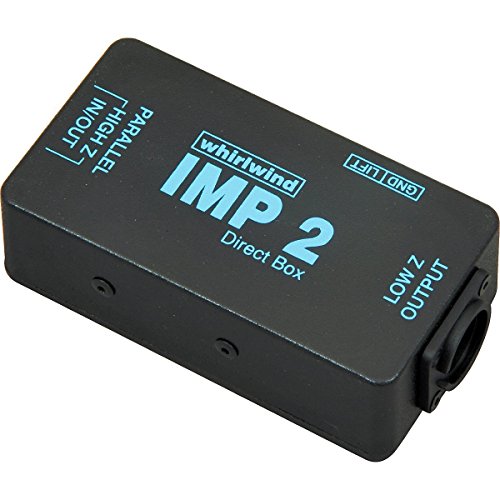
Whirlwind IMP 2 1-Channel Passive Instrument Direct Box
- One-channel passive transformer design
- Converts unbalanced signals to balanced mic level
- Economical and compact
Best For: Single-source podcasting setups seeking simple signal conversion
Budget Hum-Control Pick
Pyle Premium Direct Injection Audio Box

- Passive DI with input attenuation
- Supports instruments and consumer audio sources
- Includes ground-lift and balanced/unbalanced XLR connectivity
Best For: Mixed-source podcasting setups on a budget
Two-Channel Value Pick
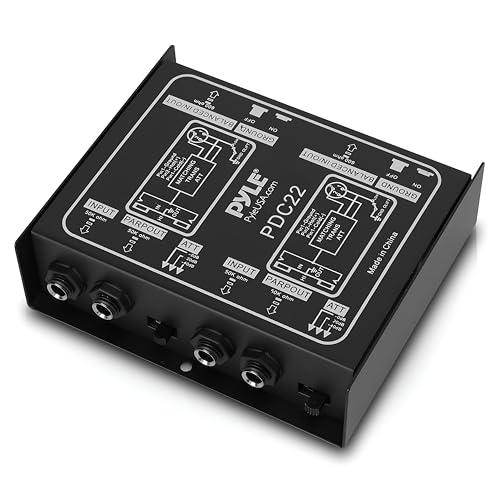
Pyle-Pro PDC22 Dual Passive Direct Box
- Two passive DI channels
- Ground-lift and hum cancellation
- Steel chassis for durability
Best For: Multi-source podcast and recording setups
Hum-Reduction Specialist
Donner Special-I Passive DI Box

- Balanced XLR conversion
- Transformer-based hum isolation
- Ground lift and through output
Best For: Reducing ground-loop noise in instrument setups
Simple Single-Channel Pick

- No power required
- Pad switch for hot sources
- Metal enclosure with ground lift
Best For: Single-instrument podcast and recording rigs
Reliable Passive Choice – Radial Pro DI
For podcasting setups that connect instruments such as acoustic guitars, basses, keyboards, or drum machines, the Radial Pro DI is a straightforward passive option. Its transformer-based design, mono output, and rugged stainless-steel enclosure suit both studio and live signal paths.
Best For: Podcasters and performers using a single instrument with a mixer, console, or professional snake system.
Pros:
- Passive mono direct box with a custom transformer
- Rugged I-beam construction and stainless-steel enclosure
- Designed for live or studio use with several instrument types
Cons:
- Provides one channel only
- Passive operation may not suit every signal-matching requirement
The Radial Pro DI is a durable, focused choice when your podcasting rig needs one dependable instrument-to-XLR connection rather than multiple channels or extra controls.
Multi-Channel Studio Hub – Behringer DI800 V2
Among DI boxes for podcasting, the Behringer DI800 V2 stands out for projects needing several instrument feeds. It provides eight channels, XLR and 1/4-inch interfaces, and optional mains or phantom-powered operation for studio, live-event, and production environments.
Best For: Podcast studios or production spaces connecting multiple instruments to mixers or amplifiers.
Pros:
- Eight-channel configuration for larger setups
- Supports XLR, TRS, and TS connectivity
- Offers optional mains or phantom-powered operation
- Servo-balanced operation is designed for an ultra-flat frequency response
Cons:
- Larger and heavier than a single-channel DI box
- Requires a more involved setup than a simple passive unit
If your podcast workflow involves several instruments or recurring multi-source sessions, the DI800 V2 provides useful channel capacity and flexible power options in one unit.
Simple Instrument Adapter – Hosa DIB-443 Sidekick
The Hosa DIB-443 Sidekick is a compact option for podcasting rigs that need to convert an unbalanced 1/4-inch TS instrument output to a balanced XLR connection. Its passive, plug-and-play design requires no external power and helps reduce hum and noise on long cable runs.
Best For: Connecting an electric guitar, bass, or keyboard to a podcast mixer, PA system, or recording interface with XLR input.
Pros:
- Converts unbalanced 1/4-inch TS to balanced XLR3M
- Passive design needs no external power
- Metal construction is intended for live-performance use
- Helps reduce hum and noise over long cable runs
Cons:
- Single-channel design
- Limited to the supplied 1/4-inch TS-to-XLR conversion role
For a basic instrument connection, the DIB-443 keeps the signal path uncomplicated. It is a practical fit when portability and no-power operation matter more than multi-channel features.
Stereo Podcasting Flexibility – Radial ProD2 Passive 2-Channel DI
For podcasting setups that use two instrument channels, the Radial ProD2 provides a passive stereo DI configuration in a compact stainless-steel enclosure. Its isolation transformer, lift switch, and 15 dB pad add useful flexibility for managing instrument signals into a mixer or recording chain.
Best For: Stereo or dual-instrument podcast setups requiring passive signal isolation and level attenuation.
Pros:
- Passive two-channel direct box for stereo sources
- Includes an isolation transformer
- Features a ground-lift switch and 15 dB pad
- Compact stainless-steel construction
Cons:
- Less suitable when only one channel is needed
- Passive design does not provide active amplification
The ProD2 is a strong fit for creators who need two channels and more control over isolation or signal level. Its feature set is more specialized than a basic single-channel DI.
Flexible Two-Channel Pick – ART DualZDirect Dual Professional Passive Direct Box
For podcasting setups with multiple sources, the ART DualZDirect is a versatile choice among DI boxes for podcasting. Its two-channel passive design converts high-impedance inputs to balanced outputs without requiring a battery, while offering attenuation and signal-control options.
Best For: Podcasters who need two passive DI channels and flexible input, filtering, phase, and grounding controls.
Pros:
- Two-channel design suits multi-source setups.
- Passive operation requires no battery.
- Offers 0, -20, and -40 dB input attenuation.
- Includes low-pass filter, phase invert, and ground-lift switches.
Cons:
- Its expanded controls may be more than a simple one-source setup needs.
- As a passive unit, it does not provide active signal gain.
The DualZDirect stands out when a podcasting rig benefits from two channels and detailed signal-management options. Its balanced outputs and ground isolation can also help integrate unbalanced sources with recording equipment.
Compact Value Pick – Whirlwind IMP 2 1-Channel Passive Instrument Direct Box
The Whirlwind IMP 2 is a straightforward option for creators comparing DI boxes for podcasting. This one-channel passive unit uses an in-line transformer to convert an unbalanced line- or instrument-level signal into a low-impedance, balanced microphone-level output.
Best For: Podcasters who want an economical, compact DI for one instrument or unbalanced source.
Pros:
- Simple one-channel passive design.
- Handles line- and instrument-level unbalanced signals.
- Provides low-impedance balanced microphone-level output.
- Uses a riveted TRHL transformer for a durable construction approach.
Cons:
- Only one channel is available.
- Does not list adjustable attenuation, filtering, or phase controls.
The IMP 2 is best suited to a focused setup where affordability, a small footprint, and uncomplicated signal conversion matter more than extra switching options.
Budget Hum-Control Pick – Pyle Premium Direct Injection Audio Box
The Pyle Premium Direct Injection Audio Box is a budget-friendly option for podcasting setups that need to connect instruments, consumer devices, or other unbalanced sources. This passive DI includes an input attenuator and ground-lift functionality intended to help manage connection and hum concerns.
Best For: Podcasters connecting guitars, basses, keyboards, submixers, or consumer audio equipment to balanced or unbalanced inputs.
Pros:
- Supports guitars, basses, keyboards, and outboard processors.
- Can connect line outputs from consumer stereo equipment.
- Includes input attenuation and ground-lift functionality.
- Offers balanced and unbalanced XLR connectivity.
Cons:
- It is a single passive DI unit.
- The supplied notes do not specify adjustable filtering or phase controls.
- Its broad connection range may be unnecessary for a basic microphone-only setup.
The Pyle is a practical fit when a podcasting workspace includes varied unbalanced sources and you want a DI with basic attenuation and hum-management features in a small enclosure.
Two-Channel Value Pick – Pyle-Pro PDC22 Dual Passive Direct Box
For podcasters connecting keyboards, guitars, submixers, or other unbalanced sources to a mixer, the Pyle-Pro PDC22 offers two passive DI channels in a compact steel chassis. Its ground-lift design helps address buzz and hum in recording or live-sound setups.
Best For: Podcast studios and live setups that need two DI channels for instruments or consumer audio sources.
Pros:
- Two channels for connecting multiple sources
- Supports ¼-inch devices including guitars, keyboards, and processors
- Ground-lift and hum-cancellation functionality
- All-steel chassis for durable use
Cons:
- Passive design may be less suitable when extra signal gain is needed
- Its broader live-sound feature set may be more than a simple single-source podcast setup requires
The PDC22 is a practical choice among DI boxes for podcasting when you need multiple inputs and a sturdy enclosure. It also accommodates line outputs from a boombox or consumer stereo, making it useful for sampling and varied recording workflows.
Hum-Reduction Specialist – Donner Special-I Passive DI Box
The Donner Special-I is a passive option for podcasting setups that need to convert an unbalanced ¼-inch instrument or line signal into a balanced, low-impedance XLR output. Its transformer isolation and ground-lift switch are designed to reduce buzz from ground loops.
Best For: Podcasters routing guitars, basses, keyboards, or other line-level sources into a mixer or PA while managing hum.
Pros:
- Converts unbalanced signals to balanced XLR output
- Transformer isolation helps address ground-loop hum and buzz
- Ground-lift switch and through connection support flexible routing
- Compact design with a one-year warranty
Cons:
- Plastic body construction may be less rugged than an all-metal enclosure
- Passive operation does not provide additional gain
Among DI boxes for podcasting, the Special-I stands out when clean signal matching and hum control are priorities. The through output also lets you send a source to an amplifier while routing the balanced signal to a mixer or PA.
Simple Single-Channel Pick – Yovus DB-1 Passive DI Box
The Yovus DB-1 keeps the DI setup straightforward: connect a ¼-inch instrument, use the through jack if needed, and send a balanced XLR output to the mixer. For podcasting, its pad switch and ground lift add useful control when sources are loud or electrical noise appears.
Best For: Single-source podcast rigs using a guitar, keyboard, or other ¼-inch output.
Pros:
- Requires no power
- Includes a pad switch for hot sources
- Ground lift helps address electrical grounding buzz
- Metal enclosure with through and XLR connections
Cons:
- Only one output channel is listed
- Supplied notes identify compatibility with guitar and keyboard, so broader source support is less certain
The DB-1 is a sensible, no-frills choice among DI boxes for podcasting when you need one passive channel and basic signal-management controls. Its pad and ground lift make it more adaptable than a bare instrument-to-XLR adapter.
How We Picked the Best Di Boxes for Podcasting
We focused on the features that matter when integrating instruments, playback sources, and other line-level or instrument-level devices into a podcast workflow. The selection includes passive models for simple, reliable signal conversion, dual-channel units for stereo or two-source setups, and multi-channel hardware for larger rigs.
We also considered connection flexibility, input attenuation, hum reduction, build practicality, channel count, and how easily each box can fit between a source and an audio interface, mixer, or recorder. Because podcast studios vary widely, the list includes both established professional options and budget-friendly choices.
Quick Comparison
| What to compare | Best fit |
|---|---|
| Single-channel passive DI | One guitar, bass, keyboard output, or similar source |
| Dual-channel passive DI | Stereo devices or two instruments in a compact setup |
| Multi-channel DI | Studios handling several sources at once |
| Attenuation control | Hot outputs that may overload a mixer or interface |
| Ground-lift capability | Systems experiencing audible hum or ground-loop noise |
Key Buying Factors for Di Boxes for Podcasting
Passive or Active Design
Passive DI boxes are generally straightforward, durable, and do not require batteries or external power. They are a strong default for many podcast setups. Active designs can offer more headroom or better compatibility with certain low-output sources, but they may need phantom power or batteries.
Inputs and Outputs
Check that the input matches your source, commonly a 1/4-inch TS instrument connection, and that the output provides balanced XLR connectivity for your mixer or interface. If you record stereo keyboards, music players, or other two-channel sources, a dual DI can avoid unnecessary adapters and extra boxes.
Ground Lift and Attenuation
Ground-lift switches can help isolate hum caused by interconnected equipment. An input pad or attenuation switch is useful when a source produces a strong signal that could clip the receiving preamp. These controls are especially valuable in flexible studios where different guests or devices use the same connections.
Construction and Placement
A metal enclosure, protected connectors, and clear labeling matter when equipment is frequently moved or operated under a desk. For permanent installations, consider whether a compact floor-style box or rack-oriented multi-channel unit makes cable management easier.
Who Should Buy Which Di Boxes for Podcasting?
Choose a compact single-channel model if you occasionally connect one instrument or playback source to your podcast interface. A dual-channel DI is better for stereo keyboards, laptops with separate channels, or two simultaneous sources. Select a multi-channel unit when your studio regularly handles several instruments or remote contributors with dedicated signal paths.
For the simplest setup, prioritize passive operation, balanced XLR output, and a ground-lift switch. If your sources vary significantly in output level, look for attenuation controls. Before buying, confirm the connector types and available inputs on your mixer or interface so the DI box solves a real routing problem rather than adding another unnecessary conversion step.