The best DJ mixer for turntablism gives you precise crossfader control, responsive channel faders, and enough connectivity for your preferred decks, software, or DVS setup. The right choice depends on whether you scratch with vinyl, timecode, media players, or a DJ controller.
We’ve gathered 10 options ranging from affordable two-channel mixers to feature-rich Pioneer DJ controllers and DVS-compatible club mixers. Use the guide below to compare the features that matter most before buying.
Best 10 Dj Mixer for Turntablism Picks for 2026
Scratch-Ready Value

- Two-channel phono/line mixer
- Replaceable slope-adjustable crossfader
- Rack-mountable with three-band EQ
Best For: Traditional scratch setups and practical two-channel mixing
Battle-Style Controller

- Open battle-style layout
- Serato DJ Lite included
- Tall pitch faders and scratch effects
Best For: Beginners practicing hip-hop, scratch, and open-format techniques
VCA Scratch Mixer
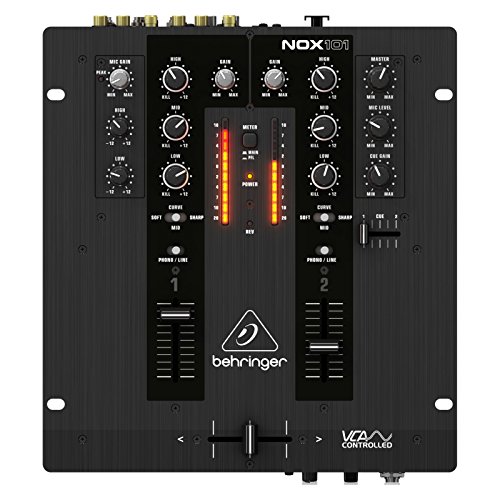
- Two-channel hardware mixer
- Full VCA control and Ultraglide crossfader
- Three-band EQs with full-kill filters
Best For: Hands-on DJs seeking flexible analog-style connectivity
Streaming-Friendly All-Rounder
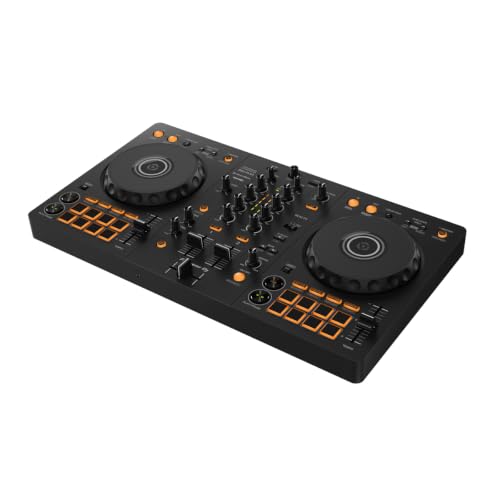
- Two-channel controller with 16 pads
- Works with computers and mobile devices
- Supports streaming and livestreaming
Best For: Beginners building digital mixing and performance skills
Classic Beatmatching Control

- Three stereo channels with three-band kill EQ
- Dual auto-BPM counter for beatmatching
- Crossfader rated for up to 500,000 life cycles
Best For: Traditional multi-channel DJ mixing and turntablism practice
Beginner Digital Control

- Smart Fader assists with beatmatching
- USB-C powered and highly portable
- Works with rekordbox, djay, and Serato DJ Lite
Best For: First-time digital DJs using a phone, tablet, or computer
Ultra-Portable Analog Mixer

- Pocket-sized two-channel design
- Full-size crossfader with gain and two-band EQ
- All-metal body with RCA, mic, and headphone connections
Best For: Compact beginner setups, small venues, and mobile sessions
Flagship Open-Format Pick
DDJ-FLX10 4-Channel Controller

- Four-channel club-style workflow
- Track Separation for live mashups
- Rekordbox, Serato, and DMX support
Best For: Serious hobbyists, mobile DJs, and pros
Turntable-Ready Club Pick

- Two-channel club-style layout
- Rekordbox DVS included
- Magvel Fader for blends and scratches
Best For: Turntablists and home DJs using DVS
Beginner Separates Pick

- Simple club-style two-channel workflow
- Rekordbox DVS unlock included
- Channel filters and Magvel Fader
Best For: Beginners building a home separates setup
Scratch-Ready Value – Numark M2
The Numark M2 is a practical dj mixer for turntablism when you want a straightforward two-channel setup for scratching, practice, parties, or mobile work. Its switchable phono/line inputs, replaceable crossfader, and rack-mountable design make it flexible for both beginner and experienced DJs.
Best For: Turntablists who want an affordable, traditional two-channel mixer with essential scratch controls.
Pros:
- Two phono/line-switchable inputs support turntables and other sources.
- Replaceable crossfader includes reverse and slope controls.
- Three-band EQ on each channel and crossfader-style cueing support hands-on mixing.
- Compact, robust, rack-mountable design with mic input.
Cons:
- Only two channels are available.
- It does not offer the software-focused workflow of a DJ controller.
The M2 is a focused choice for learning and practicing core turntablism techniques without adding unnecessary complexity. Its replaceable, slope-adjustable crossfader is especially useful for scratch-oriented setups.
Battle-Style Controller – Pioneer DJ DDJ-REV1
The Pioneer DJ DDJ-REV1 brings a battle-style layout to a compact controller, making it an approachable dj mixer for turntablism-style practice with a computer. It unlocks Serato DJ Lite and places tall pitch faders, scratch-oriented controls, and quick effects within easy reach.
Best For: Beginners learning scratch and battle techniques in a compact Serato-based controller setup.
Pros:
- Open battle-style layout mirrors a turntable and battle-mixer arrangement.
- Serato DJ Lite is included for a straightforward start.
- Tall pitch faders and quick effect controls suit scratch practice.
- Tracking Scratch can trigger routines with a single motion.
Cons:
- It requires a PC or Mac rather than functioning as a standalone mixer.
- Its two-deck layout may be limiting for larger or more advanced setups.
The DDJ-REV1 is better understood as a budget-friendly scratch controller than a conventional mixer. Its layout and guided features can help new DJs build confidence before moving to more advanced battle equipment.
VCA Scratch Mixer – Behringer PRO MIXER NOX101
The Behringer PRO MIXER NOX101 is a compact two-channel option for DJs seeking a conventional dj mixer for turntablism with tactile controls. It combines full VCA control, Ultraglide crossfader technology, and three-band EQs with full-kill filters.
Best For: DJs wanting a simple two-channel hardware mixer with filter controls and a performance-focused crossfader.
Pros:
- Full VCA control supports responsive mixer operation.
- Ultraglide crossfader is suited to performance-oriented mixing.
- Three-band EQs include full-kill filters.
- RCA, TRS, and XLR connectivity provides flexible connection options.
Cons:
- It has only two channels.
- The supplied notes do not indicate USB connectivity or included DJ software.
The NOX101 keeps the setup centered on physical mixer controls rather than software features. It is a sensible fit for DJs who value a straightforward two-channel interface and filter-based performance tools.
Streaming-Friendly All-Rounder – Pioneer DJ DDJ-FLX4
The Pioneer DJ DDJ-FLX4 is a versatile two-channel controller for learning digital mixing and scratch techniques. While it is not a standalone turntable mixer, its familiar layout, 16 performance pads, built-in sound card, and compatibility with rekordbox, Serato DJ Pro, and djay make it a flexible dj mixer for turntablism-style practice.
Best For: Beginners who want to learn two-deck mixing, explore performance pads, and stream from a computer or mobile device.
Pros:
- Simple two-channel layout supports an accessible learning path.
- Sixteen pads provide Hot Cue, Pad FX, Beat Jump, and Sampler control.
- Works with PC, Mac, iPhone, iPad, and Android devices.
- Supports streaming sources and livestream or MC use from one device.
Cons:
- It is a controller rather than a standalone mixer for direct turntable operation.
- Its two-channel layout may not satisfy users who need more decks.
The DDJ-FLX4 is a strong growth-oriented choice for digital DJs who want scratch-capable controls alongside modern streaming and mobile connectivity. Smart Fader can also ease the first steps into blending tracks.
Classic Beatmatching Control – Behringer DX626
Behringer Pro Mixer Dx626 Professional 3-Channel Dj Mixer With Bpm Counter, Black
Check Price On AmazonFor DJs seeking a traditional dj mixer for turntablism, the Behringer DX626 provides three stereo channels, hands-on EQ, and a crossfader built for extended use. Its dual auto-BPM counter can also assist with beatmatching during practice and performance.
Best For: DJs who want a conventional multi-channel mixer with a durable crossfader and BPM assistance.
Pros:
- Three dual-input stereo channels for flexible source selection
- Dual auto-BPM counter supports beatmatching
- Ultraglide crossfader is rated for up to 500,000 life cycles
- Three-band kill EQ provides substantial frequency control
Cons:
- It is a corded mixer rather than a portable, bus-powered option
- Its RCA-focused connectivity may require adapters for some modern equipment
The DX626 is a practical choice when tactile channel mixing and crossfader durability matter more than an all-in-one controller workflow. It also includes a switchable microphone input and PFL mix control for monitoring flexibility.
Beginner Digital Control – Pioneer DJ DDJ-FLX2
The AlphaTheta Pioneer DJ DDJ-FLX2 is a compact controller for newcomers exploring a digital dj mixer for turntablism. Its Smart Fader can automatically match volume, BPM, and bass while you move between tracks, making early transitions easier to learn.
Best For: Beginners who want a lightweight controller that works with compatible DJ apps and streaming services.
Pros:
- Smart Fader assists with volume, BPM, and bass matching
- USB-C bus power supports use with a phone, tablet, or computer
- Compatible with rekordbox, djay, and Serato DJ Lite
- Supports headphone cueing and external speakers through a 3.5 mm output
Cons:
- It is a two-channel controller rather than a standalone traditional mixer
- Some features depend on compatible apps and connected devices
The DDJ-FLX2 favors accessibility and portability over deep standalone hardware control. Its streaming compatibility, included course, and automatic mixing assistance make it a straightforward entry point for learning digital DJ techniques.
Ultra-Portable Analog Mixer – Gemini MM1
The Gemini MM1 is a compact, budget-conscious dj mixer for turntablism setups where space and portability are priorities. It combines two RCA channels, a full-size crossfader, gain controls, and two-band EQ in a rugged all-metal body.
Best For: Beginners, mobile performers, and small-space DJs who need simple hands-on mixing controls.
Pros:
- Palm-sized design weighs just 1.2 pounds
- Full-size crossfader with gain and two-band EQ on each channel
- All-metal body with sturdy rotary knobs
- Includes microphone and headphone jacks plus Master and Booth RCA outputs
Cons:
- Only two channels are available
- Two-band EQ offers less tone-shaping range than a three-band design
- It uses corded 12-volt power rather than battery or USB power
The MM1 is best suited to uncomplicated two-source setups, practice spaces, house parties, and portable rigs. Its small footprint is convenient, though DJs needing more channels or advanced digital integration should look elsewhere.
Flagship Open-Format Pick – DDJ-FLX10 4-Channel Controller
If you want a dj mixer for turntablism-style performance but prefer an all-in-one controller, the Pioneer DJ DDJ-FLX10 delivers a four-channel, club-oriented workflow. Its large jog wheels, track separation, rekordbox and Serato DJ Pro support, and built-in DMX output make it suited to creative, performance-focused setups.
Best For: Serious hobbyists, mobile DJs, and pros who want an open-format controller with remixing and lighting features.
Pros:
- Four-channel layout mirrors a professional CDJ and DJM booth workflow.
- Track Separation splits songs into vocals, drums, and instruments for live mashups.
- Large jog wheels include multicolor displays with waveforms, artwork, and playing-part information.
- Supports rekordbox and Serato DJ Pro, with built-in DMX lighting control.
Cons:
- At 14.8 pounds, it is less convenient to move than a compact mixer.
- Its feature-rich controller design may be more than beginners need.
The DDJ-FLX10 is the most versatile option here for DJs who want hands-on performance tools beyond a traditional two-channel mixer. Choose it when track manipulation, software flexibility, and lighting control matter as much as mixing.
Turntable-Ready Club Pick – DJM-450 2-Channel Mixer
For a traditional dj mixer for turntablism setup, the Pioneer DJ DJM-450 combines a two-channel club layout with DVS support and a scratch-friendly Magvel Fader. Its USB sound card, Beat FX, and Sound Color FX give home DJs a practical path toward a professional booth workflow.
Best For: Turntablists and home DJs who want DVS capability, hands-on effects, and a club-style mixer layout.
Pros:
- Two-channel design follows the layout and feel of Pioneer DJ booth gear.
- Included rekordbox DVS unlock supports digital files with turntables or media players.
- Beat FX and Sound Color FX provide hands-on transition control.
- Magvel Fader is designed for smooth blends and scratches, while USB supports recording and software use.
Cons:
- Two channels offer less expansion than a four-channel controller.
- Its wired, corded design is intended for a dedicated setup rather than highly portable use.
The DJM-450 is the strongest match for a separates-based turntable setup among these products. It keeps the workflow focused while adding DVS, effects, USB connectivity, and a durable crossfader for mixing and scratching.
Beginner Separates Pick – DJM-250MK2 2-Channel Mixer
The Pioneer DJ DJM-250MK2 is a straightforward dj mixer for turntablism learners building a separates setup at home. It offers a professional-style two-channel layout, rekordbox DVS support, dedicated channel filters, and a Magvel Fader without adding unnecessary complexity.
Best For: Beginners learning to beatmatch, practice light scratching, and build a simple turntable or media-player setup.
Pros:
- Two-channel club-style workflow helps teach professional booth fundamentals.
- Rekordbox DVS unlock supports digital mixing with turntables or media players.
- Dedicated Sound Color FX Filter on each channel adds hands-on control.
- Magvel Fader provides smooth, durable performance for blending and light scratching.
Cons:
- It has only two channels for more limited routing and expansion.
- The no-fuss feature set is less suited to DJs seeking a broader effects toolkit.
The DJM-250MK2 makes sense when you want an approachable entry point into a separates system. It covers the core mixing, filtering, DVS, and fader functions while keeping the layout focused for practice.
How We Picked the Best Dj Mixer for Turntablism
We focused on the features that directly affect scratching, mixing, and setup flexibility: crossfader feel, channel layout, input and output options, software compatibility, portability, and overall value. The list includes traditional mixers, DVS-capable models, and DJ controllers because turntablists use several different workflows.
We also considered whether each product suits beginners, practice setups, mobile use, performance systems, or more advanced turntable rigs. A compact mixer may be ideal for straightforward vinyl scratching, while a controller can provide decks, effects, pads, and software control in one unit.
Quick Comparison
| Best For | Recommended Options |
|---|---|
| Affordable two-channel scratching | Numark M2, Behringer NOX101, Gemini MM1 |
| Portable controller-based setups | Pioneer DJ DDJ-REV1, DDJ-FLX2, DDJ-FLX4 |
| Advanced controller performance | Pioneer DJ DDJ-FLX10 |
| DVS and rekordbox setups | Pioneer DJ DJM-450, DJM-250MK2 |
| Three-channel mixing | Behringer Pro Mixer DX626 |
Key Buying Factors for a Dj Mixer for Turntablism
Crossfader and Fader Response
The crossfader is central to scratching. Look for a smooth, fast-cutting fader with a curve control when possible. Replaceable or adjustable faders are valuable if you practice heavily or plan to customize the feel.
Inputs, Outputs, and Channel Count
Check that the mixer has the right phono inputs for turntables, line inputs for media players, and a suitable microphone connection if needed. Two channels are enough for most scratch setups; three or four channels provide more room for extra decks, samplers, or layered mixes.
DVS and Software Support
If you want to control digital files from turntables, confirm compatibility with your DJ software and the required interface or licensing. Dedicated DVS-oriented mixers can simplify connections and offer better integration with platforms such as rekordbox or Serato DJ.
Portability and Controller Features
DJ controllers are convenient when you want built-in jog wheels, performance pads, effects, and software control. They are not identical to a traditional turntable mixer, so prioritize a standalone mixer if tactile vinyl control is your main goal.
Who Should Buy Which Dj Mixer for Turntablism?
Choose the Numark M2, Behringer NOX101, or Gemini MM1 for an inexpensive, uncomplicated two-channel setup. These are sensible choices for beginners, practice rooms, and DJs who need basic mixing controls.
Choose the DDJ-REV1, DDJ-FLX2, or DDJ-FLX4 if you want a portable controller with software features and an accessible learning curve. The REV1 is especially suited to scratch-style layouts, while the FLX models offer broader general-purpose versatility.
Choose the DDJ-FLX10 for advanced controller performance, multiple channels, and deeper creative control. Choose the DJM-450 or DJM-250MK2 when DVS, rekordbox integration, and a traditional mixer layout are more important than built-in jog wheels. The DX626 is worth considering when you specifically need three channels at a lower cost.