The best drum machines for home studios make it easier to build grooves, arrange ideas, and add punch to a mix without relying entirely on software. The right choice depends on your workflow, sound preferences, available space, and whether you need sampling, sequencing, or full standalone production features.
This roundup compares 10 options ranging from compact beat makers and MIDI controllers to capable standalone workstations. Use the guide below to narrow the field by workflow, connectivity, sound design, and budget.
Best 10 Drum Machines for Home Studios Picks for 2026
Studio Classic

- 500 onboard sounds with built-in effects
- MIDI connectivity for DAWs and external gear
- Battery or adapter-powered operation
Best For: Songwriters and producers wanting classic, portable rhythm creation
Portable Sampling Hub

- Standalone sampling with built-in microphone and speaker
- 16 MPC pads and over 100 factory kits
- Rechargeable battery and USB-C connectivity
Best For: Mobile beatmakers and sample-based home-studio producers
Analog Groove Specialist

- Separate accent controls for each drum
- Song mode chains patterns into arrangements
- Color sound-shaping on most instruments
Best For: Hands-on performers and producers focused on drum pattern programming
Standalone Production Center

- 7-inch touchscreen and 16 pressure-sensitive MPC pads
- Standalone sampling, sequencing, and song arrangement
- USB-C multichannel audio and expanded MIDI
Best For: Producers creating complete tracks without relying on a laptop
Best Portable Sampler Drum Machine
teenage engineering EP-133 K.O. II
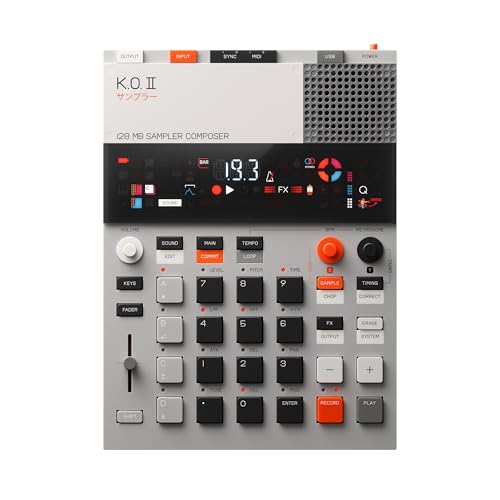
- 128MB memory with 999 sample slots
- Built-in microphone, effects, and speaker
- Battery-powered with MIDI and sync connectivity
Best For: Portable beatmaking and sample-based production
Best DAW-Integrated Pad Controller

- 16 RGB pads with velocity, pressure, and aftertouch
- MPC2 software suite included
- USB-powered for Windows and Mac workflows
Best For: Computer-based beatmaking with tactile MPC control
Best Expandable Hybrid Drum Machine
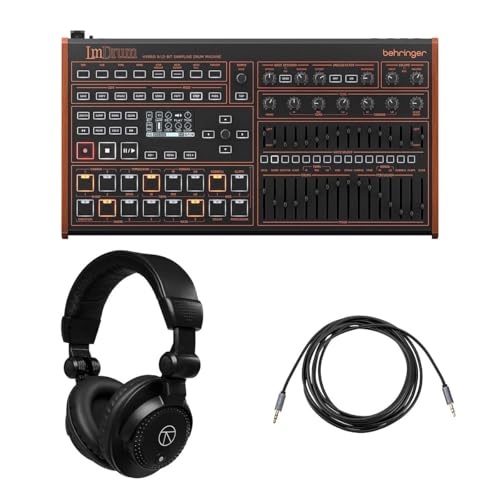
- 16-voice sampling architecture with analog circuitry
- 64-step sequencer with repeat and performance controls
- 16 independent analog outputs for multitrack routing
Best For: Home studios needing extensive routing and external processing
Best Compact Option

- Four drum kits and four bass sounds
- Records layers and multiple patterns
- Battery powered with speaker and headphone output
Best For: Portable beat making and compact home studios
Best Hands-Free Pick

- Sixteen touch-sensitive finger pads
- 48 drum kits and 100 preset patterns
- USB-C or battery power with included foot pedal
Best For: Hands-on playing and preset-driven beat making
Best DAW Controller
Donner STARRYPAD MIDI Pad Controller

- 16 pads expand to 48 assignable pads
- Adds faders, knobs, MIDI, and backlit controls
- Includes Melodics courses and Cubase LE software
Best For: DAW-based production and sample triggering
Studio Classic – Alesis SR-18 Drum Machine
The Alesis SR-18 is a practical choice for drum machines for home studios when you want a dedicated, lightweight unit with plenty of ready-to-use sounds. Its 500 onboard sounds, built-in effects, MIDI support, and pattern-focused controls make it useful for songwriting, rehearsal, live performance, and computer-based production.
Best For: Songwriters, remix engineers, live performers, and producers who want a straightforward standalone rhythm workstation.
Pros:
- Includes 500 professional sounds with built-in digital effects.
- Offers MIDI connectivity for keyboards, computers, DAWs, and electronic drum kits.
- Pattern Play, programmable Drum Roll, and tap tempo support hands-on beat creation.
- Can run from the included wall adapter or six AA batteries.
Cons:
- AA batteries are not included.
- Its plastic construction and compact controls may feel less substantial than larger modern production centers.
The SR-18 focuses on dependable rhythm creation rather than an expansive touchscreen workflow. Choose it if quick access to a broad sound library and classic drum-machine operation matter more than advanced standalone song production.
Portable Sampling Hub – Akai MPC Sample
The Akai MPC Sample is a strong fit for drum machines for home studios if sampling and hands-on beatmaking are central to your workflow. It combines 16 MPC pads, standalone sequencing, a microphone, speaker, rechargeable battery, onboard effects, and storage support in a compact portable format.
Best For: Beatmakers, finger drummers, DAWless creators, and producers who want to sample, chop, and build grooves without a computer.
Pros:
- Runs standalone with a rechargeable battery, built-in speaker, microphone, and microSD storage.
- Provides Instant Sample Chop, timestretch, repitch, resampling, and more than 100 factory kits.
- Includes four internal effects processors with 60 effect types and dedicated controls.
- Offers USB-C audio/MIDI, line I/O, headphone output, and MIDI connectivity through an adapter.
Cons:
- The MIDI DIN adapter is not included.
- Its sampling-centered workflow may be more than needed for users seeking only preset drum patterns.
MPC Sample is particularly appealing when portability and sample manipulation are priorities. Its compact design suits a home studio, while the battery, speaker, and microphone make it easy to capture ideas away from the main setup.
Analog Groove Specialist – Arturia DrumBrute Impact
The Arturia DrumBrute Impact is a focused option among drum machines for home studios, built around hands-on analog-style beat programming and performance controls. Separate accents, Song mode, and optional Color sound-shaping give its drum parts a direct, performance-oriented approach.
Best For: Producers and performers who want tactile pattern programming, chained songs, and instrument-level sound shaping.
Pros:
- Provides a separate accent control for each drum.
- Song mode supports chaining patterns into longer arrangements.
- Optional Color sound-shaping is available on all instruments except the cowbell.
- Metal construction and alloy-steel body offer a substantial physical design.
Cons:
- The cowbell does not receive the optional Color sound-shaping feature.
- Its focused drum-machine design is less suited to users seeking an all-in-one sampler or full production center.
DrumBrute Impact makes the most sense for users who value physical interaction and pattern performance. It is a specialized rhythm instrument rather than a broad sampling workstation, so its appeal depends on wanting a dedicated drum-focused setup.
Standalone Production Center – Akai MPC One G2
The Akai MPC One G2 is a comprehensive choice for drum machines for home studios when you want drums, sampling, sequencing, arranging, and audio production in one standalone unit. Its 7-inch touchscreen, 16 velocity- and pressure-sensitive pads, MPC3 OS, and expanded processing support computer-free song creation.
Best For: Producers building complete tracks in a bedroom studio, hybrid setup, travel rig, or DAWless environment.
Pros:
- Supports standalone sampling, sequencing, arrangement, and up to 16 stereo audio tracks.
- Includes a 7-inch touchscreen, 16 RGB-backlit pads, and an 8-core processor.
- USB-C provides multichannel audio streaming and expanded MIDI connectivity.
- Ships with more than 20GB of factory content, plugins, and additional production tools.
Cons:
- Its broad production feature set may be excessive for users wanting only a simple drum machine.
- The compact desktop design still requires a separate display-free workflow adjustment for users accustomed to a computer DAW.
MPC One G2 is best viewed as a complete standalone production center with strong drum-making capabilities. It costs more in complexity than a dedicated rhythm box, but it offers substantially more room for arranging full songs and integrating external gear.
Best Portable Sampler Drum Machine – teenage engineering EP-133 K.O. II
For producers seeking drum machines for home studios that can also travel easily, the teenage engineering EP-133 K.O. II combines sampling, beatmaking, sequencing, and effects in a compact battery-powered unit. Its built-in microphone, 128MB memory, four-track sequencer, and flexible pattern workflow make it useful for capturing ideas and developing them into arrangements.
Best For: Portable beatmaking, sample-based production, and hands-on live performance.
Pros:
- Built-in microphone, line input, 999 sample slots, and 128MB of memory support flexible sampling.
- Four groups of 99 patterns, real-time pattern swapping, and song mode support fast arrangement.
- Built-in speaker, stereo effects, punch-in effects, MIDI, sync, USB-C, and battery power suit mobile workflows.
Cons:
- Its compact plastic construction and small dimensions may provide less hands-on space than larger studio machines.
- It offers four sequencer tracks, which may be limiting for more complex arrangements.
The K.O. II is a strong choice when portability and immediate sampling matter as much as sequencing depth. The OS 2.0 features add useful resampling, chopping, sidechain, and arrangement tools for turning sketches into fuller tracks.
Best DAW-Integrated Pad Controller – Akai Professional MPC Studio
The Akai Professional MPC Studio is a USB-powered controller for home studios that want tactile drum-machine-style performance inside a computer-based setup. Its velocity- and pressure-sensitive RGB pads, MPC2 software integration, and assignable touch strip provide hands-on control while retaining the flexibility of a DAW workflow.
Best For: Computer-based beatmakers who want MPC-style pads and software production tools.
Pros:
- Sixteen velocity- and pressure-sensitive RGB pads with eight banks offer expressive performance control.
- MPC2 software, instrument plugins, mixing and mastering effects, and vocal tools are included.
- Works with Windows and Mac and supports integration with DAWs such as Ableton Live and Cubase.
Cons:
- It is a controller rather than a standalone drum machine, so it requires a computer and USB connection.
- Its capabilities depend substantially on the MPC2 software workflow.
For producers who prefer arranging and mixing on a computer, MPC Studio offers a practical middle ground between mouse-based editing and dedicated hardware control. The pads, touch strip, display, and included software make it especially suited to beat-focused home studios.
Best Expandable Hybrid Drum Machine – Behringer LM DRUM
The Behringer LM DRUM is a substantial option for home studios that need sampling, sequencing, and extensive routing. Its 16-voice sampling architecture, 64-step sequencer, MIDI and sync connections, and 16 independent analog outputs make it suitable for integrating drum sounds with external mixers, effects, and recording equipment.
Best For: Studio setups needing multichannel routing, external processing, and hybrid drum sounds.
Pros:
- Sixteen voices of sampling architecture combine with analog circuitry for flexible drum sound design.
- A 64-step sequencer supports polymeter, step repeat, note repeat, real-time triggering, mute, and solo functions.
- Sixteen independent analog outputs enable multitrack recording or separate external processing.
- MIDI In/Out/Thru, USB 2.0, sync, multiple audio outputs, and an audio input support broad connectivity.
Cons:
- At 11 pounds and with a listed 21 x 13.75 x 4.25-inch footprint, it is less portable than compact alternatives.
- Its extensive routing and sequencing features may be more than a beginner needs.
The LM DRUM makes the most sense when expansion and routing are priorities. Its dedicated sequencing controls and independent outputs give a home studio more options for recording rhythms separately or processing individual voices through external gear.
Best Compact Option – Stylophone BEAT
The Stylophone BEAT is a compact choice for home studios that need a portable rhythm machine for sketching ideas. It includes four drum kits, four bass sounds, pattern recording, layered recording, and a built-in speaker, while wired headphones can be connected for quieter practice.
Best For: Portable beat making, casual practice, and compact home-studio setups.
Pros:
- Four drum kits and four bass sounds provide a straightforward palette for beat creation.
- Click track and tempo lock help keep patterns in time.
- Can record multiple layers and patterns, with mute controls for shaping parts.
- Runs on three AA batteries and includes a built-in speaker with volume control.
Cons:
- AA batteries are required but not included.
- It connects to wired headphones rather than offering a stated wireless option.
- The plastic body may be less suited to heavy-duty studio use than a larger dedicated unit.
For shoppers comparing drum machines for home studios, the Stylophone BEAT stands out for convenience and portability rather than an extensive sound library. Its pattern and layering features make it useful for quick ideas, travel, or low-volume sessions.
Best Hands-Free Pick – Medeli MR101S
The Medeli MR101S is a portable drum machine for home studios that emphasizes hands-on playing and pattern variety. Its 16 touch-sensitive finger pads are paired with 48 drum kits, 100 preset drum patterns, and an included foot pedal for hands-free flexibility.
Best For: Players who want touch-sensitive pads, preset variety, and foot-pedal control.
Pros:
- Sixteen touch-sensitive finger pads support direct performance.
- Forty-eight drum kits and 100 preset patterns offer substantial built-in variety.
- Included foot pedal adds hands-free control options.
- Supports USB-C or battery power for flexible placement.
Cons:
- The supplied notes do not specify the included battery type or battery life.
- Its preset-focused feature set may be less appropriate for shoppers seeking detailed sound-design controls.
The MR101S is a practical choice if you want a self-contained playing experience with many ready-made kits and patterns. The touch-sensitive pads and foot pedal make it especially appealing for performance-oriented beat programming in a home setup.
Best DAW Controller – Donner STARRYPAD MIDI Pad Controller
The Donner STARRYPAD is a USB MIDI controller suited to home studios built around DAW software. Its 16 backlit pads can be expanded to 48 assignable pads across three banks, with velocity curves, faders, knobs, MIDI connectivity, and included music-production software.
Best For: DAW-based production, sample triggering, and flexible MIDI control.
Pros:
- Sixteen velocity-sensitive-style soft pads offer three banks for up to 48 assignable pads.
- Two faders, two knobs, and three buttons add hands-on control for virtual instruments.
- Includes MIDI in/out, USB-C connectivity, Melodics courses, and Cubase LE software.
- Works with Android, iOS, Mac, and Windows, subject to the stated connection requirements.
Cons:
- It needs DAW software to produce sound and does not operate as a standalone drum machine.
- The editor can set pad functions but does not record or arrange music.
- Connecting to an iPhone or iPad requires an Apple Lightning to USB Adapter.
The STARRYPAD is best understood as a flexible drum-pad controller rather than a self-contained rhythm box. For producers already working in a DAW, its assignable banks and extra controls provide more integration potential than a standalone preset machine.
How We Picked the Best Drum Machines for Home Studios
We focused on the features that matter most in a home production setup: sound quality, sequencing flexibility, hands-on control, connectivity, portability, and ease of use. The selection includes analog and digital drum machines, samplers, pad controllers, and standalone production centers so different types of beatmakers can find a suitable fit.
We also considered how well each device works alongside a computer, MIDI keyboard, audio interface, headphones, and other studio hardware. A simple rhythm box may be ideal for quick songwriting, while a sampler or production center can serve as the hub of a complete setup.
Quick Comparison
| Best For | Look For |
|---|---|
| Fast, hands-on beat creation | Dedicated pads, step sequencing, and pattern controls |
| Sound design | Analog synthesis, shaping controls, and effects |
| Sampling and hybrid production | Sample memory, microphone or line inputs, and editing tools |
| Computer-based studios | USB MIDI, DAW integration, and reliable pad response |
| Portable setups | Compact construction, battery operation, or easy transport |
Key Buying Factors for Drum Machines for Home Studios
Sound Engine and Library
Analog machines offer immediate tone shaping and distinctive character, while digital models often provide broader kits, samples, and editing options. Check whether the onboard sounds match your style and whether you can load your own samples.
Sequencing and Performance Controls
Look for pattern chaining, swing, quantization, fills, parameter locks, and real-time recording if you want to perform or develop arrangements quickly. Large pads and dedicated knobs can make a major difference during hands-on programming.
Connectivity and Workflow
Confirm the available USB, MIDI, audio, headphone, and synchronization connections. A standalone unit may reduce computer dependence, while a controller typically needs a DAW or software instrument to produce sound.
Size, Noise, and Budget
Measure your workspace before choosing a larger production center. Also consider whether you need built-in speakers, battery power, or headphones for quiet sessions. Budget for essential accessories such as cables, storage, or an audio interface when required.
Who Should Buy Which Drum Machines for Home Studios?
Choose a compact machine if you want quick sketches, travel-friendly production, or a simple addition to an existing studio. Analog-focused beatmakers should prioritize hands-on controls and characterful synthesis. Producers who sample vocals, field recordings, or external instruments will benefit from a sampler with capable inputs and editing functions.
If your computer is central to your workflow, a MIDI pad controller can provide responsive performance control without duplicating software features. For a more self-contained setup, select a standalone production center with sequencing, sampling, effects, and arrangement tools. Beginners should favor an intuitive interface and useful presets, while experienced producers may value deeper routing, sound shaping, and synchronization options.