The best field recorder for broadcast audio should capture clean, dependable sound in unpredictable locations while remaining practical to carry and operate. Input count, preamp quality, safety recording, timecode, and monitoring features all matter more than headline specifications alone.
We compared 10 portable recorders spanning compact interview tools, 32-bit float models, multitrack units, and podcast-focused systems to help you choose the right fit for field production.
Best 10 Field Recorder for Broadcast Audio Picks for 2026
Best Overall

- 32-bit float recording helps avoid clipping.
- Six XLR inputs and up to 14 tracks.
- Timecode I/O supports accurate video sync.
Best For: Professional multi-microphone location and broadcast production
Best Camera-Mount Value
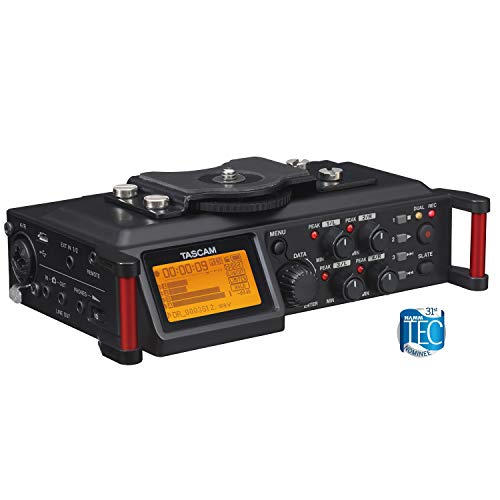
- Four balanced XLR inputs with phantom power.
- Dual recording provides a lower-level safety copy.
- Mounts above or below a camera.
Best For: Camera-based production with up to four microphone inputs
Best Compact XLR Recorder

- 32-bit float recording handles changing levels.
- Two locking XLR inputs secure connections.
- Ultra-low-noise preamps support clean audio.
Best For: Portable two-microphone film and interview recording
Best Pocket Recorder

- 32-bit float recording with a locking 3.5mm input.
- Includes a W.Lav Pro lavalier microphone.
- Offers timecode support and wireless app control.
Best For: Portable lavalier interviews and compact video kits
Versatile 32-Bit Workhorse

- 32-bit float recording helps reduce clipping concerns
- Built-in stereo mics and two XLR/TRS inputs
- USB-C recording with SD-card backup
Best For: Interviews, video production, podcasts, and live performances
Compact Broadcast-Ready Companion
Xvive XV1-R Portable Stereo Recorder

- 24-bit or 32-bit float recording up to 96kHz
- Pre-recording and auto-recording add capture security
- Limiter, noise gate, and low-cut filter onboard
Best For: Portable stereo capture and DSLR or video-camera workflows
Simple Dual-XLR Capture

- 32-bit/96kHz recording for detailed audio
- Two locking XLR/TRS combo inputs
- OLED waveform display and SDXC support up to 1TB
Best For: Compact two-source recording for film, podcasts, and music
Best Multitrack Podcast Pick

- Four XLR inputs for multi-person recording
- AI noise reduction and tone tools
- Four headphone outputs with separate controls
Best For: Podcasts, interviews, and small multi-speaker productions
Best High-Dynamic-Range Portable Pick

- 32-bit float recording for changing levels
- X/Y microphones handle up to 130 dB SPL
- USB microphone mode for computers and mobile devices
Best For: Location audio, loud events, and flexible portable recording
Best Compact Stereo Pick

- 32-bit float recording for clip-free capture
- Built-in X/Y stereo microphones
- USB-C microphone mode and 10-hour battery life
Best For: Interviews, content creation, ambience, and mobile stereo recording
Best Overall – Zoom F6
For demanding productions, the Zoom F6 is a powerful field recorder for broadcast audio. Its 32-bit float recording, six XLR inputs, and timecode I/O make it well suited to multi-microphone location work where clean takes and accurate sync matter.
Best For: Professional film, broadcast, and multi-microphone location recording.
Pros:
- 32-bit float recording with dual A/D converters helps prevent clipping across a wide dynamic range.
- Six XLR inputs support simultaneous microphone recording and up to 14 tracks.
- Timecode I/O enables frame-accurate synchronization with video.
- Works as a standalone recorder or USB audio interface.
Cons:
- At 2.4 pounds, it is less lightweight than the smaller options in this roundup.
- Its professional feature set may be more than needed for simple two-channel recordings.
The F6 is the strongest choice when a production needs multiple isolated inputs, reliable level handling, and timecode in a portable package. Its flexible power options and rugged design further support location workflows.
Best Camera-Mount Value – TASCAM DR-70D
The TASCAM DR-70D is a practical field recorder for broadcast audio when a camera-mounted, multi-input setup is the priority. Four balanced XLR inputs, phantom power, individual gain controls, and dual recording provide useful production safeguards in a compact design.
Best For: DSLR videographers, television producers, advertisers, and documentarians needing four-channel recording.
Pros:
- Four balanced XLR mic inputs with phantom power support professional microphones.
- Individual gain controls make quick input adjustments straightforward.
- Dual Recording creates a lower-level safety copy to help protect against distorted takes.
- Can mount above or below a camera and includes two internal microphones.
Cons:
- It records 24-bit audio rather than the 32-bit float format offered by the Zoom models here.
- Its four-input limit provides less expansion than the Zoom F6.
- The supplied warranty is listed as 90 days labor and one year parts.
The DR-70D offers a focused production workflow for camera rigs, especially when four XLR inputs and a safety recording are more important than maximum track count or 32-bit float capture.
Best Compact XLR Recorder – Zoom F3
The Zoom F3 is a compact field recorder for broadcast audio designed for run-and-gun work. Its 32-bit float recording, dual locking XLR inputs, and ultra-low-noise preamps help simplify recording when levels may change quickly and the recorder may be mounted out of reach.
Best For: Small film crews, interview recording, and portable two-microphone setups.
Pros:
- 32-bit float recording helps capture quiet dialogue and sudden peaks without stopping to adjust levels.
- Dual locking XLR inputs help keep microphone connections secure.
- Ultra-low-noise preamps support clean recordings in uncontrolled environments.
- Compact 8.48-ounce design, flexible power, and USB operation suit mobile workflows.
Cons:
- Two XLR inputs are less suitable for larger multi-microphone productions.
- It does not provide the timecode I/O listed for the Zoom F6.
The F3 is a strong minimalist option for professionals who need dependable 32-bit float capture without carrying a larger recorder. Choose it when two locked XLR connections are enough for the production.
Best Pocket Recorder – Deity PR-2
The Deity PR-2 is a pocket-sized field recorder for broadcast audio built around a locking 3.5mm stereo mic/line input. With 32-bit float recording, timecode compatibility, wireless control, and an included lavalier microphone, it is suited to discreet interviews and compact production kits.
Best For: Interviews, lavalier recording, mobile video, and compact timecode-enabled setups.
Pros:
- Supports 24-bit and 32-bit float WAV recording for flexible gain handling.
- Locking 3.5mm input works with lavalier, shotgun, and line-level sources.
- Up to 30 hours of battery life and Bluetooth app control support extended shoots.
- Includes a W.Lav Pro microphone and can function as a standalone timecoder.
Cons:
- The single 3.5mm input is less capable for multi-microphone work than XLR-based recorders.
- Its compact design provides fewer input and track options for larger broadcast rigs.
The PR-2 prioritizes portability and fast deployment over extensive I/O. It is a particularly practical choice when a lavalier-based setup, long battery life, and wireless control are more valuable than multiple XLR inputs.
Versatile 32-Bit Workhorse – Zoom H4 Essential
The Zoom H4 Essential is a flexible field recorder for broadcast audio when you need built-in stereo microphones plus connections for external microphones, instruments, a mixer, or a soundboard. Its 32-bit float recording is designed to help reduce worries about distorted takes during interviews, performances, and production work.
Best For: Mobile creators, interview recording, video production, podcasts, and live performances requiring multiple input options.
Pros:
- 32-bit float recording helps deliver clip-free audio.
- Built-in stereo microphones and two XLR/TRS inputs support varied setups.
- Can record to a phone, tablet, or computer over USB-C while saving a backup to SD card.
- Spoken menu guidance can make operation easier for visually impaired users.
Cons:
- Requires two AA batteries.
- The 2-inch screen may feel compact for detailed navigation.
Choose the H4 Essential if you want one recorder that can move from simple stereo capture to a more involved four-track setup. It is especially practical for creators who value flexible connectivity and a guided interface.
Compact Broadcast-Ready Companion – Xvive XV1-R Portable Stereo Recorder
The Xvive XV1-R is a compact field recorder for broadcast audio suited to mobile stereo capture, camera workflows, and on-the-go production. It supports 24-bit or 32-bit float recording up to 96kHz, with automatic and pre-recording features that add protection when moments happen unexpectedly.
Best For: Portable stereo recording, DSLR and video-camera integration, ambient capture, and creators needing a small audio interface.
Pros:
- Records in 24-bit integer or 32-bit float at up to 96kHz.
- 130dB SPL capability supports recording in a wide range of environments.
- Auto-recording and pre-recording provide extra capture security.
- Onboard limiter, noise gate, and low-cut filter offer useful sound management.
Cons:
- Its stereo 1/8-inch mic/line input is less suited to setups requiring multiple XLR inputs.
- Some advanced features, such as film markers, are optional or workflow-dependent.
- Requires two AA batteries for operation.
The XV1-R stands out when portability and fast setup matter more than extensive physical inputs. Its pre-recording, processing controls, and camera-oriented features make it a capable choice for field and video work.
Simple Dual-XLR Capture – Zoom H1 XLR Recorder
The Zoom H1 XLR offers a straightforward setup for a field recorder for broadcast audio, combining 32-bit/96kHz recording with two locking XLR/TRS combo inputs. Its waveform display and headphone output make it practical for checking levels and monitoring interviews, podcasts, and video audio.
Best For: Filmmakers, podcasters, and musicians who need two locking XLR/TRS inputs in a compact recorder.
Pros:
- 32-bit/96kHz recording supports detailed, clip-free audio capture.
- Two locking XLR/TRS inputs accommodate microphones, instruments, and other sources.
- OLED waveform display provides a quick view of recording levels.
- Supports SDXC cards up to 1TB and includes 3.5mm stereo input and headphone output.
Cons:
- It has two main XLR/TRS inputs, so larger multichannel setups may require another recorder.
- Its 0.96-inch display is quite small.
- Requires two AA batteries.
The H1 XLR is a sensible pick for users who want a focused, easy-to-manage dual-input recorder. It keeps the setup compact while providing locking connections, waveform viewing, and extensive SDXC storage support.
Best Multitrack Podcast Pick – Zoom PodTrak P4next
For a field recorder for broadcast audio that prioritizes multi-person recording, the Zoom PodTrak P4next offers four XLR inputs, multitrack recording, and practical tools for producing balanced sound with less setup.
Best For: Interviews, podcasts, and small broadcast-style productions with multiple participants.
Pros:
- Four XLR inputs support up to four people plus a call-in guest.
- Up to +70dB of gain accommodates demanding microphones.
- AI noise reduction, Tone Enhancement, and COMP simplify mixing.
- Four headphone outputs have separate volume controls.
Cons:
- Its feature set is focused more on podcasting than general-purpose location recording.
- It requires two AA batteries.
The P4next is a strong choice when your broadcast workflow involves several speakers in one room or a remote caller. Its multiple inputs, individual headphone monitoring, and built-in processing make it especially practical for fast podcast and interview production.
Best High-Dynamic-Range Portable Pick – Xvive XV1-R Portable Recorder
If you need a field recorder for broadcast audio in unpredictable environments, the Xvive XV1-R combines 32-bit float recording with built-in X/Y microphones and support for signals up to 130 dB SPL.
Best For: Filmmakers, podcasters, musicians, and location recording where levels can change quickly.
Pros:
- 32-bit float recording reduces the need for manual gain adjustment.
- X/Y microphones capture stereo audio up to 130 dB SPL without distortion.
- Records WAV up to 96 kHz and also supports compressed AAC recording.
- Can function as a USB microphone with computers and mobile devices.
Cons:
- There is no headphone jack for direct monitoring.
- Files are automatically split when they reach the stated 4GB maximum.
The XV1-R stands out for loud or rapidly changing sources where 32-bit float recording can make capture more forgiving. Its compact design, auto-record and pre-record features, and USB microphone mode add flexibility for both field and desktop use.
Best Compact Stereo Pick – Zoom H1 Essential Recorder
The Zoom H1 Essential is a straightforward field recorder for broadcast audio when you want clear stereo capture for interviews, video production, ambience, and everyday content without a complex setup.
Best For: Content creators, interviewers, musicians, and mobile stereo recording.
Pros:
- 32-bit float recording helps provide clip-free audio capture.
- Built-in X/Y microphones record natural stereo sound.
- USB-C microphone mode supports livestreams, calls, and remote recording.
- Offers up to 10 hours of battery life with two AAA batteries.
Cons:
- It has stereo operation rather than multiple microphone inputs.
- The included microphones are built-in, limiting microphone-selection flexibility.
The H1 Essential is a compact, accessible option for single-source or ambient recording. Its 32-bit float capability, headphone output, and USB-C connectivity make it useful across interviews, video work, music sessions, and remote audio tasks.
How We Picked the Best Field Recorder for Broadcast Audio
We evaluated these recorders by looking at the features that affect real-world broadcast and location work: microphone and line inputs, connector types, preamp performance, recording formats, limiter or safety-track options, timecode support, battery operation, monitoring, portability, and ease of use. We also considered whether each model suits interviews, documentary production, event coverage, film sets, podcasting, or quick grab-and-go recording.
Because no single recorder fits every production, the selection includes both professional multitrack units and simpler handheld models. A compact recorder may be the better choice for a one-person crew, while a larger unit can provide more routing flexibility and simultaneous inputs.
Quick Comparison
| Best For | Look For |
|---|---|
| Professional location crews | Multiple XLR inputs, strong preamps, timecode, and redundant recording |
| Solo filmmakers and interviewers | Compact design, 32-bit float recording, and straightforward monitoring |
| Podcast and panel recording | Several microphone inputs, headphone outputs, and simple mix controls |
| Music and ambient capture | Quality built-in microphones, stereo recording, and high-resolution WAV support |
| Travel and backup recording | Small size, long battery life, USB connectivity, and quick operation |
Key Buying Factors for a Field Recorder for Broadcast Audio
Inputs and Connectivity
Count the microphones you need to record at once, then check the connector type. XLR or combo inputs are important for professional microphones, while 3.5mm and built-in microphones are useful for compact setups. Phantom power is necessary for many condenser microphones.
Recording Safety and Preamp Quality
Clean preamps reduce hiss when recording quiet dialogue. Limiters, dual-level safety tracks, and 32-bit float recording can protect against unexpected peaks, although they do not replace careful microphone placement. Confirm which safety features work with your intended channel count and format.
Timecode and Workflow
For multicamera shoots, timecode can significantly reduce syncing work. If your production does not use synchronized cameras, prioritize fast controls, reliable headphone monitoring, and simple file transfers instead.
Power, Storage, and Durability
Field work rewards practical design. Check battery type and expected runtime, memory-card compatibility, mounting options, weather protection, and whether the recorder can operate as a USB audio interface. Physical controls are especially valuable when recording outdoors or while wearing gloves.
Who Should Buy Which Field Recorder for Broadcast Audio?
Choose a professional multitrack recorder such as the Zoom F6 if you need several balanced inputs, advanced routing, and dependable production features. The Zoom F3 or Deity PR-2 is better for a lightweight solo kit when 32-bit float recording and portability are priorities.
For camera-mounted interviews and small video crews, the TASCAM DR-70D or Zoom H1 XLR offers useful external microphone connectivity without the bulk of a full production mixer. Handheld models such as the Zoom H1 Essential or H4 Essential suit reporters, musicians, creators, and anyone who needs fast stereo or voice recording.
Podcast and roundtable users should consider the Zoom PodTrak P4next for its multiple inputs and participant-friendly workflow. The Xvive XV1-R models make sense when you want a compact stereo recorder, USB microphone functionality, or 32-bit float capture for music and ambient sound. Before buying, match the recorder’s input count and monitoring options to your actual crew and microphone setup rather than paying for features you will not use.