The best field recorders make it easier to capture clear, dependable audio away from a studio. The right model depends on whether you need a compact lavalier recorder, multiple microphone inputs, multitrack production, or a simple handheld device.
We compare 10 field recorders from Zoom across professional filmmaking, music production, podcasting, weddings, and everyday content creation, with attention to recording quality, portability, controls, and workflow.
Best 10 Field Recorders Picks for 2026
Best for Run-and-Gun Audio

- 32-bit float recording reduces clipping concerns
- Two locking XLR/TRS inputs
- Low-noise preamps and flexible power
Best For: Filmmakers and musicians needing dependable two-channel location audio
Best Wearable Recorder

- Includes an omnidirectional lavalier mic
- 32-bit float recording
- Up to 15 hours on two AAA batteries
Best For: Interviews, weddings, vlogs, and discreet on-camera audio
Best for Multichannel Production

- Six XLR inputs and up to 14 tracks
- 32-bit float recording
- Timecode I/O for frame-accurate sync
Best For: Film, broadcast, and location crews recording multiple sources
Best for Mobile Music Making

- Four-track recording with bounce and undo
- Built-in microphones and 80-plus rhythm patterns
- USB interface with battery or USB-C power
Best For: Musicians creating layered tracks and ideas on the go
Versatile 4-Track Pick

- 32-bit float recording for clip-free audio
- Four tracks with stereo mics and two XLR/TRS inputs
- USB-C recording or streaming plus SD backup
Best For: Musicians, podcasters, filmmakers, and multi-source recording
Pro-Level Control Pick

- Large 19.4mm X/Y stereo microphones
- 32-bit float recording and F-Series preamps
- Dedicated gain knobs and up to four-track recording
Best For: Filmmakers, musicians, and demanding location recording
Compact Everyday Pick

- Lightweight 92-gram portable design
- X/Y stereo mics with 32-bit float recording
- USB-C microphone mode for calls and streaming
Best For: Content creators, interviews, music practice, and portable stereo recording
Versatile Field Recorder
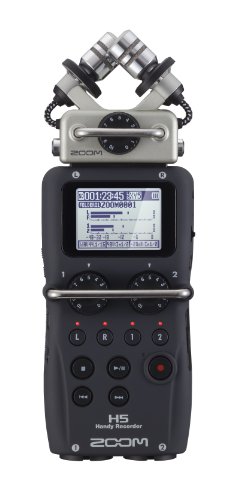
- Interchangeable input capsules
- Four-track simultaneous recording
- Two XLR/TRS inputs with phantom power
Best For: Filmmakers and musicians needing expandable multitrack recording
Clip-Free XLR Recorder

- 32-bit float recording up to 96kHz
- Two locking XLR/TRS inputs
- SDXC support up to 1TB
Best For: Podcasters and filmmakers needing two professional inputs
Pattern-Flexible Field Recorder

- Three mics with nine recording patterns
- 32-bit float clip-free recording
- USB microphone and SD backup recording
Best For: Journalists and musicians capturing varied sources with one handheld unit
Best for Run-and-Gun Audio – Zoom F3
The Zoom F3 is one of the most practical field recorders for filmmakers and musicians who need clean, clip-free audio without constantly adjusting levels. Its 32-bit float recording, dual locking inputs, and flexible power options suit demanding location work.
Best For: Run-and-gun filmmakers, location recordists, and musicians using professional microphones.
Pros:
- 32-bit float recording helps capture quiet dialogue and sudden peaks without clipping.
- Dual locking XLR/TRS inputs help keep connections secure.
- Ultra-low-noise preamps support clean recordings in uncontrolled environments.
- Can operate as a standalone recorder or USB device with flexible battery power.
Cons:
- Its two-input design is less suited to larger multi-microphone productions.
- Requires separate microphones for most professional recording setups.
The F3 is a compact, focused choice when reliability and clip-free capture matter more than a high channel count.
Best Wearable Recorder – Zoom F2
The Zoom F2 is a highly portable field recorder built around discreet lavalier recording. It includes an omnidirectional lavalier microphone and 32-bit float capture, making it a straightforward option for interviews, weddings, vlogs, and on-camera work.
Best For: Journalists, wedding videographers, filmmakers, podcasters, and content creators recording with a lavalier mic.
Pros:
- 32-bit float recording captures audio without requiring gain adjustments.
- Includes a lavalier microphone, windscreen, and lapel clip.
- Runs for up to 15 hours on two AAA batteries.
- Supports microSD, microSDHC, and microSDXC cards up to 512GB.
Cons:
- Its lavalier-focused design is less suitable for multiple microphones or line-level sources.
- Records at 44.1kHz or 48kHz, offering fewer rate options than some larger recorders.
Choose the F2 when discreet, wearable recording and simple setup are more important than extensive input flexibility.
Best for Multichannel Production – Zoom F6
The Zoom F6 is a professional field recorder for productions that need several microphones, broad dynamic range, and accurate synchronization. Six XLR inputs, up to 14 tracks, and timecode I/O give it the flexibility required for filmmaking, broadcast, and complex location sessions.
Best For: Film crews, broadcast teams, musicians, and location recordists managing multiple microphones.
Pros:
- 32-bit float recording with dual A/D converters helps prevent clipping.
- Six XLR inputs support simultaneous multi-microphone recording.
- Provides up to 14 tracks and timecode I/O for professional workflows.
- Works as a standalone recorder or USB audio interface.
Cons:
- At 2.4 pounds, it is heavier than the smaller field recorders in this roundup.
- Its broader feature set may be more than a solo user needs for simple recordings.
The F6 is the strongest fit here for complex productions where channel count, synchronization, and recording flexibility take priority.
Best for Mobile Music Making – Zoom R4
The Zoom R4 combines a multitrack recorder, built-in stereo microphones, effects, rhythms, and USB interface functionality in a portable package. It is a versatile choice among field recorders for musicians who want to capture ideas, layer parts, and work away from a computer.
Best For: Musicians, songwriters, and creators who want portable multitrack recording with built-in rhythms.
Pros:
- Records, layers, and bounces up to four tracks.
- 32-bit float recording reduces the need for gain adjustments.
- XLR/TS combo inputs accommodate microphones, instruments, and keyboards.
- Includes more than 80 built-in drum patterns and works as a USB audio interface.
Cons:
- Its four-track design is less appropriate for large multichannel productions.
- Digital recording time is listed at 14 hours.
The R4 stands out as a self-contained songwriting and rehearsal tool, especially for users who value layering, rhythm patterns, and battery-powered operation.
Versatile 4-Track Pick – Zoom H4 Essential
The Zoom H4 Essential is a flexible choice among field recorders for creators who need to capture music, interviews, podcasts, video audio, or live performances. Its built-in stereo microphones, two XLR/TRS inputs, 32-bit float recording, and USB-C connectivity make it suitable for both standalone recording and computer, tablet, or phone workflows.
Best For: Musicians, podcasters, filmmakers, and creators recording multiple sources or larger projects.
Pros:
- 32-bit float recording helps deliver clip-free audio across changing volume levels.
- Offers four-track recording with built-in stereo microphones and two XLR/TRS inputs.
- Can record or stream through USB-C while saving a backup to an SD card.
- Spoken menu guidance supports more accessible operation.
Cons:
- Requires two AA batteries.
- Its broader feature set may be more than casual users need.
Choose the H4 Essential if you want one field recorder that can handle built-in microphone work, external sources, and computer-based audio with useful backup flexibility.
Pro-Level Control Pick – Zoom H5 Studio
The Zoom H5 Studio is a strong option among field recorders for filmmakers and musicians who want detailed sound and hands-on level control. It combines large 19.4mm X/Y stereo microphones, F-Series preamps, 32-bit float recording, and dedicated gain knobs in a portable, battery-powered design.
Best For: Filmmakers, musicians, and location recordists who want professional features and direct gain adjustment.
Pros:
- Large stereo microphones are designed to deliver rich audio with a wide dynamic range.
- 32-bit float recording helps protect takes from clipping in changing environments.
- Dedicated gain knobs provide quick, precise hands-on adjustments.
- Records up to four tracks simultaneously at up to 192kHz in WAV format.
Cons:
- Requires four AA batteries.
- Its professional controls may be unnecessary for simple voice memos.
The H5 Studio is the better fit when recording quality, manual control, and flexible multitrack capture matter more than keeping the setup as simple as possible.
Compact Everyday Pick – Zoom H1 Essential
The Zoom H1 Essential is a compact entry point into field recorders for creators who want clearer stereo audio than a phone or camera typically provides. Its X/Y microphones, 32-bit float recording, USB microphone mode, and lightweight 92-gram design suit content creation, interviews, music practice, ambience, and everyday recording.
Best For: Content creators, students, podcasters, musicians, and anyone who wants a simple portable stereo recorder.
Pros:
- Compact 92-gram design is easy to carry and use on the go.
- X/Y stereo microphones capture voices, music, ambience, and room sound.
- 32-bit float recording helps reduce concerns about distorted takes.
- USB-C microphone mode supports calls, livestreams, voiceovers, and desktop or mobile recording.
Cons:
- Uses two AAA batteries.
- Its stereo-focused design is less suited to users needing multiple external inputs.
Pick the H1 Essential when portability and straightforward stereo recording are your priorities, especially for videos, interviews, rehearsals, and travel sound.
Versatile Field Recorder – Zoom H5
The Zoom H5 is a flexible choice for field recorders who need interchangeable microphones, four-track recording, and professional connectivity. Its included shock-mounted X/Y capsule helps reduce handling noise, while two combo inputs support external microphones or line-level sources.
Best For: Filmmakers, musicians, and field recorders who want expandable microphone options and multitrack recording.
Pros:
- Interchangeable input capsules make it adaptable to different recording situations.
- Records up to four tracks simultaneously.
- Two XLR/TRS combo inputs offer selectable phantom power and a -20dB pad.
- Works as a multichannel or stereo USB audio interface for PC, Mac, or iPad.
Cons:
- Records to SD or SDHC cards up to 32GB, limiting storage compared with newer high-capacity models.
- Requires two AA batteries.
The H5 stands out when expandability matters more than the simplest possible setup. It is a practical field recorder for users who expect to connect external microphones or build a multitrack rig.
Clip-Free XLR Recorder – Zoom H1 XLR
The Zoom H1 XLR is a straightforward field recorder for interviews, podcasts, music, and video work. Its two locking XLR/TRS combo inputs support microphones and instruments, while 32-bit/96kHz recording and an OLED waveform display help simplify level management.
Best For: Filmmakers, podcasters, and musicians who need two professional inputs in a compact recorder.
Pros:
- Records in 32-bit float at up to 96kHz for clip-free audio capture.
- Two locking XLR/TRS inputs accommodate microphones, instruments, and other sources.
- OLED waveform display provides a quick view of recording levels.
- Supports SDXC cards up to 1TB for extended sessions.
Cons:
- Provides two recording channels rather than the H5’s four-track capability.
- Requires two AA batteries.
Choose the H1 XLR when you want a focused, modern recorder with professional inputs and substantial storage support. Its 32-bit float recording is especially useful when changing levels during a session is inconvenient.
Pattern-Flexible Field Recorder – Zoom H2 Essential
The Zoom H2 Essential gives field recorders broad coverage options from a compact handheld design. Three built-in microphones provide nine selectable recording patterns, and 32-bit float recording captures audio without requiring constant gain adjustments.
Best For: Journalists, podcasters, musicians, and filmmakers recording sources that range from focused interviews to wide stereo soundscapes.
Pros:
- Three built-in microphones and nine patterns support varied recording perspectives.
- 32-bit float recording helps deliver clip-free audio without manual gain changes.
- Can function as a USB microphone while recording a backup to an SD card.
- Offers wireless Bluetooth timecode synchronization for multiple H2 Essential units.
Cons:
- Its built-in microphone design is less suited to users who need interchangeable capsules.
- Requires two AA batteries.
The H2 Essential is a strong all-in-one option for field recording because its selectable patterns cover both narrow and spacious sources. USB microphone operation, simultaneous SD recording, and accessible menu navigation add practical flexibility.
How We Picked These Field Recorders
We selected models for distinct recording needs rather than treating every device as interchangeable. The lineup includes compact handheld recorders, lavalier-focused options, multitrack units, and professional recorders with multiple XLR or TRS inputs. We considered 32-bit float recording where available, input flexibility, microphone configuration, portability, monitoring, battery practicality, and how easily each recorder fits a real-world workflow.
Because features and accessories can vary by package, check the current listing before buying. Confirm included microphones, cables, batteries, mounts, and storage requirements if those items matter to your setup.
Quick Comparison
| Use Case | What to Prioritize | Best Fit From This Roundup |
|---|---|---|
| Filmmaking and dialogue | Reliable clipping protection, XLR inputs, and monitoring | Zoom F3 or Zoom F6 |
| Lavalier recording | Small size, simple operation, and discreet placement | Zoom F2 |
| Music and multitrack work | Multiple inputs, overdubbing, effects, and track control | Zoom R4 or Zoom H5 |
| Portable general recording | Built-in microphones, low weight, and quick setup | Zoom H1 Essential or Zoom H2 Essential |
| Two-channel XLR recording | External microphone support and straightforward routing | Zoom H1 XLR |
Key Buying Factors for Field Recorders
Inputs and Microphone Compatibility
Built-in stereo microphones are convenient for ambience, rehearsals, meetings, and quick interviews. XLR or combo inputs are more suitable when you need professional microphones, line-level sources, phantom power, or a stable connection to a camera and production rig.
Recording Format and Headroom
32-bit float recording can make location work more forgiving by preserving usable detail across a wide range of levels, especially when sound cannot be perfectly monitored. It does not replace good microphone placement, wind protection, or proper gain management, but it can reduce the risk of unusable clipping.
Track Count and Workflow
Choose a simple two-channel recorder for fast capture. If you plan to record several sources, overdub parts, bounce tracks, or apply effects, a multitrack model will provide more flexibility. Also check whether the recorder supports the monitoring and routing options your project requires.
Size, Power, and Handling
A smaller recorder is easier to carry and hide, while a larger professional unit may offer more inputs and controls. Consider battery life, memory-card requirements, mounting options, headphone monitoring, and whether you will operate it handheld, on a camera, or in a bag.
Who Should Buy Which Field Recorders?
Choose the Zoom F3 if you need a compact professional recorder for filmmaking or music and want dependable 32-bit float capture. The F6 is better for larger productions that require more inputs and routing flexibility. For weddings, interviews, and discreet dialogue capture, the Zoom F2 is the most specialized choice.
Musicians who want multitrack control should look at the Zoom R4 or H5 models. The H4 Essential is a versatile middle ground for musicians, podcasters, and filmmakers. For lightweight everyday recording, the H1 Essential and H2 Essential offer straightforward handheld operation, while the H1 XLR suits users who specifically need two-channel external microphone connections.