The best loop stations for live performances help musicians build layered arrangements, add rhythm, and keep a solo set engaging without a full band. The right choice depends on your instrument, workflow, control needs, and stage setup.
We’ve selected 10 options ranging from compact, affordable pedals to feature-rich BOSS and Pigtronix loopers. Use the guide below to match recording capacity, foot control, rhythm features, and connectivity to the way you perform.
Best 10 Loop Stations for Live Performances Picks for 2026
Flagship Looping Power
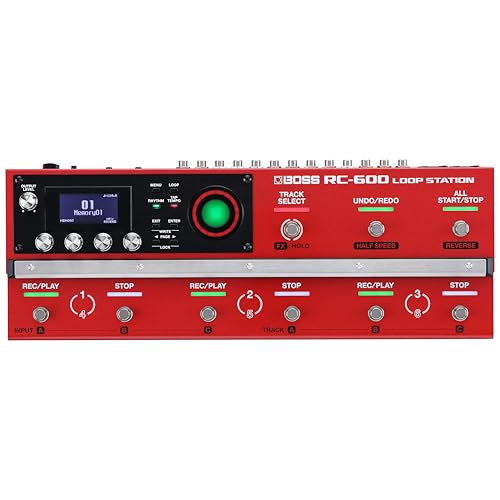
- Six simultaneous stereo phrase tracks
- Extensive input and track effects
- Nine assignable footswitches
Best For: Advanced live looping and layered performances
Recallable Stereo Loops

- Dual looper with stereo ins and outs
- Three hours of record time
- 50 recallable loops
Best For: Stereo looping with repeatable saved performances
Dual-Track Performance Hub

- Two tracks and 13 hours of stereo recording
- Onboard rhythm tracks and color LCD
- XLR, 1/4-inch, and USB connectivity
Best For: Versatile vocal and instrumental live looping
Rugged Compact Looping

- Six minutes with unlimited overdubs
- Double-, half-speed, and reverse playback
- Includes adapter and three patch cables
Best For: Simple, durable pedalboard-based looping
Hands-On Layering Pick

- Two simultaneous stereo phrase tracks
- Eight input and track effects available
- 64 phrase memories with MIDI support
Best For: Tabletop live looping with layered performances
Compact Stereo Pedal
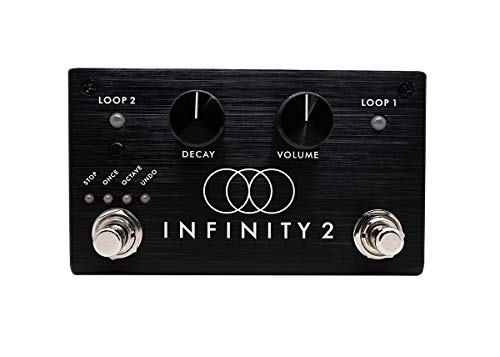
- Dual-stereo looping with five minutes of time
- Stutter and octave-shift effects
- Dry/wet routing and instant stop
Best For: Portable stereo looping and quick live control
Rhythm-Driven Song Looper

- 280 preset rhythm styles and 16 drum kits
- Six hours of stereo recording
- Two-track operation with MIDI I/O
Best For: Solo song-based performances with built-in rhythms
Best Drum-Machine Looper

- 140 minutes of stereo loop storage
- 121 drum grooves across 11 genres
- Separate looper and drum outputs
Best For: Solo performers needing built-in rhythm backing
Best Creative Playback Options

- 11 playback types
- Stereo input and output
- Reverse and speed-adjustment effects
Best For: Guitarists wanting portable loop manipulation
Best Effects-Focused Looper

- Seven assignable loop effects
- 24-bit/48kHz stereo drum machine
- USB and headphone connectivity
Best For: Live performers needing hands-on effects control
Flagship Looping Power – BOSS RC-600
For performers comparing loop stations for live performances, the BOSS RC-600 is built for complex, highly layered sets. It offers six simultaneous stereo tracks, extensive effects, and flexible foot control in a floor-based design.
Best For: Guitarists, singer-songwriters, multi-instrumentalists, and experienced looping musicians who need extensive live control.
Pros:
- Records and edits up to six stereo loops in real time.
- Uses 32-bit AD/DA and 32-bit floating-point processing.
- Includes 49 Input FX types, 53 Track FX types, and nine assignable footswitches.
Cons:
- Its advanced feature set may be more than beginners need.
- The 8.2-pound floor-based unit is relatively large and heavy.
The RC-600 is the most feature-packed option here for performers who value deep customization, multiple tracks, and a broad onboard effects palette over compactness.
Recallable Stereo Loops – Pigtronix Infinity 3
The Pigtronix Infinity 3 is a practical dual looper for musicians seeking loop stations for live performances with stereo connectivity and substantial storage. Its 24-bit/48kHz recording and recallable loop memory support repeatable set workflows.
Best For: Performers who want a dual looper with stereo inputs and outputs, long recording capacity, and recallable loops.
Pros:
- Provides dual looping with stereo ins and outs.
- Offers 24-bit/48kHz recording quality.
- Stores up to 50 recallable loops with three hours of record time.
Cons:
- The supplied notes do not list onboard rhythm tracks or effects.
- The unit-only package may require additional accessories for a complete setup.
Choose the Infinity 3 when stereo operation and saved-loop access matter more than a large effects section or multiple simultaneous tracks.
Dual-Track Performance Hub – BOSS RC-500
The BOSS RC-500 balances live control and practical connectivity for musicians choosing loop stations for live performances. Its two-track layout, 13 hours of stereo recording, onboard rhythms, and XLR and 1/4-inch inputs make it suited to varied live setups.
Best For: Vocalists, guitarists, and performers who need dual-track looping, microphone connectivity, and long recording time.
Pros:
- Provides two-track looping with up to 13 hours of stereo record time.
- Includes onboard rhythm tracks and a color LCD.
- Supports XLR and 1/4-inch inputs plus USB import and export.
Cons:
- It has fewer tracks than the six-track RC-600.
- The BMIDI-5-35 adapter cable is available separately.
The RC-500 is a strong middle-ground choice: more versatile for vocal and instrumental setups than a basic looper, while remaining more focused than a flagship multi-track unit.
Rugged Compact Looping – MXR M303 Clone Looper
The MXR M303 Clone Looper is a straightforward option for musicians looking at loop stations for live performances and wanting a durable pedalboard-friendly design. It provides six minutes of looping, unlimited overdubs, speed changes, reverse playback, and a useful accessory bundle.
Best For: Guitarists and pedalboard users who want simple looping with creative playback options and included cabling.
Pros:
- Supports up to six minutes of looping with unlimited overdubs.
- Offers double-speed, half-speed, and reverse options.
- Includes a 9V adapter and three MXR premium patch cables.
Cons:
- It offers less recording time than the BOSS RC-500.
- Additional control options require a separately connected MXR Tap Tempo switch or DVP volume pedal.
The M303 suits performers who prefer a rugged, focused looper with creative speed and reverse functions rather than extensive multi-track control or onboard effects.
Hands-On Layering Pick – BOSS RC-202
For performers seeking loop stations for live performances, the BOSS RC-202 emphasizes hands-on tabletop control. Its two simultaneous stereo phrase tracks, real-time saving, and onboard effects support layered sets without requiring foot-operated control.
Best For: Guitarists, keyboardists, and electronic performers who want detailed tabletop control and complex layered loops.
Pros:
- Two independent stereo phrase tracks with dedicated controls and status indicators.
- Four input effects and four track effects can be used simultaneously.
- Stores 64 phrase memories and supports optional footswitches, expression pedals, and MIDI.
Cons:
- Its tabletop design may be less convenient than a conventional floor pedal for foot-first operation.
- It requires corded electric power.
The RC-202 is a strong choice when performance control and creative effects matter more than a minimal pedalboard footprint. USB connectivity and expandable external control add flexibility for more involved setups.
Compact Stereo Pedal – Pigtronix Infinity 2
The Pigtronix Infinity 2 is a compact option for performers comparing loop stations for live performances. It provides dual-stereo looping, five minutes of loop time, stereo I/O, and quick-access effects in a pedal-sized format.
Best For: Players who need a small stereo looper with straightforward controls, instant stop, and performance-oriented effects.
Pros:
- Dual-stereo looper with five minutes of looping time.
- Includes stutter and octave-shift effects.
- Offers dry/wet routing, instant stop, and stereo input/output.
Cons:
- Its five-minute loop time is shorter than some larger loop stations.
- The supplied notes do not specify onboard phrase-memory storage.
Choose the Infinity 2 when portability and stereo routing are priorities. Its focused feature set suits players who want quick loop manipulation without the larger tabletop interface of more elaborate units.
Rhythm-Driven Song Looper – BOSS RC-10R
The BOSS RC-10R combines song-based looping with dynamic rhythms, making it a practical choice among loop stations for live performances. Its two-track operation, 280 preset rhythm styles, and compact pedal format support complete, structured performances.
Best For: Solo performers who want built-in drums, song sections, and long recording capacity in a small footprint.
Pros:
- Provides more than 280 rhythm styles, 16 drum kits, and song-section fills.
- Offers six hours of stereo recording with 32-bit processing.
- Includes 99 phrase memories, 50 user rhythms, and full MIDI I/O.
Cons:
- Its rhythm-focused feature set may be more than needed for simple looping.
- Operation relies on push buttons and an LCD rather than a larger tabletop control surface.
The RC-10R stands out for performers who want loops and accompaniment working together. Its selectable output filter also helps adapt guitar and rhythm sounds for either a guitar amplifier or full-range system.
Best Drum-Machine Looper – MOOER Groove Looper X2
The MOOER Groove Looper X2 is a versatile choice among loop stations for live performances, combining stereo looping with an integrated drum machine. Its 14 save slots, extended recording capacity, tempo tools, and separate audio routing make it practical for performers who need structured backing grooves onstage.
Best For: Solo performers who want long stereo loops and built-in rhythm accompaniment.
Pros:
- Stores up to 140 minutes of stereo loops across 14 save slots.
- Includes 121 drum grooves across 11 genres, with 11 variations per genre.
- Offers count-in, automatic, and normal recording modes.
- Supports time stretching, tempo detection, and separate looper/drum outputs.
Cons:
- Requires a 9V DC, 300mA adapter.
- Track management and file transfers require the dedicated editor software.
With stereo recording, flexible tempo control, and substantial onboard storage, the Groove Looper X2 is especially appealing when a live set benefits from repeatable drum-backed arrangements.
Best Creative Playback Options – Rowin Twin Looper Pedal
The Rowin Twin Looper is a compact option for loop stations for live performances, offering stereo input and output alongside 11 playback types. Reverse and speed-adjustment functions make it useful for guitarists who want quick ways to reshape loops during a set.
Best For: Electric guitarists seeking creative loop manipulation in a portable pedal.
Pros:
- Provides 11 different playback types.
- Supports stereo input and output with channel volume control.
- Allows reverse playback and speed adjustment.
- Uses a durable aluminum-alloy metal design.
Cons:
- The supplied notes do not specify the included power adapter or power requirements.
- The available details do not list onboard storage slots or computer connectivity.
The Rowin Twin Looper focuses on hands-on playback variation rather than extensive production features. Its stereo routing and rugged enclosure suit players who value portability and immediate sound-shaping controls.
Best Effects-Focused Looper – VALETON VLP-400
The VALETON VLP-400 brings extensive hands-on control to loop stations for live performances, with assignable knobs and footswitches for seven effects. Its synchronized stereo drum machine, color-coded indicators, headphone output, and USB project management support both stage use and practice.
Best For: Performers who want assignable effects and clear visual control over loops and drums.
Pros:
- Provides seven assignable effects, including octave, reverse, freeze, half, fade, once, and solo.
- Includes 24-bit/48kHz stereo drum kits with tempo synchronization.
- Color-coded LEDs show recording, playback, and overdub status.
- Offers headphone monitoring and USB connectivity for imports, exports, and updates.
Cons:
- Requires a 9V DC power supply rated at 0.5A.
- Its larger listed dimensions may be less convenient for tightly packed pedalboards.
The VLP-400 is a strong fit for performers who want more than basic record-and-play looping. Assignable controls and dedicated visual feedback make its feature set particularly relevant to active live manipulation.
How We Picked the Best Loop Stations for Live Performances
We compared these loop stations by focusing on the features that matter during rehearsals and shows: loop length, track arrangement, overdubbing control, footswitch access, audio quality, rhythm options, connectivity, and physical reliability. We also considered whether each model suits a specific type of performer, from a guitarist building simple layers to an experienced live musician running complex arrangements.
Because a looper can become the center of a performance rig, practical control matters as much as the specification list. Models with dedicated switches, clear status indicators, and flexible routing generally have an advantage onstage, while smaller pedals may be preferable when space and simplicity are priorities.
Quick Comparison
| Best For | What to Prioritize | Models to Consider |
|---|---|---|
| Advanced solo performers | Multiple tracks, extensive control, MIDI, and routing | BOSS RC-600, Pigtronix Infinity 3 |
| Flexible pedalboard setups | Dual tracks, stereo operation, and responsive foot control | BOSS RC-500, Pigtronix Infinity 2 |
| Song-based performances | Rhythm patterns, presets, and structured sections | BOSS RC-10R |
| Compact or budget rigs | Simple operation, useful recording time, and low cost | MXR M303, MOOER, Rowin, VALETON |
| Tabletop performance | Hands-on controls and compact desk-friendly design | BOSS RC-202 |
Key Buying Factors for Loop Stations for Live Performances
Track Layout and Looping Workflow
Decide whether you need one continuous loop, two independent tracks, or several synchronized parts. A simple looper is quick to learn, but multiple tracks are more useful for separating rhythm, harmony, and vocals or for creating verse-and-chorus arrangements.
Foot Control and Timing
Live looping demands reliable start, stop, undo, redo, and overdub commands. Look for dedicated footswitches or an input for an external controller if you need hands-free access to more functions. Quantization and automatic timing features can help, but they should complement—not replace—accurate playing.
Rhythms, Presets, and Storage
Built-in drums can provide a click, groove, or complete accompaniment. Presets and memory locations are especially valuable when your set includes multiple songs. Check recording capacity and whether saved loops can be backed up or transferred over USB.
Connections and Sound Quality
Stereo inputs and outputs are useful for keyboards, stereo effects, and wider mixes. Also check microphone support, auxiliary or MIDI connections, amp routing, and whether the unit preserves your instrument’s tone. Low-latency operation and clean overdubs are essential onstage.
Size, Durability, and Power
Measure available pedalboard space and confirm the required power supply before buying. A larger unit may offer better control, while a compact pedal is easier to transport. Metal construction, visible indicators, and dependable switches are worthwhile for frequent performance use.
Who Should Buy Which Loop Stations for Live Performances?
Choose the BOSS RC-600 or Pigtronix Infinity 3 if looping is a central part of your show and you need extensive control, routing, and expansion options. The BOSS RC-500 and Infinity 2 are better middle-ground choices for performers who want serious dual-track capability without moving to a larger floor controller.
For song-oriented sets with built-in accompaniment, the BOSS RC-10R is a natural fit. The BOSS RC-202 suits tabletop performers, beatmakers, and musicians who prefer hands-on controls rather than a traditional floor pedal. The MXR M303, MOOER, Rowin, and VALETON models make sense for beginners, compact pedalboards, or players who want core looping functions at a lower cost.