If you stream from a bedroom, office, or untreated room, the right shield can make your mic sound noticeably cleaner. Microphone isolation shields for live streaming help reduce reflections, tame harsh room tone, and keep your voice more focused.
In this roundup, we compare 10 practical options for streamers, podcasters, and creators who want better audio without building a full vocal booth.
Best 10 Microphone Isolation Shields for Live Streaming Picks for 2026
Compact Foldable Shield

- Foam front and vented metal back panel reduce reflections.
- Large 23.2" x 11" size suits vocals and some instruments.
- Includes desktop stand plus 3/8" mount and 5/8" adapter.
Best For: Streamers who want a larger, portable shield with included stand support.
All-in-One Noise Blocker

- Fits most XLR and USB mics with removable parts.
- Dual-layer pop filter helps cut plosives and breath noise.
- Five-sided foam design is built to reduce reverb by up to 30db.
Best For: Streamers and podcasters who want compact isolation with built-in pop filtering.
Tabletop Studio Shield

- Absorbing cotton insulation helps cut sound reflection.
- Foldable design makes angle adjustments easy.
- Can mount on a tabletop or microphone stand.
Best For: Desktop streamers who want a foldable, positionable shield.
Portable Noise Reducer

- Fits most XLR and USB mics with 50-75mm jacket diameters.
- Five-sided seal design reduces noise from multiple directions.
- Weighs only 120g for easy transport and mounting.
Best For: Mobile streamers who want a lightweight, quick-setup shield.
Studio Booth Pick
TONOR Microphone Isolation Shield with Tripod Stand
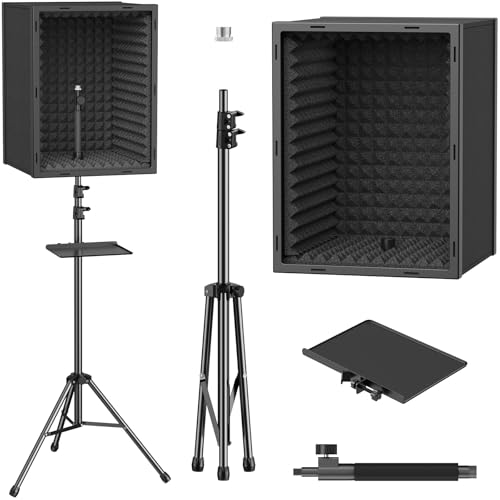
- Five-panel foam-and-board design reduces echo and reflections.
- Heavy-duty steel tripod adds strong stability.
- Height adjusts for seated or standing recording.
Best For: dedicated streamers and podcasters who want a stable booth-style shield
Portable Foam Shield
Microphone Wind Shield Pop Filter Isolation Ball

- High-density foam helps reduce bounce and interference.
- Dual-layer pop filter cuts hiss and plosives.
- Only 200g and easy to mount on common stands.
Best For: portable streaming and desktop recording setups
Foldable XL Shield
LZSIG Triple-Layer Microphone Isolation Shield

- Triple-layer build targets noise, reflections, and bounce.
- XL size offers broad coverage for voice work.
- Foldable five-panel design improves storage and travel.
Best For: creators who want a large, flexible shield for streaming and recording
Full-Setup Insulation
Dmsky Shield With Tripod Stand

- Triple-layer design targets noise reduction
- Includes heavy-duty tripod and pop filter
- Height adjusts for seated or standing use
Best For: Creators wanting an all-in-one streaming setup
Portable Desk Shield
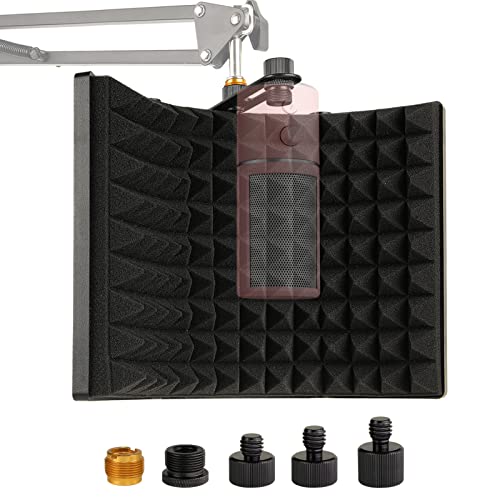
- Lightweight 3-panel design folds for travel
- Foam interior reduces sound reflection
- Includes several adapters for mounting
Best For: Condenser-mic streamers needing a compact desk shield
Compact Foldable Shield – Aokeo Foldable Mic Shield
If you’re shopping for microphone isolation shields for live streaming, this Aokeo option is a practical pick for cutting down room reflections and tightening up vocal clarity. Its foam front, vented metal back panel, and foldable design make it easy to use in a home setup, podcast corner, or small recording space.
Best For: Streamers and creators who want a larger, portable shield with included desktop stand support.
Pros:
- Sound-proof foam front and ventilated metal back panel help reduce noise and reflections.
- Large 23.2″ x 11″ size can also support recording for instruments like guitar or violin.
- Made from solid metal alloy and professional sound-absorbing foam for a lightweight, portable build.
- Includes 3/8″ threaded mount plus 5/8″ adapter for broad mic compatibility.
Cons:
- Its larger footprint may take up more desk space than smaller shields.
- Compatibility depends on your mic mount setup, despite the included adapter.
Overall, this is a solid all-around isolation shield if you want a straightforward way to improve live-stream vocal recordings without adding much setup complexity.
All-in-One Noise Blocker – Black Mic Isolation Ball
For microphone isolation shields for live streaming, this black isolation ball is built to create a more controlled vocal capture in untreated spaces. The five-sided sealing design, dual-layer foam, and integrated pop filtering make it a strong choice when you want to reduce room noise, plosives, and harsh breath sounds in one compact accessory.
Best For: Live streamers and podcasters who want compact, studio-style isolation with built-in pop filtering.
Pros:
- Wide compatibility with most XLR and USB microphones, plus removable parts for adjustment.
- Fits condenser and dynamic mics with capsule diameters from 45-70mm.
- Dual-layer nylon pop filter helps reduce plosives, hiss, breath noise, and saliva spray.
- Five-sided sealing with high-density acoustic foam is designed to reduce reverb by up to 30db.
Cons:
- Its specialized ball-style design may not suit every mounting preference.
- Smaller package size may be less versatile than a full panel-style shield.
This is a useful choice if you want a more self-contained acoustic solution for streaming and voice work without building a larger treatment setup.
Tabletop Studio Shield – Aokeo AO-403 Isolation Shield
If you need microphone isolation shields for live streaming that are easy to position on a desk, the Aokeo AO-403 keeps things simple. Its folding panel design, absorbing cotton insulation, and compact size are aimed at reducing sound reflection while staying portable enough for different recording spaces.
Best For: Desktop streamers who want a foldable shield for tabletop or stand-mounted use.
Pros:
- Absorbing cotton insulation on the inside helps reduce sound reflection during recording.
- Foldable panel design allows angle adjustments for better positioning.
- Lightweight and compact enough to carry between setups.
- Can be fixed on a countertop or tabletop, or mounted to a microphone stand.
Cons:
- Does not include a stand, so you may need compatible mounting gear separately.
- Fit may vary with personal stands, even though it is designed to work with Aokeo-branded stands.
It’s a straightforward, desk-friendly option for creators who want basic reflection control and flexible placement without a bulky setup.
Portable Noise Reducer – Penypeal Mic Isolation Ball
Among microphone isolation shields for live streaming, this Penypeal model focuses on portability and simple noise reduction. The five-sided seal design, double-layer filter opening, and light 120g build make it a convenient option for creators who need cleaner recordings across different setups and locations.
Best For: Mobile streamers and voice users who want a lightweight shield for quick setup.
Pros:
- Fits most XLR and USB microphones with removable jacket diameters between 50-75mm.
- Five-sided seal design helps reduce noise from multiple directions.
- Double-layered filter opening is designed to reduce plosives, wind interference, saliva spray, and divergent sound.
- Very lightweight at 120g and easy to mount on desktops, small tripods, cantilever arms, and floor stands.
Cons:
- Its compact, portable design may be less substantial than larger shield formats.
- Compatibility depends on mic diameter range and included holder fit.
This is a sensible pick if you need a lightweight, easy-to-move shield that can travel between home, outdoor, and studio-style recording situations.
Studio Booth Pick – TONOR Microphone Isolation Shield with Tripod Stand
If you want microphone isolation shields for live streaming that do more than just cut a little room echo, this TONOR vocal booth is built like a full recording enclosure. Its five-panel foam-and-board design is aimed at reducing reflections and indoor reverb, while the included tripod stand adds a more permanent, stable setup for desks or floor use.
Best For: Streamers, podcasters, and voice users who want a more enclosed, stable booth-style setup.
Pros:
- Five high-density foam and sound-absorbing panels help reduce echoes and reflections.
- Claims to prevent up to 96% of indoor reverb for a drier, clearer sound.
- Heavy-duty steel tripod and reinforced plastic frames improve stability.
- Height adjusts from 51.2″ to 74.8″ for seated or standing use.
Cons:
- Bulkier box-style design is less portable than simple shields.
- Requires some setup compared with lighter clip-on style options.
- Best suited to dedicated spaces rather than quick travel use.
This is the most booth-like option in the group, so it makes sense if your priority is stronger isolation and a steadier recording position. The included mic adapter and tablet/phone tray also make it practical for live-stream workflows where you need both sound control and reference material close at hand.
Portable Foam Shield – Microphone Wind Shield Pop Filter Isolation Ball
For microphone isolation shields for live streaming that stay lightweight and easy to move, this foam isolation ball keeps the focus on simple noise control. Its high-density acoustic foam is designed to reduce bounce and interference, and the included dual-layer pop filter adds extra help against harsh sibilance and plosives.
Best For: Streamers and creators who need a compact, portable shield for desktop or mobile setups.
Pros:
- High-density foam helps absorb unwanted noise and reflections.
- Dual-layer pop filter reduces “s” hiss and plosive sounds from “B” and “P.”
- Very lightweight at 200g, making it easy to transport.
- Compatible with desktop, arm, floor stands, and shock mounts.
Cons:
- Microphone and holder are not included.
- Designed for microphones in the 50mm to 68mm diameter range.
- Less substantial than larger booth-style isolation shields.
This model is a sensible pick when portability matters more than maximum enclosure. It is especially useful for home streaming, office voice work, and other situations where you want a fast, simple way to reduce reflections without adding much weight or bulk.
Foldable XL Shield – LZSIG Triple-Layer Microphone Isolation Shield
If you are comparing microphone isolation shields for live streaming and want a balance of control, size, and portability, this LZSIG XL model stands out. Its three-layer reflective, filtering, and absorbing structure is designed to cut ambient noise and sound bounce, while the foldable five-panel build makes it easier to store and move between setups.
Best For: Streamers, podcasters, and voiceover users who want a large but foldable shield with flexible positioning.
Pros:
- Three-layer construction uses reflective, filtering, and absorbing materials for sound control.
- XL 30″ x 12.9″ size gives a broader coverage area.
- Foldable five-panel design is easier to store and transport.
- Includes 3/8″ and 5/8″ adapters for broad mic and stand compatibility.
Cons:
- Large size may take up more desk or stand space.
- Heavier-duty design is less compact than smaller foam shields.
- Best setup flexibility depends on having a compatible stand or mount.
This is the strongest all-around choice if you want a bigger isolation surface without committing to a fixed booth. The adjustable angles, anti-slip support points, and wide compatibility make it a practical option for creators who switch between desk streaming and more traditional mic-stand recording.
Desktop-Ready Noise Control – Aokeo Foldable Foam Shield
If you want microphone isolation shields for live streaming that are simple, portable, and aimed at reducing room reflections, this Aokeo model is a practical pick. Its absorbent foam interior and vented metal back are designed to help block unwanted sound bounce, while the foldable panel layout makes angle adjustments easy on a desk or tabletop.
Best For: Streamers and home recordists who want a compact shield for tabletop or stand-mounted use.
Pros:
- High-density absorbent foam helps reduce sound reflection during recording.
- Foldable panel design allows angle adjustment and easier transport.
- Can be used on a flat surface or mounted to a microphone stand.
- Steel construction adds durability for regular use.
Cons:
- Microphone and stand are not included.
- Best suited to condensers and similar setups, so fit depends on your existing gear.
Overall, this is a straightforward isolation shield for creators who want basic acoustic control without extra complexity. It focuses on portability and practical mounting options, which makes it useful for streaming setups that move between desk and stand use.
Full-Setup Insulation – Dmsky Shield With Tripod Stand
Among microphone isolation shields for live streaming, this Dmsky bundle stands out because it pairs the shield with a heavy-duty tripod and pop filter. The triple-layer sound insulation design is meant to reduce ambient noise and wave bounce, while the adjustable stand makes it easier to position the shield for seated or standing sessions.
Best For: Streamers and podcasters who want an all-in-one shield, stand, and pop filter package.
Pros:
- Triple sound insulation uses reflective, filter, and absorbing layers.
- Heavy-duty tripod stand supports desk or boom-style positioning.
- Height adjusts from 42 to 71.5 inches for seated or standing use.
- Includes a pop filter, adapters, and a storage tray for accessories.
Cons:
- Larger setup may be less convenient than a basic standalone shield.
- More components can mean more adjustment during initial setup.
This is the most complete option in the group if you want fewer separate purchases. It’s built around flexibility and stability, so it fits creators who need a shield that can move between desk-based streaming and taller performance positions.
Portable Desk Shield – Compact 3-Panel Vocal Booth
If you need microphone isolation shields for live streaming in a smaller footprint, this 3-panel model is built for simple tabletop or mic-arm use. The high-density absorbent foam is intended to reduce reflection and keep vocals clear, while the lightweight foldable design makes it easy to move between home recording and broadcast setups.
Best For: Streamers using a condenser mic who want a compact, portable shield for desktop setups.
Pros:
- High-density foam helps reduce sound reflection.
- Compact 3-panel, foldable design is lightweight and portable.
- Works on a desktop/tabletop or mounted to a microphone stand.
- Includes multiple adapters for broader mount compatibility.
Cons:
- Not suitable for Blue Yeti microphones.
- Smaller size may not suit users who want a larger enclosure.
This is a strong fit for streamers who value portability and a cleaner desk layout. The included adapters add useful flexibility, but the compatibility note is important if you use a Blue Yeti.
How We Picked the Best Microphone Isolation Shields for Live Streaming
We focused on Microphone Isolation Shields for Live Streaming that offer meaningful room-reflection control, broad mic compatibility, and a design that fits real creator setups. We prioritized models with sturdy mounting, effective foam or multi-panel absorption, and practical features like threaded adapters, tripods, or foldable panels. Ease of setup mattered too, since streamers usually want faster results than a full studio treatment can provide.
Quick Comparison
The best choice depends on your space and microphone type. Foldable 3-panel shields are usually the most flexible for desk setups and condenser mics. Ball-style foam shields can be simpler and more compact, but they are typically better for reducing light plosives and side noise than for blocking larger room reflections. Bundles with tripods or stands are ideal if you want an all-in-one solution, while adapter-compatible shields work well if you already own a boom arm or mic stand.
Key Buying Factors for Microphone Isolation Shields for Live Streaming
Coverage and Shape
Look for enough coverage behind and around the microphone capsule to reduce echo from nearby walls. Larger foldable panels generally outperform small foam shells in untreated rooms.
Compatibility
Check thread sizes, mounting hardware, and whether the shield works with your specific mic, such as a Blue Yeti, condenser mic, or dynamic microphone setup. A good fit matters as much as the acoustic material.
Material Quality
High-density acoustic foam and thicker panel construction tend to absorb more sound and last longer. Thin foam can help a little, but it will not replace proper isolation in reflective spaces.
Stability and Setup
If you move your gear often, choose a shield with a stable stand or easy-fold design. For permanent desks, weight and rigidity may matter more than portability.
Room Type
In small, echo-prone rooms, a more enclosed shield can help. In already treated rooms, a lighter shield may be enough to refine the sound.
Who Should Buy Which Microphone Isolation Shields for Live Streaming?
Choose a foldable multi-panel model if you want the most versatile option for streaming and recording at a desk. Pick a ball-style foam shield if you want a compact, simple accessory for quick vocal control. If you are building a new setup from scratch, a package with a tripod stand can save time and money. For creators upgrading an existing rig, adapter-friendly shields offer the easiest integration with current mounts and microphones.
In short, the best Microphone Isolation Shields for Live Streaming are the ones that match your room, your mic, and how you actually create content every day.