If you record vocals, voiceovers, or podcasts at home, an isolation shield can make a noticeable difference in clarity. It helps reduce room reflections so your mic captures a tighter, more controlled sound.
In this roundup of the best microphone isolation shields for voice recording, we focus on models that balance absorption, portability, mounting flexibility, and value for different studio setups.
Best 10 Microphone Isolation Shields for Voice Recording Picks for 2026
Triple-Layer Stand Shield
Dmsky Foldable Mic Shield with Tripod

- Triple sound-insulation layers help reduce bounce and noise.
- Includes pop filter, adapter, and storage tray.
- Height-adjustable tripod supports desk or standing use.
Best For: Creators who want an adjustable all-in-one shield with stand support.
Compact Folding Shield

- Absorbing cotton interior helps reduce reflections.
- Foldable design allows easy angle adjustment.
- Works on tables or with a microphone stand.
Best For: Users who need a compact, portable shield for existing setups.
Portable Booth Box
TroyStudio Foldable Vocal Booth

- Box-style design uses thick foam on all inside surfaces.
- Portable and foldable for travel or small spaces.
- Supports table use and many microphone types.
Best For: Portable vocal and voiceover recording in tighter spaces.
Five-Panel Foam Shield

- Three-layer design aims to reduce interference and noise.
- Switches between 3-panel and 5-panel setups.
- Can be used on a desktop or microphone stand.
Best For: Flexible recording setups that need adjustable panel coverage.
Booth-Style Isolation
Studio Tripod Isolation Shield
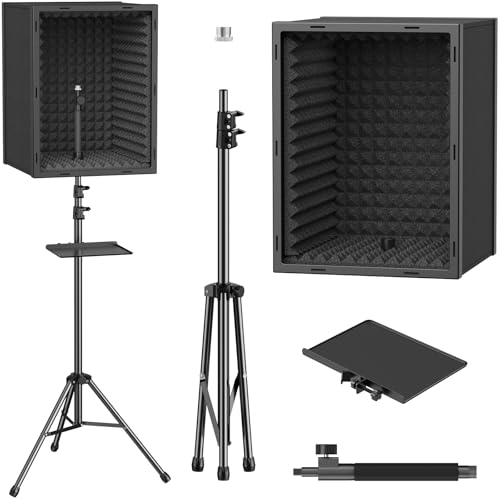
- Five-panel foam box design helps reduce echoes and reflections.
- Height-adjustable tripod supports seated or standing recording.
- Fits many mics with the included 3/8" to 5/8" adapter.
Best For: Users who want a more enclosed vocal booth feel for home recording
Large Desktop Shield

- Large shield size suits voice, guitar, and violin recording.
- Includes desktop stand for quick setup.
- 3/8" mount and 5/8" adapter support common mic hardware.
Best For: Creators who want a bigger, flexible shield for voice and instrument work
Studio-Ready Shield
Professional Recording Shield with Adjustable Stand

- High-density absorbent foam helps cut interference.
- Includes adjustable stand and metal thread adapters.
- Steel build is rugged and scratch-resistant.
Best For: Voice recording setups needing a sturdy shield with a stand
Compact Booth Shield
Foldable 3-Panel Portable Mic Shield
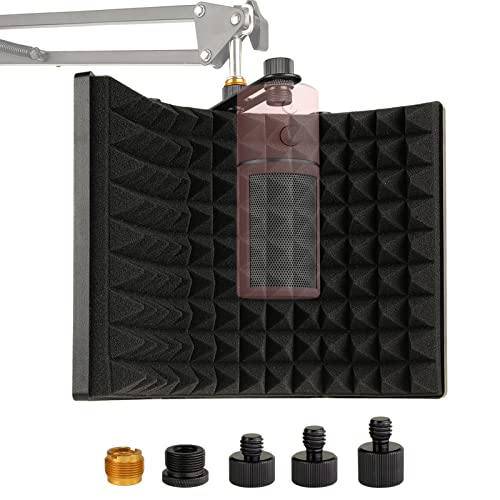
- Foldable 3-panel design supports angle adjustments.
- High-density foam helps reduce reflections.
- Includes adapters for desktop or mic-stand mounting.
Best For: Portable home recording and streaming setups with condenser mics
All-In-One Vocal Shield
Recording Shield with Pop Filter and Tripod

- Includes pop filter, tripod stand, and storage desk.
- High-density foam is designed to keep vocals clear.
- Steel build is rugged and scratch-resistant.
Best For: Beginners wanting a fuller recording bundle with extras
Triple-Layer Stand Shield – Dmsky Foldable Mic Shield with Tripod
If you want microphone isolation shields for voice recording that combine a stand, pop filter, and foldable panels, this Dmsky model is built for a flexible home or project studio setup. Its triple sound-insulation design uses a reflective layer, filter layer, and absorbing layer to help reduce ambient noise and audio bounce.
Best For: Voice recording setups that need a full-height, adjustable shield with stand support.
Pros:
- Triple-layer construction helps reduce reflections and external noise.
- Includes a pop filter and 3/8″ to 5/8″ adapter for broader mic compatibility.
- Heavy-duty tripod stand supports desk or standing use.
- Height adjusts from 42 to 71.5 inches for seated or standing recordings.
Cons:
- Larger setup than a simple tabletop shield.
- May be more than needed for very basic recording spaces.
Overall, this is a practical all-in-one option if you want adjustable microphone isolation shields for voice recording without piecing together separate accessories. The included stand and storage tray make it especially convenient for everyday studio or broadcast use.
Compact Folding Shield – Aokeo AO-403 Isolation Shield
The Aokeo AO-403 is a straightforward choice among microphone isolation shields for voice recording when you want a compact, foldable barrier that helps cut reflections at the mic. Its absorbing cotton interior and vented metal back plate are designed to reduce sound interference during recording.
Best For: Simple tabletop or stand-mounted recording setups that need a compact isolation panel.
Pros:
- Absorbing cotton interior helps reduce sound reflection while recording.
- Folding panel design makes angle adjustments easy.
- Compact, lightweight build is easy to carry.
- Can be fixed to a countertop, tabletop, or microphone stand.
Cons:
- Does not include a stand in the box.
- Fit may depend on your own stand unless using Aokeo-branded stands.
For buyers who want a simpler, portable shield rather than a full vocal booth, this model stays focused on the basics. It is a practical fit if you already have compatible mounting hardware and just need a foldable isolation solution.
Portable Booth Box – TroyStudio Foldable Vocal Booth
This TroyStudio booth is a different take on microphone isolation shields for voice recording, using a portable box-style design to surround the mic area with thick acoustic foam. It is meant to reduce echo and room reflections more aggressively than a standard open shield.
Best For: Portable voiceover, podcast, and vocal recording when you want a more enclosed reflection filter.
Pros:
- Thick 2-inch egg-crate foam on all inside surfaces helps absorb echoes and reflections.
- Portable, foldable design is easy to pack and transport.
- Works with table use or stand mounting.
- Compatible with many mic types, including USB, condenser, and vocal microphones.
Cons:
- Small internal size may be limiting for larger gear.
- Only fits stands with a diameter smaller than 0.86 inches.
If you want a more enclosed recording space for cleaner, drier audio, this model stands out from open-panel shields. It is especially useful for mobile recording or home studios where room acoustics are hard to control.
Five-Panel Foam Shield – XTUGA MIS02 Recording Shield
The XTUGA MIS02 is a practical pick among microphone isolation shields for voice recording if you want an adjustable 5-panel design with layered noise reduction. Its high-density sponge insulator material and multi-layer structure are intended to cut interference and improve recording clarity.
Best For: Budget-conscious recording setups that need flexible panel positioning.
Pros:
- Three-layer design with high-density sponge helps reduce noise interference.
- Adjustable 3-panel or 5-panel configurations provide flexibility.
- Foldable end panels make angle tuning easier.
- Can be used on a desktop or attached to a microphone stand.
Cons:
- Does not include a stand in the listing details.
- Best suited to controlled recording environments rather than full isolation.
For users who want an adaptable shield without a more complex booth-style enclosure, this model keeps the setup simple. It offers the kind of adjustability that helps when you are moving between different recording positions or room layouts.
Booth-Style Isolation – Studio Tripod Isolation Shield
If you want microphone isolation shields for voice recording that lean more toward a mini booth than a simple reflection filter, the TONOR model is built for that job. Its five-panel, high-density foam box design is meant to cut echoes and reflections while helping reduce indoor reverb for a drier vocal take. The adjustable tripod stand also makes it easier to set up for seated or standing sessions.
Best For: Home studio users, podcasters, and voice actors who want a more enclosed recording space with broad mic compatibility.
Pros:
- Box-style design uses five high-density foam and sound-absorbing panels to help reduce reflections.
- Claims up to 96% indoor reverb reduction for clearer-sounding recordings.
- Heavy-duty steel tripod and reinforced plastic frames add stability.
- Height adjusts from 51.2″ to 74.8″, so it works for seated or standing setups.
Cons:
- Larger booth-style footprint than a basic foldable shield.
- Assembly is quick, but it is still a stand-based setup rather than a compact desktop panel.
- Maximum supported mic weight is 4.4 lbs, so very heavy setups are out.
Overall, this TONOR shield makes sense if your priority is stronger isolation and a more controlled vocal space. The adjustable height and wide mic compatibility make it practical for a range of recording tasks, from podcasts to voice-overs and instruments.
Portable Reflection Filter – Tabletop Foldable Mic Shield
For buyers comparing microphone isolation shields for voice recording, this Aokeo option focuses on simple setup and portability. The foldable panel design uses absorbing cotton insulation to reduce sound reflection, while the lightweight steel build keeps it easy to move between a tabletop and a mic stand. It is aimed at users who want a practical shield without a bulky booth.
Best For: Podcasters, home recordists, and content creators who need a portable shield they can use on a desk or stand.
Pros:
- Absorbing cotton insulation is designed to reduce reflection during recording.
- Foldable, compact construction makes it easy to carry and store.
- Can be used on a countertop/tabletop or mounted to a microphone stand.
- Premium steel frame and screws are built for durability.
Cons:
- Package does not include headphones or a microphone.
- Stand is not included, so some setups require separate hardware.
- Less enclosed than a full booth-style shield.
This Aokeo shield is a sensible pick if you want an adaptable reflection filter that does not take up much space. Its biggest strengths are convenience and flexibility, especially for smaller recording areas.
Large Desktop Shield – Triple Insulation Mic Shield
This Aokeo model is a straightforward choice if you want microphone isolation shields for voice recording with a larger capture area and a simple desktop setup. It uses a sound-proof foam front and ventilated metal back panel to help reduce noise while recording. The included desktop stand, plus 3/8″ and 5/8″ threaded compatibility, makes it easy to adapt to common mics and mounts.
Best For: Voice recording, podcasts, singing, and broadcasting with a larger shield and included desktop stand.
Pros:
- Triple sound insulation design combines foam and a ventilated metal back panel.
- Large 23.2″ x 11″ x 2″ size can also help with instruments like guitars and violins.
- Includes a desktop stand for easier setup right out of the box.
- Supports 3/8″ threading with a 5/8″ adapter for broad mic compatibility.
Cons:
- Bulkier than smaller foldable shields.
- Built for multiple uses, so it may be more than needed for a minimal desk setup.
- Accessory-focused package still depends on your existing microphone choice.
In practice, this is the most versatile of the three if you want a bigger shield that can handle more than just spoken voice. The included stand and adapter support make it especially convenient for creators who switch between different microphones and recording styles.
Studio-Ready Shield – Professional Recording Shield with Adjustable Stand
For microphone isolation shields for voice recording, this AO-504 setup is aimed at users who want a sturdier, more complete desktop recording solution. It combines a high-density absorbent foam interior with a vented metal back plate and an adjustable stand, so it is built to help reduce outside noise and keep vocals clearer during tracking.
Best For: Voice recording setups that need a rugged shield with an included stand and broad mic compatibility.
Pros:
- High-density absorbent cotton interior is designed to reduce audio wave interference and outside environmental noise.
- Includes an adjustable 182 cm stand plus metal thread adapters for easier setup with many microphones.
- Steel construction is described as rugged and scratch-resistant for regular studio use.
- Acoustic foam front and vented metal back plate are built for recording-focused use.
Cons:
- Microphone is not included.
- The notes do not mention portability or foldable panels.
- Compatibility is broad, but fit still depends on the adapter and stand setup.
This is a practical pick if you want a more permanent voice recording shield and prefer a package that already includes mounting hardware. Its main strengths are the sturdy build and stand height adjustment, which make it easier to position around a studio mic.
Compact Booth Shield – Foldable 3-Panel Portable Mic Shield
This microphone isolation shield is built for compact voice recording spaces where portability matters. The foldable 3-panel design uses high-density absorbing foam to help reduce reflections, and its lightweight form makes it easy to move between a desktop and a mic stand.
Best For: Home recording and live broadcast users who want a portable, foldable shield for condenser mics.
Pros:
- Foldable 3-panel design allows angle adjustments and easier storage.
- High-density foam is intended to reduce sound reflection and keep voice and instrument audio clear.
- Works on a desktop/tabletop or mounted to a microphone stand.
- Includes multiple adapters for 3/8-inch and 5/8-inch threading.
Cons:
- Not suitable for Blue Yeti microphones.
- Smaller dimensions may be limiting for larger recording setups.
- The shield is plastic/sponges rather than a metal-heavy design.
For users who need microphone isolation shields for voice recording but do not want a bulky booth, this model is the most travel-friendly option in the group. The tradeoff is size and material simplicity, but the flexible mounting options make it useful for quick home-studio or streaming setups.
All-In-One Vocal Shield – Recording Shield with Pop Filter and Tripod
If you want microphone isolation shields for voice recording with more accessories in the box, this Aokeo bundle stands out. It pairs a high-density absorbent foam shield with a pop filter, tripod stand, storage desk, and adapters, making it a more complete starter kit for recording vocals.
Best For: Beginners or home-studio users who want a shield bundle with a pop filter and stand included.
Pros:
- Includes a pop filter to help reduce hissing on “S” sounds and plosives on “B” and “P” sounds.
- Comes with a tripod stand, storage desk, and metal thread adapters for a fuller package.
- High-density absorbent cotton material is designed to keep vocals clear while reducing environmental interference.
- Steel construction is described as rugged and scratch-resistant.
Cons:
- Microphone is not included.
- The bundle is larger and less compact than the foldable 3-panel option.
- As with similar shields, the exact fit depends on your mic and adapter configuration.
This is the most accessory-rich option here, so it makes sense for users who want a ready-to-use vocal recording package instead of buying pieces separately. The added pop filter and storage desk are especially useful for straightforward studio workflows.
How We Picked the Best Microphone Isolation Shields for Voice Recording
We prioritized Microphone Isolation Shields for Voice Recording that offer practical sound absorption, easy setup, and compatibility with common condenser microphones. We also looked at whether each shield includes useful extras like a stand, pop filter, or adapter hardware, since those features can reduce the need for separate purchases.
Quick Comparison
Use a compact 3-panel shield if you want a simple desktop solution, or choose a larger multi-panel booth-style design if you need more wraparound coverage. Models with a tripod stand are better for flexible placement, while foldable units are easier to store and move between sessions.
Key Buying Factors for Microphone Isolation Shields for Voice Recording
Panel Coverage and Shape
More panels usually mean more side and rear absorption, which can help tame reflections in untreated rooms. A curved or wraparound design often performs better than a flat panel because it blocks more reflected sound around the microphone.
Foam Density and Absorption
High-density foam is the main feature to look for. It will not fully soundproof a room, but it can reduce harsh early reflections and improve vocal focus. Thicker foam and deeper panel construction are generally more effective for home recording.
Mounting and Compatibility
Check whether the shield works on a desk stand, boom arm, or included tripod, and confirm thread sizes if you plan to reuse your current mic hardware. Compatibility matters most if you use a larger condenser mic or a setup like a Blue Yeti.
Portability and Space
If you record in a small room or shared space, foldability and a lighter frame are important. Desktop users may prefer a compact shield, while creators who move gear often should favor a design that packs down quickly.
Who Should Buy Which Microphone Isolation Shields for Voice Recording?
Choose a basic foldable shield if you want an affordable improvement for podcasting or voiceovers. Pick a larger booth-style model if your space has noticeable echo and you want stronger surrounding absorption. If you need an all-in-one solution, a shield with a pop filter and stand is often the most convenient choice for new creators building a simple recording rig.
For most buyers, the best Microphone Isolation Shields for Voice Recording are the ones that fit your mic, your desk, and your room before anything else.